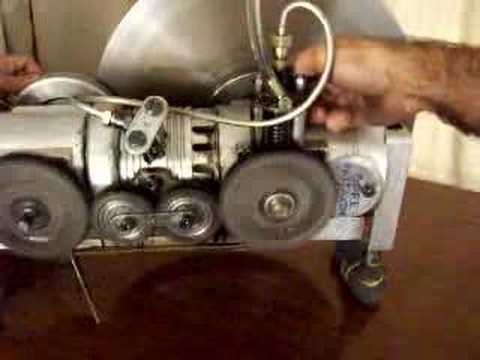
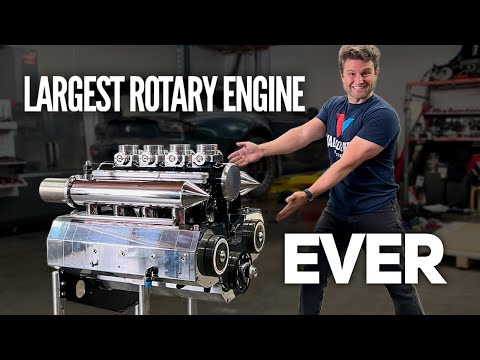
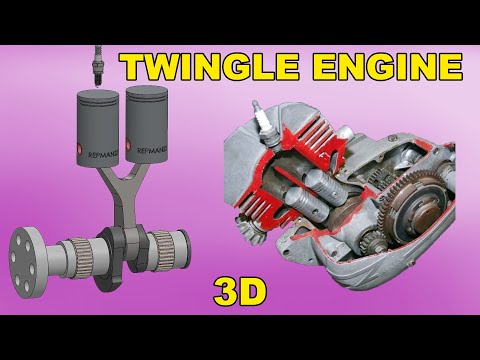
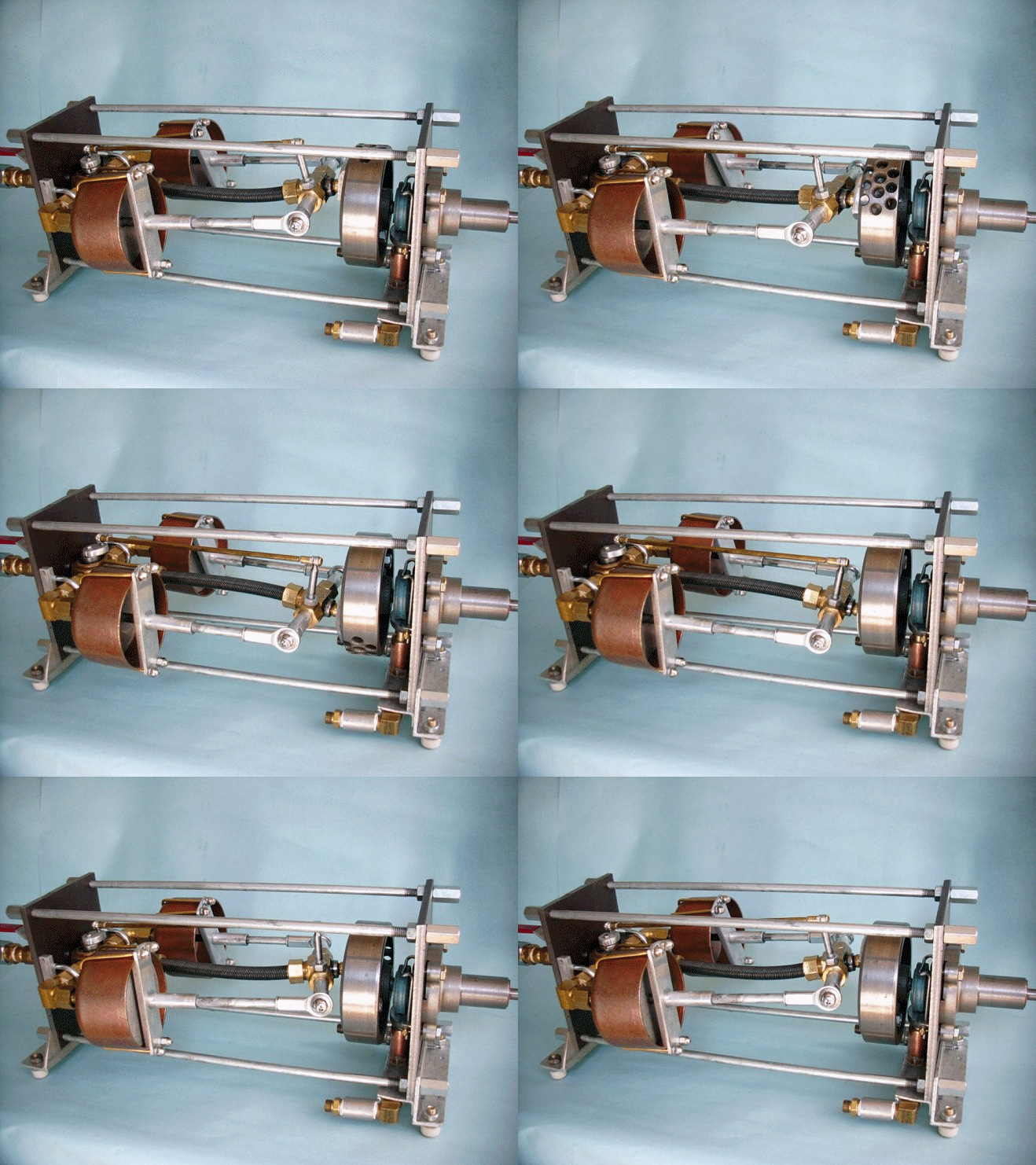
I admire this groups work, seems to be good engineering here, and no vibration in some of their models. It appears that their work is underfunded but that they have good mechanical solutions.
Hey Dave . . . I’ll see you one and raise you one . . . as Australian engineers designed; and probably will go into production for the usages stated. Especially if it gets the interest of the Chinese manufacturers for use in their cars as range extender ICE’s.
Watch through to 16:53 for reference to use as small stationary generator engines.
Watch on to 18:30 for the compression ratios graphic chart showing 11.5 to 1 and 13 to 1 tested.
S.U.
The engine above will s-e-e-m maybe ideal for woodgas.
It has no valves. It has a true mechanical variable compression ratio change possibility.
As an opposed pistons engines should have good thermal conversions to mechanical.
Watch this video more so than about this specific IC engine; but about how to analyze, evaluate any new, woo-woo, “world changer” engine Net-spin fed to you.
Pay particular attention at these time stamped points - 4:20; 6:30; 7:18; 8:38; 10:50.
And my favorite at beginning at 11:30 → 16:50, how a rod and crankshaft IC engine makes better low RPM torques. And on then onto even that a single cylinder/twin cylinder thumper engine able to off-start out-torque a four cylinder engine. The same poor low RPM torque analysis applying to many other engine types like Wankel’s, free pistons types, etc.
Then he talks about comparable must be greater eight pistons rings frictions in this opposed engine versus versus the same power pulses per revolutions of a four piston conventional engine beginning at 16:51.
He finishes just where the small size and weights of this engine would be best applicable.
A real engine. In real metals being made, now, today.
This is a swashplate drive engine, and the idea is old. The guy in the video calls it a “wavy thing”. Okay, I like descriptive names. Anthony Mitchaell worked on a crankless engine. Here is a steam engine that uses a wobble drive or ‘Z’ drive as he calls it https://www.greensteamengine.com/2_cyl_1a.gif This is just a slight variation on the swashplate theme. Diesel injector pumps usually use swashplate drives.
Rindert
Hi Rindert,
Many many air-conditioning refrigerant pumps and hydraulic fluid pumps, and hydraulic motors are swash plate types too.
Always under pressure the piston plungers can be unattached.
AC pumps and this IC engine they must be attached for the negative pressure times too.
Look carefully at the driven/driving end plates true pictures to see the captive following groove. More wear and friction there.
S.U.
Yes, also true of hydraulic transmissions, hydraulic motors etc… but we use them still. Low efficiency and high wear rate do not necessarily determine what we do. Cost is a big factor, reliability, availability… other factors some of them psychological. It’s pretty hard to predict what will happen out there in the big world.
Rindert
I’m keen on a super simple co-axial (same drive shaft) opposed cylinder engine with a linear electric generator in between. You’d need valves but the compression ratio would take care of itself. It’d kick like mule but would run really well on wood gas. Make knock your friend.
I just hope to still be around when these new variations of ice engines finally make it to market and not to be held up in red tape for years and years , funny how no Australian media is blowing the trumpet on that engine Steve , normally just a whisper of something Aus made or designed gets on the news sticking there tongue out to the world as we did it first apparently its well known that Aus has found the cure for so many disease’s and we now gonna live for ever .
Dave
Hello RindertW.
Many thanks for the link to the Australian Anthony Michell engineers life story.
Much new for me to learn here.
1883-86 Osborne Reynolds works on the origin of thin film oil lubrications: “Tribology”.
Then Anthony Mitchell’s original concept and development of the self-adjusting thrust bearing.
Vehicle guy me I forget about the need for this in ships, airplanes, and even large stationary power plants. This patent what gave him the credibility and royalties money to pursue his “Crankless” engines.
Dave; the Australian situation of too far, too remote, too small of a manufacturing base to get adequate credit in the Americas and Europe manufacturing centers is well lined out on page 263. True back then in the early 20th century. Maybe to day with closer developing manufacturing centers in Indonesian, Thailand, and Vietnam it is different now?
Mitchell’s high point engine seems to be on page 265 in the opposed pistons 2-stroke diesel on page 265.
I had no Internet for a few days and it took me time to get back to fully re-reading this.
Regards
Steve Unruh
View this not as searching for a better woodgas engine solution.
View this as a historical document.
Explains a bit of the Italian engine designer Garrelli.
Explains searching for the simplest mechanical solutions to improve the downsides of the 2-stroke processes.
View thru and is explained how the current applies solutions are power valves and such.
Not explained is that in todays social environment that NO engine design that intentionally uses a consumable to be exhaust expelled will be allowed to be manufactured and used anymore.
I have to wonder about gyroscopic effects. Wouldn’t angle changes shoot the main shaft bearings, and make it hard to control in turns? I start to think of gimbals… I don’t even want to go there.
Rindert