Yield here is usually about 20% to 30% of 55 gallons, depending on how many branches I feed in at the top of the chimney barrel. With holes at the bottom (under the barrel) it might be hard to tell when to start closing off the inlet air. I use a sledge and a pair of punches to put 1/2" holes all around the bottom sides of the barrel about 6" apart. After the flames are going good, usually a few of the holes on the upwind side with show glowing char, and I immediately shovel sand over them. I keep watching the other holes, and keep shovelling, until the side of the barrel is covered about a foot up from the ground. (I feel this creates a hot oven environment.) With the bottom covered, no air can enter and burn up your charcoal, unless it comes down from the top. If this air hits the flames, it will never make it to the charcoal. Check out Kelpie Wilson’s site/blog, and also Gary Gilmore’s video on his PA Pyramid Kiln.
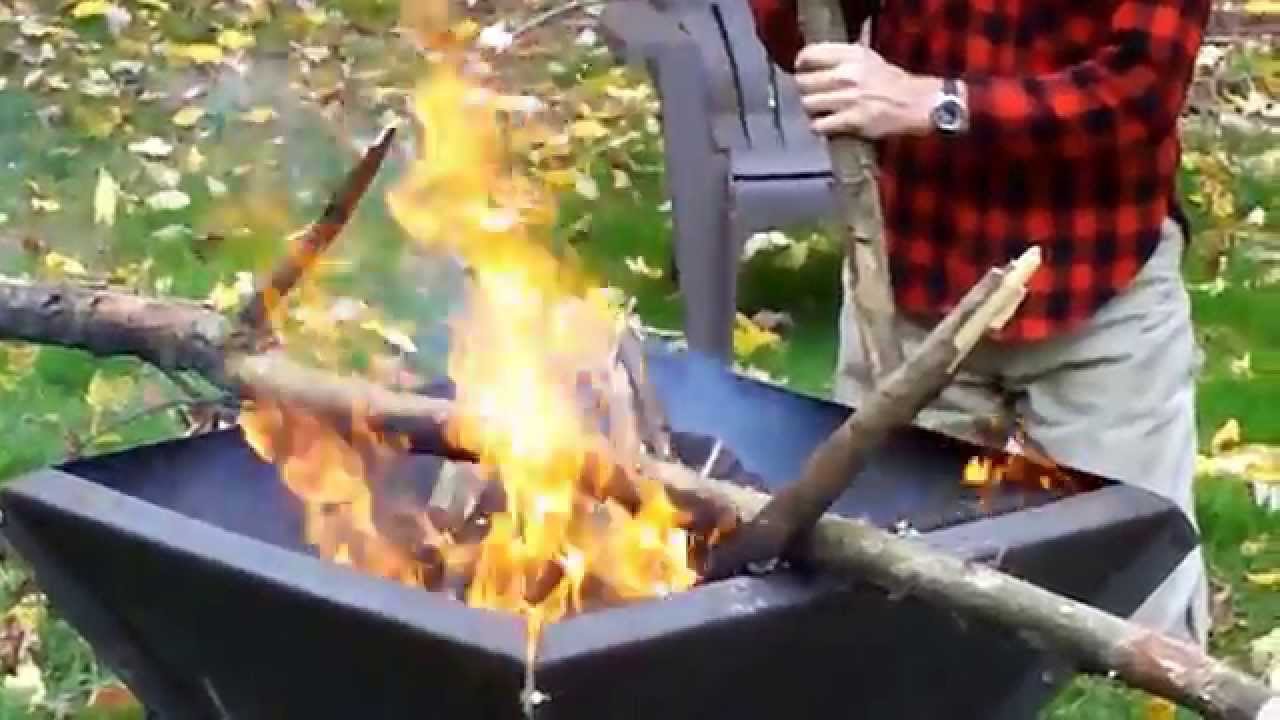
Another thing the dirt around the bottom of the barrel does is keep the 20 gallons of water inside the barrel until it eventually oozes out through the holes at the bottom. One way to recover any ash that gets washed out is to simply move this used dirt to your compost pile, and bring in fresh dirt/clay or sand for the next burn. My TLUD stoves over the years have evolved to a rather large powerful stove using old six inch stovepipe spliced together to make a nine inch pipe that fits into a nine inch stainless steel stockpot. The grate is a worn-out 10" carbide saw blade with teeth knocked off. I made a slide show about 4 years ago showing how to build this stove. The details are in the description. The current version is slightly modified in that I have cast pearlite/plaster into an oil pan with the grapefruit juice can up the center. The 20# weight on this holds the top on tight, and allows me to use only two bricks to hold the pot.

This makes lots of really good charcoal while cooking. I no longer need to use the air valve on the bottom because I have learned to use charcoal brands to regulate the flame height. I do use forced air at the end, especially if I am down to partly consuming my “made” charcoal because I need just a few more minutes of simmering time (like to finish a big pot of rice).
I have been out collecting more dead fallen branches from a wet weather creek/ravine that passes through my land. This wood, like driftwood, is very dry, and is converted to charcoal without cutting it, and ruining those nice 10" carbide saw blades.