I strongly believe you have the right idea about moving in and out to reduce the evening chill down dew off of the wood you are trying to dry. You could get the same effect by tarping on and off.
Ventilation is the often overlooked factor on forced wood drying. The wood moisture must be carried out and away from the surface of the wood chunks and bits. Still air will form a humid boundary air layer against the wood. It must be moved away! Replaced with new air. The air relative humidity is a huge factor. Have tropical hot and saturated wet air conditions and wood does not dry hardly at all. Arctic or high altitude cold and dry air; and wood will dry if the air is moving across it.
Wood is a sponge. Dry - it is an insulator. Wet - it is a heat conductor. Dry - it shrinks and contracts. Wet - it swells and expands.
You bet local/regional weather and climate are huge factors. As is the “cut” of the tree/bush portion. Bark on; or bark off; makes a big difference too. Trunk/stem, or limb/branch. How thick. Wood drys much faster out the ends cuts - so, how long the pieces are cut will slow or speed drying. How deeply it is stacked or piled. And on the ground pileing as the worst possible way to dry wood!
Ha! Ha! And as a stationary electrical generator guy I am always looking at ways for the engine generator; and even gasifer systems as working to just-in-time dry the wood fuel bits. The maths and practical experiences says there is enough wastes heats and air flow possibilities to use live fresh cut woods.
And, yes I know; a criticism that vehicle guys (especially pickup truck guys with space) do not even try to use the on board heats to pre-dry and pre-warm their wood fuels. I see pictured some 40’s AG tractors that did this.
I’ve posted on this plenty, so I’ll just reiterate the short version:
Warm up inflow air, pass warm dry air through wood, pre heat air coming in with warm wet outflow (counterflow heat exchanger)
You can season wood under a roof and in free air, but a solar drier of the type above will get you bone dry wood and fast. Gallons of water condense out of that heat exchanger.
Well, I keep the firewood in potato sacks on pallets, covered with sheet metal, until it’s fairly dry; then I move it to the old sheep barn, where it’s cold.
I usually bring a few sacks in at a time during the winter and store them in the boiler room.
Well it seems we have consensus here and I can trust my gut feeling. For drying wood I do think ventilation is an undisputed No:1 , heat and time are on a shared number two. Ventilation together with any of the other two does wonders with wood drying.
Thank you guys for your input
My wood dries well over the summer, but I always thought a little ventilation in the form of a solar panel and a 12V fan wood help things along. Nice thing would be that it is self regulating, only moving air when the sun shines.
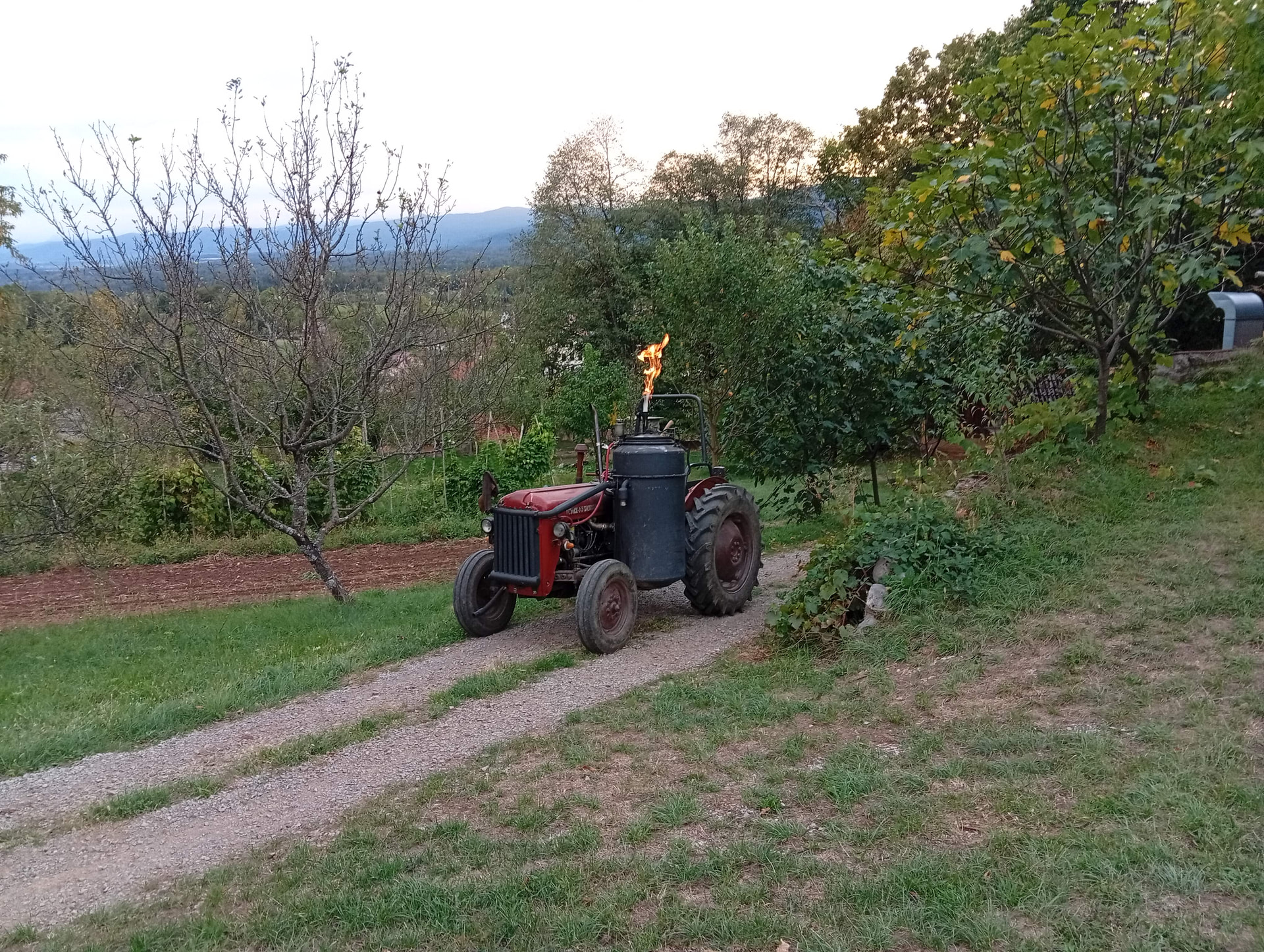
I don’t worry too much about drying the wood—though it does need to be kept under cover. Before shutting down, I fill the gasifier to the top; this way, the wood dries out thoroughly at high temperatures, ready for the next start-up. Usually, about 1–2 liters of a fragrant liquid accumulate…
This is what I call “drying wood the Wayne Keith way”…
Airflow helps as much as heat, but personally, I wouldn’t worry about it unless it is getting really hot under a tarp or in a shed that restricts airflow. It -can- get hot and dry enough to self-ignite like in a solar kiln.
you might get enough airflow with the chimney effect and not need the fan or a solar panel.
The only reason I would add airflow is that the shed has 4 rows of densely packed wood. Like I say, it usually dries well over the summer, but some of the wood near the ground in the middle could use a little more help, but it is so minor I haven’t bothered doing anything about it. It never gets hot here, all the drying pretty much comes from low relative humidity which is where airflow would come in handy.
“they” found out, if the tires last too long, they can sell less, so mixtures are changed for selling more, of course the new mixtures are better for environment!
for storing wood on the place where it is felled- for getting it lighter- i use the side parts from tractor tires between ground and wood, so less mould damage on the under layer…also if stone piles are nearby, they do the same job..
Most of my fire wood is dead with the bark already falling off so fairly dry already and because of the way my stove works it doesn’t have to be real dry to use. Six months in the stack is usually plenty. I always thought that if I wanted to really ramp up the drying time i’d build a type of rocket mass heater with the duct run on the bottom of a stack. The one in my greenhouse has a bed that’s 32 inches wide and 14 foot long. A design like that out side would with a cover over the stack would dry a lot of wood pretty quick and get rid of all the dead fall to small to bother with for the house stove.
Tom, I’ve been looking into rocket mass stoves lately. Do you have any photos of the one in your greenhouse? I would love to see. Do you have any issues with the lighting of fires? I built a scaled down test unit using a 3" diameter riser on a batch stove to check its performance and have issues with lighting. It may need a bypass to work properly.
It is not a batch heater so has to be fed about every half hour. If I built another on I’d definitely do a batch heater but they are a little more finicky to get working right. My duct run is made from 6 inch galvanized round duct with a 180 degree turn and then back to the fire hole. So about 27 foot of duct in a bed that is 32 inches wide and 30 inches high. the ducts are imbedded in a wet sand-clay slurry. That took about a full year to completely dry out and become solid. The 6 inch duct was too small for that length of run. It should have been 8 inch duct. I have a booster fan on the stove pipe that I need to get the flow going and occasionally as it’s heating. Heat in the barrel runs in the 550F range and by the time it has passed through the bed and exits the system the stove pipe is usually in the 80F range, so pretty efficient. I have 27 gallon totes sitting on the bed and it keeps them warm enough to grow root crops, beets and carrots all winter even if we get in the single digits occasionally. I’ll see if I can find any accessible pictures but there’s really not much to it.
Thanks Tom for the info. I hadn’t thought of a booster fan because exhaust temperatures are usually very high, but with the mass sucking the heat out of the gases it is doable. I will try that.
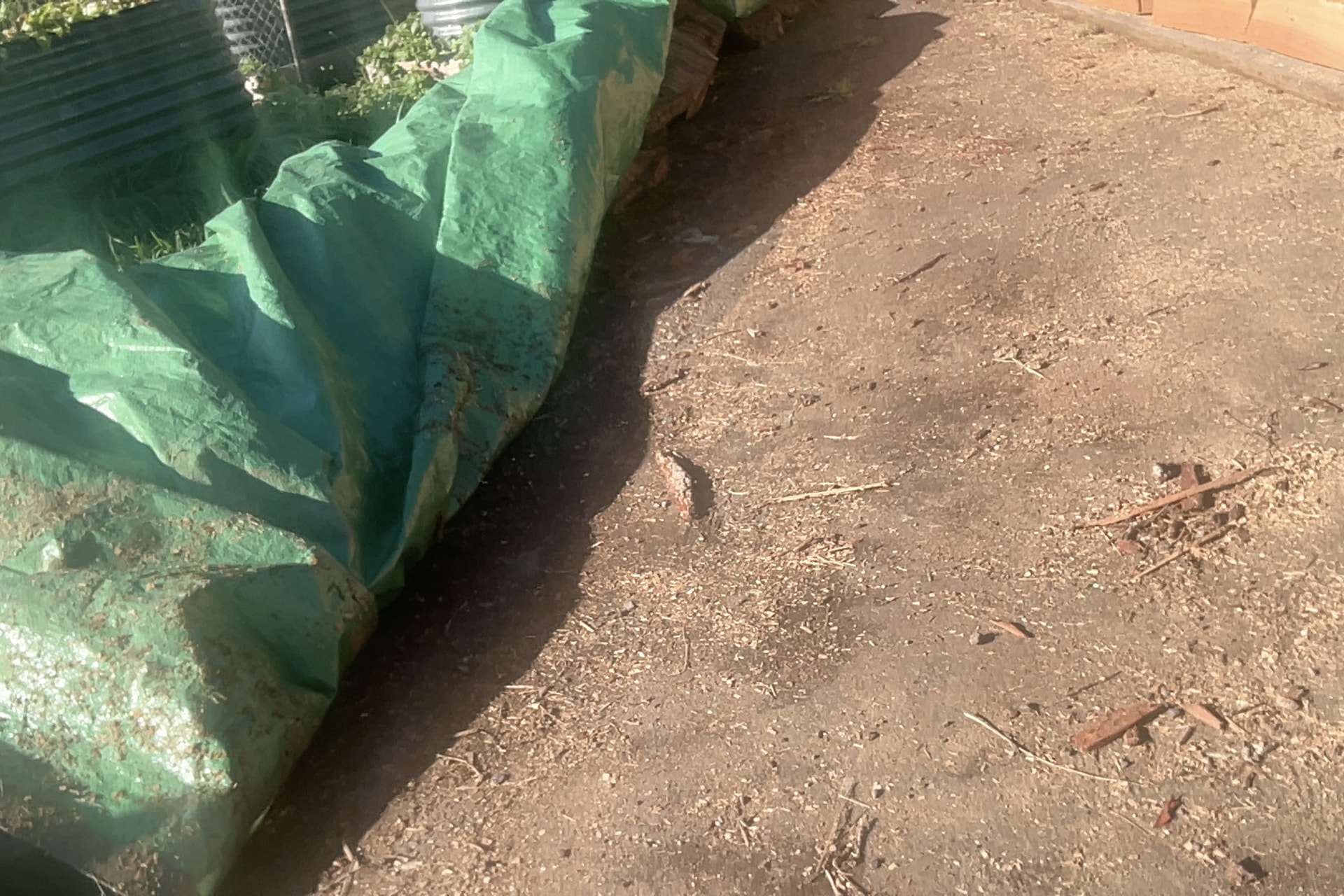
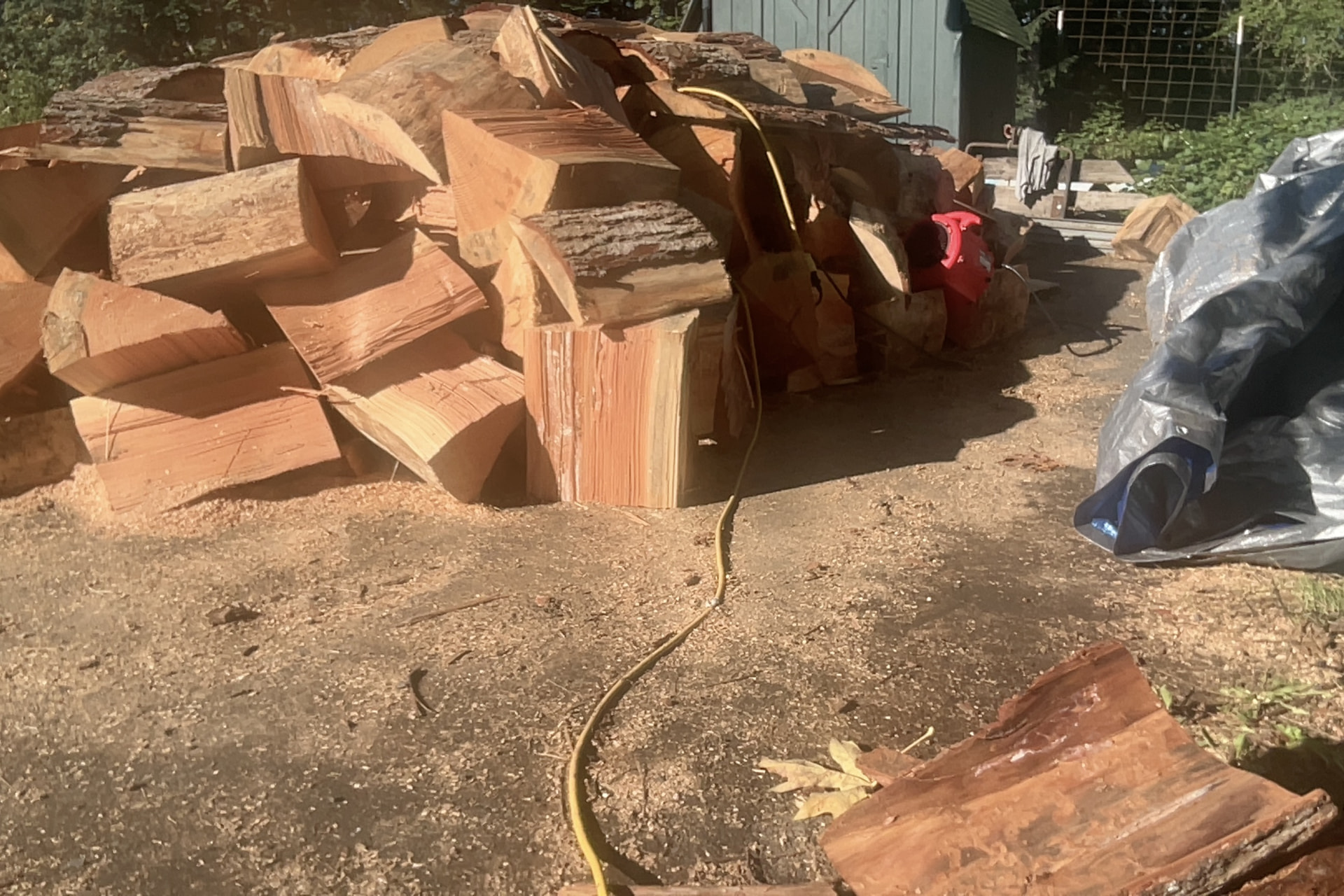
Ha! Ha! More boring pictures - with a purpose. We’ve had another round of October-like storms pass though for the last 4-5 days. Another 1" to 1 1/2"inches of rains here. Finally a wake up to a sunny day. With 5-7 glorious sunny warm early Fall days predicted. The pictures are showing the effectiveness of my wide tarping out apron bases to direct off the tarps shed rains away from the wood rows stacks.
Yes. I am forced air circulating on the backside/north-side of the wood rows. These will never see the now lower in the sky direct sun. The good news to me now it all seems dry enough to arrest any new black spot molds growths.
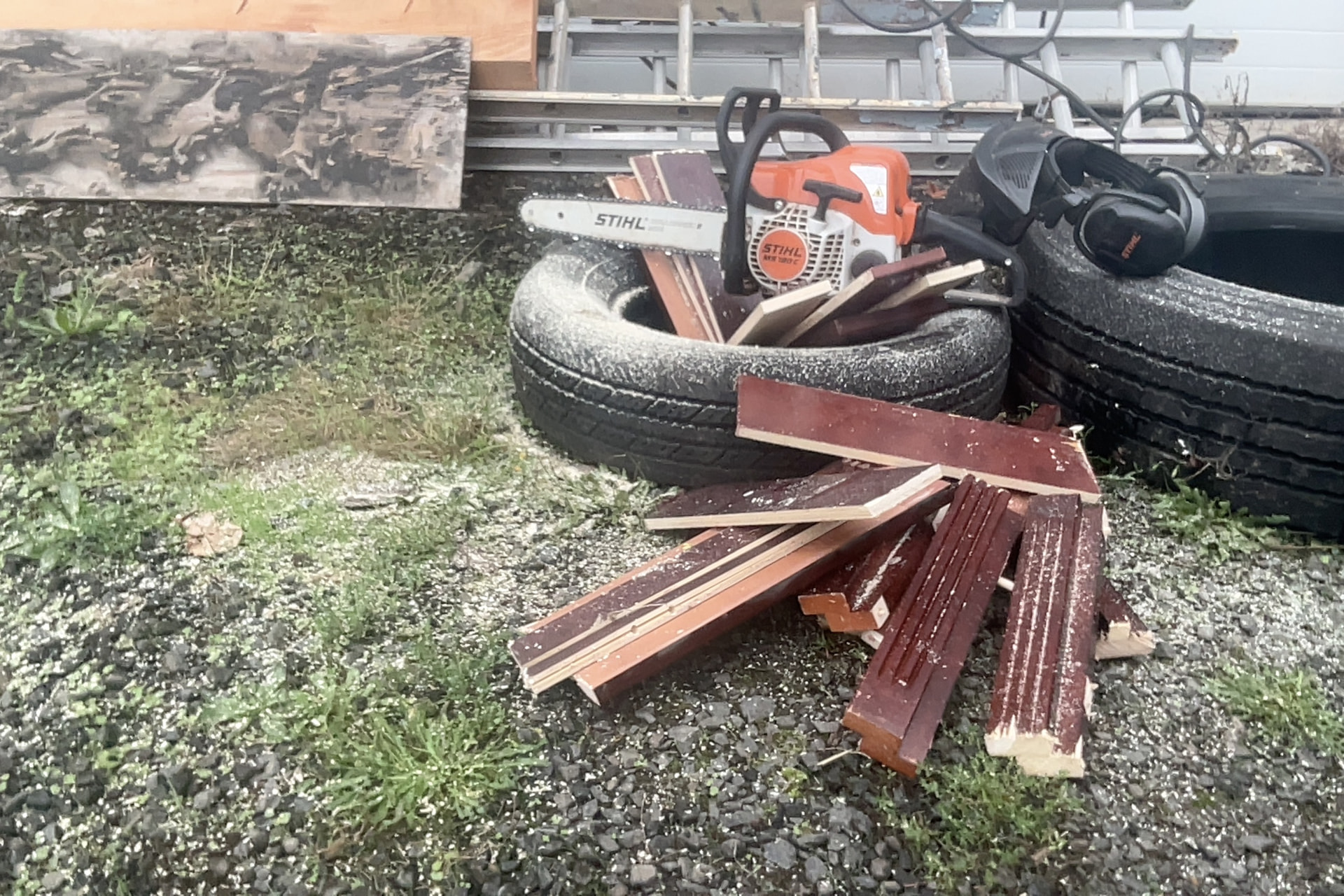
Here is a Project Farm chainsaws video that Summer sweating busy I had not watched. One cheap saw stood out to him. And he did compare these smaller saws to one battery electric saw.
There are WHYs in these comparisions of why I use Stihl gasoline saws. I just can get more done in my now limited daily working time frames. My walking around; standing up; and stoop working as my limitations now. I only got so much daily time now; 1-2 hours a day. The lighter weight; and higher chains speeds Stilhs get it done for me. Same with the acres of grasses and brush wacking I still have to do seasonal now. I get 3X done with the gasoline Stihl forestry weed-eater in comparison to any battery electric guy. Sure fuel and oils are expensive. Pay for it. Get it done. Then move on to the actual fun things in life.
Yes. Stilh’s are noisier - for working gas saws their emphasis is on the power to pull the faster working chain speeds. Yes. Stihl’s pullover starting takes more effort/force. Because of the needed higher designed compressions for more working power in the lightest weight possible. They need the higher octane gasoline! Pay more. To get more.
Want easy to crank? Get one of their Easy-2-Starts (spring assisted) like the MS180C saw I bought for the wife:
I have three 60cc saws. Stihl, Husqvarna and Echo. Really can’t tell much difference between them as far as getting work done. The Stihl is by far the hardest to repair but I wouldn’t throw it out of bed for eating crackers. The Echo is the most finicky.
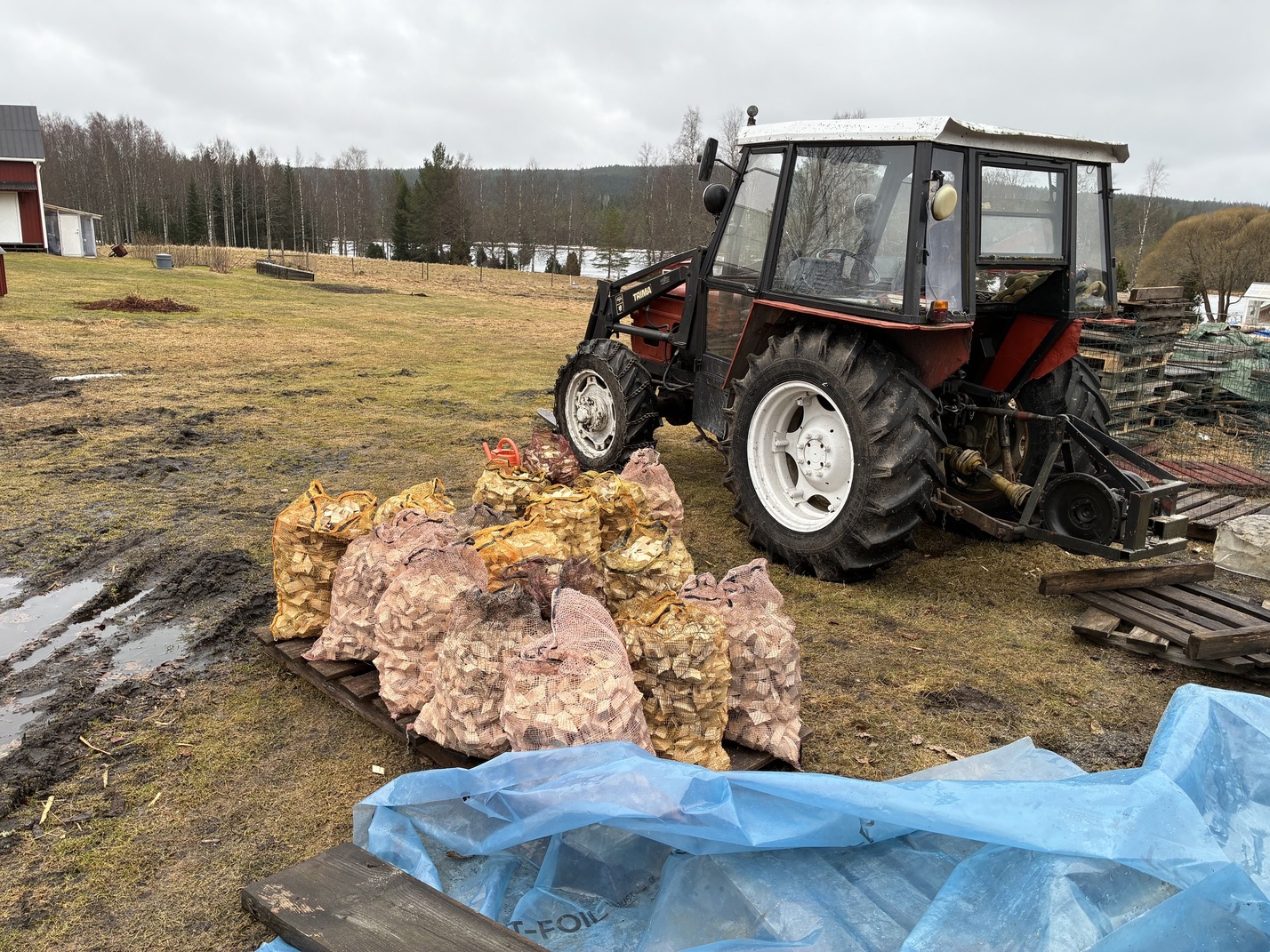
Today I prepared some engine fuel—about a cubic meter—using cherry and oak wood; it is essentially a textbook example of fuel for a WK or Imbert wood gasifier. I hope it dries sufficiently, just in case a friend driving a wood-gas car happens to pass through our area—perhaps from Sweden…



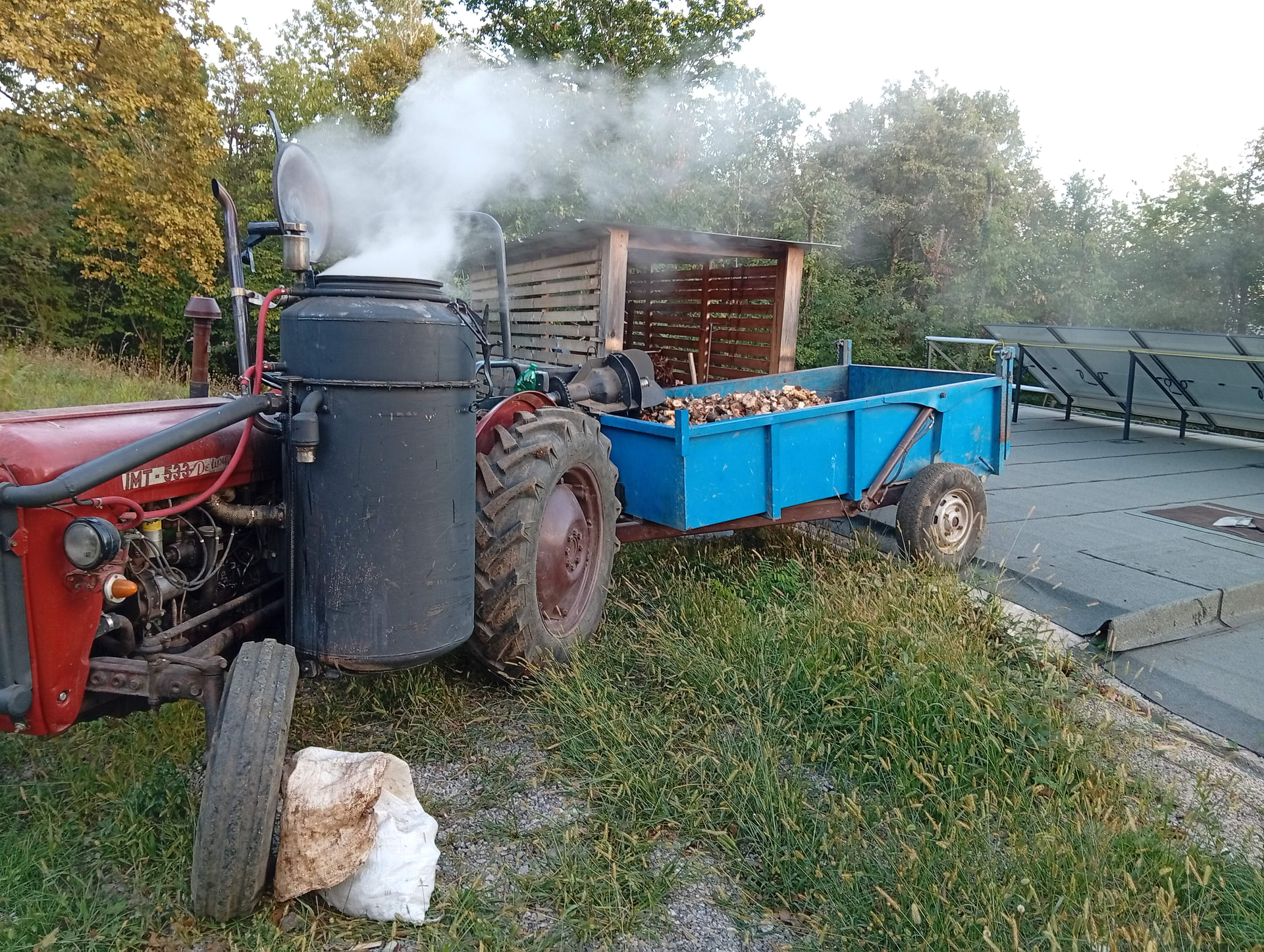
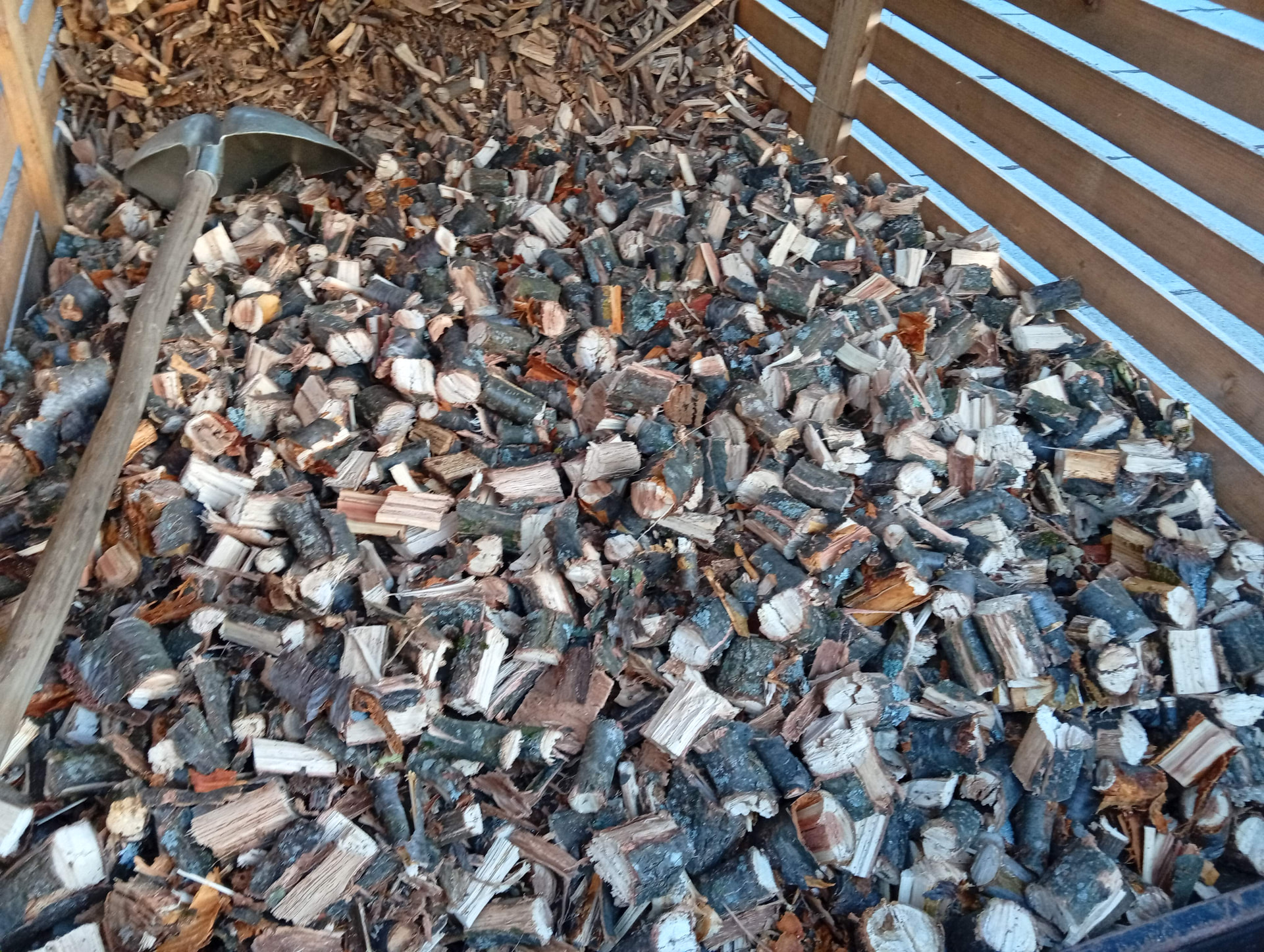
 If only work wasn’t such an obstacle.