Sauerkraut is high in vitamin B6, K and C. The vitamin C concentration made it useful for sailors looking to avoid scurvy in antiquity. Most people would prefer citrus (to each his own), but cabbage grows in lots of places that citrus does not. And sauerkraut stores well for a journey.
8 Likes
Yes. Exactly so. Off-growing seasons and long term expeditions and outposts did have to by trial and err develop carry over sources for trace vitamins. I am reading the book “Astoria” by Peter Stark about the 1811-1813 colony attempt at he mouth of the Columbia River that petered out and failed due to every long winter wet season nutritional lacks sicknesses. Scurvy. Rickets. VAD (vitamin A deficiency).
The British with a far flung sailing Empire - learned to use limes (probably copying the Spanish and Portuguese). Therefore the Brit sailors got nick-named “Lime’ees”.
The Hessians/Germans learned to use sauerkrauts (probably copying the Dutch). Therefore Germans getting tagged as, “Krauts”.
We USA/Canada used; and still use apples as a wintering over supplement. Then the child hated Cod-Liver oil.
“Borscht” ?? for others?
Ha! Native herbs, fungi and wintering over leafy plants, native rose-hips can do the same-same supplementations. The “Astorians” were very poor at learning and adopting native coping strategies. With the arrogance of civilization and seduced with the God-like power of gunpowder.
Steve unruh
11 Likes
Many of you maybe already know this but it was new to me.
6 Likes
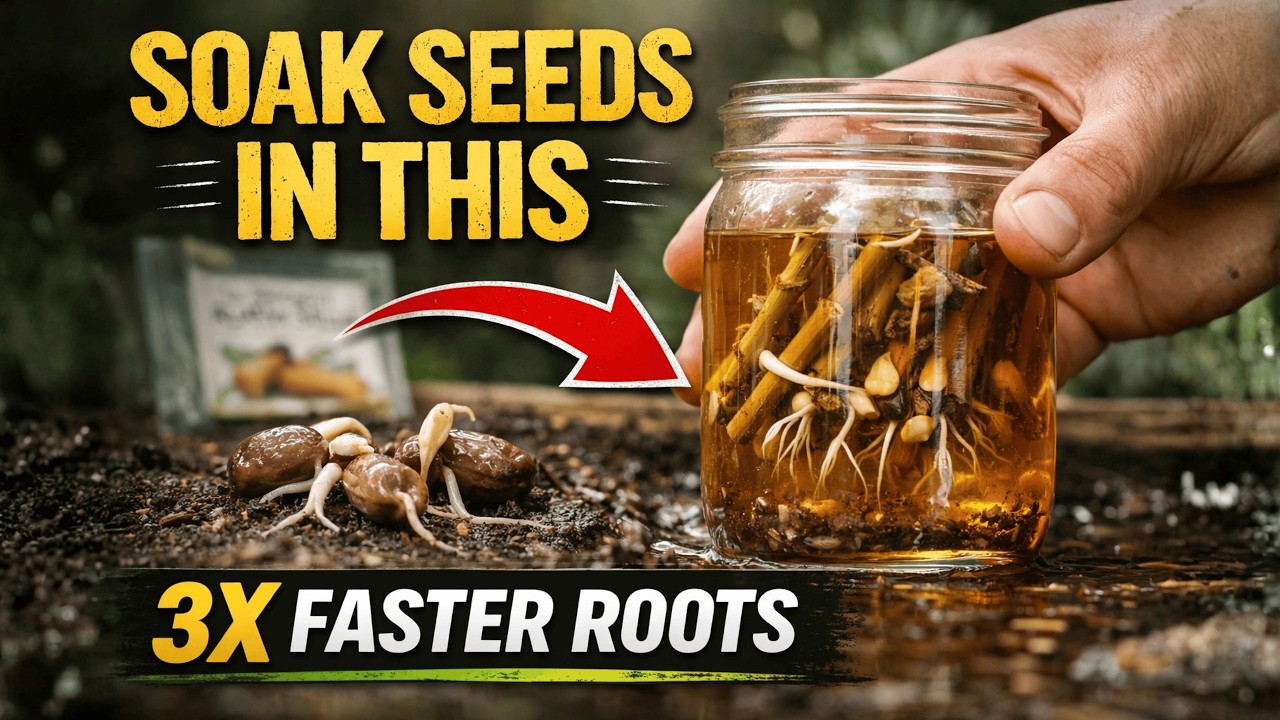
Willow does make for better rooting. I’m not sure about the aspirin and peroxide, but I’m pretty sure the video is AI. Cuttings standing unsupported, a dropper bottle with the dropper descending from the squeeze bulb, tablets dissolving instantly all are hard to believe. The flashing “scratches on the movie film” are an especially creative touch. The information may be accurate, but it would be good to find another source as back-up.
4 Likes
I have heard of all three but not together like that. I have used peroxide to speed up germination. I have used willow as a rooting compound, never with seedlings and I have heard about aspirin, but never tried it.
3 Likes
Almost all the gardening advise channels on youtube have the same two or so voices. Most of them don’t get more than a few thousand views. What’s the point of posting the same things over and over. Not a fan.
7 Likes
Moving day. Relocated my worm bins to their summer home and mixed up a tasty mash of rotted squash, potatoes and peat with a few quarts of old tomato sauce thrown in for good measure. They love all that crap. Still chilly here and their new location isn’t heated so they won’t be real motivated to gourge themselves like they would if their bins were 70F. I haven’t been planning a big garden this year and will mostly be growing in 25 gallon tubs but I have been thinking about what they call chaos gardens, where you just scatter seeds and take what you get. Well I have tons of seed packets from the plandemic years that should be expired or about to so I’m just going to stick them everywhere and see what happens. I’ve mostly been feeding deer and rodents the last few years anyway. I won’t feel so bad about them eating stuff I didn’t put a lot of effort into.
11 Likes
I cleaned out my 5 gallon buckets a couple of weeks ago. during that warm spell.
I am looking at the cardboard method for lazy gardeners. I would need like a dumpster of cardboard though.
5 Likes
They have officially declared that there will be no more frost so it’s time to get these starts planted. I imagine many of you have already got things like tomatoes and cucumbers on the vine. I’ve been bitten to many times to risk an earlier start. Plus nearly all my growing will be done in large containers this year so more susceptible to swings in the weather. I have about one and a half cubic yards of biologically amended compost, about 20 gallons of charged bio-char and 15 gallons of worm castings all hauled down to the garden and ready to go to work. Hopefully this year will far exceed the dismal production I got last year. I believe I did make a lot of deer and racoons happy though, so there is that at least.
Anyway I was looking at Marty’s woodgas generator setup and it reminded me of something I have been wondering about. My set up is running an older generac 6500W generator and it’s fine for tools but I’m interested in trying to set up to grow in my greenhouse year around. I have plenty of grow lights and a couple of power stations that should be large enough to power those lights for 12 hours a day but I don’t know if I should charge that power station off my generator. I have a 2000w inverter generator but I want to keep that portable and it would not seem to be ideal for a wood gas hook up anyway. Wondering if anyone is running a “suitcase” generator on woodgas. With the development of these powerstations I see no reason why I can’t run lights and whatever other things I need, like small pumps and fans. The Power stations charge in about an hour so that means not having to run a gasifier for long spells to keep them charged. Hopefully they don’t need real clean input power.
9 Likes
Watched a lot of world cup reaction you tubes lately. Naturally glad to see so many people from other places discovering what’s great about the US. A lot of raves about the food and the thousand acre supermarkets filled with an incredible variety of foods. At least Americans call them foods. The reality is that the majority of them are just a matrix in which massive amounts of sugar can be stored. That’s why they are so appealing. Sugar. Perhaps more addictive than heroin. If you are not growing it yourself or paying high dollar for unadulterated commercial grains then you are slowing getting poisoned. Of course growing food is a Pain in the ass for most people.
6 Likes
You can imagine a way to grow food organically, without using chemicals during plant growth. But how to harvest a diverse crop in the conditions of one family? Grass for goats, potatoes and other vegetables, sunflowers, wheat and other types for humans? Wheat alone needs 500kg every year, and that’s for bread alone – it’s clearly not a back job!
We lack a universal machine for all these (and several auxiliary) operations. We even had to start building it, because if this is not done, then both children and grandchildren will be left without healthy food… (https://www.drive2.ru/r/uaz/452/664499474046920478/)
Things are moving slowly, but much faster than corporations are moving in this direction. 
6 Likes
Wheat and wheat products are the most difficult foods to get in the states Marat. I haven’t purchased any types of fertilizers in three years now, relying solely on JADAM and Korean Natural Farming techniques and have been happy with the results for growing any vegetable crops and grains like corn. I also make a lot of a more engneered compost and produce a lot of worm castings My main problem is not having wildlife eat most of my efforts since my garden area borders a large swamp. No way for me to grow wheat even if I wanted to and to get an honest wheat is extremely expensive here. Still anyway to avoid the chemical contamination prevalent in nearly all our foods is well worth the effort for future generations as you say.
9 Likes
Mine too but I no-till broadcast Winter/Cereal rye in part of the garden, and another area where nothing has grown (barely weeds) for 50 years. It grew and the wildlife left it alone enough that it tillered and I have a thin stand to harvest.
wheat is probably going to be a similar result as even if they eat a stalk, it has several tillers. now that is it taller, they seem to go around it. I don’t know if that is the height or if it smells and they don’t like it.
It really isn’t the growing that is the issue, it is the harvesting. I don’t even have the equipment, and for a thin stand it isn’t worth asking someone with small enough equipment to harvest it, to come do it.
8 Likes
hey Tom, we tried Einkorn, didn’t have much luck, tried several different recipes. Really hard crust, and odd taste, and smell. if anyone has a good recipe let me know.
8 Likes
According to this lady, it is a bit different to work with.
I’ve been working with einkorn flour for about six months now and I’ve already learned so much (but still have so much left to learn!).
Einkorn flour is so much different than modern bread or all purpose flour, but holy cow is it so rewarding when you start understanding how it works.
Here are just a few things I’ve learned so far about one of the oldest cultivated wheats:
- Einkorn absorbs less water than bread flour - when I started baking with einkorn flour I assumed (since it’s an ancient grain!) it would absorb more water, turns out I was wrong! The dough turns into a sticky, unmanageable mess if you use too much hydration.
—>I use 15% less hydration in my Einkorn recipe than my Classic Sourdough Recipe - Gluten develops differently - einkorn does contain gluten, but the gluten network is much weaker
—> when using einkorn, I don’t do any stretch and folds during bulk fermentation (or I just do one)
—> also don’t expect your dough to rise much during bulk fermentation - Fermentation can move quickly - it’s much easier to over ferment with einkorn
Mistakes I made when I first started using einkorn:
•adding too much water
•too many stretch and folds
•over proofing
•expecting it to rise like my regular loaves
Hope these tips help! I absolutely love working with einkorn flour!
5 Likes
There are home grain mills that allow you to store and use whole grains. They are some hundreds of dollars so not cheap but do last and help make use of those unusual grains that aren’t pre milled/bagged/stocked on store shelves.
Whole grains have a long shelf life and freshly milled and consumed grain delivers a ton of nutrition. Milled flour otherwise loses a lot of nutrition in the first 24 hours, so much that milled flour for sale is artificially fortified for those losses.
10 Likes
We have a dry grains container for the vitamix blender that works well though not optimal for making flour. For a long time we used a cheap Corona hand cranked mill. The flour from that was even courser but better than a sharp stick in the eye. Always wanted to buy and expensive grinder with stones instead of burrs but it never got to the top of the list of priorities. You can definitely tell the difference in bread made with freshly ground flour though.
12 Likes