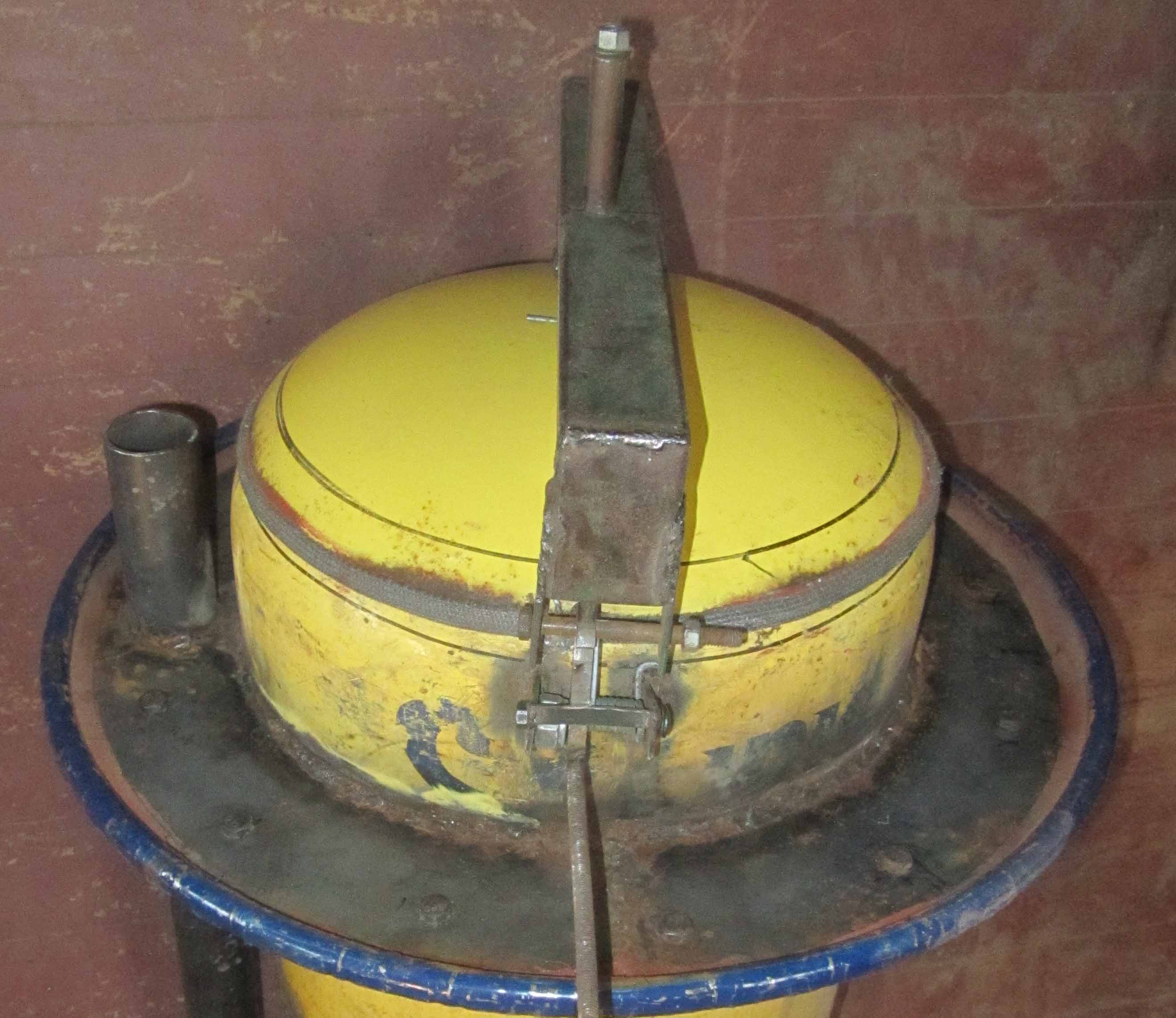
Hi folks, I’m new to the platform, I built a cross draft charcoal gasifier out of a standard sized bbq bottle, it has an air intake with a tap, and a 35 millimetre gas outlet on the opposite side.
Both are welded 15 ml below the weld line on the gas bottle. The gasifier has no grate.
the gasifier is complete with a radiator made out 30ml copper pipe and has a filter made out of PVC pipe( in my testing I have not had anything in the filter.
I am using charcoal I made myself, and have had the fan pulling the air through from the end of the filter. (I have tried the fan on both low and higher suction) and the smoke has had no flammability whatsoever. I have also tried adjusting the tap on the air intake.
I decided to try it with the fan turned off, and blew air through the air intake with a leaf blower on very low power, for some reason this has resulted in a beautiful big flame which has stayed burning for a good at least quarter of an hour. The minute i have tried turning the fan back on to draw the air THROUGH the system, the flame has instantly gone out and I have had no luck reigniting it.
I cannot wrap my head around why this would be the case and I don’t know what to do to make it work.
I thought maybe switching the sizes of the air inlet and gas outlet around may help because I have no idea what else to try. ( So that the air intake is the size of the outlet and vice versa)
I had an idea to have a fairly large pipe with a screw cap on the end, coming out the bottom of the gas bottle, so I can undo the cap and use a corkscrew or something to remove the charcoal ash since I don’t have a grate.
Sorry for such a long post, but I just wanted to give a clear picture on everything, I would really appreciate some insight from someone who knows about it.
Have you tested for air leaks? It’s usually easier to flare a gasifier when pushing with a blower, and when you pull with a blower it lets all the air leak in through any bad joints.
Also are you running any specific size of nozzle or is the air intake the same size as the outlet? You’d need to jet it down to get some velocity.
Also also, check the size of your charcoal. It will perform better if it’s in between 1/8" and 3/4" in size. You can classify it using two screens of that size, one to keep the biggest pieces out and the other to separate the dust.
Like Cody said, check for air leaks. I think that is the main issue. If there is a leak, you just lose some good gas through them if you are pushing air through. If you use suction, those leaks let in air that dilutes the gas to the point it won’t burn.
Pictures tell a thousand words, I cant visualize it based on your explanation. We need to visually see it inside and out then we can help you.
Simple thing to try is dump the fuel out and add 15% moisture to it and it should flare. If not then is blower pulling hard enough? Is it overdriving the unit? You cant do either it must be within the flow range of the unit. Have you leak tested it?
Here’s another issue to examine. I don’t know what type of fan you are using and it may not be the case here, but some centrifugal fans can draw in air from the motor side either as cooling air for their motor, holes in the casing or around the motor shaft. That air could also dilute the gas to the point where it won’t burn.
lucas, if you fill the gasifier, the hearth area must be relative compact for not to have too much voids there…poke with a thin 6 mm rod in, so not much coal gets damaged, and the coal level shrinks and make a compact hearth area…this is also to do if you get a flame with interruptions, there is often a small hollow burn around the nozzle caused by long ventilation or too strong ventilation…
Too much coal dust in your fuel can be an issue was well, especially if you are crushing it to get it to a use-able size. Half inch to a quarter inch works best for me. Larger doesn’t work as well and smaller chokes things off. Best to screen it to get the fines separated. I actually hose mine off and let it dry but I have so much stockpiled that I can do that. As Matt said. A little moisture in the fuel is a good thing, but not too much.
Just for testing you could seal those joints with either aluminum duct tape, or for the gasifier lid if you have a bicycle inner tube it should provide enough rubber surface to seal up. The filter you could use standard duct tape, but aluminum tape would hold up to the sunlight better.
I put a stove gasket around it and it still leaked like a sieve and I got terrible gas. I would temporarily seal those areas with aluminum tape, especially the lid. If the gasifier works with the temporary seal, you know that’s your problem and you can work on designing a better seal.
Thanks for the advice Cody, I’ll give it a go, what did you think of my idea to add a three inch thread with a screw cap to the bottom of the gasifier to release the spent charcoal so i can put in fresh charcoal ? What are your thoughts?
My machine yeild nothing after the grate. The only reason they have a clean out is so you can clear out pieces that fall through it. Other than that they are for the most part maintenance free. Ammo box filter only needs the first filter layers peeled off as you use it and you clean those as you remove them. The ammo can go a year with out a full cleaning.