I’d also like to add that using the DC output prevents the inverter from trying to “sync” with the generator voltage, which causes momentary power interruptions.
If your intention is to switch it on and off regularly, that isn’t good for the electronics.
In Belgium, we are seeing increasing voltage issues caused by photovoltaic panels. Sometimes, the inverter disconnects from the grid for this reason.
For instance, if the kitchen range hood is running at that moment, it will make an unusual noise and briefly surge; you can imagine the impact that has on the lifespan of certain appliances.
Sounds like a fun day out Jan
The offer is there for you as long as those things are still in my barn.
I do not have a clue (yet) what to use them for other than for a rebak which is why I have them, they are too big to use as they were intended for at home.
To combine genset, PV and battery is allways tricky task, because of the weather. Even with good forecast, clouds may choose the way over your PV or just the opposite. So you never know if it’s good to fill the battery stack or not.
IMHO, I consider storage as a place where to save excess energy produced over the real consumption by the gen/PV running in best efficiency mode. Storing energy proactively make sense only for the purpose to consume it during period when prime sources are offline, e.g. during the night or vacation.
Yes, for me it was both interesting and educational, I really had no idea how JO’s saw worked, but it seemed smart, no need to lift or move the log.
I’ll try again and go up to you Johan, you also have a lot of things to look at, I’ll see if I can get the red s10 to run a little better and stop puffing in the intake, hope it works.
Hey guys, on the AC → to DC → back to AC with storage batteries this has partially been played out many ways in our personal electronics devices. That wall-wart converter is as much an isolation safety device as a charging port.
On the modern vehicle hybrid systems, especially Toyota’s it can be live active viewed easily. Understandable as long as you do have the AC <=> DC and then DC <=> AC fixed in your minds. Unlike a true only electric plug-in they never fully charge the battery bank. Having to leave battery bank head-room for unpredictable braking (regenerating) events. Toyota in now years into all world services with their now 30 years step by step evolved 4th Generation systems.
Copy, piggy-back on others hundreds of thousands of hours evolved experiences handling very variability inputs with never set, predictable loading. Their learned Why’s. And Why-nots.
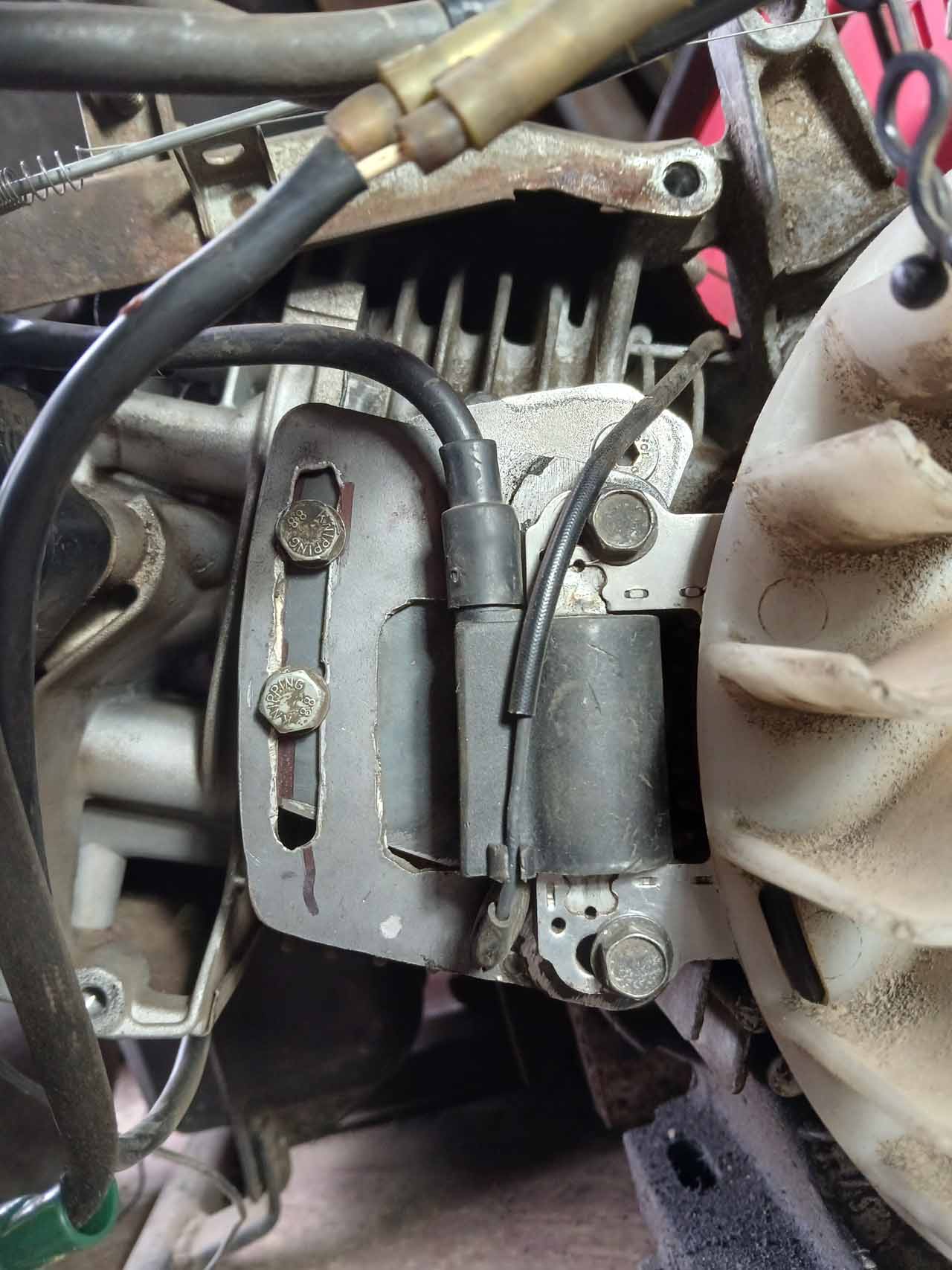
My generator was running like s**t so I got it into the shop and started diagnosing it. It backfired through the carb and was running extremely lean. It needed almost a full choke to run.
It had a leaky intake valve so I lapped it and put it all back together. I took the opportunity to replace the carburetor with a dual fuel carb and added my DIY timing changer.
It stopped backfiring but still ran lean. It took several days to track down the issue. I sprayed a bunch of carb cleaner around the carb but there was no effect on engine rpm. I finally disassembled the intake side of the head and carefully examined everything. A week before I started fixing it, I had removed the carb and had torn the gasket between the carb and engine isolator block. I had replaced it with a new one. Unfortunately it was a Chinese gasket and was cut wrong. It was allowing a lot of air in after the carb. Don’t know why the spraying missed it. After fixing that everything was good.
I’m planning on running the generator on propane from now on. The nice thing about propane is that it keeps forever and is cheaper than gasoline. It is ideal for an engine that may sit for months between runs. Luckily I have several 45kg tanks that aren’t being used for anything. So I advanced the timing about 8 degrees.
The engine picked up about 400 rpm over the 3000 it had at stock timing. I don’t know how this translates into power gain or fuel efficiency as I don’t have a baseline. That may be a experiment for the future. Next I have to get the gasifier up and running and test the engine on it.
19 Likes
Marat_Lysenko
(Marat (East of Ukraine, 70 km from Donetsk))
310
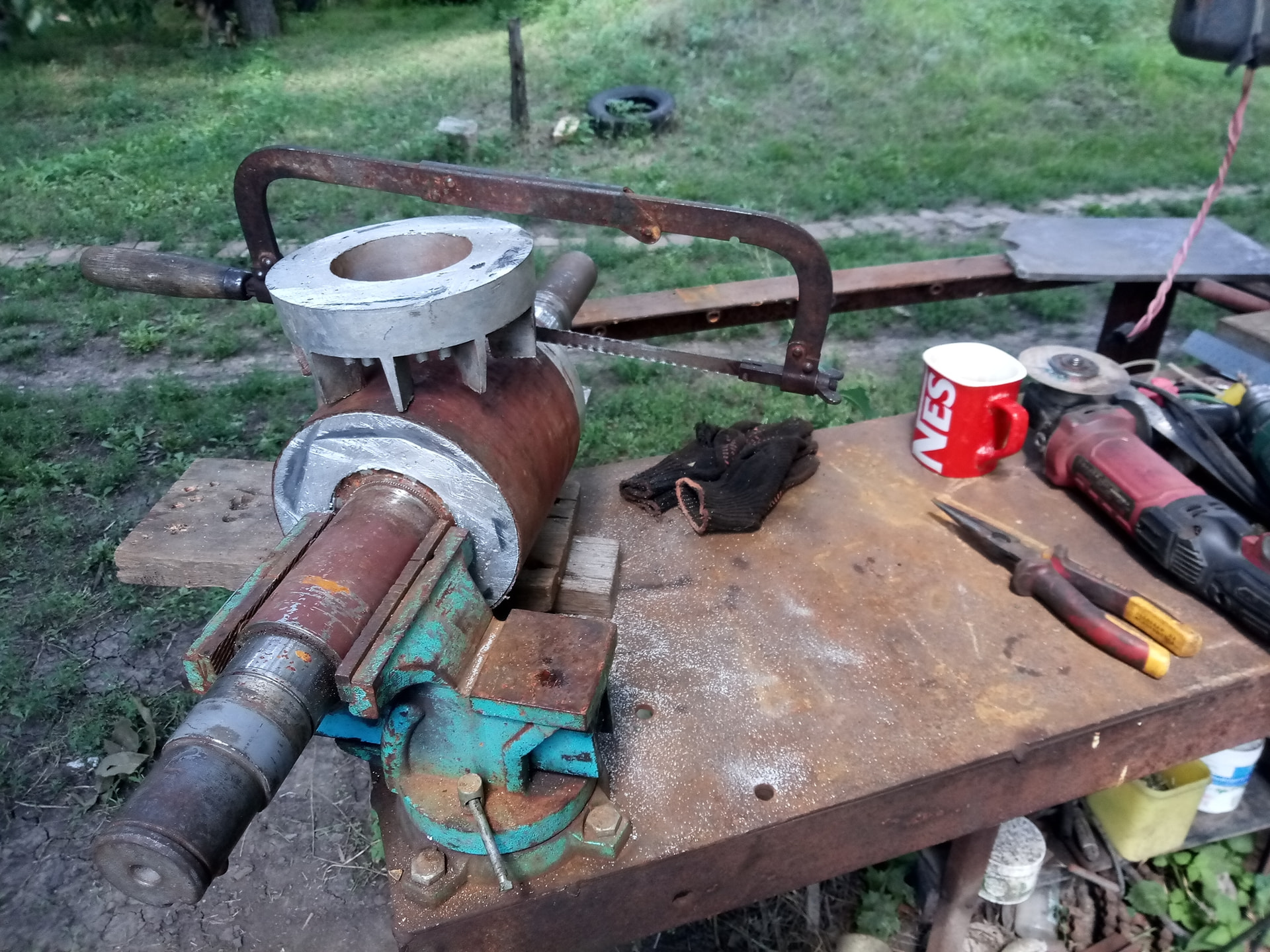
The process of creating your own Mini heat electric station. The rotor of a 18.5 kW three-phase asynchronous motor.
The warring parties have switched to attacks on civilian infrastructure. The power often goes out. When it comes back on, it’s usually around 140 V instead of the usual 220 V. They’re also targeting fuel trucks, which has led to a shortage of all types of fuel at gas stations. When gasoline does become available, it often costs around $2 per liter (before that, a liter of gasoline cost $0.7). Even at this price, there are huge queues for fuel…
Therefore, work on the wood-fired power plant has intensified.
The next step is to etch the remains of the squirrel cage in caustic soda without damaging the iron stator package.
This is done in order to convert a three-phase asynchronous motor into a synchronous generator with a capacity of up to 20 kW for the Mini heat electric station.
As practice shows, electricity from the grid is a very temporary and unstable thing. Moreover, it is of very poor quality, even when it is available on the grid – it is impossible to use welding, the refrigerator complains, the water pump is hard, and the computer goes on strike against such a mess.
Marat your situation is very special, but it won’t be long now before prices start ticking upwards all over the world. Reserves are soon reaching all time low and consumption is constantly higher than production. For anyone who has not yet completed their gasifier - now is the time.
caustic soda will dissolve the insulation and paper on the coil wires, making them bare, which will short them out. So you will just have scrap metal, unless you are going to rewind it. Otherwise, you could generate with the 3-phase ac motor (an alternator) and convert to dc, rather then make a dc generator.
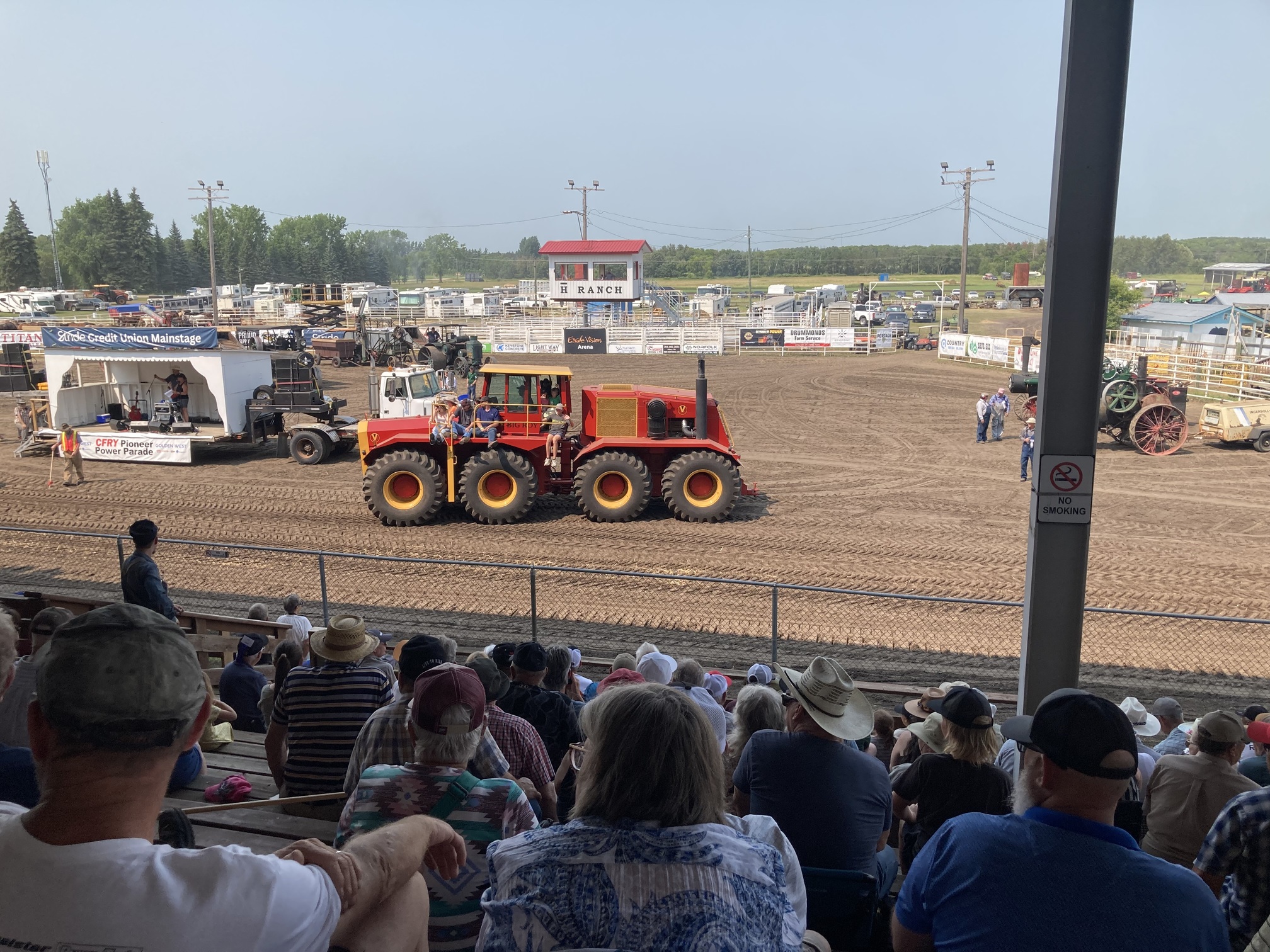
Last weekend in the local town was one of the largest vintage demonstration shows in western Canada. The Manitoba Threshermans Reunion. Focusing mostly on agricultural it showed everything from horse drawn power to steam engines to modern tractors.
Anyway this event featured one of the largest tractors in the world. Big Roy, Versatile 8-WD Model 1080 tractor built right here in Winnipeg Manitoba.
Am I right that etching is to get rid of the rotor without having to saw or grind through the iron part? It looks like the aluminum ends (at least one) have been sawed off, but iron would be a lot more work. Are you planning to add windings to the existing iron core, replacing the aluminum?
7 Likes
Marat_Lysenko
(Marat (East of Ukraine, 70 km from Donetsk))
316
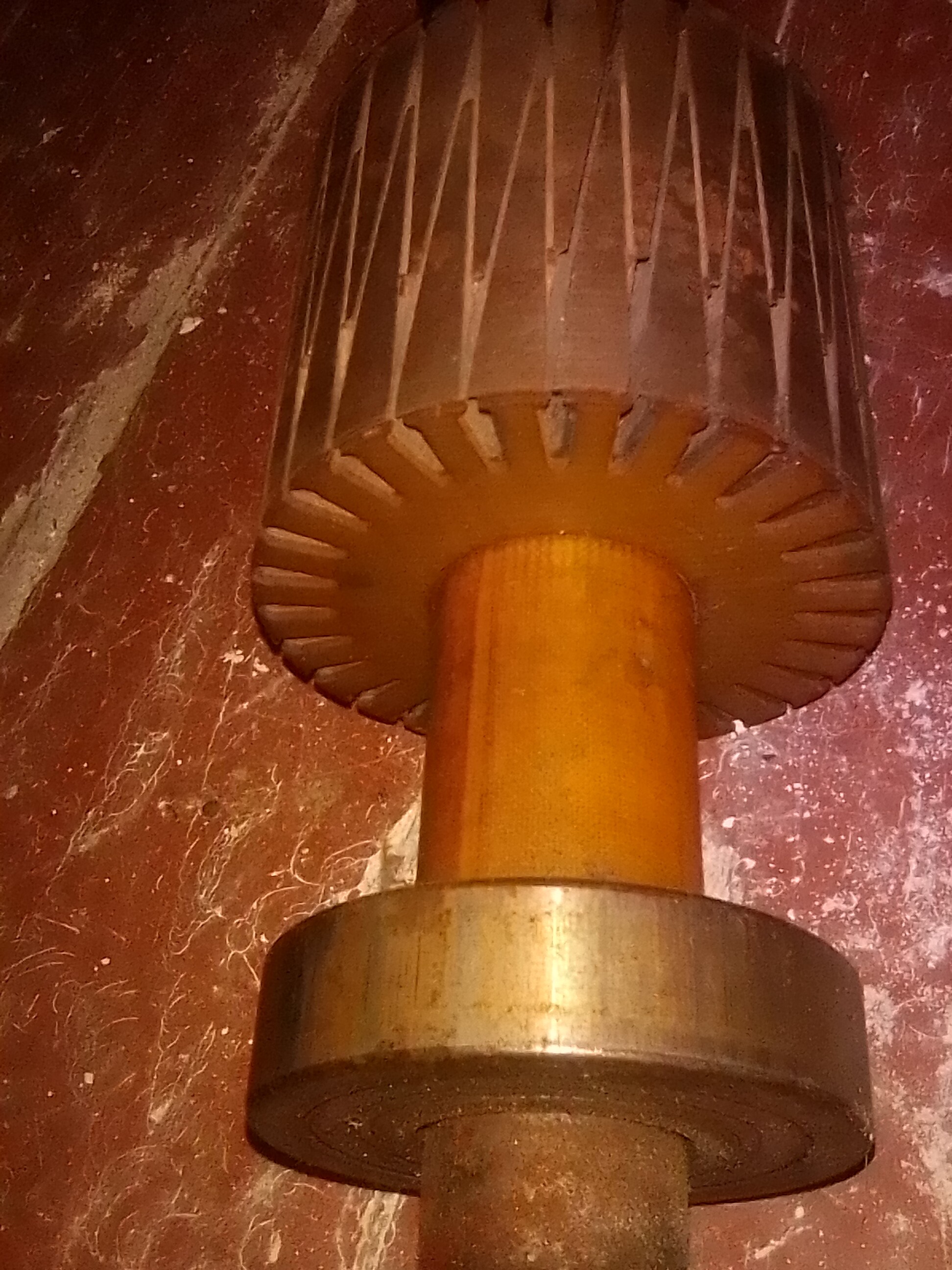
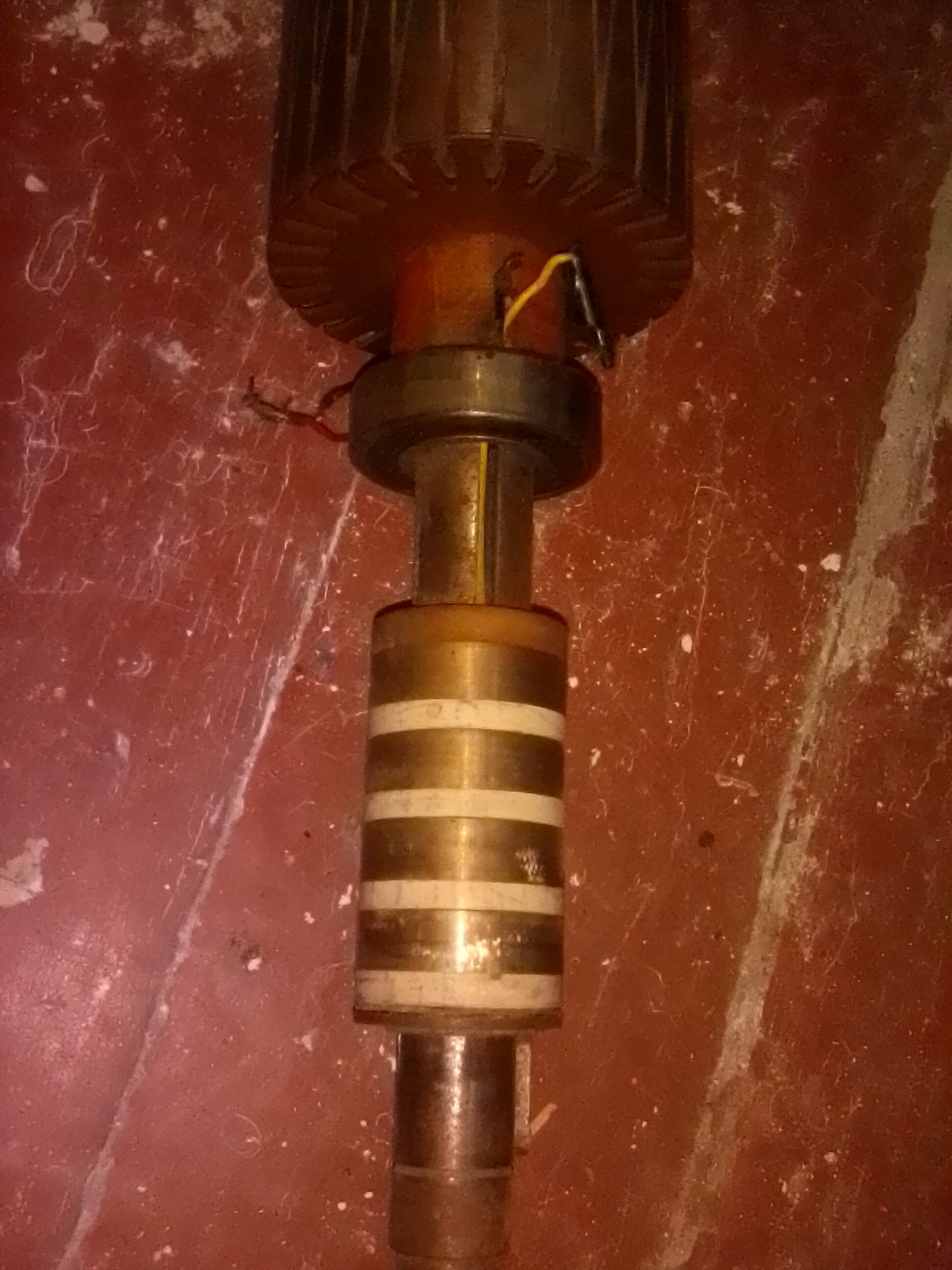
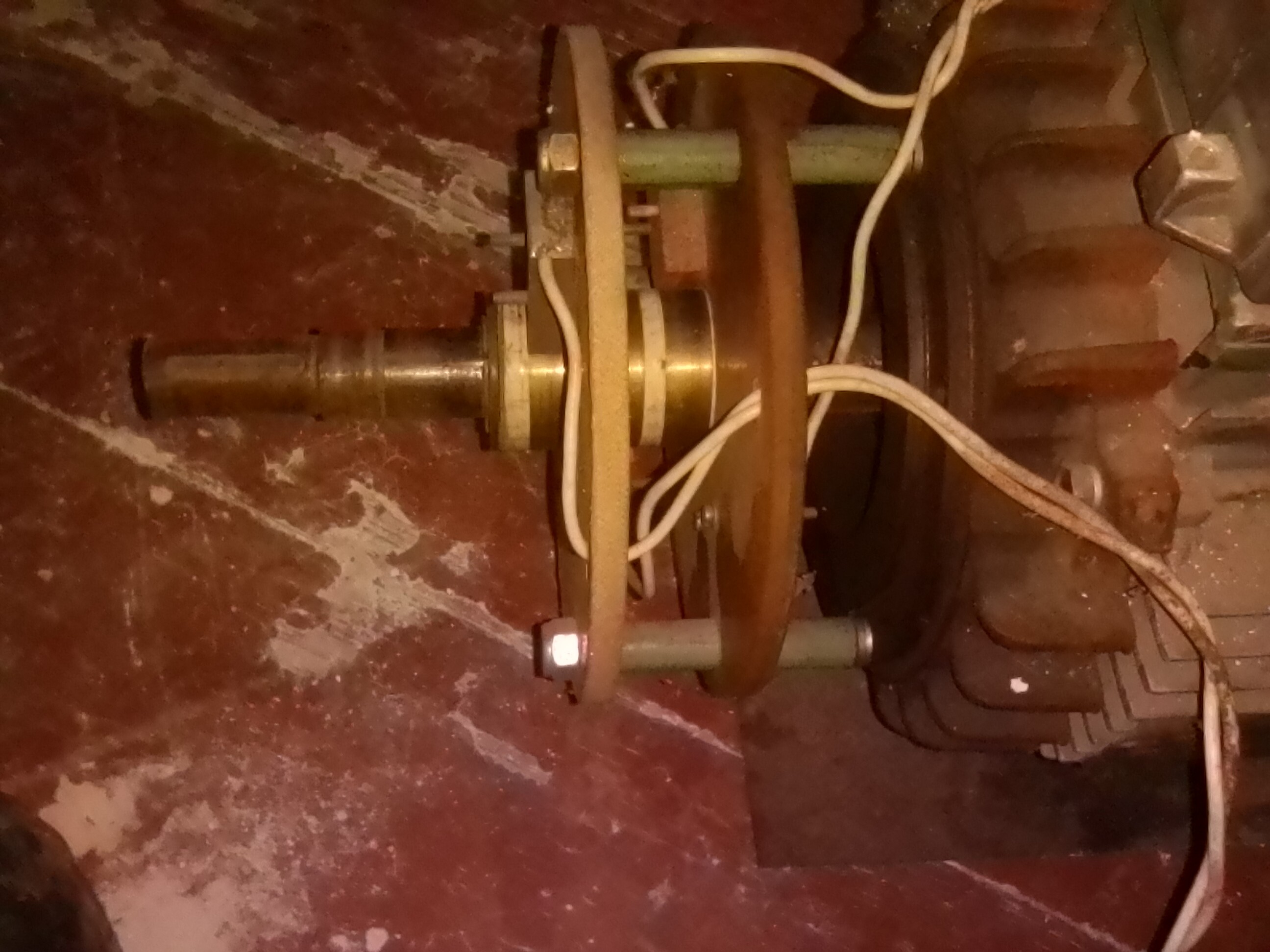
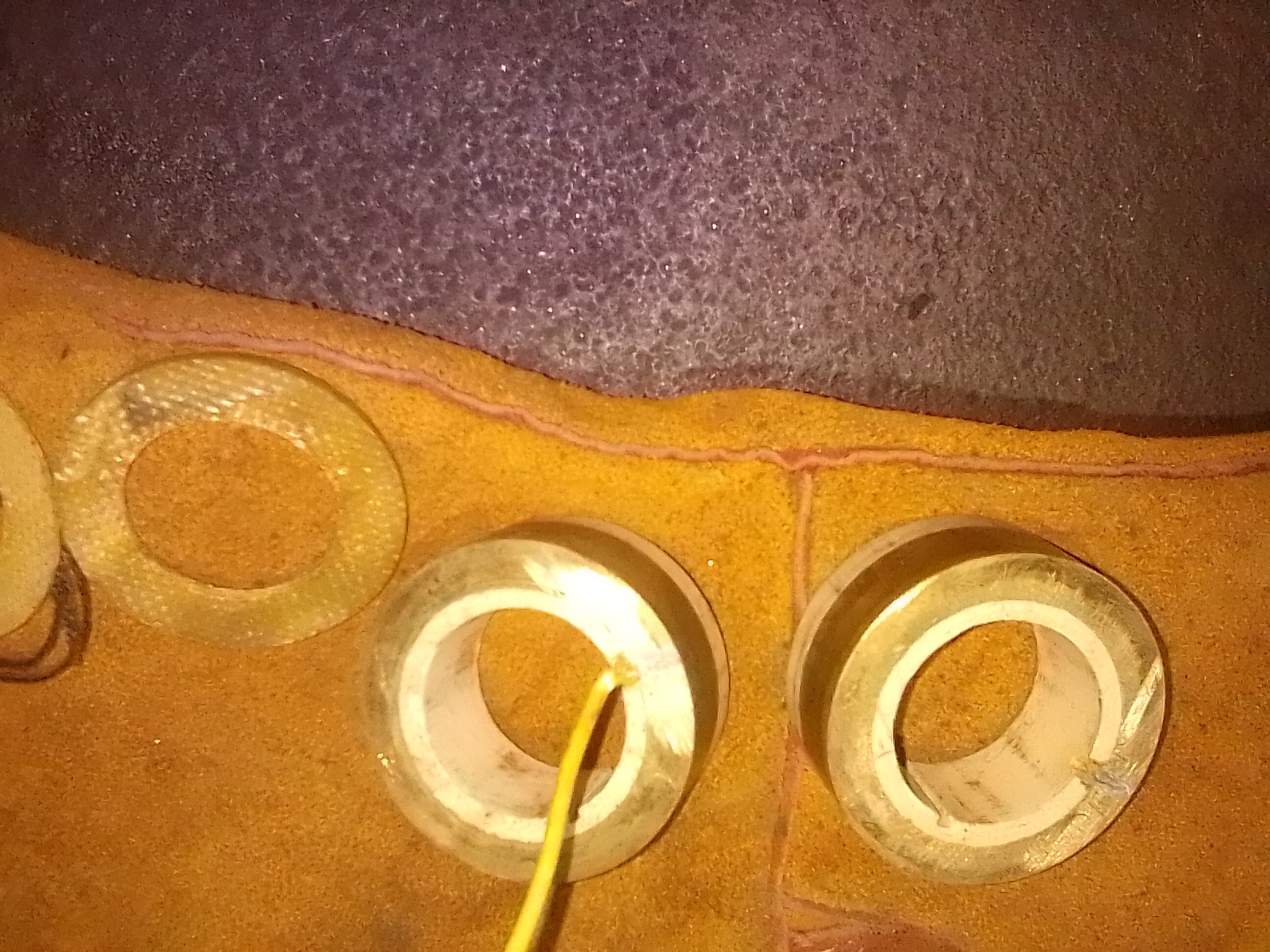
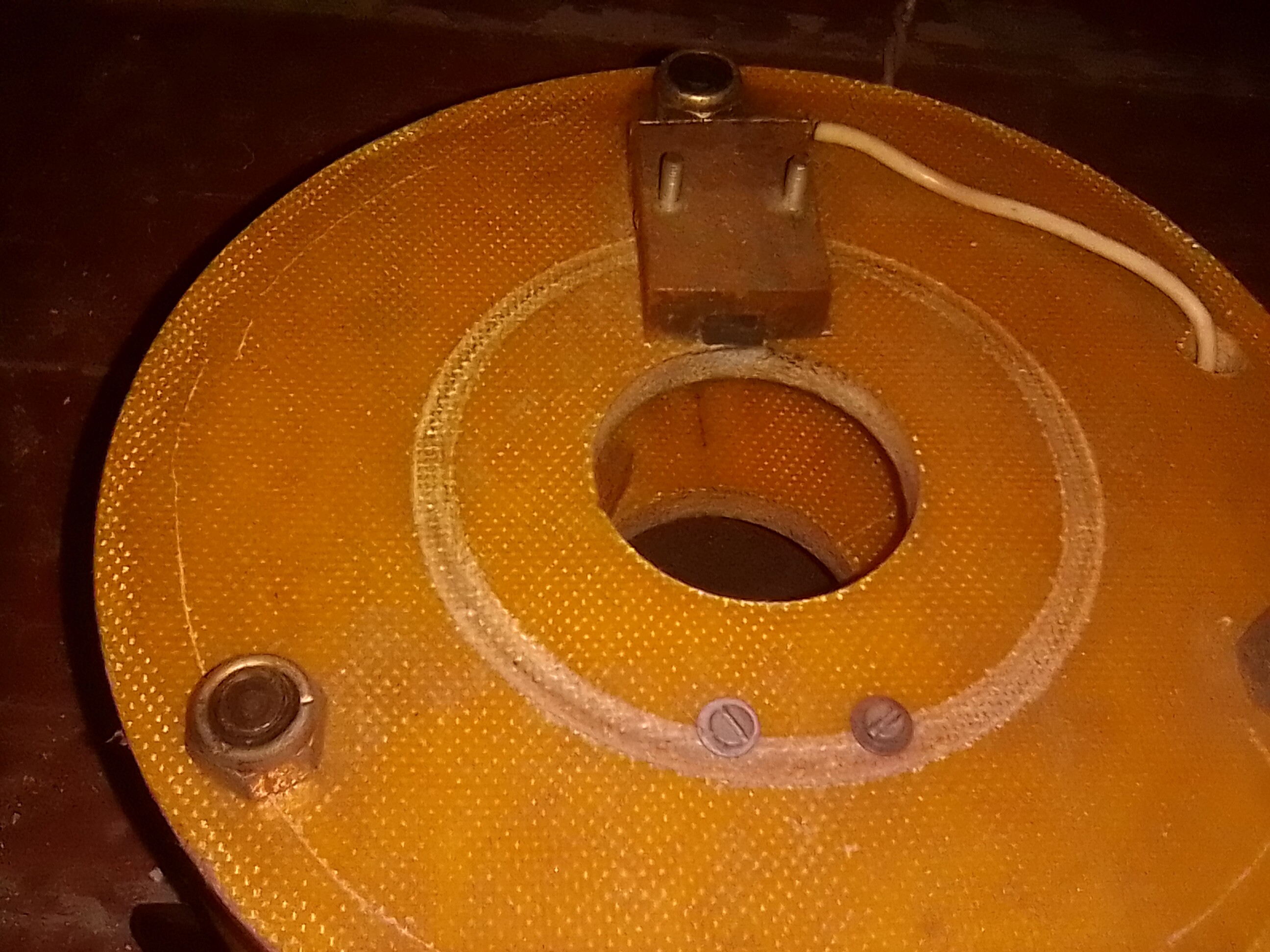
20 years ago, I already converted an asynchronous motor into a synchronous generator. More precisely, it was one of my attempts to find a fuel-free way to generate energy from the Earth’s magnetic field, which is why the rotor had two independent windings, while the stator remained in its original three-phase configuration.
Therefore, the photo shows four contact rings for the brushes.
You can also see that the router and I didn’t get the bevels on the rotor right the first time, so there are more cuts on the rotor.
Marat_Lysenko
(Marat (East of Ukraine, 70 km from Donetsk))
317
This time, I would like to try to do it without a brush assembly. Take another smaller asynchronous motor. Remove the copper stator winding from it. Cut out and etch the aluminum squirrel cage from the rotor. Wind a three-phase copper winding on the rotor and a single-phase winding on the stator. Attach the rotor to the shaft of this large generator, pass the wires through the grooves under the bearing, and connect them to the large excitation winding through a three-phase diode bridge.
It is also necessary to make the lubrication system of the generator bearings liquid oil.
All this, and other solutions, are needed to increase the service interval of the generator, internal combustion engine and wood gasifier to 2-5 years. Well, it depends.
DMC-20-RM electrical insulation premix is a dough-like mass (often based on an unsaturated polyester resin reinforced with fiberglass) that is processed by pressing or injection molding and then “baked” in a mold to produce an electrical insulation component.
Marat_Lysenko
(Marat (East of Ukraine, 70 km from Donetsk))
318
It seems to me that there are too many monster-like agricultural machines in the world. At the same time, there is a sharp shortage of small, versatile agricultural machines. These machines should be small enough to be used by a single family to cultivate 10-20 hectares of land. They should also be versatile enough to perform all operations, from preparing the soil for planting to harvesting and threshing crops. This includes crops such as grains, oilseeds, vegetables, and even fruits!
Therefore, a small steam threshing machine looks, oddly enough, more suitable for a single family’s needs than a modern tractor with a V12.
For a small farm, you are better off with a tractor and pull behind implements. Asia and India make a lot of them. And you might be able to make some of what you want.
While I am enamored by the Steam engines and equipment, it really wasn’t very good or reliable. We have a steam show every year where they demonstrate all of it. Steam engines break down a lot, and for as big as they were, they weren’t all that powerful.
It was surprising to me that the steam traction engines were so huge. Usually there would be two guys standing up, running them. But the engines are little; the boilers and fireboxes are BIG.

 It was allowing a lot of air in after the carb. Don’t know why the spraying missed it. After fixing that everything was good.