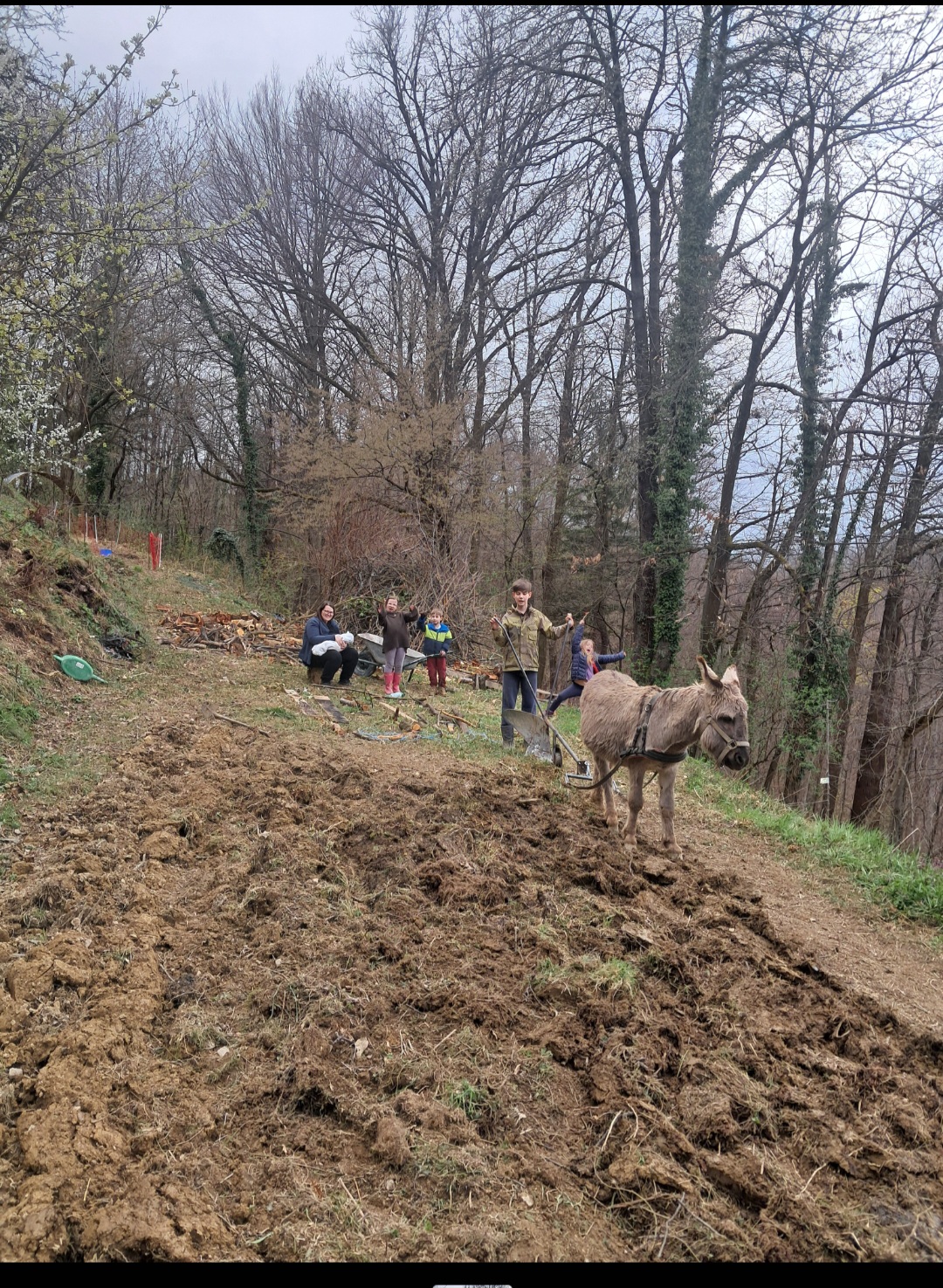
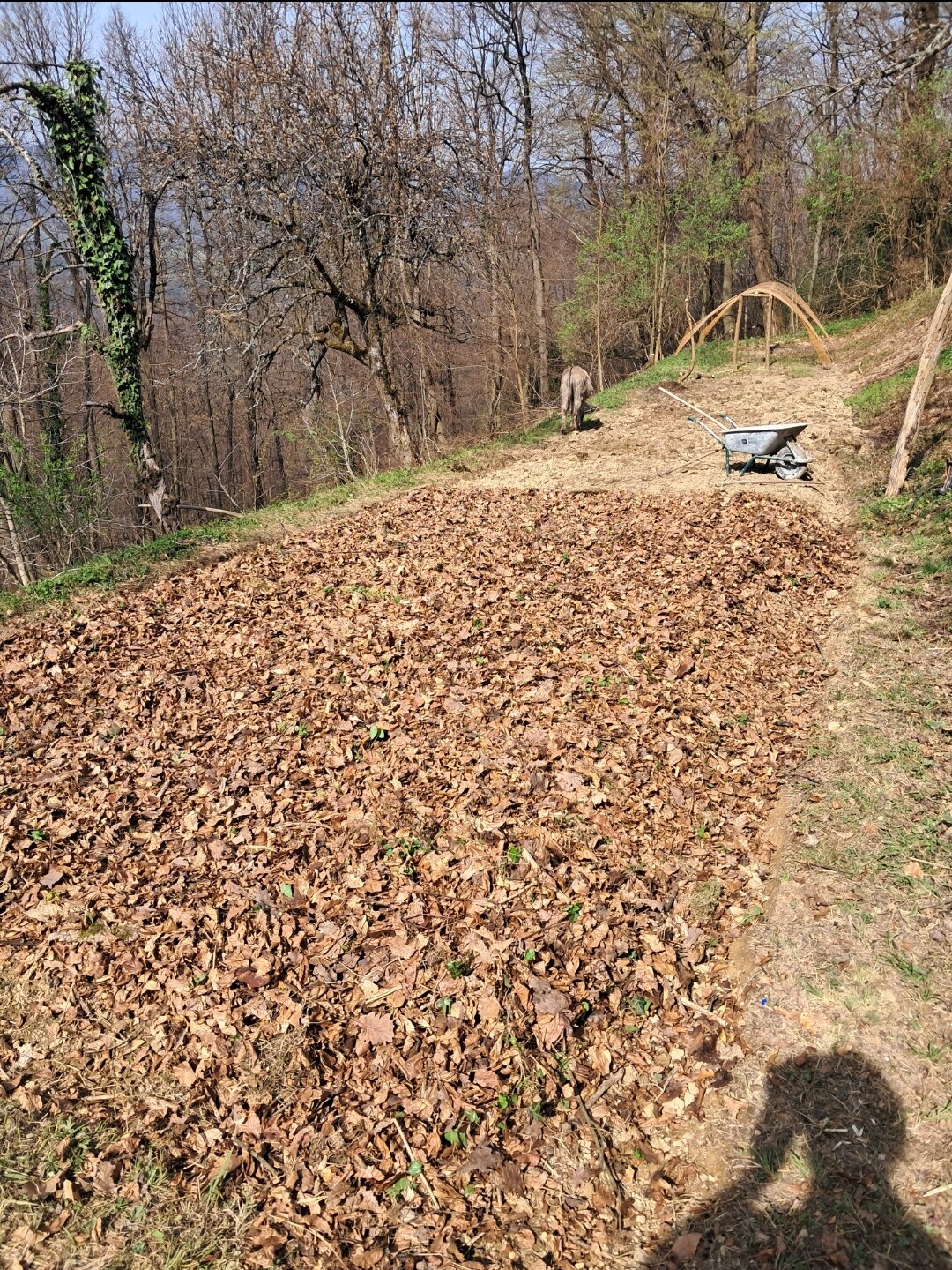
Happy holidays from Lovro and I.
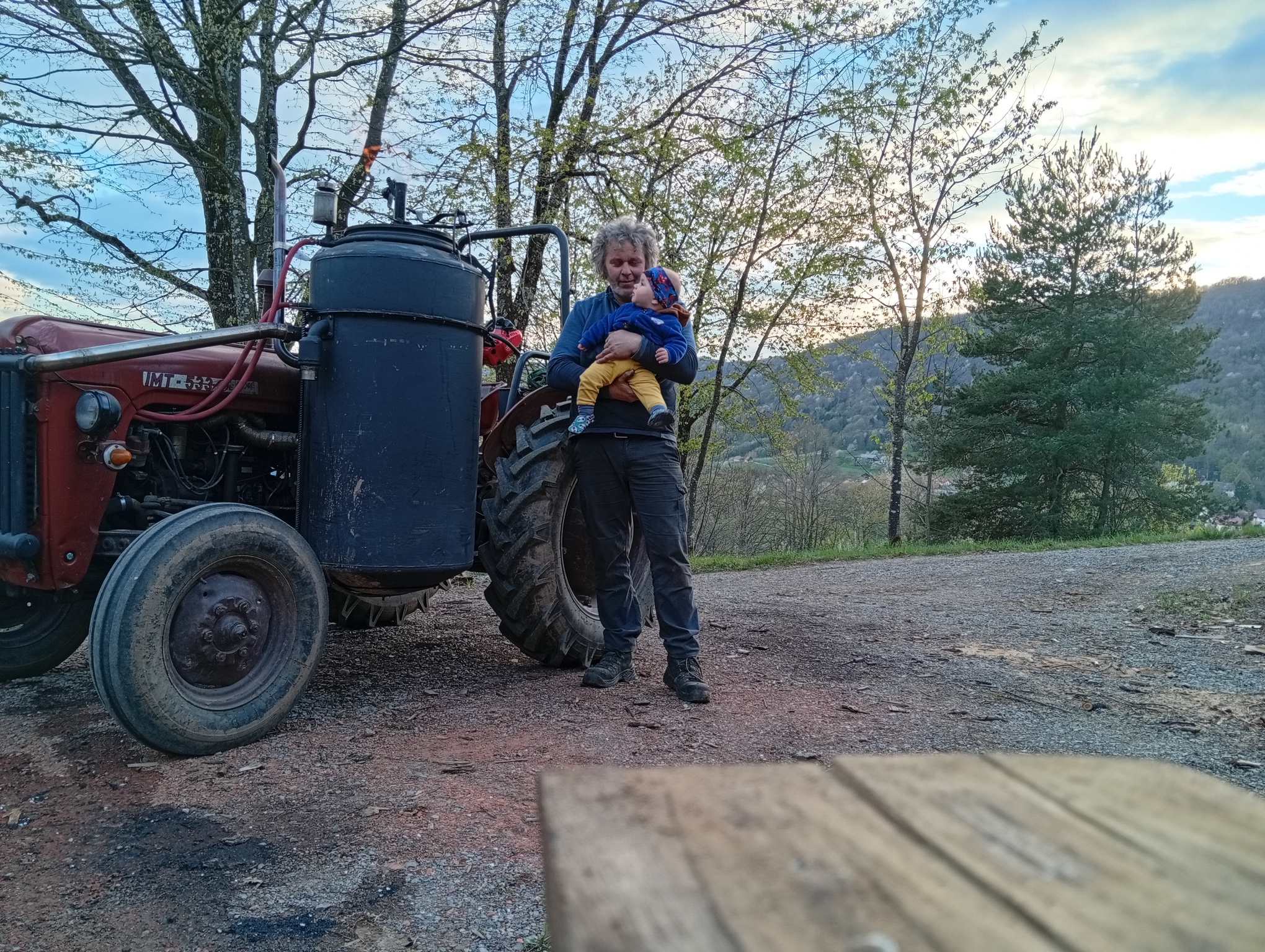

tone, you make it right…i see lovrenc is observing the flame of the gasifier…he will soon work with you…lovrence is grown much !!!
happiness, sunshine, flowers , woodgas and a happy grandpa…
the best wishes for easter…
jesus christ is resurrected, he is really resurrected, they say in greece in orthodox church at easter morning…
He is risen, indeed.
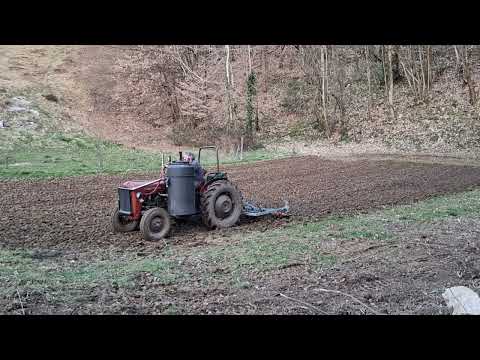
Tone, can I ask you a few questions about your video?
Best regards Marat
-The depth of cultivation is 20 cm
-the size of this plot is a little less than 20 m wide, 25-30 m long
Thank you, Tone!
I asked why: in the Donbas, in the spring, there is still some moisture in the soil: either spring rains or dew in the morning. But closer to June and beyond, it is usually very dry.
And my younger son planted winter wheat in the fall of the year before last, according to the recommendations of Ivan Ovsinsky (book 1908 “The New System of Agriculture”), at a depth of 5 cm. And the plot was cultivated to the same depth before that. I.e. it turns out that the seeds fell on the capillary untouched by the cultivator layer, and on top were covered with loose earth from the drought. And a wonderful wheat grew! Twice as high as the farmer on the next plot (he cultivates deeply up to 20-25 cm, and sows seeds at 5-10 cm), and twice as many spikelets were on our wheat – a clear sign of good moisture, although the year was very dry.
But maybe you get enough rainfall, and it’s not as important as it is in our arid steppe.
However, Ovsinsky writes that the layer that has not been cultivated also drains excess water much better than deeply plowed soil.
Marat, l too came at the same conclusion. If you look at nature, “noone” plows and fertilizes yet everything sprouts and grows. We can not mimic the sistem of nature 100% but we can get close.
This is virgin soil, gras sod and lots of weeds like blackberry and plumb tree roots. So l too plowed it at a depth of about 7cm, wich is l can manage with our trusty gray companion. After planting "early potatoes in this case) leaves are added and in the future years l will not plow this at all any more.
Fealds that require direct sowing like grain l just fertilize with manure and sow over untilled ground then pass over with a rototiller at depth of 5cm, just to work in the seed. Its all a work in progress still but lm slowly figuring out what works best and is least input.
All l know is deep plowing is the worst. Only had my feald deep plowed once, the first year. Ruined it for 3 years, still the worst feald l got and l turned it in a hayfeald. The plow turned out the dead soil underneath, clay and rocks.
Interesting, I’ve been thinking about trying to put over-cut grass over potatoes and vegetables this year, I don’t have any fertilizer to speak of.
Do you think it would work?
Won’t there be a lot of weeds in the grain if I sow on top of the grass and rotortill it down 5cm?
Do you mean like lawn grass clippings as a mulch or just mowed down to the ground?
Hello,
Do you work with the moon? It has an effect on crops.
Some people find it hard to believe, but I’m convinced of it.
I’ve gardened with my father since I was a child, and we’ve sometimes worked without following the moon’s phases, and we often see the difference.
Of course, other factors are important, such as the humidity you mentioned, and also the wind.
I’ve also read that it’s not necessary to dig deeper than 15 cm because there’s a mix of certain organisms.
Even if it’s necessary in some cases, it’s best to avoid it whenever possible; not only is it more work, but it can be harmful.
I mean grass that the lawnmower makes, I have a collector for the lawnmower and can cut a little of the field that is next to the lawn.
We have tried a little with grass clippings before, but I think it just clumps together and molds, I must be doing something wrong.
It does the same for me. I was told the best way was to compost it to let it heat up to kill the seeds. then apply it. You are supposed to flip it. The spot we did it actually wouldn’t grow grass for a few years I think because it got acidic. The spot eventually recovered.
I thought that was too much work, so I had the same issue as you, the best I did was apply pelletized lime on it, then water it in or rain it in. Ideally you flip it with a pitchfork to scatter it more. I just punched holes in it with a pitchfork when it crusted over to break it up. Well actually running the lawnmower over the piles works the best but doing that while plants are growing is pretty hard without breaking the plants.
I also had issues getting seeds to grow in the spring I think because the piles insulated the soil and possibly the pH was off. Once the plants are growing, if you break it up, so moisture can get in it works better.
Now I will say I was using a garden dump cart so the piles started at like 18" from like 5+ acres of land. It is actually too thick. weeds didnt grow through it, but there wasn’t enough oxygen to get worms in it. It works better if it is like 4-6". It still crusts but it is a lot less material, and you can probably add lime then hit it with a rototiller to break it up which even an inch deep into the soil also would get some micro organisms involved earlier which breaks it down faster. Probably adding like shredded cardboard or paper for ‘browns’ like the browns and green ratio for compost would help. Which you might be able to shred with the mower…
I will say after several years the soil is much improved over what it was. The key is the organic matter so whatever you have. You almost have to think about it like it is a giant worm bin.
Wait for the weeds to sprout, cut them with a cultivator, and plant your crops. Unfortunately, our farmers don’t do this because they’re afraid that the soil will be dry by the time they plant. Instead, they use herbicides to control the weeds… And to destroy their profits… And to harm the health of their families and the families of their customers… I haven’t met a single family that eats bread made from their own grain. So, we’re all sick together.
Jan, l love grass clippings but l rarely get any. I mulch with it and when it dryes on top or the soil in summer heat like a dense matt. But l can see why you have mold problems, here heat bakes it in a couple of hours. Up north probably not so much.
If soil has enaugh organic matter and moisture it seem no real “fertiliser” is nessesery. This goes hand in hand thugh, as organic matter holds moisture. But in order to load the soil with enaugh organic matter it takes A LOT of raw material. On the first year l set a plot with hay as mulch, the soil is so hungry it will consume an amazing amount. A lair of 20cm compacted hay or grass will be eaten up untill winter. But the next years you need less and less and soon the sistem stabilizes as the soil is saturated with organic matter.
It is wery benefitial to feed as much organic matter to soil as possible ofcorse but it can be overwhelming the first year so l found its good to lay leaves on the ground first when preparing virgin ground. They decompose slowly. On leaves l add grass, straw, hay etc to weigh leaves down and to give the soil food. Leaves are wery poor in nitrogen.
Woodchips are exelent also! But also nitrogen poor so l wuld put them on only when the soil beneeth is alredy rich. Once the soil gets “alive” it oroduces its own nitrogen.
Potatoes, l tryed many methods and the best seems to be to plant them in the clasical manner, hill once then mulch heavy with leaves or grass.
Weeds will not grow if the plot is mulched enaugh. Seeds in the mulch are never a problem. Seeds without propper conditions do not grow and probably soil life under the mulch eats them too.
Jan, I agree with Kristijan. Crass clippings work good, but it’s a lot of work adding to the layer as the potatoes grow. It’s my experience the layer easily cracks, let sunligt down and turn potatoes green unless you constantly add to the layer around each growing bunch of foliage. And once you added mulch you can’t hill them again without destroying the layer.
Also, I think too much nutrients and “live” material will risk causing scab. Potatoes like poor sandy soil.
Ok, do you have any suggestions on what I should fertilize with instead, I’ve got some fresh horse manure but it’s not enough.
I too have to agree with Kristijan about the potatoes but I don’t grow them in the ground anymore. Too much work for an old man. I grow them in tubs now. A good yield for me in the ground is 8 to 10 pounds per pound of seed in the ground and Maybe 6 in the tubs but I don’t eat that much anyway. Way easier to just dump a tub over and pull out the taters. A couple of years ago I started growing primarily in the Korean, JADAM, method Jan. There is a little more to it than this but most of what I use as fertilizer is just leafs of different plants soaked in large containers like garbage cans. They work well because they have the lids. I use grass clippings, nettle leaves, leaf mold from under trees with the white fungus attached. Different plants = different nutrients. I will probably never go back to other ways I have tried. Of course I only grow vegetables and every plant gets a cup or so of worm castings in the planting hole. I don’t know how you would grow grains with this method.
Ok, you think soaking different plants works well as fertilizer?
Can I use this in greenhouses?
The JADAM system soaks plants in water with various decomposing bugs (fungus, bacteria, etc). It doesn’t create nutrients out of thin air… it’s just taking the plant matter and decomposing it back into its parts, like compost but done differently. What is useful is that those nutrients are bio-available and dissolved into the water for easy application to the garden or what not.
Different plants will have different nutrients, though all plants will have N/P/K and micronutrients that the JADAM “fermentation” type system releases. The ratio will be a little different though. Plants take what they need, though extra nitrogen (N) encourages leafy growth vs extra phosphorous and potassium (P/K ) which encourages fruit/flower production. Some plants like onions need extra sulfur or whatever but the amounts are small.
My plan would be to use low/no input feedstock to JADAM and use the resulting “charged” water on plants I actually want. “Feedstock” plants on my list are comfrey, azolla, moringa, switchgrass. Each one can fix nitrogen from the air and concentrate other needed nutrients from the soil/water. So “N” comes from the air. P, K and other minerals would come from cheap, effectively permanent rock flour / lime / sulfur amendments. These plants can absorb P and K in particular from the rock flour and concentrate it in their tissues. JADAM then releases those nutrients in a form that is easy to get in the right places.
Like Tom said, you would struggle to scale this kind of system up for use with bulk grains. For a garden it can be practical. The nutrients are dilute but highly bio available. It’s enough if used right. I’d use bio char to keep the soil charged with life and hold on to nutrients as well as possible so that they stay put versus wash away.
Tom, one thing I haven’t been able to test is if JADAM water can work in an “olla” pot. It would virtually eliminate nutrient run off and leaching. And… keep funky JADAM smells in pots- haha. Look up ollas; it’s an ancient technology. If the JADAM nutrients can diffuse through terracotta, it should work. The JADAM “bugs” should/would not get through the pores in the pot so some direct application still makes sense.
JADAM is using anaerobic bacteria (mainly bacillus spp) to break down any organic matter and liquify it. You could probably strain it then put the ‘solids’ back into the jadam bucket for next time.
I would probably use cheesecloth that will breakdown in the container because I suspect it is messy and smelly.
As far as using it in hydroponics, you need to boil it to sterilize it, filter it more so it doesnt clog the system, and then test it. You have litlle idea of what nutrients it contains so you can supplement it.