Just seemed too complicated and too many ways for it to fail for me to get my pea brain wrapped around it. However, as Bob said, we will never know unless someone sticks a toe into the water.
9 Likes
as tone has done…first complete diesel conversion to woodgas…
thierry, my nozzle on my crawler, simple bigger metal piece, seems work well in the updraft system, less heat exposed of all systems and of course no frost problem
9 Likes
I hope you have a full recovery.
2 Likes
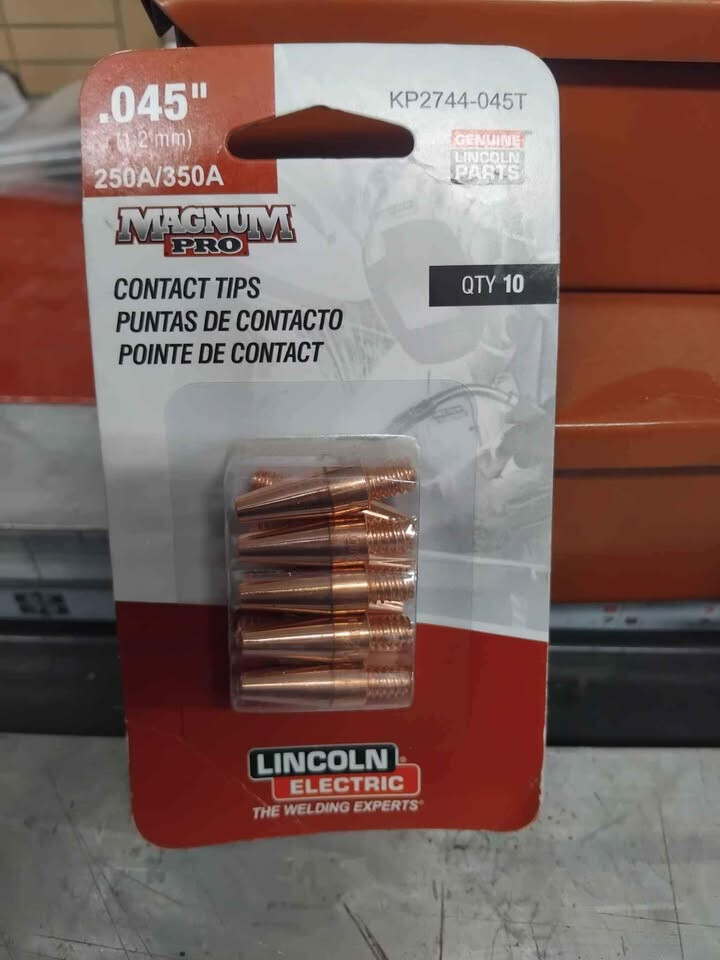
Wouldn’t those be about 10 times too small?
5 Likes
I’ve seen Steve Unruh put the idea to use sandblastic ceramic nozzles but not welding tips.
I don’t want to think of how many ports I’d need to cut and weld to make it work.
5 Likes
Yes, it’s true that they are small, but we could drill them a little bigger (lots of small 4 or 5 mm nozzles like Tone).
6 Likes
Thierry, copper has good thermal conductivity, but a low melting point, I don’t know if it could withstand these temperature conditions, I think the best material is iron with a lot of carbon.
8 Likes
I have seen tig cups used (charcoal gasifier). i dont think the contact tips would last very long.
8 Likes
A while ago people on here came up with silicon carbide, (SiC) as being the best material for nozzles. Now I can’t seem to find so many silicon carbide burner and sandblasting nozzles anymore.
Rindert
7 Likes
These guys are in India, and have burner and blasting nozzles as well as some other parts. The only real issue is they are an industrial supplier of kiln parts and have minimum quantities. However, they do ship samples of at least certain parts.
And I am wondering if some of this wouldn’t make a great grate.
https://www.firllerrefractories.com/sisic-products.html
5 Likes
Aussie Dave got me using the Hexaloy tubes for nozzles a ways back, Rindert. I looked at the E bay supplier I got them from and they were no longer in business, at least last year. i never burned one up. I’m using a fluted pipe nozzle now with a water jacket similar to one MattR made a couple years ago. I haven’t really put enough hours on it to know how it will stand up to high use. I’m putting that gasifier on the saw mill and when I get caught up on things here I’ll be using it a lot, so we’ll see.
11 Likes
Hexoloy is a trade/brand name for sintered silicon carbide. Maybe everyone knows that already but Rindert and Tom are speaking about the same or similar material.
Saint-Gobain owns the trademark and has a large share of the materials production. Here is their datasheet:
Hexoloy® SA Silicon Carbide Technical Data, Saint-Gobain High Performance Ceramics & Refractories
It doesn’t mention it in the S-G datasheet but other sources highlight Silicon Carbide’s resistance to (chemical) reducing environments. A chemist would say that the CO (carbon monoxide) in a gasifier is strong reducing environment. Silicon Carbide is a good fit for that and the high temperatures.
7 Likes
After creating an orifice in my down draft gasifier, I went to work on the nozzle. The old water cooled nozzle kept itself from melting, but there was no easy way to inject water for better gas. The new nozzle now takes heat from the lower end and uses it to create steam that is injected into the intake air. It makes a huge difference. It is very similar to Trigaux’s design from a few years back. Luckily, I live in an environment where hard freezes are infrequent.
The fire is less intense and the gasifier runs cooler. The metal drum is cooler as is the outlet temperature. The radiator is also running cooler. All the while the output gas is good and the generator is running great.
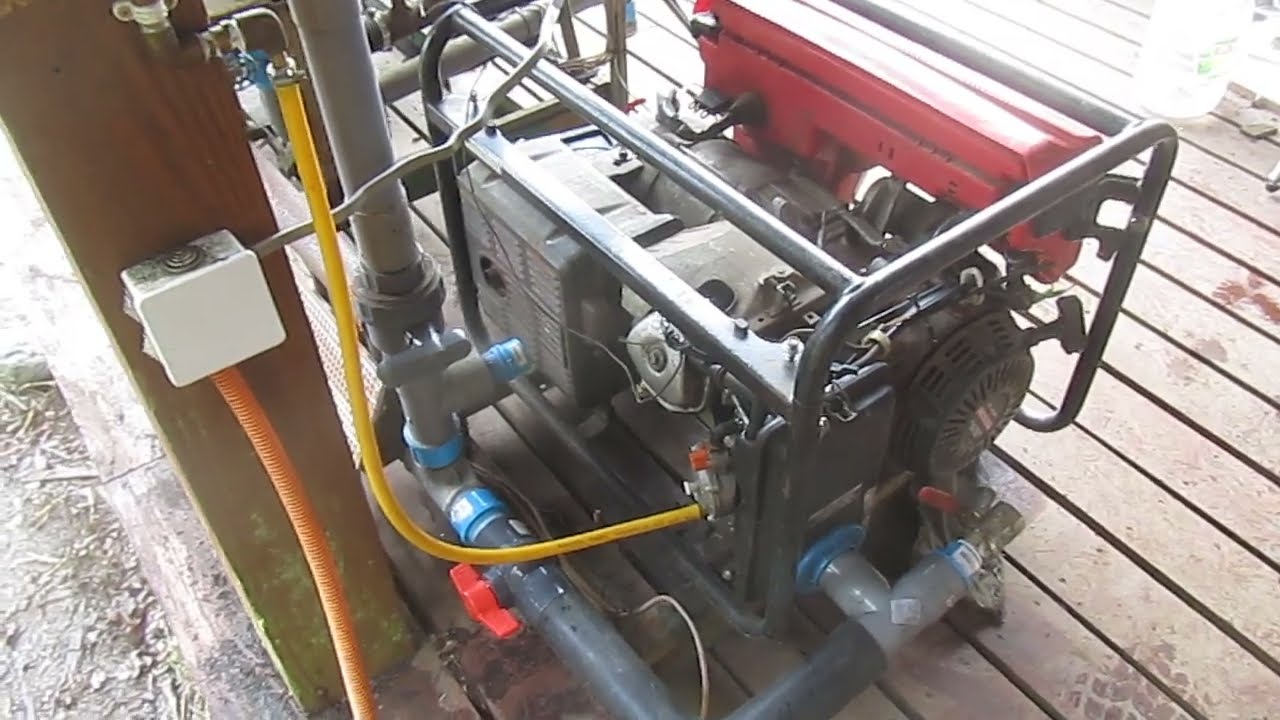
The brightness of the internal burn is reduced (it’s more dramatic in person):

After the run the steam that was going into the airstream is exiting the air intake:
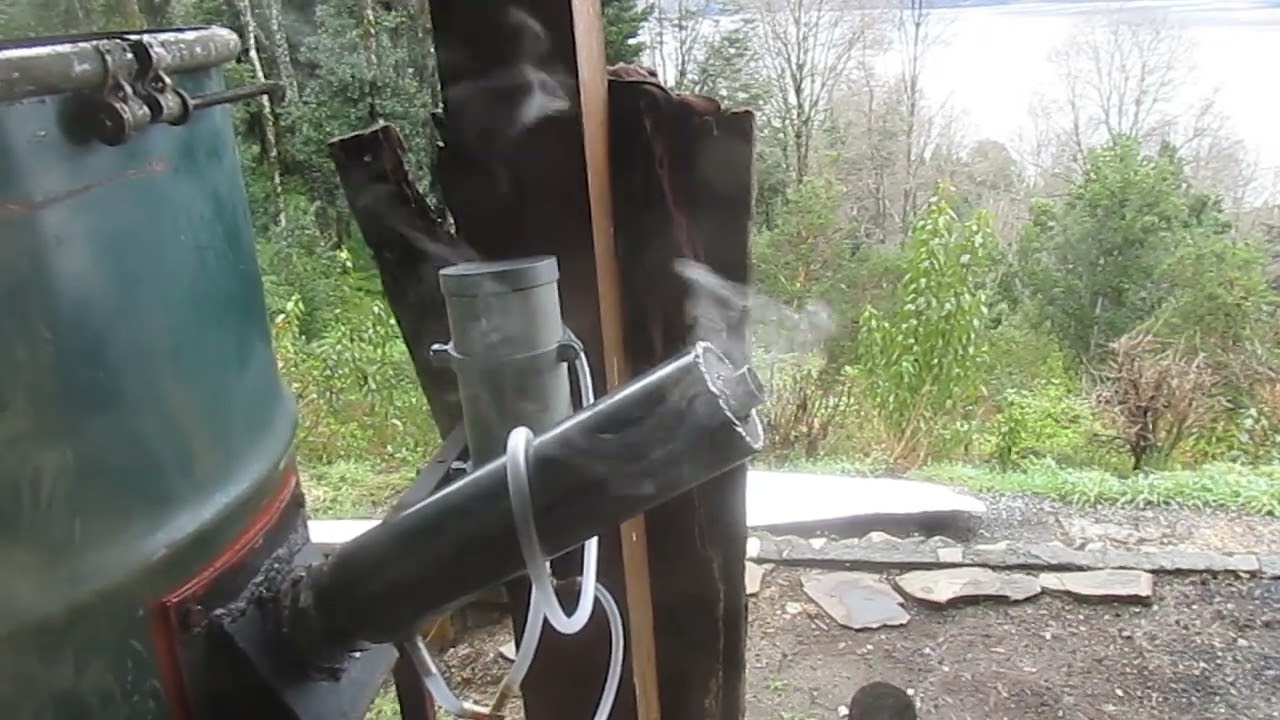
I do have to do one fine tune to the nozzle. I think there is just a little too much water being injected. I am getting a drip about every 5 seconds into the radiator drain collector. There is a throttle on the steam. It is an internal cylinder with a hole that when rotated uncovers a hole in the air tube to allow steam to enter the airstream. However, currently there is no alternative place for the steam to go (an oversight). Perhaps a small valve on the steam chamber will suffice. I would just have to balance the steam throttle position with the steam outlet valve.
Finally, I have to work on water replenishment. I will have to do an extended run to see how much water is consumed. If it is small enough, I might get away with a tank that just needs to be topped off before a run. Alternatively, I can use a float activated valve in a small tank.
In any case, I am quite pleased after these latest modifications. I just have to make some extended runs to see how the gasifier behaves.
14 Likes
I had a thought regarding freezes. I think you could add antifreeze to the water. The water should boil off preferentially with minimal refreshment of the antifreeze needed. I may try this anyway to combat corrosion inside the nozzle.
11 Likes
marty, i have on my pasquali - 700 ccm - a water tank with 5 liters, and that is sufficient…when the water level shrinks down to about 4 liters, more steam is produced in the system, but will say also the water cools less, so i would say 5 liters is a minimum…on my system the hot water pipe from the nozzle not goes immediately in the water tank, but up to a T fitting.
here the air for the nozzle is sucked through , takes steam and with a rubber hose goes in the nozzles air inlet.
on the other side of the T fitting is a ball valve, when it is closed, all air goes through the steam , when it is opened, less air must go through the steam, depends, how much the valve is open.
13 Likes
I installed a bleed valve on the steam chamber to limit the steam to the air intake.
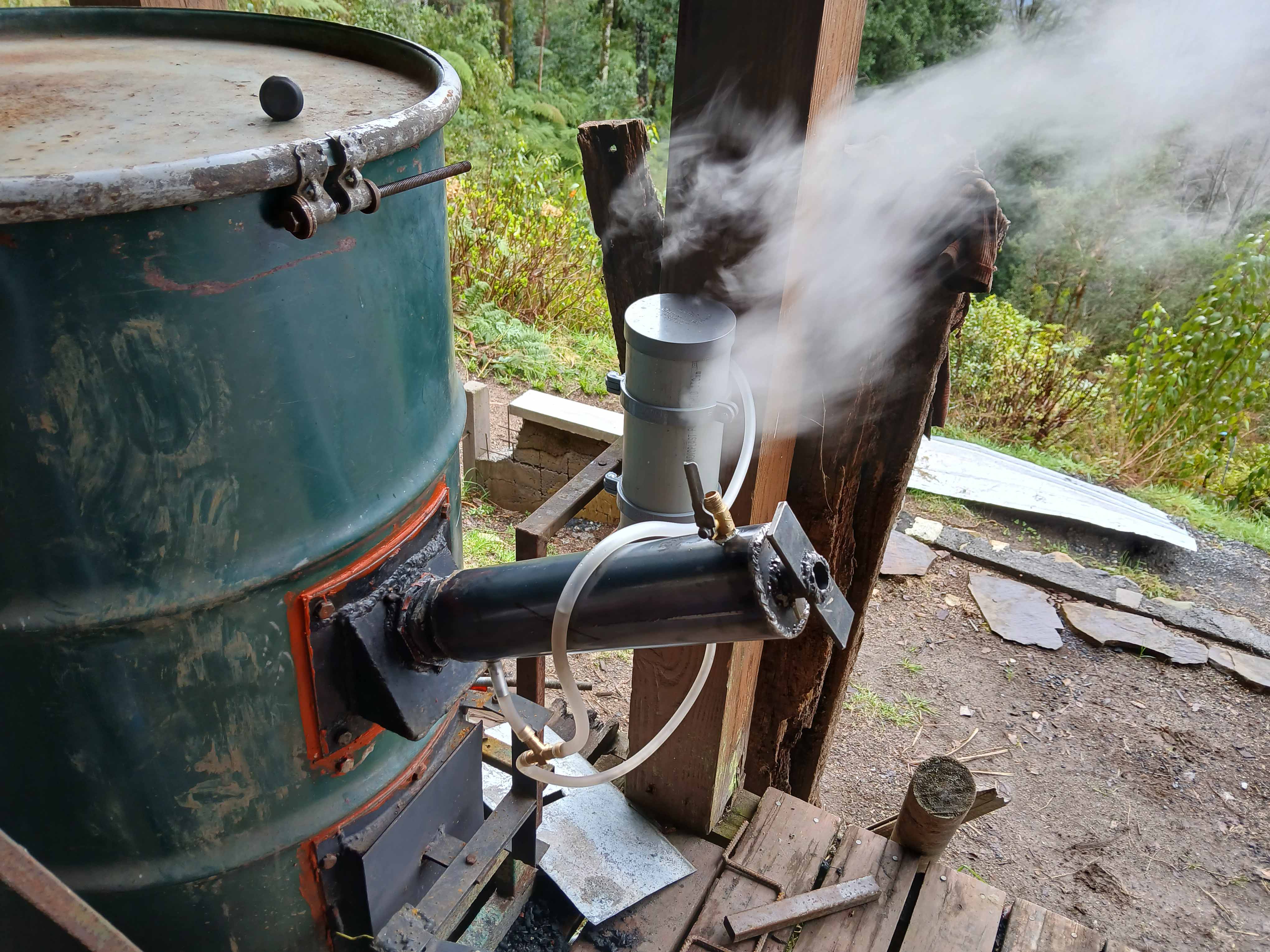
Now I can control how much steam enters the air stream.
It looks like the nozzle boils about 200 ml per hour. Not all of this is getting into the air. I would say the majority is being lost to the environment. I am considering trying to recycle it back into the supply tank, but I would have to add a condenser otherwise the water in the tank would probably begin to boil.
It is interesting that when I replenish the tank after an hour so as to maintain a certain level in the nozzle, the inrush of cool water stops the boiling for a couple of minutes. During that time the engine loses rpm’s (50 Hz to 45 Hz). Obviously the gas is much better with the steam added, but I would think the governor would handle this. I’ll have to look into this. But the upshot is that I can find the right amount of steam to add by watching the rpm’s.
So in order to maintain a steady water level in the nozzle, I will have to make a decision about recycling and/or a float valve. My goal is to be able to go about 6-8 hours without attention, which is what I was able to do before with the other nozzle. I just don’t know how much there is to recycle and if it is enough so that I can top off the tank at the start of a run and not have to add anything more. I may just have to build a condenser to find out.
15 Likes
To determine whether or not I need a float valve, I had to make a condenser. I had a coil of copper tube, so I just stuck it on the steam vent and let the condensate drain back into the nozzle.
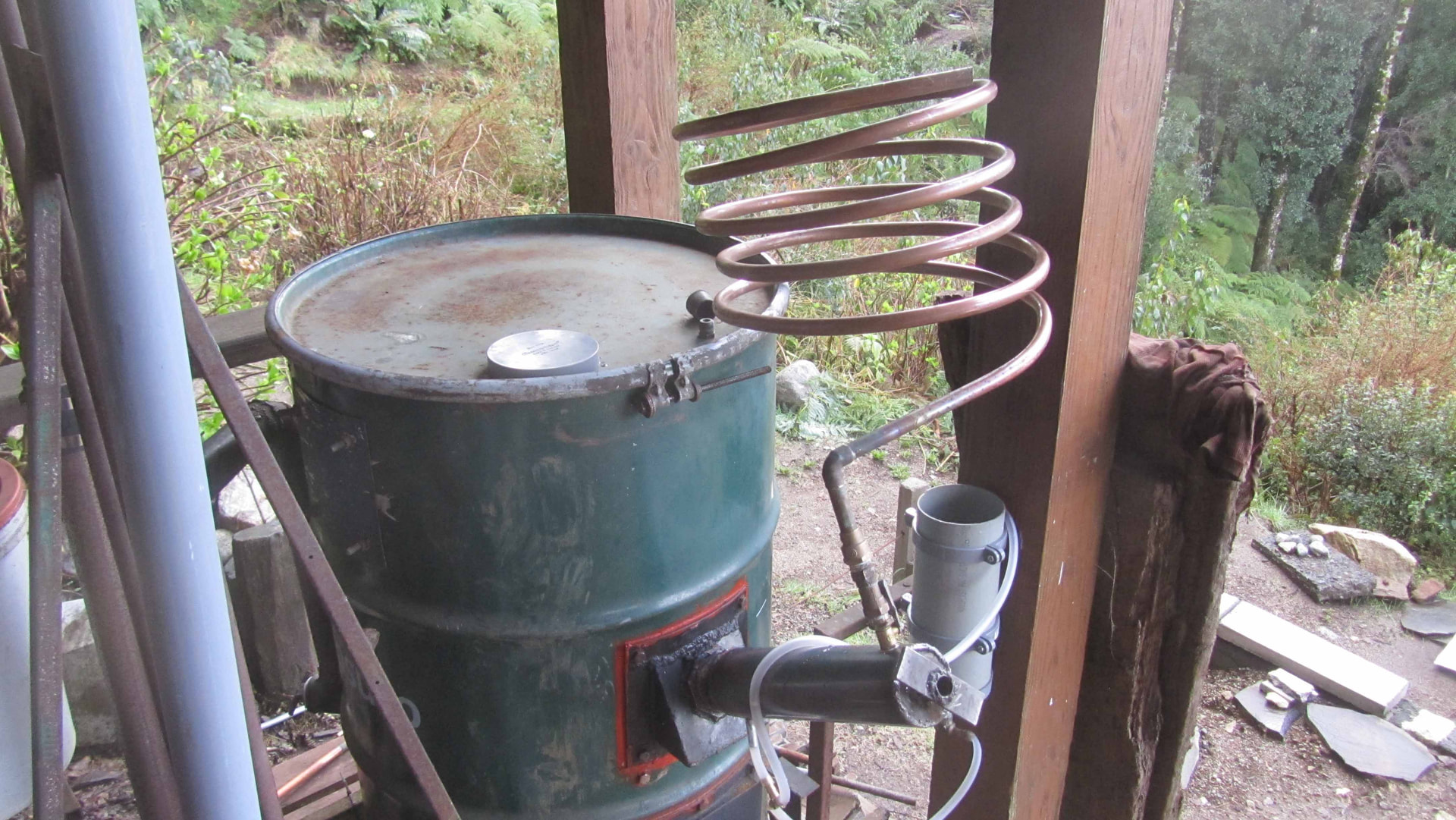
I still had to add water to the tank every hour so I installed a float valve.
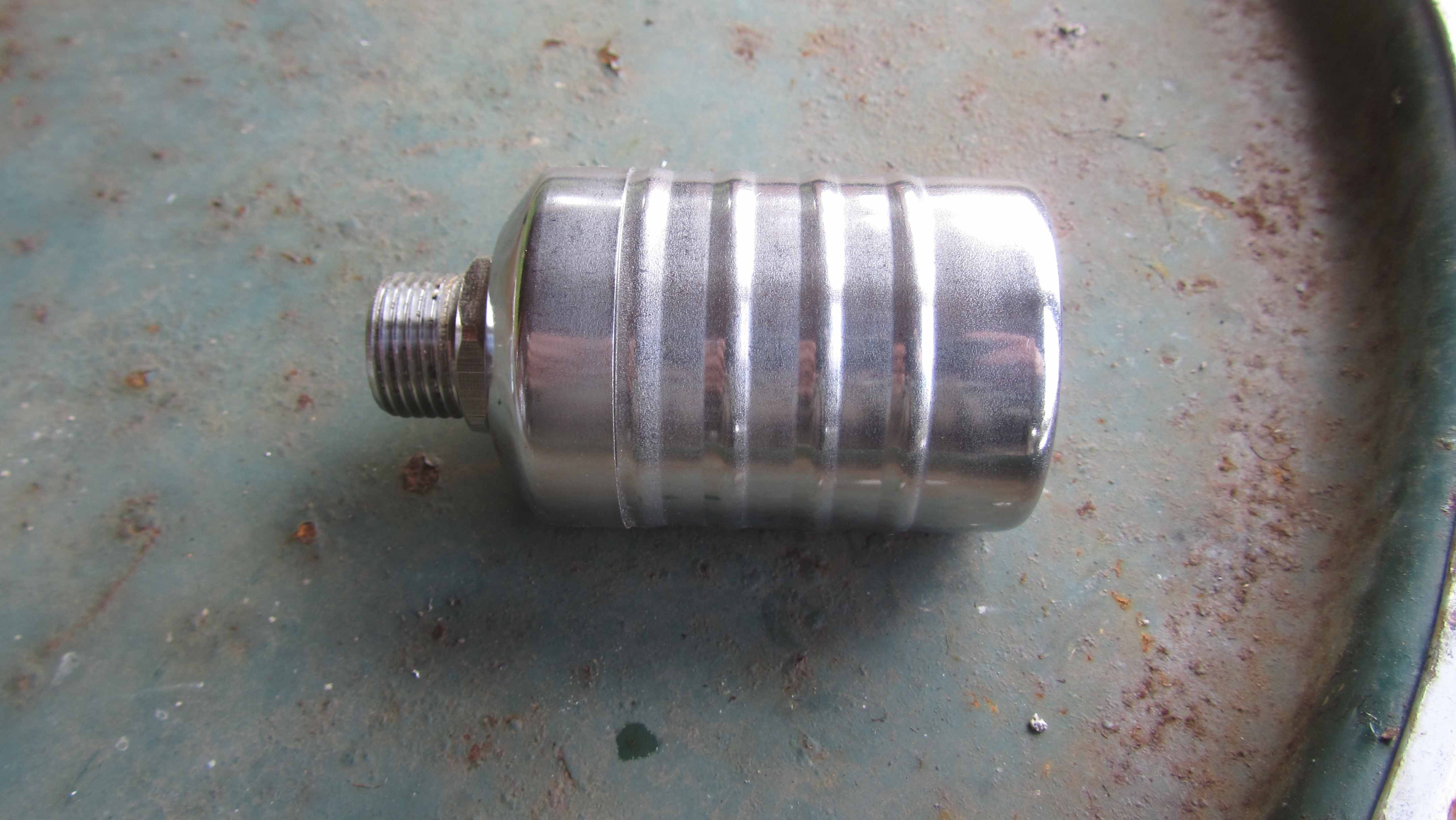
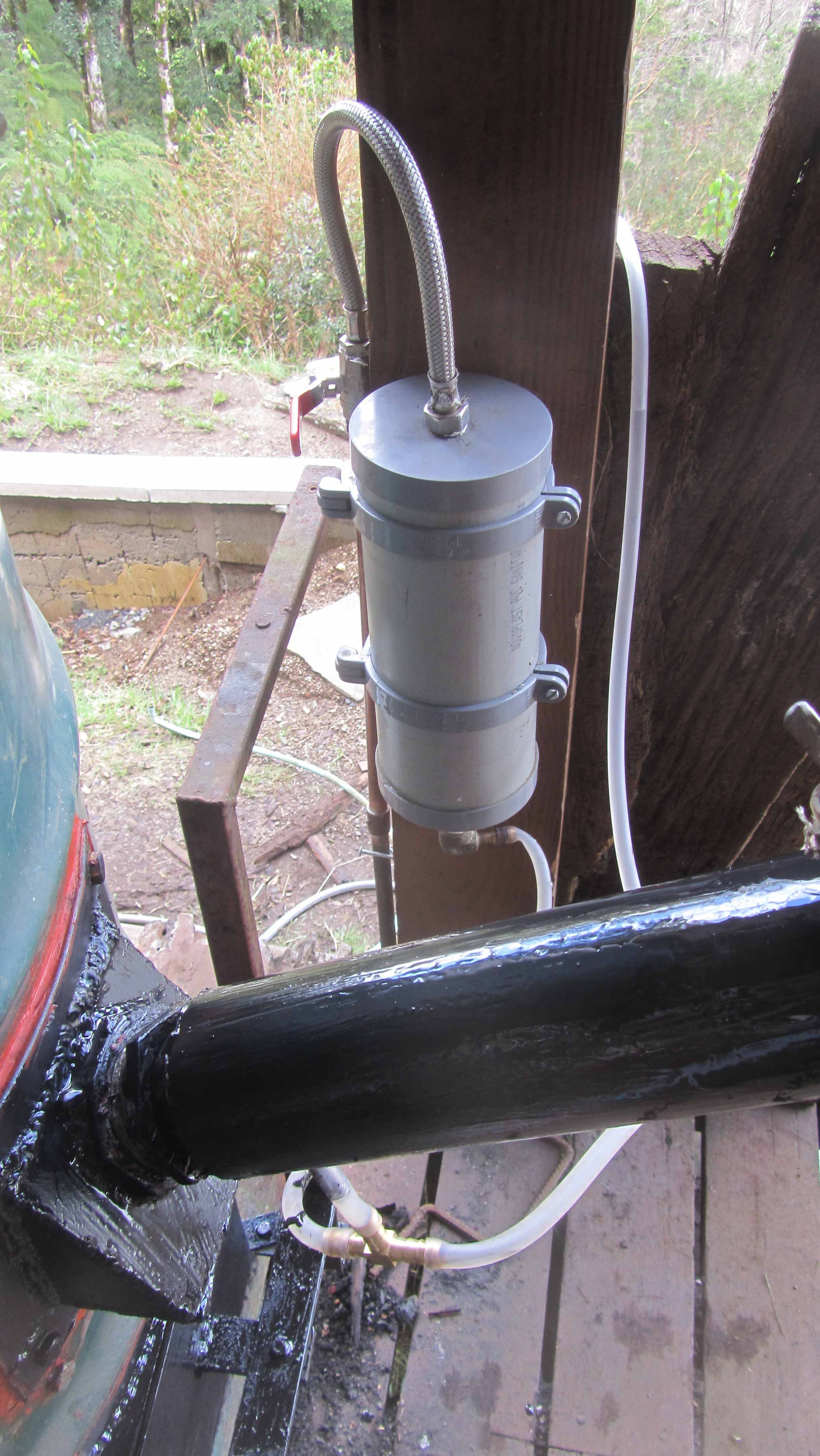
It was an easy installation, but to tell the truth, I would have preferred if I could have done it without the valve. I guess I am paranoid, but I worry about the valve malfunctioning and the nozzle melting.
So since I already have an Arduino monitoring temperatures, I will install a thermocouple on the nozzle and if the temperature rises past boiling, I will trip a relay that will short out the generator ignition coil.
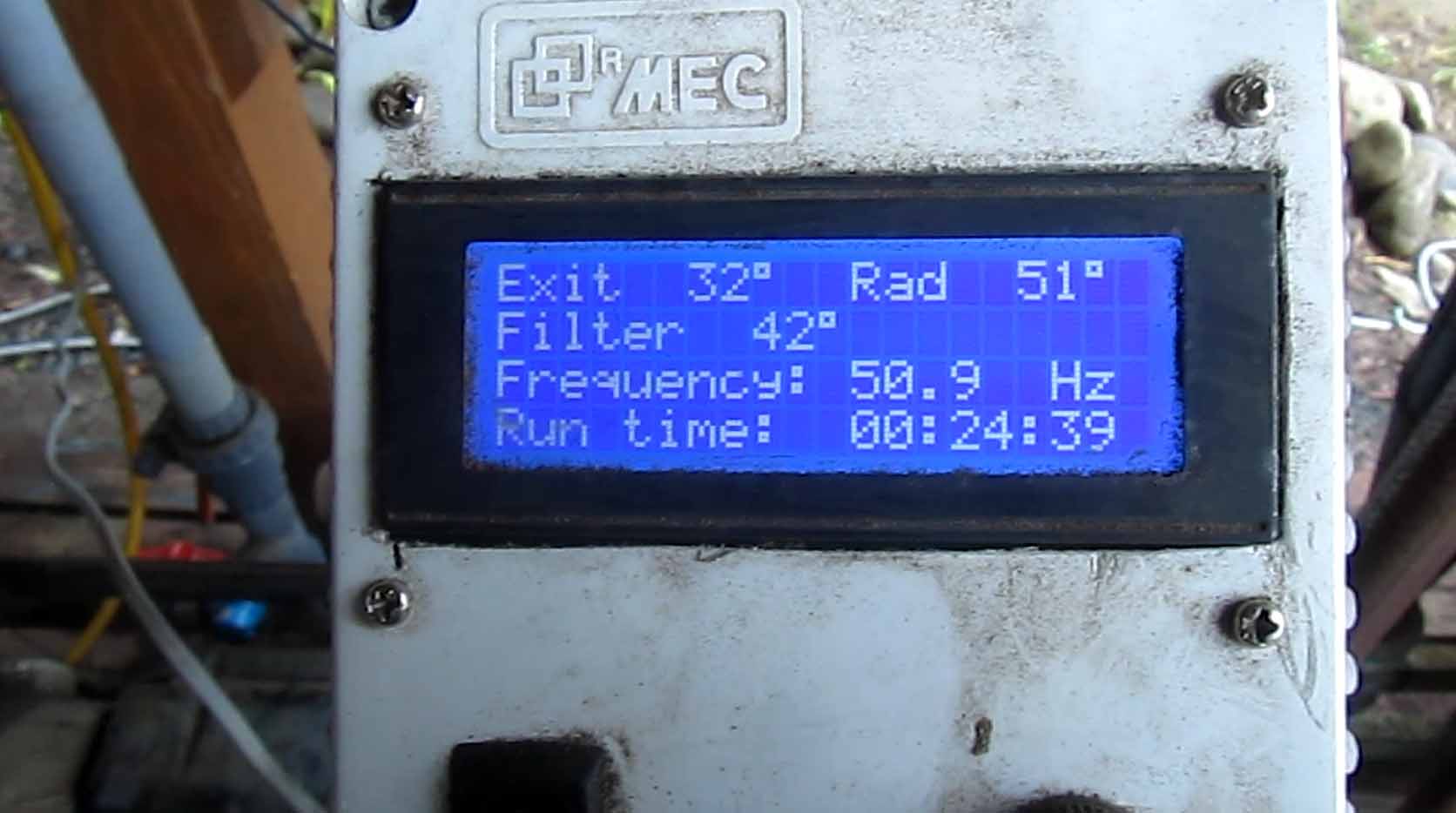
No, the temperature exiting the gasifier is not at freezing, just a bad thermocouple MAX6675 board. The other two temperatures are read by thermistors. A second board I have is also bad  , so I upgraded and ordered some MAX31855 boards from China. Once those arrive and are installed, I think the upgrades to the gasifier will be complete. Then it is just a matter of running it and getting used to its capabilities.
12 Likes
I wish I could do programming and electronics, it must be really fun.
10 Likes
Greetings Martin, you are doing an excellent job. Generating energy for your own use during times when there is no sun is no joke. The device must operate independently without supervision, and it must react appropriately to any potential errors, well, this is where a microcontroller comes into play, which you adapt to your device - processes. The equipment for this is available at a reasonable price these days, one only needs to know in detail how their system works, and it is quite easy to put this into a “programming language” with AI.
Martin, what power does your generator operate with? How many kWh does it produce per day? What is the fuel consumption per kWh?
11 Likes