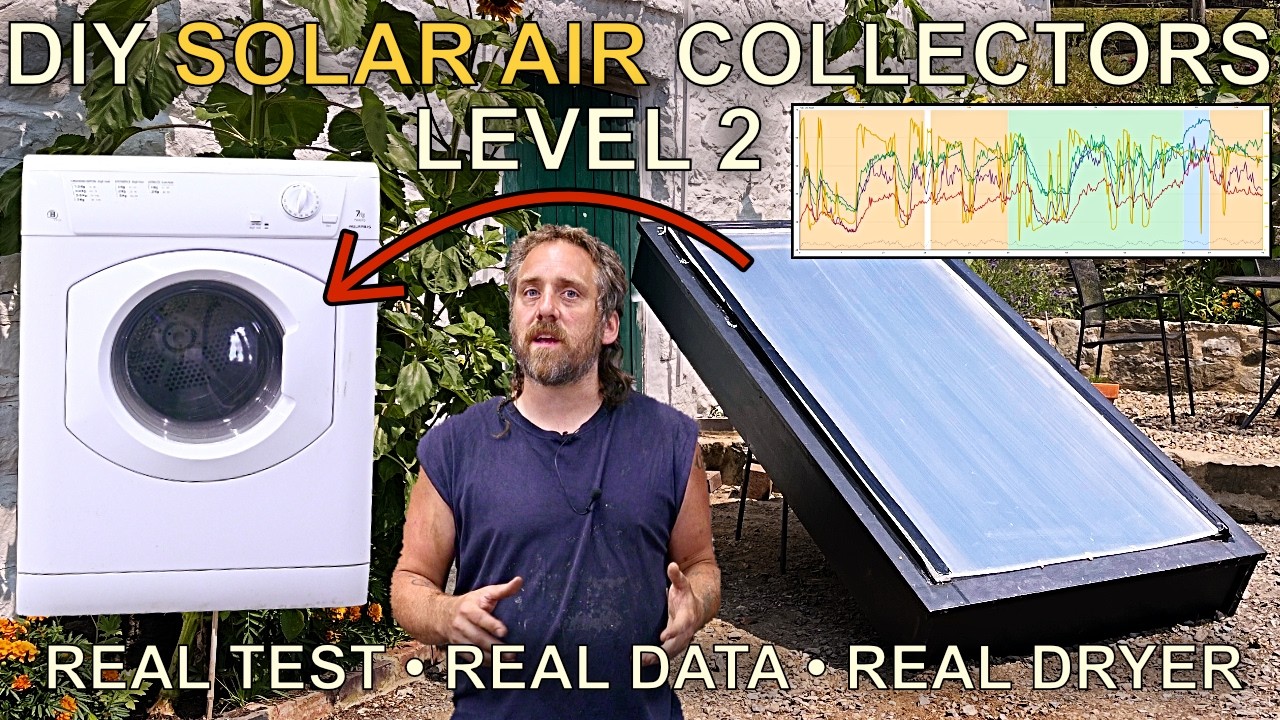
What I like about this video is the ardrino controls… I imagine any heat source could be used and it would compensate.
Clothes dryer testing at the end of video..
But I was thinking all kinds of heat sources could be used for this.
What I like about this video is the ardrino controls… I imagine any heat source could be used and it would compensate.
Clothes dryer testing at the end of video..
But I was thinking all kinds of heat sources could be used for this.
I was looking at this setup, and I was thinking… it seems one could connect this to the heat of a gasifier, or a generator, or a campfire… I was even thinking of using direct from my solar panels to a heater…
It would be a lot cheaper, and easier to just hang a rope between two trees and hang your clothes on it.
Agreed… but this could also dehydrate food… And could use about any heat source… I was wondering how fast it would dry with a powerful fan with no heat… I have done that with all the rain we have had.
It is interesting to see a different application. We have an umbrella style clothes line that we can mount on out deck when we do not have rainy weather. During the winter we have a drying rack near our wood stove that hangs from pullies from the ceiling. we load it up, hoist it up and the stove dries the clothes in a couple of hours. my wife is big on the idea of saving electricity and not using our electric drier. kent
Last time our dryer was on the fritz we hung up some lines in the guest bathroom and I hooked in a standalone dehumidifier, the kind that doesn’t double as an air conditioner and just blows out dry air. We have a side loader washer so it spin dries halfway decent and the dehumidifier just finished them off.
Yeah when it is rainy outside, I will just lay out my clothes in the bathtub with the large fan blowing on the clothes, the I turn them about every 4 hours. I also run the de humidifier in the small bathroom which helps. takes about 5-8 hours for my clothes to dry this way, since I am off grid it is easier to do this instead of running my dryer…
Drying benefits greatly from a counterflow heat exchanger, basically an HRV (not an ERV which would humidify the incoming air - bad for a dryer).
Exhaust air pre heats incoming air. This raises the maximum temperature in the dryer and creates very low relative humidity, perfect for drying.
It’s tough to do counterflow with a traditional clothes dryer because lint in the forced air exhaust will gum up the works. But you could also just hang clothes in a hot dry space and not have lint carryover into the exhaust- hang dry but much faster.
Counterflow is great for a wood dryer and much easier… no lint!