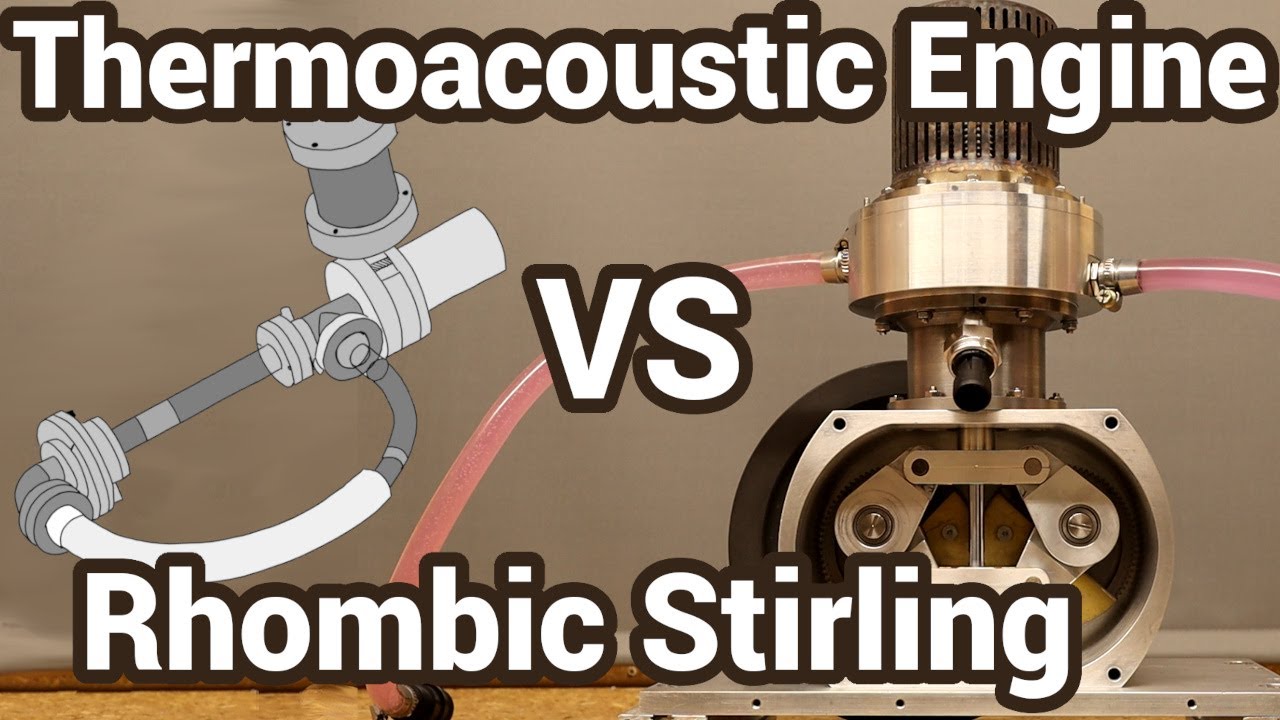
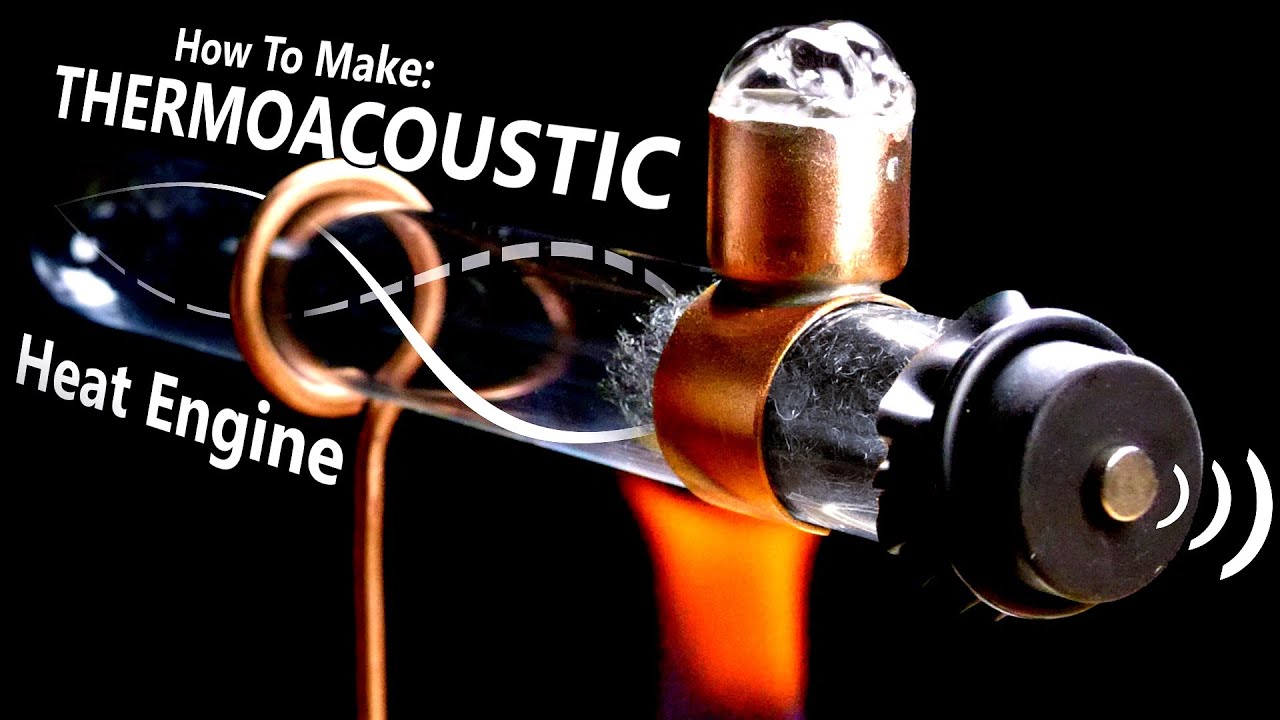
Since our local political discussions are talking about data centers. I decided to check the progress of thermal acoustic electric generators. Which essentially convert heat into sound which can then be used for cooling or electric generation. A loudspeaker is used because the waves generate pressure so it is backwards use of a speaker, similar to using a motor to generate electric. And it uses a heat differential similar to a TEG.
Here is kind of a basic overview and introduction.
here is a very simple one.
Here is a paper from Thailand that describes a fairly simple one, although now that I look at it, it has two generators on it. So possibly only half is needed. The temperature difference was like 1000F (hot side) to 80F (cold side) (if I did the conversions from kelvin correctly). It appears like they are claiming a higher efficiency then TEGS like max 20% I think in this case. (although I read a recent paper from MIT for a TEG that claimed 40% but that was with like 2400C temperature)
I tried to install it, but my Defender do not want to run it, because installer is not signed with publicly known provider of the software. @madflower69, did you already intall it? On WIN11?
So far, I discovered two papers discussing two different designs of TAHE (thermoacoustic heat engine). The first one has laboratory implementation, so really measured numbers. The second one is only about simulation results usinf DeltaEC software. But both are not about practical “generator” able to produce electricity output.
Concerning the size, both paper consider there are some limits to design parameters, which prevent linear scaling of the size. My underestanding is, that 1 kW output engine would be at least two meters long.
It might end up to be 2 meters but you can bend the tube like a trombone, which is like 3m long if fully uncoiled. Some of the more ‘advanced’ designs actually have a loop in them to recirculate the waves to keep them a standing wave.
The paper from Thailand in the first post way at the bottom went through a 'cheap design I think they only got 300w using nothing fancy.
I am trying to figure out the designs limitations and applications.
I’ve been down this Stirling rabbit hole including following the “My Engine” guy you linked to. He is doing as fine a job as I have seen navigating the challenge and I still think his best outcome will generate very modest power.
Stirling theoretical efficiency is high; practical efficiency is much lower. For the cost, size, weight, complexity you don’t get much power. Improving efficiency and power density pushes you into exotic materials and fabrication techniques.
External combustion engines all have the practical issue of getting heat into the engine and later dumping it somewhere else. That’s two points on the engine that require massive heat transfer rates - not easy/cheap/light/small.
They also invariably use a working gas to extract mechanical power from the heat flux. That gas needs to be pressurized to get any power out of a practically sized engine. Super hot and super high pressure is a tough combination. You can design a high pressure, high temperature, high cycle rate stirling on paper… then go to see what material stands up to 100 bar at 600C with high heat transfer rates… and have a cry. Thermoacoustic helps on a few fronts but you still end up with lower power.
Internal combustion creates the heat right where it is needed and exhausts it after putting said heat to best mechanical use. You lose some theoretical efficiency but it’s practical.
Sometimes practicality is dictated by the purpose and local conditions. If you need a lot of heat and moderate amount of electricity in almost 24/7 delivery, such device like TAHE might be “practical” solution.
TAHE is really interesting tech. I’m not here to talk someone out of a good (but maybe rare) use case or pursuit of a passion. Have at it!
I think a great success for this TAHE project is a 1kwatt generator and that’s not a lot. It’s like emergency power only for furnace blowers and starter motors, maybe charge up some hungry electric tool batteries, etc.
For me solar + battery as a first line… no moving parts. Then backup from a gasifier generator and use the exhaust to heat water in an insulated but unpressurized hot water tank. Both heat and electricity have easy “storage” for use as needed. At high latitudes and in the winter, a system like that may be leaning hard on the backup b/c solar production will be low. You’ll want the waste heat anyhow.
1kw of power from a TAHE is better than nothing but I’d rather have a gasifier running 5 hours a day generating 4-5kws. I’ll note the daily power production is similar (24 times 1kw vs 5 hours times 5kw) and confirm my preference. Better to have fewer, higher power hours and if you need higher daily production… just run longer.
I think it ends up to be a bit more efficient then TEG generators, with lower differential limits. And I was really looking for some cheap way to utilize waste heat or dispense of it. Converting to electric energy disposes of the heat..
Makes sense. I think TEG works best for super low power situations where 10-50 watts would make all the difference… charging a phone or something.
If you can get a TAHE working, it might only have one moving part. With good lubrication, it might just go for thousands of hours. Even a simple IC engine has dozens of moving parts and seals to go bad.
I wonder what sort of power you can get from a speaker voice coil. I’ve used them for microphones, and crude seismometers/vibration sensors with some added mass, but sensors and power sources are pretty different.
A speaker is essentially just a linear motor that pushes air. you could use like a solenoid as well. I don’t know what the efficiency is. If you have a speaker designed for 100w, I -assume- you can get somewhere around 100w back out of it.
If I ever knew, I’ve forgotten the electrical and acoustic numbers for speakers, and I have limited patience for Google searches these days. But I looked enough to find that speaker efficiency (electrical power to acoustic power) seems to be around 1 or 2 percent. It’s hard to find precise numbers, but at this level, it doesn’t matter much. I thought it was bad, but I wouldn’t have thought it was that bad. If it’s hard to get power out of these things, and they’re using speakers, it’s not surprising .


 .
.