I don’t see this discussion being any different than the hundred times we have had it before. Get some junk and build something. If it works great. If it doesn’t build it different until it does. In my many years I have found the learning is in the doing. Talking a thing to death should be left to politicians.
16 Likes
Good plan, good attitude. Go for it!
Most everyone’s needs are a little bit different. Everyone’s skills, tools, and experience are a little bit different. So, everyone’s path and plans are a little different. One thing I believe is the same - - - everyone here want’s to encourage you, and see you succeed. Sometimes our enthusiasm runs in different directions, but we’re pulling for you, and each other 
13 Likes
David, I’m not going to partisipate in the charcoal vs wood debate. You’re of course free to do what ever you want. What direction we go is often determined by other factors - what type of containers our neighbours happen to offer us, the size of our carports which our trailers sits under or wether we happen to have spare bathtubs or not.
I’m not that smart, so it usually takes a while to wrap my head around certain fenomena. I may understand the theory behind things, but it takes me a while to get the gears greased.
I’ve been burning wood in domestic hot water boilers all my life, but 3 years ago I got a new job operating a huge steam boiler. I already knew the basic theory behind how temp and pressure affects steam, but being so used to water in its liquid form I now had to think twice.
Maybe a long winding analogy, but the difference between straight forward burning wood for heat and gasification has simularities. What caught my attention was this:
You may already get all this, but when I first started with gasification it took me a while to clear my mind up around a few basic things.
First of all there’s a common misunderstanding - when people are told gasification is about burning wood in an oxygen restricted inviroment, they often think it’s about restricting the air flow. Not at all. It’s about the oxygen getting consumed when passing the fuel.
Another common misunderstanding is about fuel size. In a normal stove, with almost unlimited air supply, you get a hotter fire with a lot of smaller sticks vs a few big logs - more surface area. With gasification it’s the opposite - the smaller the fuel the faster the oxgen is consumed and the cooler the gasifier will run.
A third common misunderstanding is about moisture. A stove will not run as hot if you have moist wood. In a gasifier it’s the other way around. The fuel won’t shatter as quickly, the bigger pieces will allow oxygen to penetrate deeper and the gasifier will run hotter.
14 Likes
Hello everyone,
Thank you for your many interesting comments.
I’m glad you’re paying attention to my success, thank you.
Matt,
You’re facing a problem I don’t have with your gasifier: ease of use for the end customer.
Difficulty doesn’t scare me, at least not the longer learning curve of a more complex routine.
To be frank, let’s stop repeating the same debate: charcoal is easier and faster to learn, I understood that from the first comment I read on the subject.
Anthony,
Thank you for the clarification.
SteveU,
Your support touches me, but don’t worry, a lively debate on a topic is all the more exciting.
Especially since I’m not exactly going at it half-heartedly either 
Tom,
Thank you for clarifying that this debate is still the same, and I’m not here to get stuck on a topic that isn’t evolving…
If the arguments for and against bring new points of agreement, fine, but if they’re points already discussed, no. (I’m speaking here because I created the discussion to condense what interests me.)
Kent,
Thank you for your kind words and encouragement. 
JO,
Thank you for this comparison between wood heating and a gasifier.
Since I was little, I’ve been feeding the wood stove and now the wood boiler, and it seems simple, but it’s not so simple when it comes to avoiding waste.
If the wood isn’t placed correctly, it won’t fall to the bottom of the boiler and won’t burn.
If you put in too much wood or a type of wood that burns hotter, the boiler goes into safety mode and stops heating the water, it smothers the fire and gets dirty.
If I wait too long between uses, the water cools down and it will take more energy to reheat it.
In short, the comparison is really very insightful for me, as I have a lot of experience with wood heating.
Conclusion:
Your discussion has been eye-opening!
Why choose between wood and charcoal?
Why not use both?
An engine that could run on charcoal when I’m too lazy to start the mechanism, or on wood because I have some I don’t want to waste.
Two alternatives instead of one?
That’s clearly better.
So I’ll need twice the first part (combustion chamber?) Sorry, I’m getting confused with the terminology.
A filtration system that can filter both types of fuel, and above all, an engine that will run properly with a suitable adjustment system.
In short, I need all the ideas you can think of for this project!
8 Likes
 Even oatmeal (havermeel) tastes much better if you cook it naturally … I mean with wood.
Rindert
8 Likes
I think @Tone’s grate nozzle thingy solves that problem. Check it out. LINK I use it on my small engine gasifier. It works, but I think it needs a valve to give added control, rather than relying solely on balance of pressures.
Rindert
8 Likes
Thats not the messsage Im trying to get thru. Im trying to teach you. If I ran a college coarse I would teach the deconstruction of wood via thermal process using a retort. Trust me there is a lot to learn there. Then we would study the other part using chacoal tearing apart H20 and Co2. If you have never built or opperated a gasifier then then is is the way to learn faster. Im showing the easy road. You are taking the hard road just like I did. Good luck
8 Likes
hi David ))
yes, it is possible to run small stationary generator on chunks even if it is your first build.
i guesstimate that i have produced over megawatt hour of power with 420 cc twin cylinder engine.
no signs of tar, only some soot gets past hay filter.
i would like to point your attention to some aspects.
-
preheating incoming air with heat exchanger is most important, put heat insulation on heat exchanger if possible.
-
heat insulation on hearth.
3, monorator or double wall hopper - helps separate moisture and tar from fuel.
-
filter out as much soot as possible before condensation occurs. soot mixed with condensate is nasty stuff.
-
do not forget about cleaning ports in cooler and heat exchanger - that was my novice mistake, i had to improvise and cut them later.
16 Likes
DavidP. my concern is not about you.
You are intelligent. And better yet: tough and persistent.
My concern is for the integrity and ongoing life of this DOW forum.
The rules of this forum wisely set up specifically does not allow for debate.
This was based on experiences by many of us on other wood-for-power forums in the previous 15-20 years. All dead and gone now.
Why? The real people with real needs for home DYI power left. Newcomers observing the “vigorous debates” quietly did not jump, unexperienced, into that boiling stew. Did not participate. Read some, and left too.
Who was left? Those who either thrill from watching octagon cage fighting matches. Those whose university exposures convinced them that only through vigorous debate were way to ultimate truths distilled out.
Neither ever being practical approaches to getting real needful things done in real life.
Wanna kill a forest??
Not by cutting it down, harvesting it. It will regenerate and grow back.
Not by burning it down. Many dormant, previous dropped cones and seed pods, are only activated from fire heat. It will grow back.
But allow it to run wild with growing seedling eating animals. Goats. Sheep. Mice. Porcupines.
Get past that, to young trees: then assault them with cows and horses, moose and deer.
You black hands charcoal guys mostly all failed at your 1st, 2nd, 3rd raw woodgasifing attempts. So you declare it cannot be done by common mortal man.
Bullshit.
I ain’t so special.
Others here who gained thru the beginners mistakes at raw woodgasifing and use daily ain’t golden haired Gods either.
Just because you all lacked the fortitude to set aside your preconceptions and bring it out to success doesn’t mean it is impossible. That no one else can do it.
Again. Utter bullshit.
Here. Wanna learn how to not tar up engines???
Tar up, valve stick an engine and then have to repair it:
https://forum.driveonwood.com/t/waynes-international-444-farm-tractor-project
Somewhere in this topics 223 posts; or in an accompanying Premium Side detailed build topic WayneK. (with over 10 years experiences) shows he did tar up and bend valve push rods on his engine. He was still learning the chararistics of his newly built system.
Fixed it. Thought, and self-learn operational techniques for that particular system. And carried on.
What make exceptional people?
Those who chose through hard work, bumps and bruises to carry-on, carry-through difficult times, and tasks.
Every single one of you would not be here if a woman had not with increasing difficulty carried you for month after month. The endured through the hours of pain, blood and mucus of birthing you.
Only people who have chosen to make themselves exceptional are interesting.
You black-hander’s quit chasing new blood away from the DOW with your debates.
Go play with your nearly 1,000 posts nozzles failures topics.
Steve Unruh
8 Likes
You are on the right track with your thinking. I build my sistems that way now. They can run on raw wood if needs be, but l burn charcoal in them because its more available for me and it performs much better.
But you got some more homework to do first before you decide, wich seems you are doing well. We all are happy to fill the blanks for you and help you clarify what you dont seem to understand fully yet.
When you talk about water in a carcoal gasifier think liters not hektoliters per day. Water is an aditive. You need to refuel the gasifier anyway with charcoal, and in the mean time you also top the water tank. Thats for your 1000kwh a year just maybee 200l of water for the whole year.
If you build a hybrid gasifier its even simpler. You can mix the water with the fuel, add 20% or so of water to charcoal and you are good to go. Also keeps the dust away.
Cubes in a gasifier work, why not? You can gasify preety much any type or shape of biomass if the gasifier is designed for it. Mr Wayne, as you will learn upon geting his book, even determined you can drive for about 3km on a dead cat
As of why mobile gasifirs are easyer thain stationary ones, well, thats not true actualy. Stationary are much easyer. As long as you are there all the time controllig it as you wuld when you are driving 
gasifiers are not some magical devices wood in—>power out. There are rules, thigs that need to happen and be just right and its up to you to controll these things. Or automation wich gets complicated and expensive real fast.
In its core, the non negotiable term for any gasifier is it needs a bed of carbon with a granulation between 3-20mm roughly. We call this granulation “engine grade charcoal”. Its the job of the upper part of the gasifier to prepare this size of charcoal and replac3s it fast enaugh as it gets consumed. Its in charge of both producing charcoal and “milling” it to size.
Whenever there is a distruption in this charcoal factory, things change and its up to the operator or automation to detect and correct this.
Per instance, if the peaces get too large, not all gases will react and the gas will be hot and weak. Engine will suck more in to keep with the demand, resaulting in even more draw on the gasifier and even faster burning of finer charcoal, a positive feedback loop that will destroy the balance if not corrected emediatly.
On the other hand, if too much fine charcoal is formed, the reaction bed will
Edit: only half my message was sent somehow. Will retype later when im done with work. To be continued…
16 Likes
Hello Rindert,
@Tone 's system really caught my eye.
For the moment, it’s his system that has convinced me, but of course, I haven’t seen everything yet.
Hello Matt,
Thank you for teaching me things; that’s exactly why I’m here. But let’s not get ahead of ourselves.
First, I need to know how to build and what to build.
Then I’ll think about improvements, but for now, I only have advantages, disadvantages, and vague data.
It’s difficult to sift through everyone’s opinions.
And let’s try to keep things simple, because I’m not a technician.
Hello Andris,
Thanks, I don’t yet understand how to implement these various points, but it’s a good approach to follow.
SteveU
Thanks for the link to the topic, it seems very interesting.
Hi Kristijan,
Thanks for all your explanations, you’re the person I understand best so far.
Exactly! That’s the sentence that convinced me about the WK project: burning the neighbor’s cats to generate electricity! (Just kidding, of course.)
I’d like to automate the system so it can run for 3 hours unattended, but it will probably be a basic system at first, which will improve over time.
As for programming, I’ve done some before and I learn very quickly.
And we mustn’t forget that we can now use AI for help.
Looking forward to the next installment.
10 Likes
https://forum.driveonwood.com/t/wood-fired-gas-generator-Kolyvan-9-0-version
DavidP. it was not you.
I fixed the topic links and they work now.
Joni’s systems are one to look over carefully as they are extremely simple and on 53 YouTubes, he showed they were very functional for his GM variant car.
On the version 8.0 he show internal dimensions. Careful. The numbers are correct but his loaded up diagram is top to bottom compressed. And side to side stretched.
The version 9.0 he shows his progressive improvements. And he pictures it cut apart after hard usage to show real in-use changes.
He was before the Russians invaded working on a version 10.0 now that he had established his configurations. It was to be in stainless steel for burn-through and internal corrosion resistances. And that one possibly licneced for manufacturing.
He did not design specifically for DYI’s guys to be able to copy. He is a superior welder on used, thin steel sheet metals.
He did design from version 7.0 for one man liftable weights. He did finally achieve this with many changes. His hopper lid rod spring steel latches are the simplest, lightest I’ve ever seen.
And on a driver present vehicle application as Kristijan has pointed out; Joni did not specifically design for unattended operation.
Still Joni was not afraid to woodgas his GM single overhead camshaft engine.
Regards
Steve Unruh
9 Likes
I don’t have access yet, I’m the newbie.
Ah now yes!
2 Likes
I received my new welder; I only had a small arc welder before, and milt is not my friend.
Here are some photos.
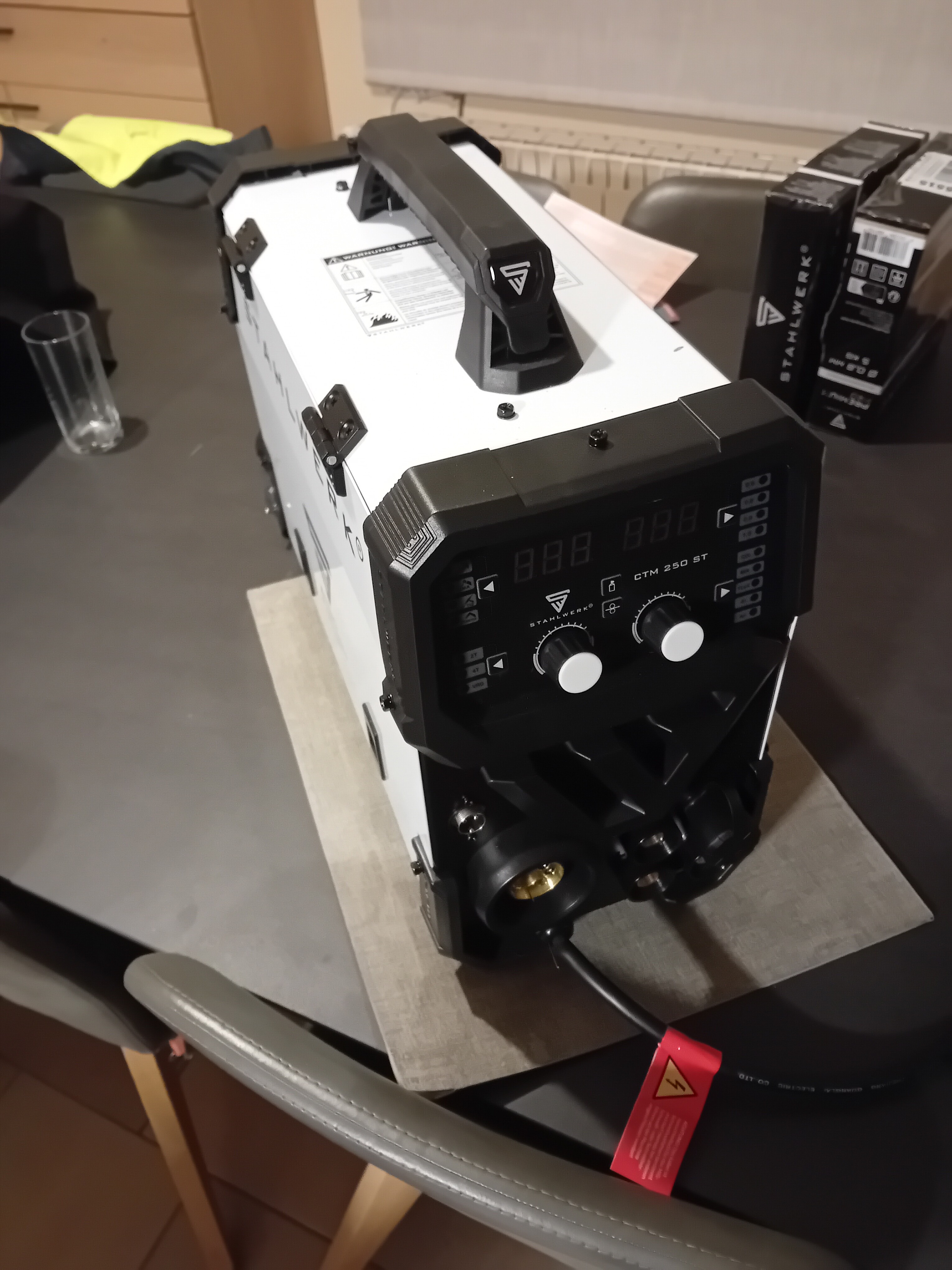
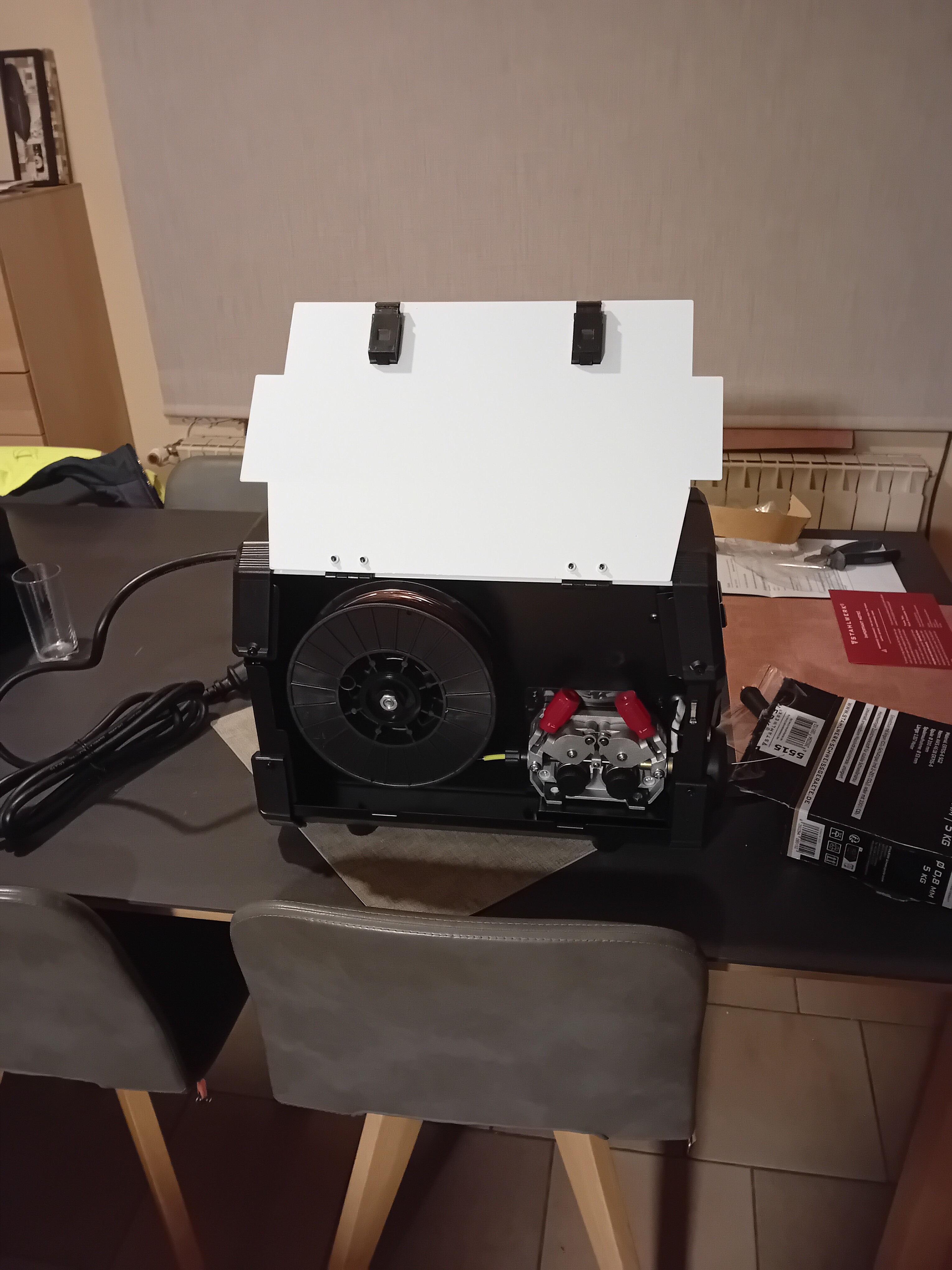
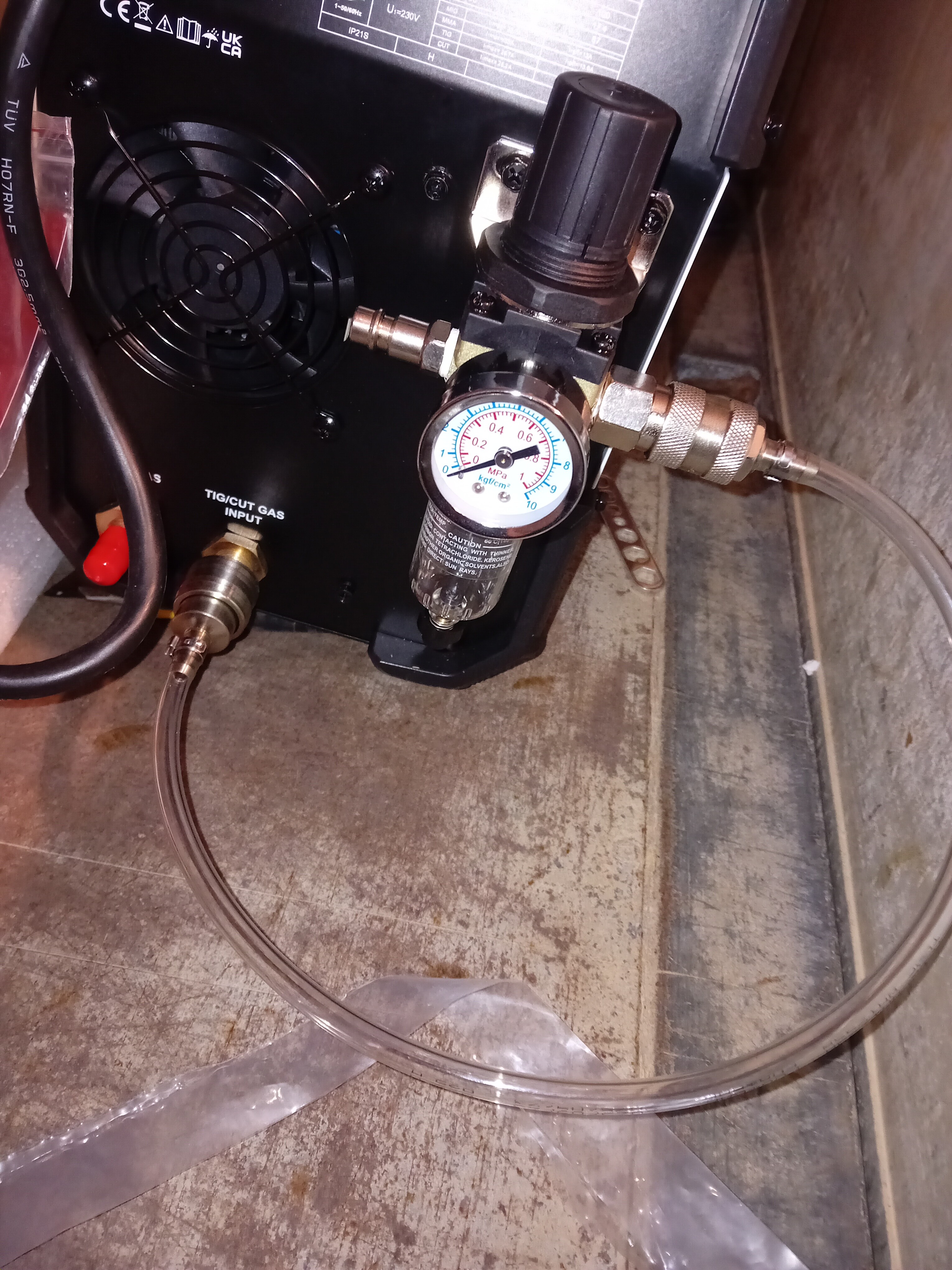
I couldn’t decide between MIG and TIG welding, and I also wanted to try plasma cutting. SO I got a combination machine does everithing!
Just like my future gasifier, a combination machine that does everything! 
11 Likes
I never once said this Steve. I never once said not to the build a wood fuel machine.
Learn the fundamentals first then you have a foundation to build from. The retort and the simplefire are the easiest ways to learh that.
My bar is also set higher What you call success I likely would not.
11 Likes
matt, i and shure others appreciate your sharing of your knowledge about your charcoal gasifiers and like that you like to bring it to the maximum perfection possibly …
but i can understand steve, charcoal is dangerous, who begins with charcoal and has found his system of simple fuel preparation will never switch to woodgas…
i think both systems should have place here in the forum, not all people are so genious to perfect a woodgasifier in all his aspects…
from history sight the charcoal systems are more older , a lot of development in france, than imbert began with mobile raw wood gasifiers on cars, though he preferred to drive on gasoline, because he said he has enough mony for to do it…
his motivation perhaps was that raw wood is easier to find somewhere when driving far away from home, for example from farmers, and other peoples, because wood stove heating was the more common system in this time, in opposite to charcoal in the right size.
i am completely convinced with my charcoal systems and the power i can achieve, but of course if everyone would go this way, the woodgas experience really will die…from max gasman we hear nothing more and also others has left us, and also their knowledge, when it was not conserved here…
13 Likes
Exactly, I have a different way to go about this now. I dont ever want to see anyone take the path I took. Those that have success at small scale likely have a good fuel that works. I did, I ran cedar chips for the first five years. As long as it was dry it didnt make tar I did not fail. What Steves fails to understand I send machines all over the world. So different fuel types and environments render different results.
A retort can put into perspective the time tempurature and energy required to dry X fuel at X moisture content. Then change it and see what happens. A charcoal gasifier can show just how much steam can be converted before you crash the reactor or produce water in the filter. What tempuratures, whats being wasted at what gas energy density. We can then inject pyrolisis gas directly into the charcoal unit and test those limits. When you can see it this way it puts into a perspective you can actually see. You have a way better idea how to construct your gasifier and you will be armed with the info to build it better and be more successful.
Yeah a lot of us dont post anymore becuase we are shunned for briinging out our ideas, oppinions and our input based on our experience because we are now based in charcoal tech. We are seen as failures becuase a wood fuel set was not good enough for us.
No we didnt fail, we found a better way and if you choose to ignore it thats on you. Ignorance is bliss
11 Likes
Allow me to put an end to this debate, which will probably never end.
Without meaning to offend you, it’s my choice which system I want to use.
You were kind enough to warn me about the potential problems with each system, and I thank you for that.
But now I’ve made my choice, and I’m going to take both, so rejoice!
I wasn’t planning on having just one burner, but rather two that I could bypass to run my engine.
In the same way that I can use electricity, fuel oil, or wood to heat the water in my radiators.
It’s just an idea, not a certainty.
Now that I’ve chosen, I thought I’d start with the end (makes sense, right?).
The engine is perhaps the part that scares me the most because I have to take the car apart and keep the necessary components.
Has anyone had the opportunity to do this and could offer some guidance?
11 Likes
It’s probably obvious, but you can remove engines and other heavy parts with ladders, steel tubing, pipe, and come-alongs (fence pullers), and rope. Or you can get an engine hoist or other lifting equipment. I’ve done a little of both (we’ve had lots of vans), and can highly recommend a hoist of some sort. Your back will thank you
7 Likes
Hey DavidP.
You want to leave attached all electrical harnesses hanging on the engine out to remote sensors and back to wherever the engine controller is. Leave the harnesses attached to these. Unbolt, unclip, or base mounting cut these out free.
You want to leave on the engine all control cables and thier housings back to the actual peddle or lever. Unclip there. Salvage out the actually pedal/control knob and it’s mounting.
Any of these you easy cut; you will regret later.
You want remove and keep all of the rubber engine and transmission mounting blocks and their bolts. And keep any, and all torque struts.
In your case the engine radiator, hoses and lines will all have a later re-use value to you.
Here is a video illustrating the process:
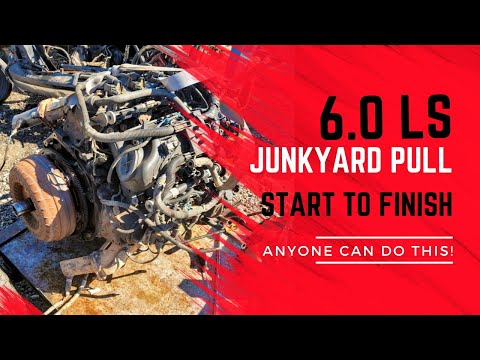
What to sacrifice and get out of the way is all of the surround removable sheet metal. Carefully if you intend to sell them.
The welded inner fender sides and any welded across the front core supports, you oscillating electric saw (Sawzall) cut these away.
Later before vehicle scrap disposal strip out as many nuts and bolts, and fasteners as you have time to do.
You OWN these already versus having to source and buy out fasteners. Makes them 3x the value of new.
This all will be your greasy nuts and bolts training. You will need this for an overhead camshaft head gasket replacement. Also show you tools you will need to acquire.
Regards
Steve Unruh
7 Likes