No, I didn’t put in any xantham gum. I didn’t even know about that.
Actually Suave shampoo works better than Dawn.
Rindert
4 Likes
I didn’t figure you did. Most likely someone just came up with it fairly recently. It seemingly makes it easier to get consistent results for testing mixtures.
Xantham gum is used as a cheaper alternative to Agar Agar for microbiology growth mediums. Which immediately makes you wonder if the cheaper alternatives like potato starch would also work. I don’t think so, because xantham gum increases viscosity.
Xantham gum is bacteria found naturally on cabbage, and other brassica leaves that make the leaves turn all slimy, and seemingly simple to make. Given it is also a common food additive, it is opening up a gopher hole. I don’t want to go down at this point. 
5 Likes
Hello,
Making your own aerated concrete is something I’d never considered but why not.
My house is built with older aerated concrete blocks (40 years old), and the insulation in these blocks is equivalent to that of a softwood like spruce.
These blocks are much more efficient nowadays than they were back then, but the more insulating the concrete, the less resistant it becomes.
Now you can buy blocks made with cellular insulation.
YTONG is a well-known brand here.
Regarding your experiments with aerated concrete, I would compare it to making chocolate mousse.
When you mix the egg whites, they become very airy (like mousse).
When you add the chocolate (like cement), you have to do it gently and mix as little as possible so the mousse remains light.
I suppose it’s similar when making aerated concrete. The more the mousse is mixed with the cement, the more the small bubbles will burst.
6 Likes
He covered that in the video when he talked about beating it too much to form open cells.
I think it might be a good way if you want to experiment for like refractory bricks because you can achieve consistent results in small batches. It isn’t cost effective for large batches like houses given xantham gum is over a dollar a pound.
3 Likes
I use a mixture of 1 Portland cement, 1 sand and 5-7 perlite, for a low density concrete to backing up high temperature refractories. Works great, as long as the refractory sees most of the heat. my old foundry furnace had 2.5 inches of castable high temp refractory, then backed with 2.5 inches of this low density concrete, After melting bronze all day the outside of the furnace was hot to the touch, but I could hold my hand on it, yellow / orange on the inside, just hot to the touch on the outside…
kent
10 Likes
Kent, you beat me to it. I’d use Perlite to lower the brick density. Fire brick embedded in perlite/cement or perlite/water glass would be very heat resistant and insulating.
If you really want to do it up… add a facing layer of Satanite and an IR reflective zirconium coating on top. Prepare for insane temps…
8 Likes
thanks. the only problem I have with either perlite or cement is that they spall and crumble at higher temps. I sold my old big furnace, it was more than I could handle and I am building a newer, much smaller furnace around a #20 crucible. I figure I can still lift and pour that size.
kent
6 Likes
That’s why I would surely use firebrick in front of perlite/cement. And I would suggest a different binder such as water glass or a true refractory cement.
Perlite starts to soften up around 1600-2000F (800-1000C) which is a lower temperature than real refractory cements. Satanite is good to 3200/1800C, so no issues with spall there! You might find that soft perlite is no problem if the refractory binder holds.
Ceramic wool provides no structural support but is an excellent material for insulation. For a kiln/foundry (vs a gasifier), I would surely consider it. There are bio-soluble insulation wools that can’t take quite as much heat but are much safer (for your lungs). That would be my choice.
6 Likes
This is not about the posts about thermal qualities but rather a report about Kristijan’s original post.
I am less enamored about aircrete than I once was. If you go up a ways in this thread you will see a foam generator I built a while back and a shot of a greenhouse with some wooden planting boxes outside. I paved that whole area with aircrete and clad those wooden boxes with it four inches thick. After six years it has weathered and deteriorated a lot. I also built some retaining walls with a mixture of aircrete and some bio-char flakes about a eight of an inch in diameter. They faired even worse and started to spall after a couple years. I tried a lot of different foam to cement mixes and none gave me results I was satisfied with. If I built anything else with aircrete I think I would build thicker and then clad it with a stucco mix.
8 Likes
Have you seen aluminum phosphate refractory cements? It appears they handle up to 1600C/3200F.
I just stumbled onto them. I don’t have time to go down that rabbit hole, but it looks like initially at least it is phosphoric acid, reacted with aluminum metal to create AlPO4, then that is about as far as I got.
This guy added magnesium I think… I didn’t read the full paper yet so it is kind of a bookmark.
https://www.sciencedirect.com/science/article/pii/S1877705816313868
2 Likes
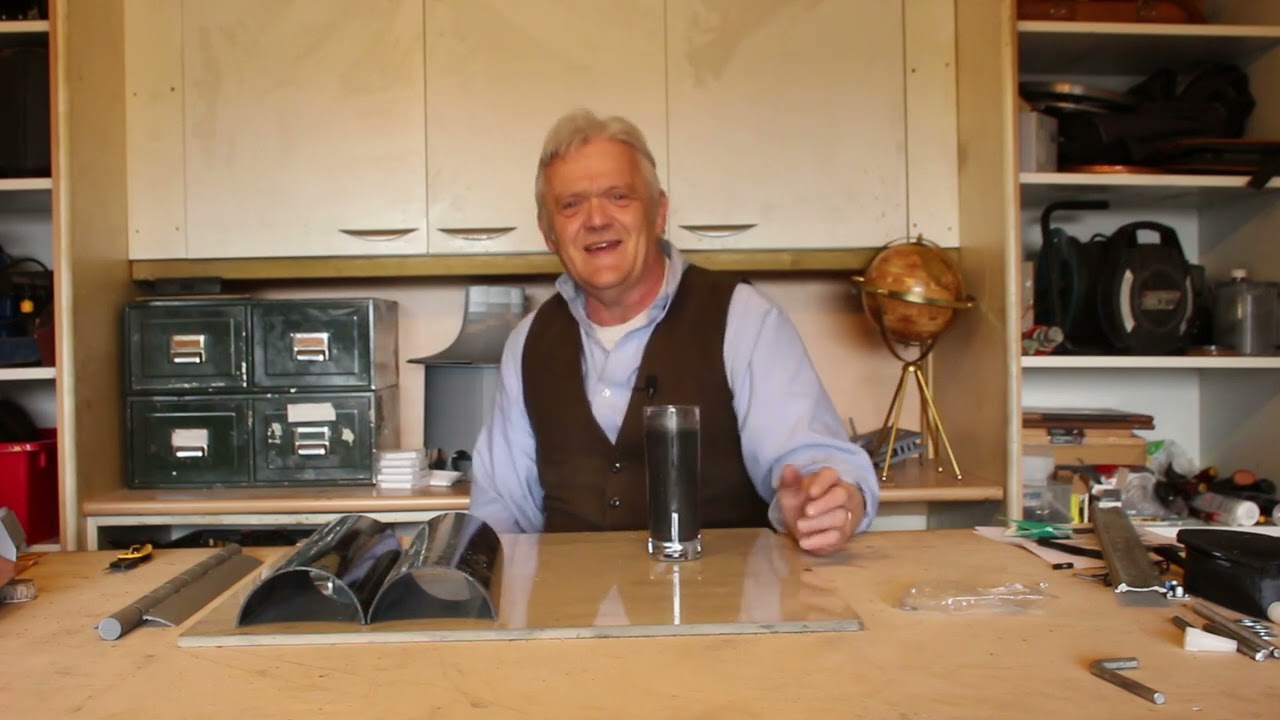
Graphene in concrete..
3 Likes
Hmmm… That sounds like it may have evolved from pine ash.
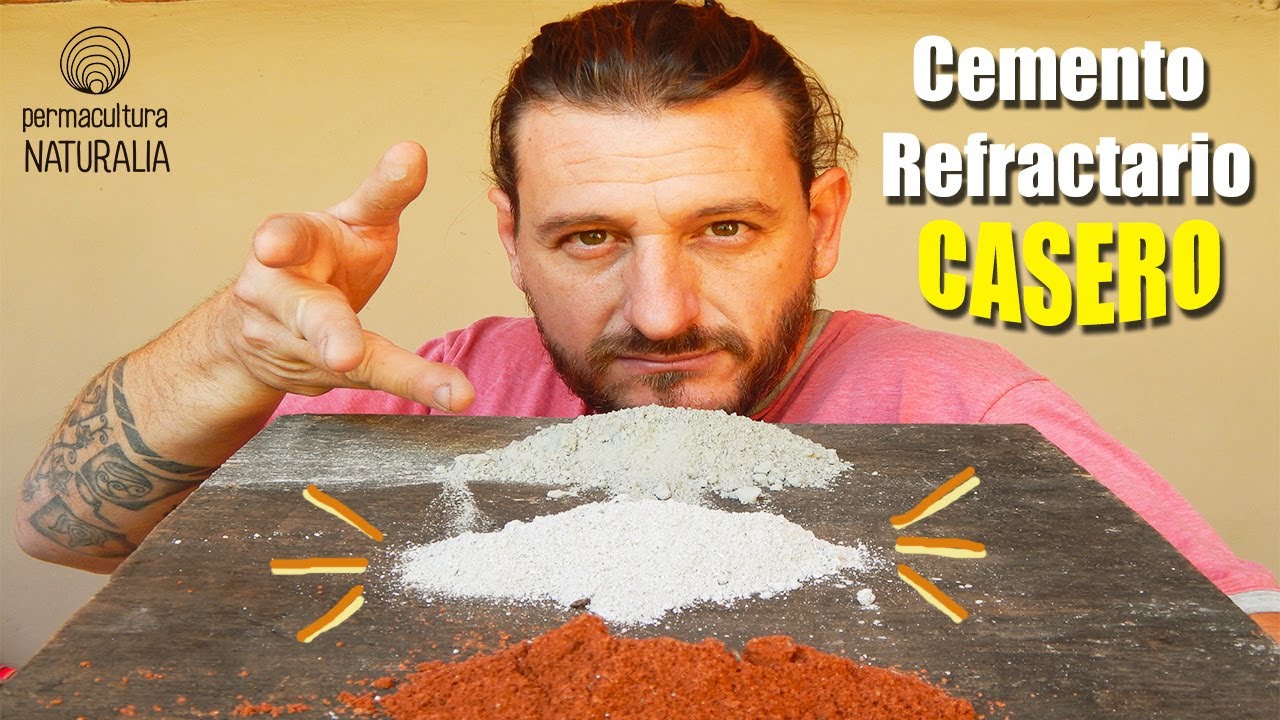
3 Likes
I don’t know about aluminum phosphate, but “Rapid Set Cement All” which is available from sources like Home Depot (in the US, at least), is a high aluminum cement that’s better for medium-high temperatures than Portland cement, and cures “in 15 minutes.”
From the MSDS:
Aluminum calcium oxide sulfate 10-25%
Dicalcium silicate 10-35%
Calcium sulfate 1-12%
Silica, crystalline quartz 0-0.1%
Formaldehyde <0.01%
I made a (rough) cast bottom and riser for a J-tube rocket stove using this cement, mixed with a lot of perlite. It worked okay for the short time I played with it, but was mechanically fragile (too much perlite, maybe?). Throwing wood into it would not be a good idea. But is was nice to work with, and the quick setting is helpful for impatient craftsmen of questionable skill 
4 Likes
calcium breaks down at a lower temperature then the phosphate.
maybe isolated. Aluminum oxide which is contained in ash is an -excellent- refractory but the ash contains a lot of calcium carbonate, potassium, magnesium and trace elements, however it can contain 1-15% aluminum oxide and I can’t imagine it exists in the plant as aluminum oxide. There is a chance they isolated aluminum phosphate.
I was googling for a binder for aluminum oxide and the search came up with the aluminum phosphate, so I thought I would ask. It just seems like it checked off a lot of boxes, and I hadn’t seen it mentioned before.
4 Likes
Aluminum phosphate cement is new to me. I am reading up, because it is definitely interesting. I can’t find much of an online source for purchase, but perhaps it is just that recent of a formulation.
2 Likes
Ahh I think I found it. Mono Aluminum Phosphate and aluminum phosphate are two different things, and are easily confused along with one that has dihydrogen in it. And I think I read something where the crystal structure contains both in an alternate pattern.
We might need to be looking for mono aluminum phosphate which is a lot easier to find.
4 Likes
I was studying Marcell Foti’s formulations for artificial stone (geopolymer) he uses pine ash as a catalyst. My interest is to make cast shapes in silicone carbide.
https://www.youtube.com/@marcellfotihttps://www.youtube.com/@marcellfoti
1 Like
YouTube can’t seem to find it 
3 Likes
Rindert, Kent,
Try this:

5 Likes
Might not have to cast them. This just popped up in my feed.
4 Likes