I have the same thing on the other Chevy, and I don’t see any problems with this.
10 Likes
I was looking on AliExpress for the stainless mesh. They want over $200 USD for 10 square meters. I think @Woodrunner went for 200 mesh size but they offer 300 and 400 mesh too. I think the 400 mesh is 36 micron if they’re like the other listings. 1 meter by 10 meters dimension would be convenient but pricey.
8 Likes
Hi Cody, when i first looked at this ss mesh it was 1200$ 10 square meters, when i later bought for my chevy it was down to 400$.
It is pricey, but has become better anyway.
8 Likes
So you did end up buying the 200 mesh? I would save a lot of money that way. I don’t have a bubbler filter planned like you have, though. My safety filter at the throttle isn’t that tight either since it’s just a tea strainer.
5 Likes
Yes, i bought 200mesh if i remember correctly, it was the only available alternative at the time.
Seems to work good enough, some fine soot passes, but my old engines eat it without hesitation.
7 Likes
I wonder if it would be too much restrictive flow to have a cold filter with hay and wool after the mesh filter and cooler?
6 Likes
I don’t think it’s worth it, for the little amount of soot.
But maybe a tractor-style oil bath cleaner, with water in it instead, and a small amount of oil (to avoid a gooey mess)
I think the ones really into clean gas, cools the gas after mesh filter, then slightly re-heats it, and pass it through a smaller filter (air-cleaner/ pod filter)
7 Likes
I remember Max Gasman saying that’s what he did with his car.
6 Likes
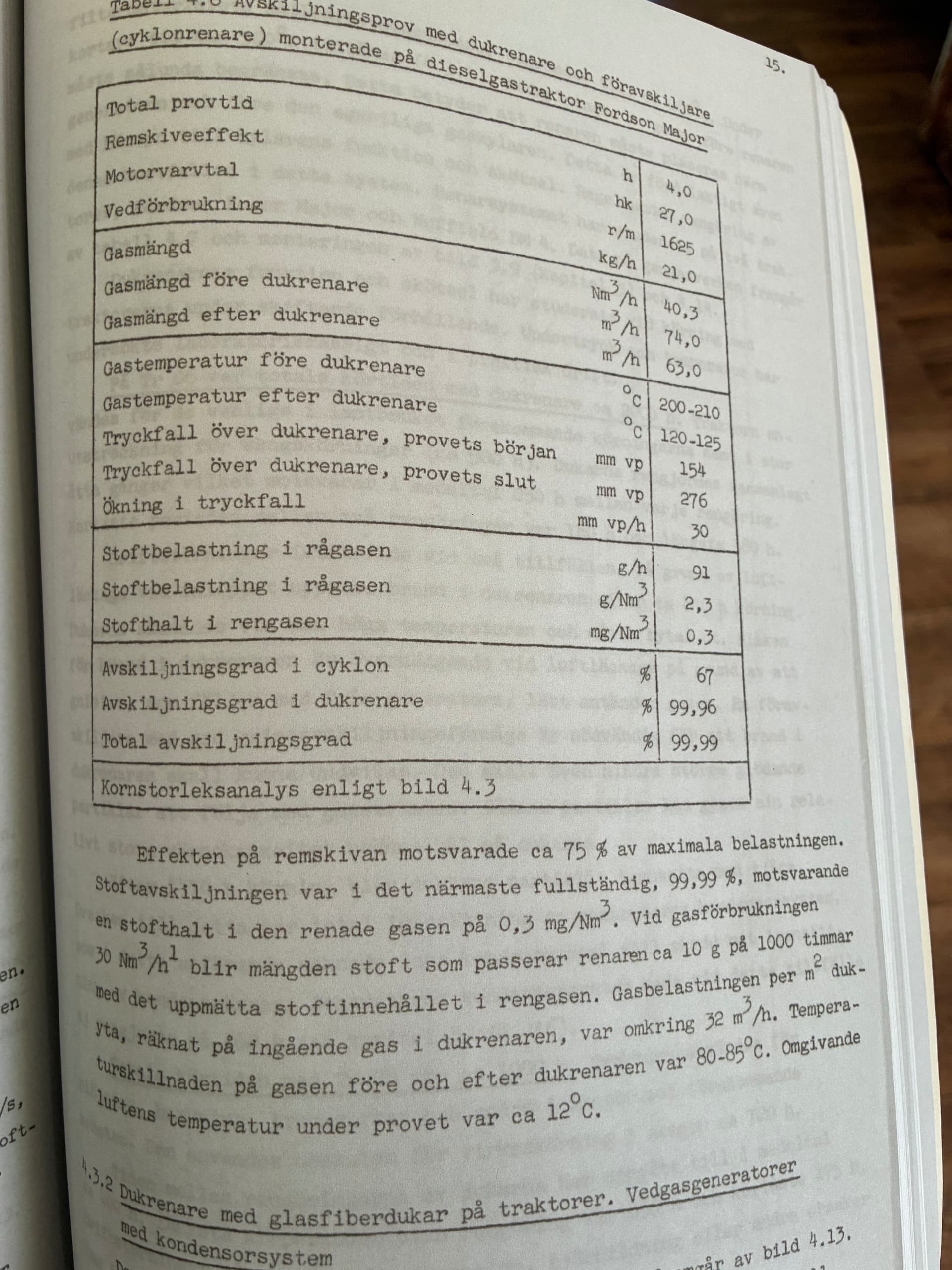
The Swedes had a purification rate of 99.99% with fiberglass cloth and cyclone.
However, the cyclone must not be that good, but must let slightly coarser material through.
However, do not work so well on standard Imbert units.
13 Likes
Do any of you understand what happens if I move the throttle up or down?
I had the throttle further down from the beginning and the first few times I drove and then I remember the car being stronger, but I don’t know if it was because I had a lot of charcoal in the hopper.
4 Likes
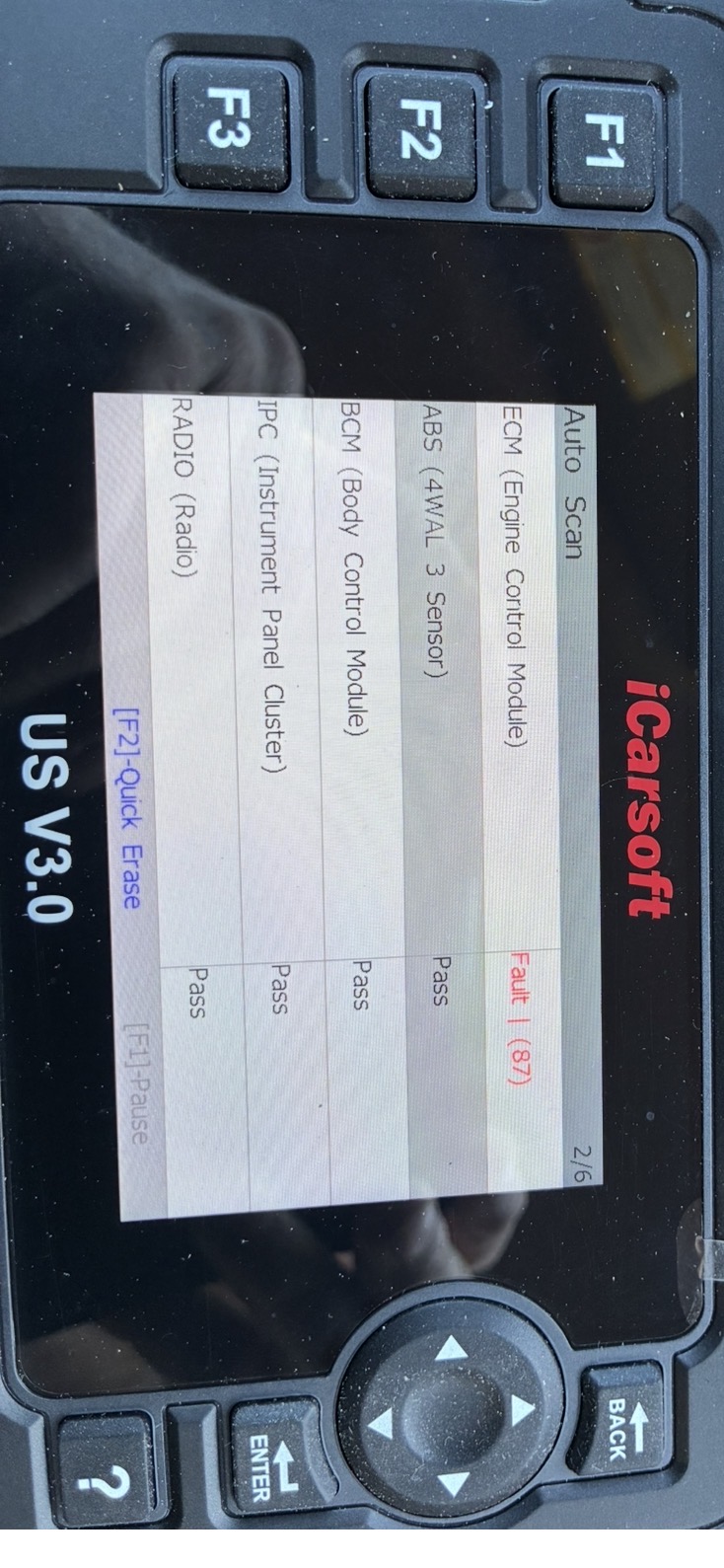
Does anyone understand this instrument? It says 87 error codes but I can’t find any errors. If I clear the error codes, are they still there even if I don’t start the car?
7 Likes
If you do clear the codes, and they come back, then they’re real issues.
I wonder why it doesn’t show you the codes? I don’t have a fancy scanner like that.
8 Likes
AI Overview
On a Chevy S10, Error (or Code) 87 in the OBD-I system indicates an EEPROM (Erasable Programmable Read-Only Memory) flash memory error. This means the vehicle’s Engine Control Module (ECM) or its internal, removable computer chip (often called the CALPAK or Mem-Cal) has detected a critical internal memory or programming fault. [1, 2, 3]
Common Causes
-
Corroded or Loose EPROM Chip: The memory chip inside the ECM has wiggled loose or its contacts have corroded over time.
-
Failing ECM: The physical hardware of the Engine Control Module is failing or has suffered internal damage.
-
Damaged Wiring/Grounds: Poor, corroded, or loose ground connections to the ECM can cause voltage drops that prevent the computer from reading its memory correctly. [1, 2, 3, 4, 5]
Troubleshooting Steps
-
Clear and Reset the Code: Disconnect the negative battery cable for about 10–15 minutes, then reconnect it and see if the code returns. Sometimes temporary voltage drops (like a weak battery) can trigger a false code 87.
-
Reseat the EPROM Chip: Locate the ECM (usually found behind the passenger-side dashboard/kick panel). Carefully open the casing and remove/reseat the EPROM chip inside to ensure the pins are making solid, uncorroded contact.
-
Inspect the Grounds and Wiring: Check the wiring harness connecting to the ECM, specifically ensuring the engine block-to-frame grounds are clean, tight, and free of corrosion.
-
Replace the ECM: If the code 87 immediately returns and the chip is seated properly, the ECM internal memory is likely corrupted and the unit must be replaced. [1, 2, 3, 4, 5, 6, 7]
When replacing the ECM, you can opt to purchase pre-flashed plug-and-play units from verified suppliers like FS1 Inc, ensuring it is tailored to your truck’s exact VIN and engine specs. [1]
9 Likes
Good researching SeanO’
A couple of learned techniques:
Don’t just disconnect the battery negative cable. Disconnect BOTH negative and positive cables. Then jumper wire between them connecting first on and off. Then left connected for a few minutes.
The real way to check for ground circuit problems is to appropriately sized parallel jumper wire the circuit leaving the existing hooked up. ANY change of states and you do have resistance/broken insides insulations wire strands, etc.
This works for positive circuits sides too. With cautions that your parallel “bypass” may be bypassing a safety relay.
Ha! I had a vehicle I failed to check someone had left in drive engine start up and roll up onto my steel safety toe once. Trapped me. Embarrassing.
Steve Unruh
12 Likes
I installed an update of the program in the instrument, and went out and drove in the forest.
After about 10km the abs and brake fluid light started to come on.
When I stopped the engine and started it again the abs and brake fluid lights went out.
When I got home I tested with the instrument, error code on the air mass meter, no error code on the abs?
8 Likes
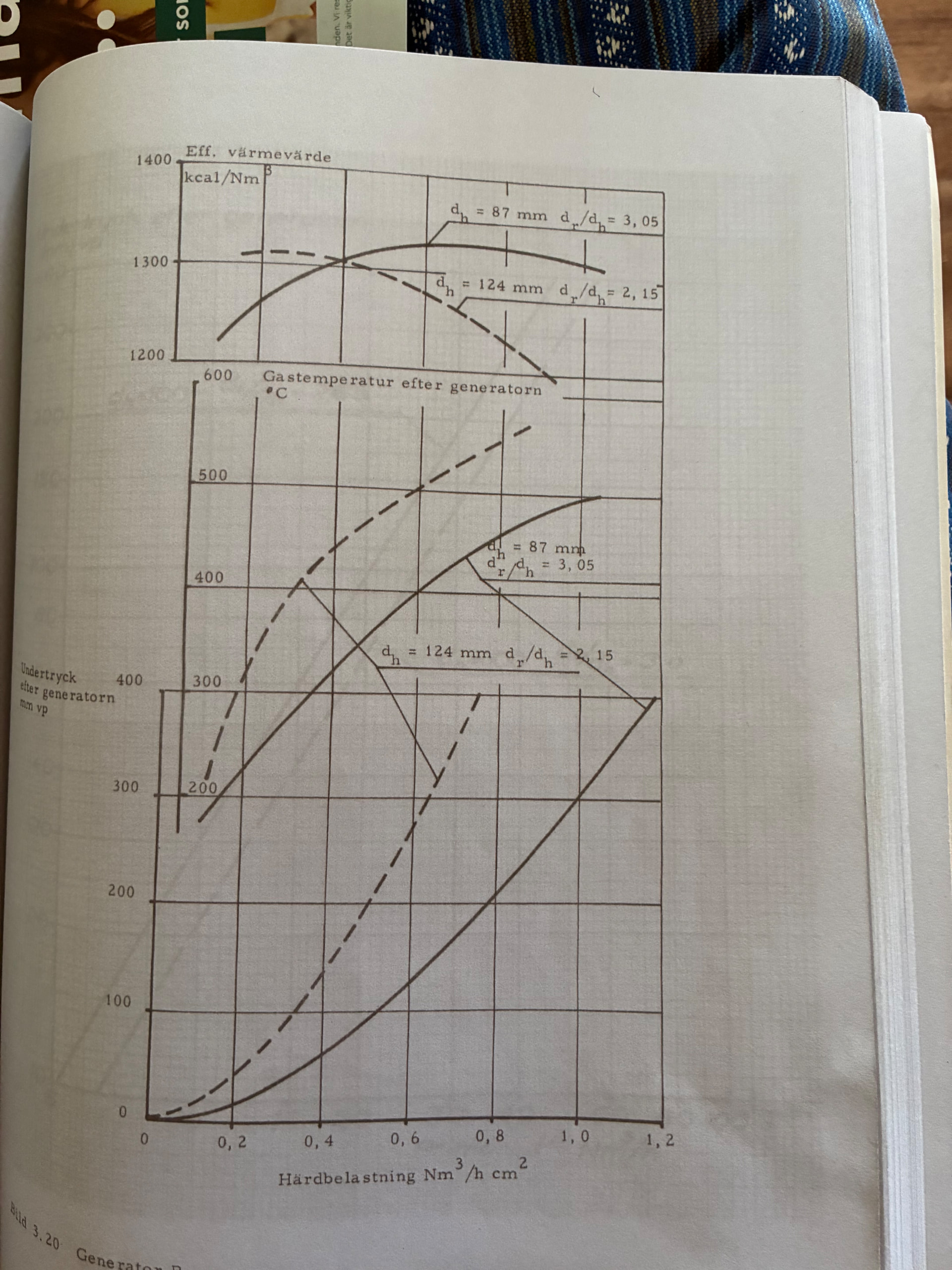
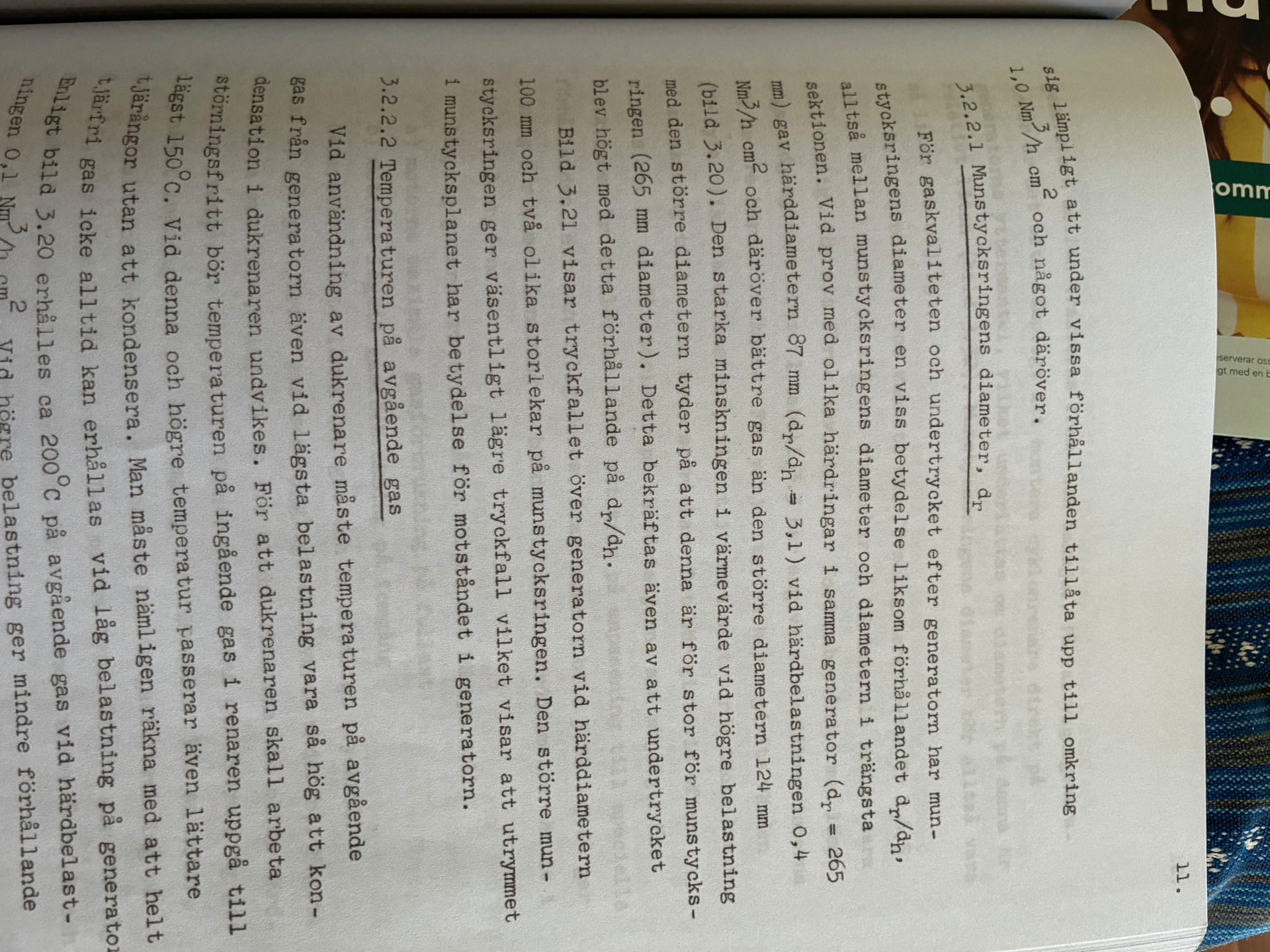
Does anyone understand what is written here?
From what I understand, there is better gas with less constriction?
5 Likes
Jan, the only explanation I can come up with is the heart gets more focused an ash insulated with a smaller restriction. The final power output may suffer from high vacuum at high demand though.
10 Likes
It also says that the vacuum pressure is higher with a larger restrictor, if I read it correctly?
5 Likes
How could that be? Can’t be right. Very counterintiutive  That would mean a restriction the size of a nozzle would make the gasifier breathe good - I don’t think so.
I can accept a certain amount of velosity would purge fines and ash better, but not enough to make the results flip upside down.
10 Likes