I wonder if the gas doesn’t take the easiest route, and then one or two of the pipes are wasted? When I drive my current car, I have 4 pipes on each side, but only the top one usually gets really hot, should that be because the gas goes there the most?
Another question too, or maybe related to this, the car is stronger now when it’s around -10 degrees c,(14f) than when it’s warmer, is it due to colder gas entering the engine or to higher oxygen content in the air, or is it something else?
10 Likes
Denst gas, denst air and less moisture- a little bit of all three I would guess. Seems to always be the case with gasification - lots of small factors add up.
10 Likes
I was wondering if an intercooler for a truck would work better than one I build myself out of pipes?
3 Likes
If I may, with water, hot water is less dense than cold water, so it will rise above the cold water. I presume the same is true for gas, which could explain why the pipe is hotter at the top.
3 Likes
You got me thinking here Jan. If the supply gas pipe is larger in diameter then the 3 pipes it is feeding. And you have a vaccum of -30 on all of pipes connecting back to a pipe that has a vaccum of -30 no flow. The vaccum should be the same on all 3 pipes because no gases are flowing yet.
Now the flow will change if there is a obstruction in the pipe and that would change the flow in that pipe. My cooling pipes seem to plug up first with the lower pipes or one side of my pipes system first. Yes heat rises and my top pipes are hotter on my cooling pipe rails that are up right. I am not sure about the heat if they are flat on a roof of a car, I would think they would be all the same, except again for flow obstructions in the pipes. On my cooling system my main header pipe coming out of my drop box is larger going to smaller pipes. They are also slanting down to the back of the bed of the truck. This helps the moisture and soot to flow down the pipes to condensation tank.
So the gases flowing out of a larger pipe stright into a smaller pipe and the same gases flowing out of the same larger pipe but has to now make a right angle turn into a smaller pipe at -30 vaccum. That right angle is a slight obstruction to the flow of the gases. Same pipe diameters different flow velocities are happing here.
6 Likes
Some physical characteristics of gas:
-the volume of gas also changes with temperature according to the equation V1/T1 = V2/T2 (pressure is constant)
-if we take the example of a gas at 100°C and a gas at 30°C, we convert these values into Kelvins 100°C = 373°K and 30°C = 303°C and calculate the difference in volume, which is 23%
- if we compare the torque and engine power, the difference is about 20%,… which is very large
The gas cooler is a very important factor for good engine power, so it pays to do a good job of cooling the gas.
For each configuration of a vehicle or stationary unit, it is good to foresee a reasonable shape of the cooler, I agree with Mr. Wayne, as well as with Andris, I have a cooler on my tractor, as Andris drew.
Just a tip, if you divide the gas from one pipe into several cooling pipes (Wayne’s suggestion), it is good to drill smaller holes here, so the gas is evenly distributed throughout each pipe, the sum of these holes should be equal to the cross-section of the supply pipe,…
11 Likes
not really in my experience, unless some of them are plugged.
i took a thermal picture, unfortunately could not get whole cooler in frame.

13 Likes
Yes, that’s the next question I ask myself, is a vertical cooler better than a horizontal one?
Shouldn’t the distribution be better in a vertical cooler?
7 Likes
Yes, exactly I wonder if my gas won’t get colder as the car runs better this winter, even though I have so many radiator pipes.
Also thinking about whether I can get better distribution between the pipes even if I have better size between them, the turbulence and the order in which they are located will also affect.
At the same time, a single pipe may create greater resistance through bends, but many pipes have sharp connections.
As you can hear, I understand the idea, as usual. Hmm
7 Likes
Ah, I knew it, I was waiting for you to ask… 
I have a feeling the vertical radiator will be more efficient because the hot gas will stay at the top and will have to cool down to descend.
But I’d also like an expert’s opinion because I might be wrong.
5 Likes
That is only the case when low flow. Jan drew a crossflow, it should work that way.
4 Likes
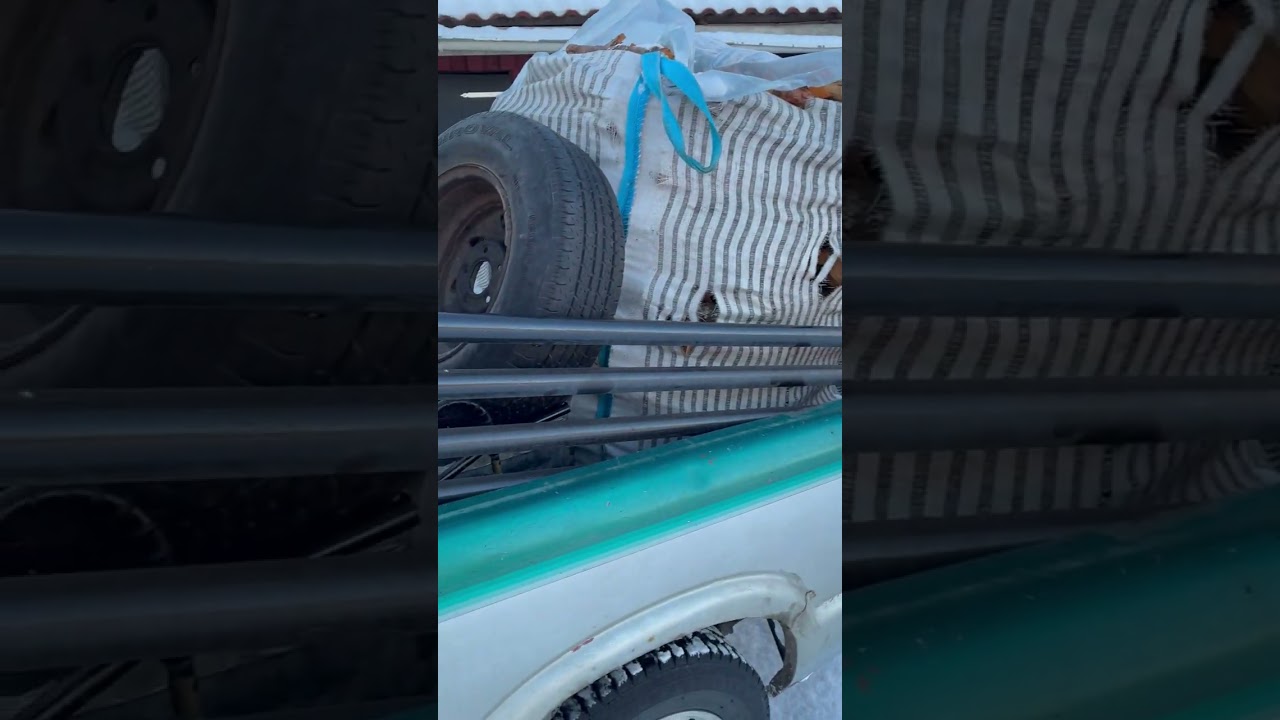
Seems to be one thing that I feel and another that the meter shows.
Doesn’t seem to be that much of a difference, if the meter is correct.
A pipe is colder though.
10 Likes
Mr Wayne better not watch the video with all that white stuff.
10 Likes
Hi Jan, this is a simple way.
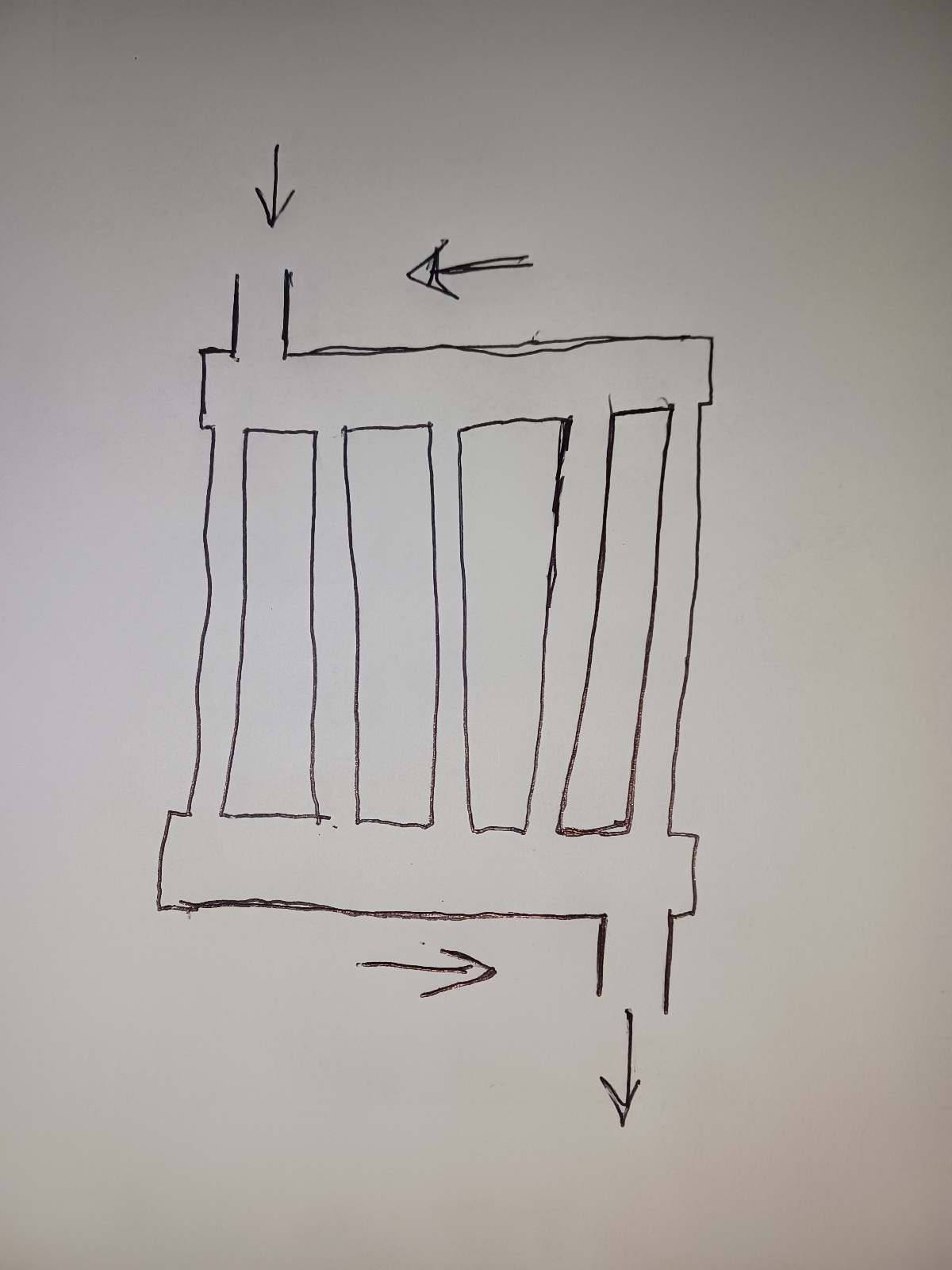
This is how i do it on my volvo.
This could be placed horizontal, vertical, laying down, as long there is a slope for water to run to nearest collector.
12 Likes
JanA. do not use a forced induction vehicle intercoolers.
This has already been tried many times. Many times it has failed sooner versus later.
Soots clogging. Then nearly impossible to get cleaned out. Aggressive chemical cleaning and then pinholes sprout in the thin aluminum walls from the woodgas alkaline corrosion.
Vehicle intercoolers were designed to heat transfer out; very clean filtered air.
The old 40’s coolers with large passages of flattened oval tubes would be the optimal shape. With like the best back then: having manifold boxes in both ends with individual tube brush capable clean out ports. Ha! More places for air leaks!
Round tubes able to be water flow washed are really the best compromise.
And with experiences you learn to size accounting for internal walls build ups, slowing heat transfers.
Regards
Steve Unruh
11 Likes
I’m not so worried about soot anymore as long as the filter works properly, but aluminum might not be the best.
Looked at used intercoolers, but they were quite expensive and quite large.
4 Likes

11 Likes
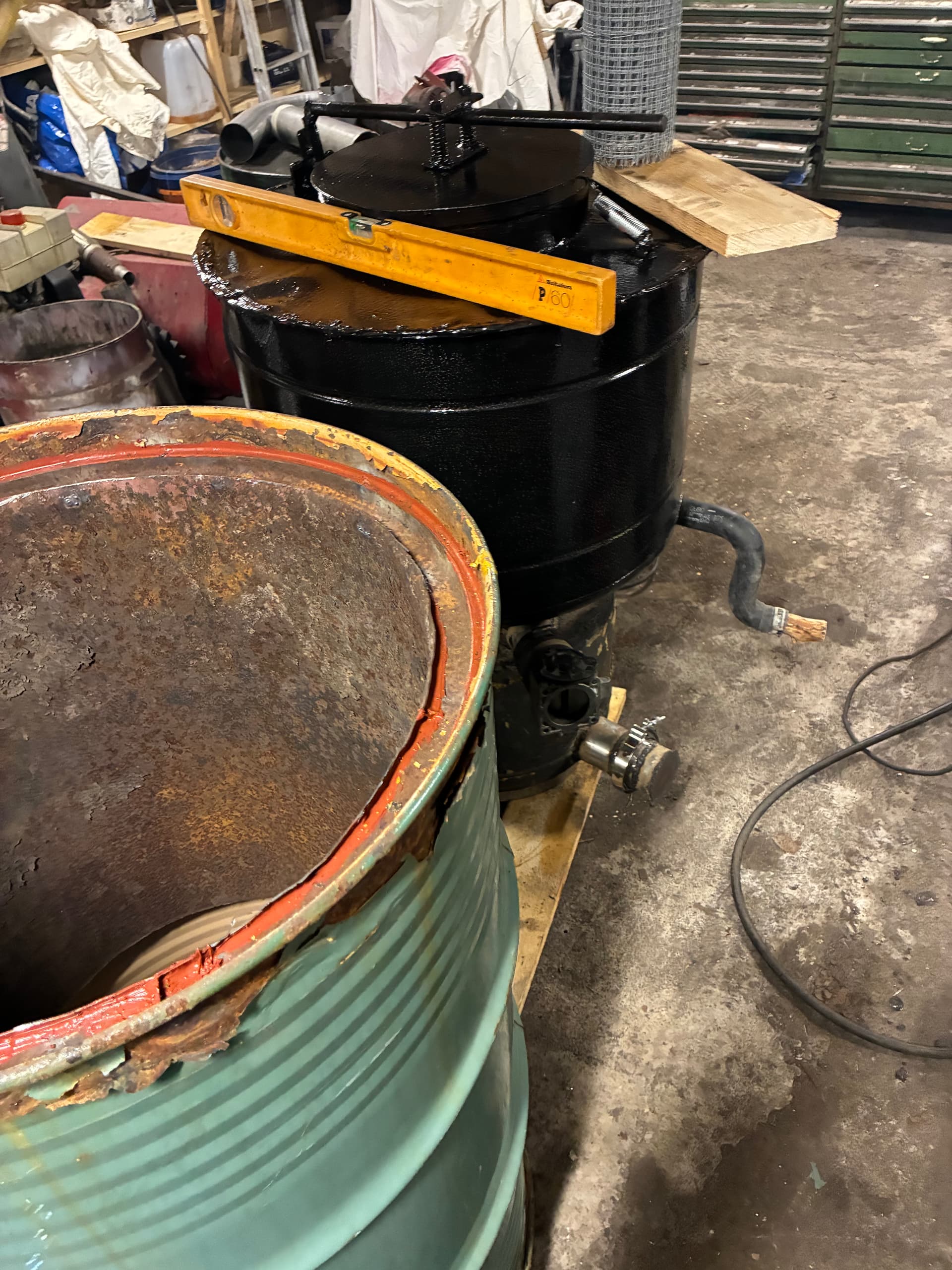
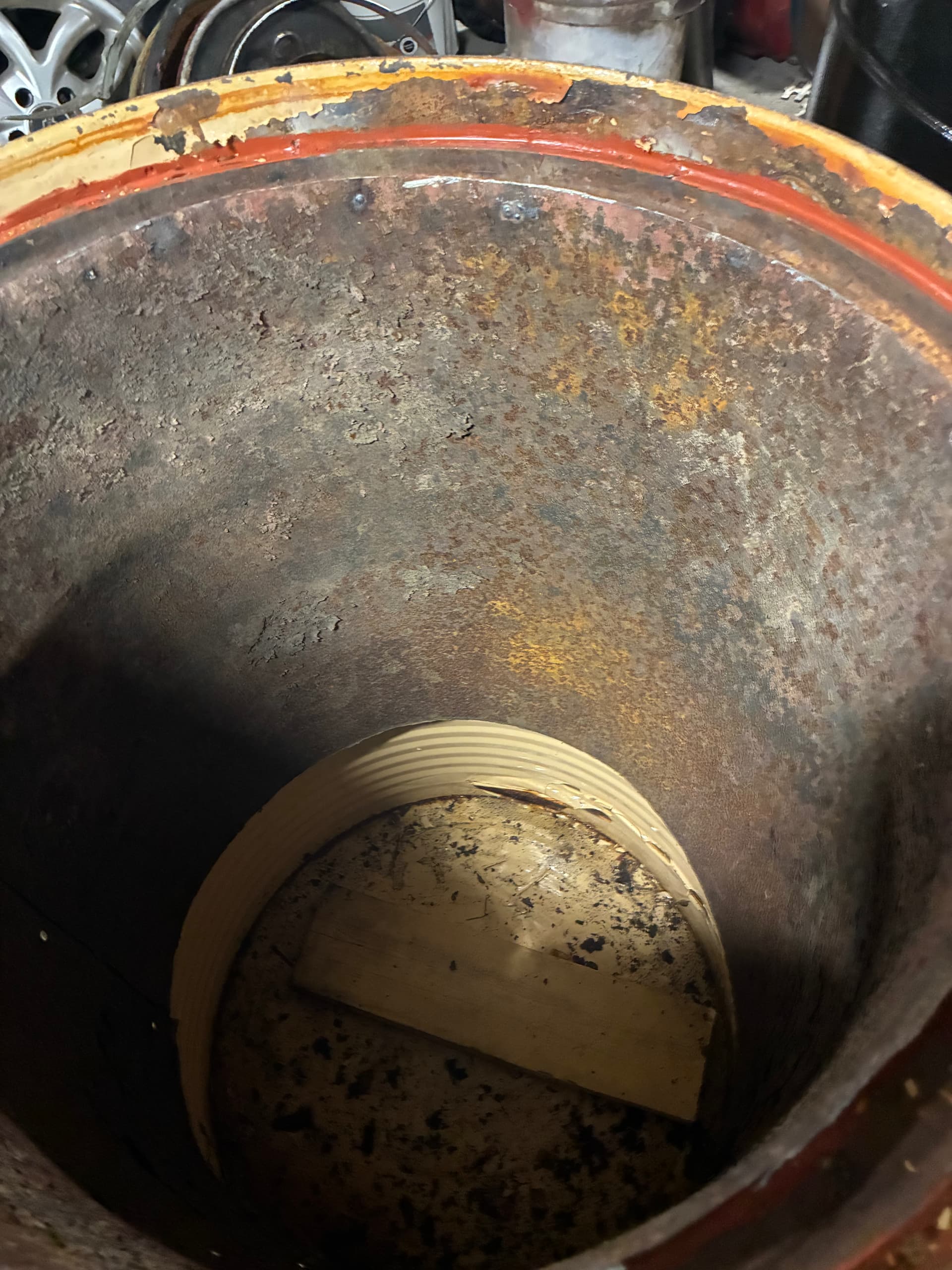
Ugh, I’m worried, I wonder if it will get worse with age?
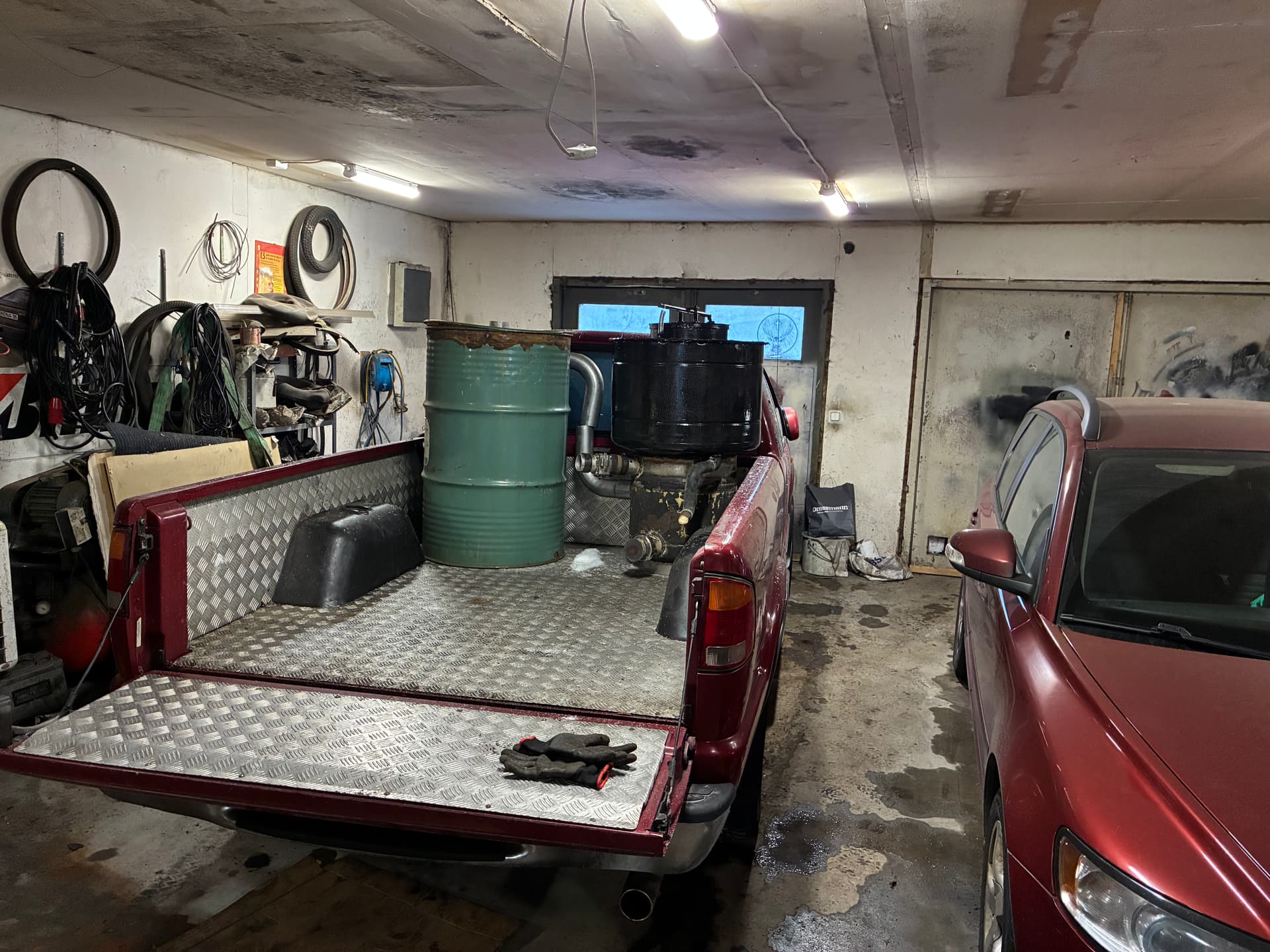
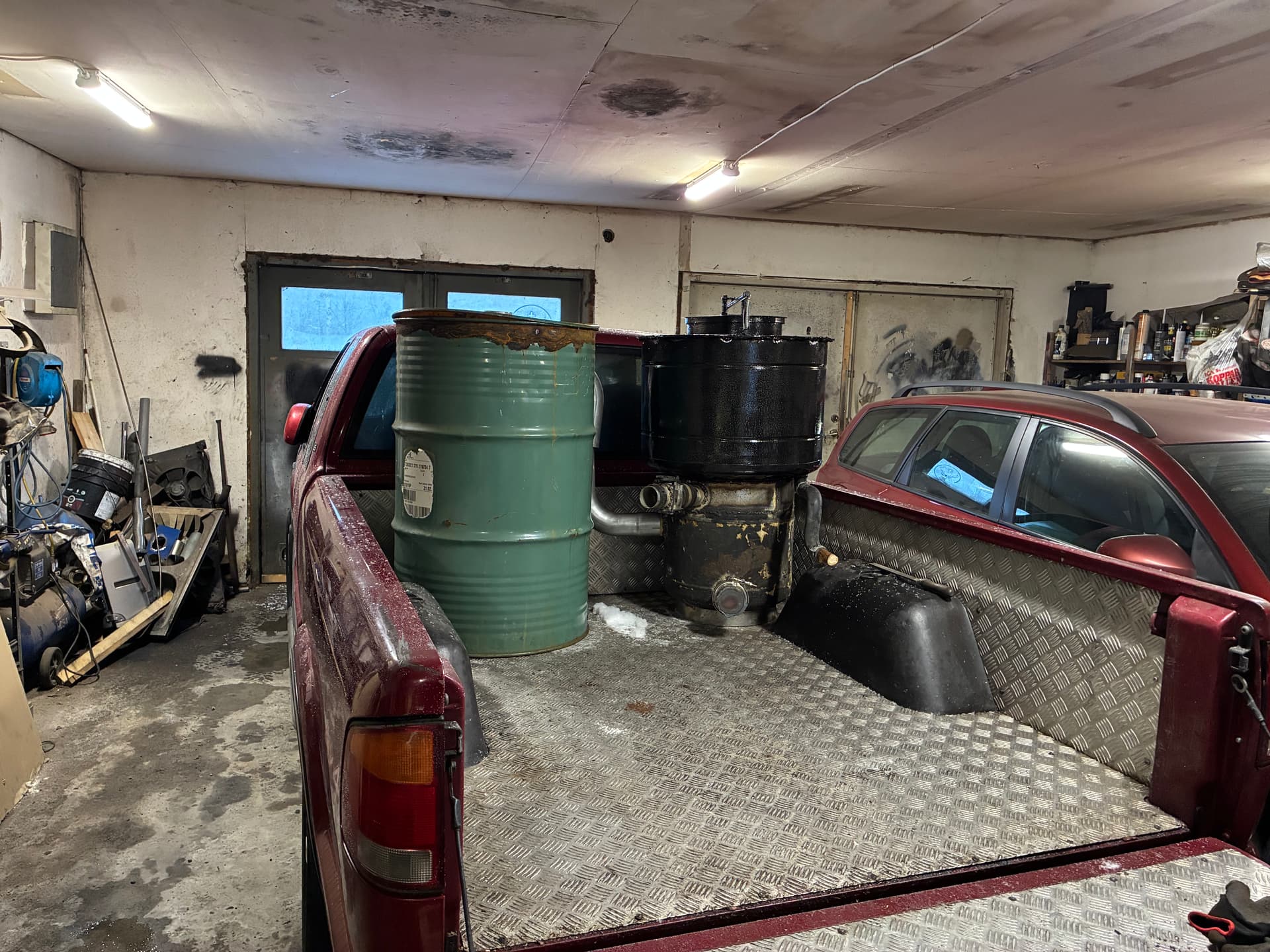
Now I’m wondering, should I make a fixed pipe between the unit and the filter that is 67 mm (2.5”) or should I put a 60mm (2.4”) flex hose on instead?
If I put the radiator behind the cab, it will be 50cm (19.6”) high and 130 wide, (51”) do you think that’s enough?

11 Likes
Jan, I don’t think some extra cooling up front would hurt. It doesn’t have to be much, but it’ll be in the wind drag and increase its efficiency with speed. On the Volvo i put a small container to catch condensation infront of the radiator. I collect half a cup every other trip.
10 Likes
Yes, that was a good idea, I don’t have a condensation tank in the front of my car, it should be better with this.
8 Likes