Hi Goran, I also really look forward to your posts—they are always interesting.
You mentioned that the charcoal at the bottom disappears after shutdown; well, I noticed the same thing when I first started using my gasifiers. I discussed this with Kristjan, who explained that moist gases “consume” the charcoal as they are forced downwards. So, what did I do? I installed a “chimney” at the top of the gasifier. When shutting down, I open the chimney and close the gas outlet; this allows all the moist gases to rise up through the chimney, preserving the charcoal at the bottom.
Regarding the slow startup…:
When I light the charcoal at the bottom and fan the initial fire, a high temperature is generated in a narrow zone in the center, near the restriction opening. However, when I start blowing air through the nozzles, there is actually far too much air, resulting in poor-quality, non-flammable gas—this happens when all the gases travel toward the gasifier outlet, meaning I’m essentially just burning the charcoal in the center without the heat spreading outwards. Now, I open the chimney, which redirects most of the gases upwards; this allows the heat to spread more quickly across the hot zone and raises the temperature higher, though it does create a cloud of moist smoke. As I’ve mentioned before, my startup process takes about 10 minutes, after which the engine runs solely on wood gas. When building the new gasifier, I plan to install a single startup port; initially, it will function like the single nozzle found in charcoal gasifiers (like Giorgio or Martin’s designs), since only charcoal will be gasified at that stage. Then, I will gradually reduce the airflow to that nozzle and begin opening the air supply to the “operating nozzles”… though this is just an idea for now…
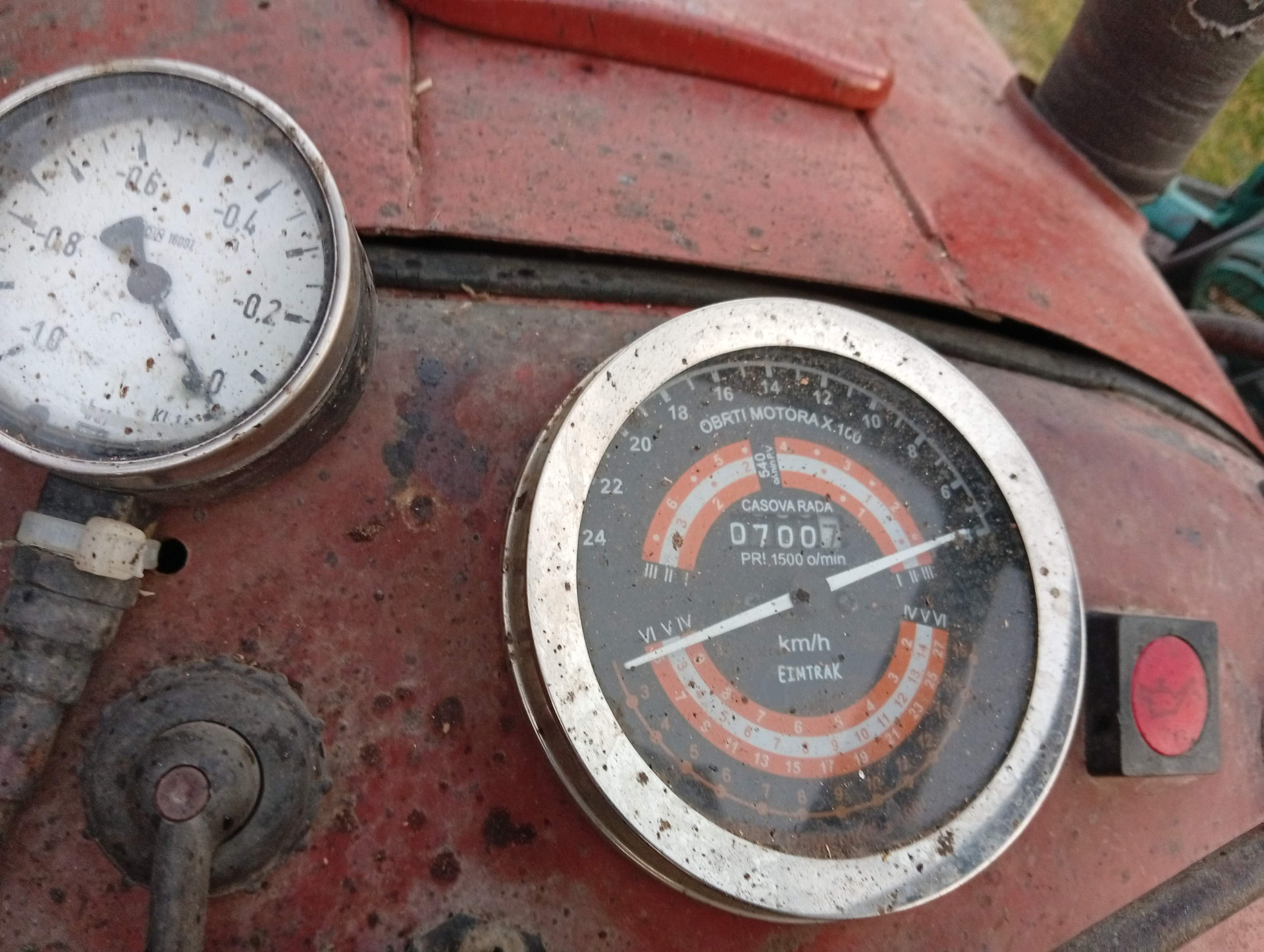
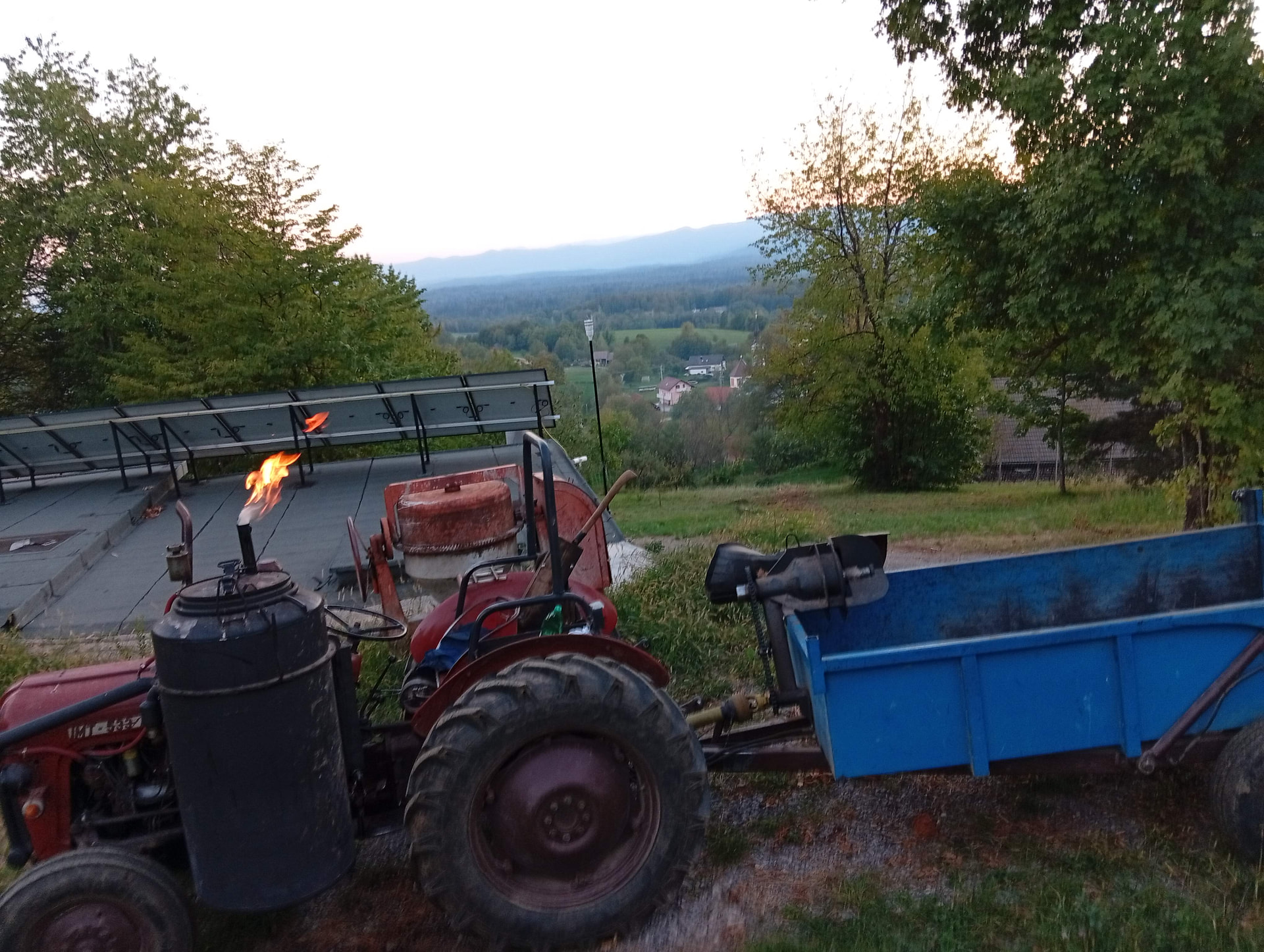
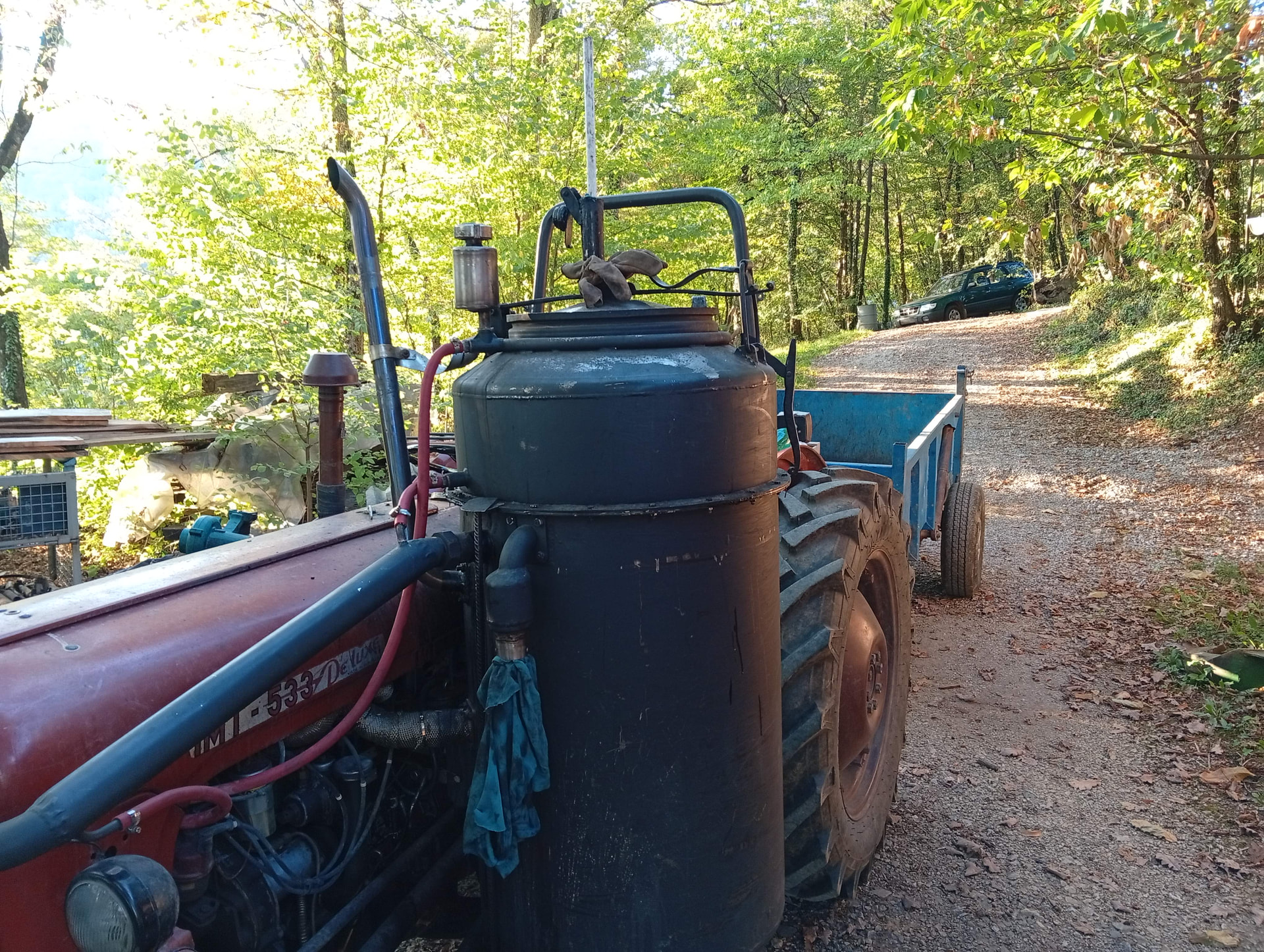
To liven up these thoughts, here is a picture from this afternoon… The Fergie has clocked up 700 hours running on wood gas.
Hi Tone, sorry for late answer.
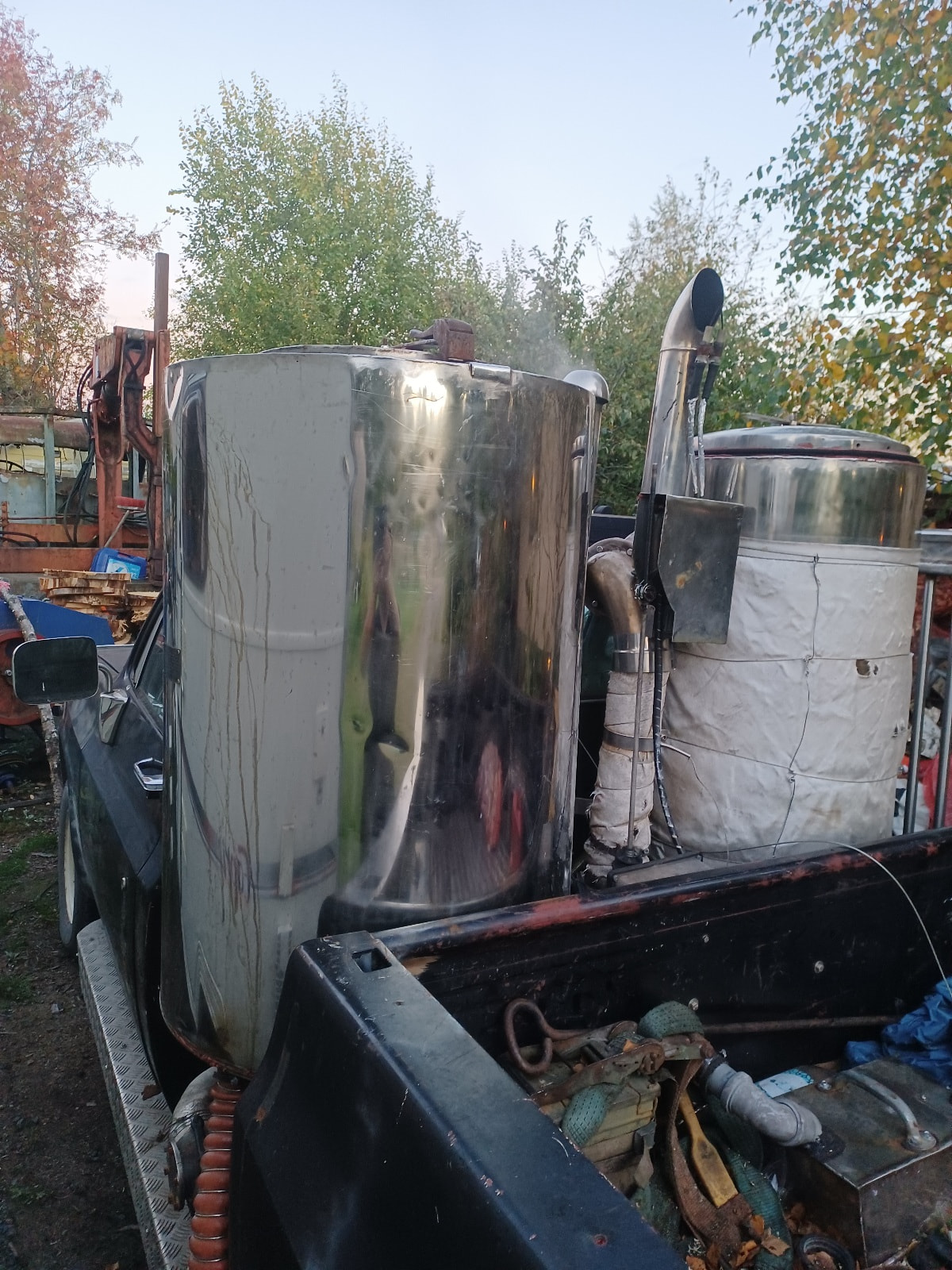
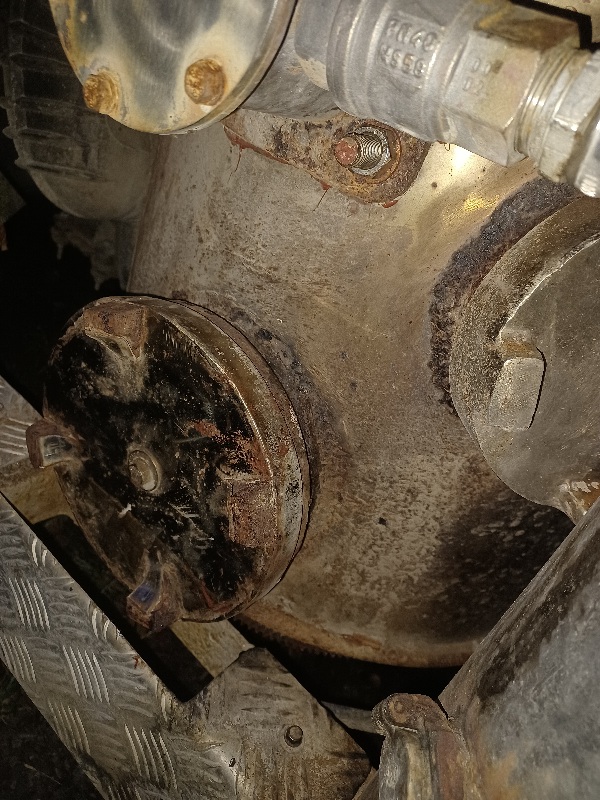
I need to clarify some about my gasifier, i had a leak a filling lid (acting as a chimney) also a small leak at ash clean-out lid, and as i dont close the air-supply to my nozzles, this made the gasifier slowly burn after shut down, up to 12 hours, this consumed the charcoal above the nozzles, creating a cavity. When i light up, raw wood enters nozzle level, and makes start up smokier, and takes longer time. Also ash from this “after burning” ends up in reduction zone, making the reduction char less reactive in the beginning (this about ash contamination is just a theory i have)
Well, after this new seals i put in, i think it would start up as it used to, 4-10 minutes, if i take good care of it, and use good, dry wood.
A very interesting idea about the start-up nozzle, i like it. Seems it could be a real easy and fast starter.
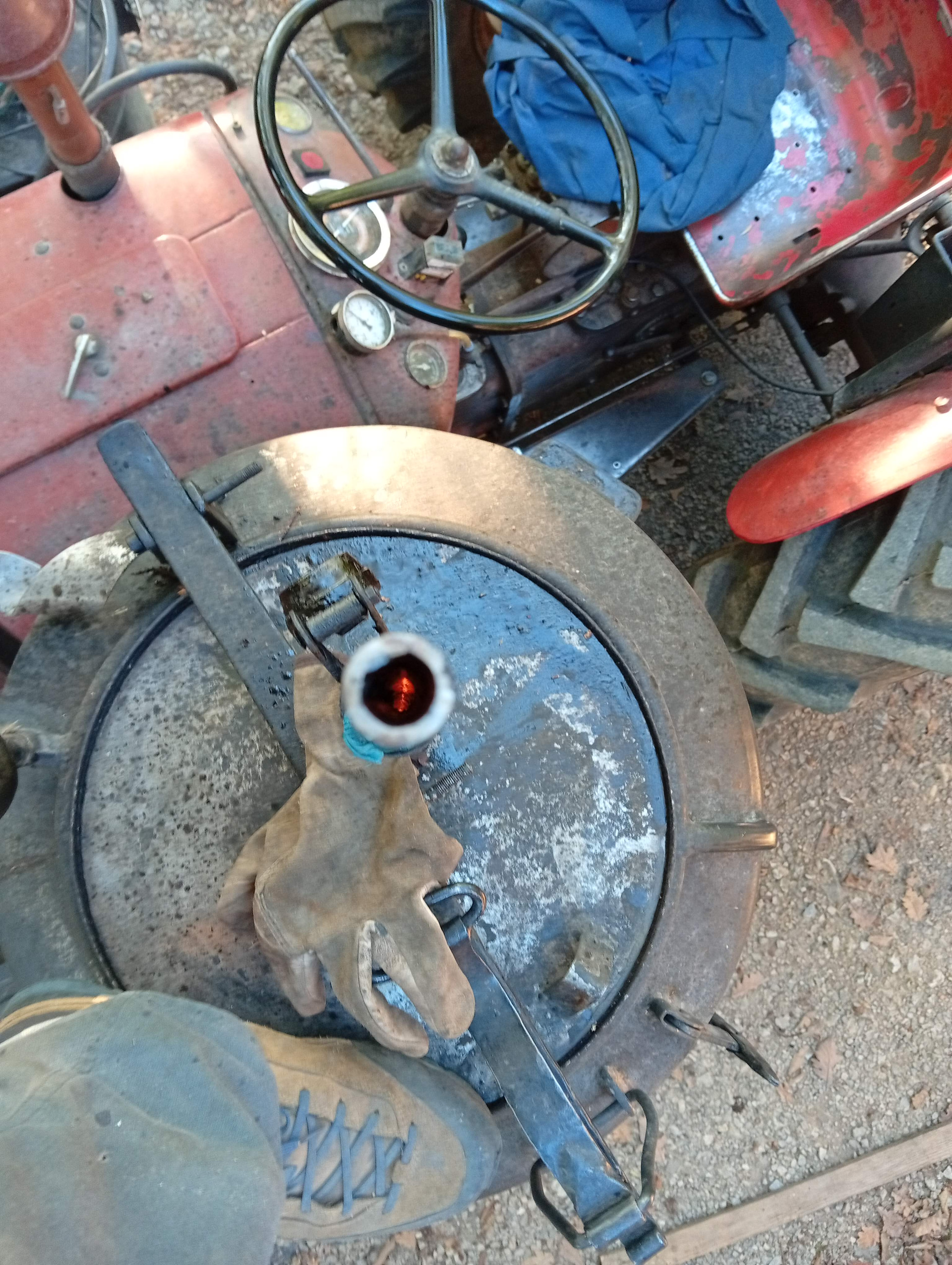
I also tried starting it using a 3/8" pipe inserted through the chimney and sealed with a rag; I also sealed the air intake opening with a rag. The startup was truly fast—perhaps 3–4 minutes—and the tractor ran on the gas. I drove slowly using this air intake method for about 3 minutes, then removed the rag from the air intake; as expected, the gas quality dropped to the point where the engine stalled. I then blew air onto the nozzles for a minute, vented the smoke through the chimney, and the gas was once again good for operation. Evidently, I drove using the startup pipe for too short a time—or rather, I introduced air to the working nozzles too quickly; I should have opened them gradually while slowly closing the intake for the startup pipe. But the theory actually works!
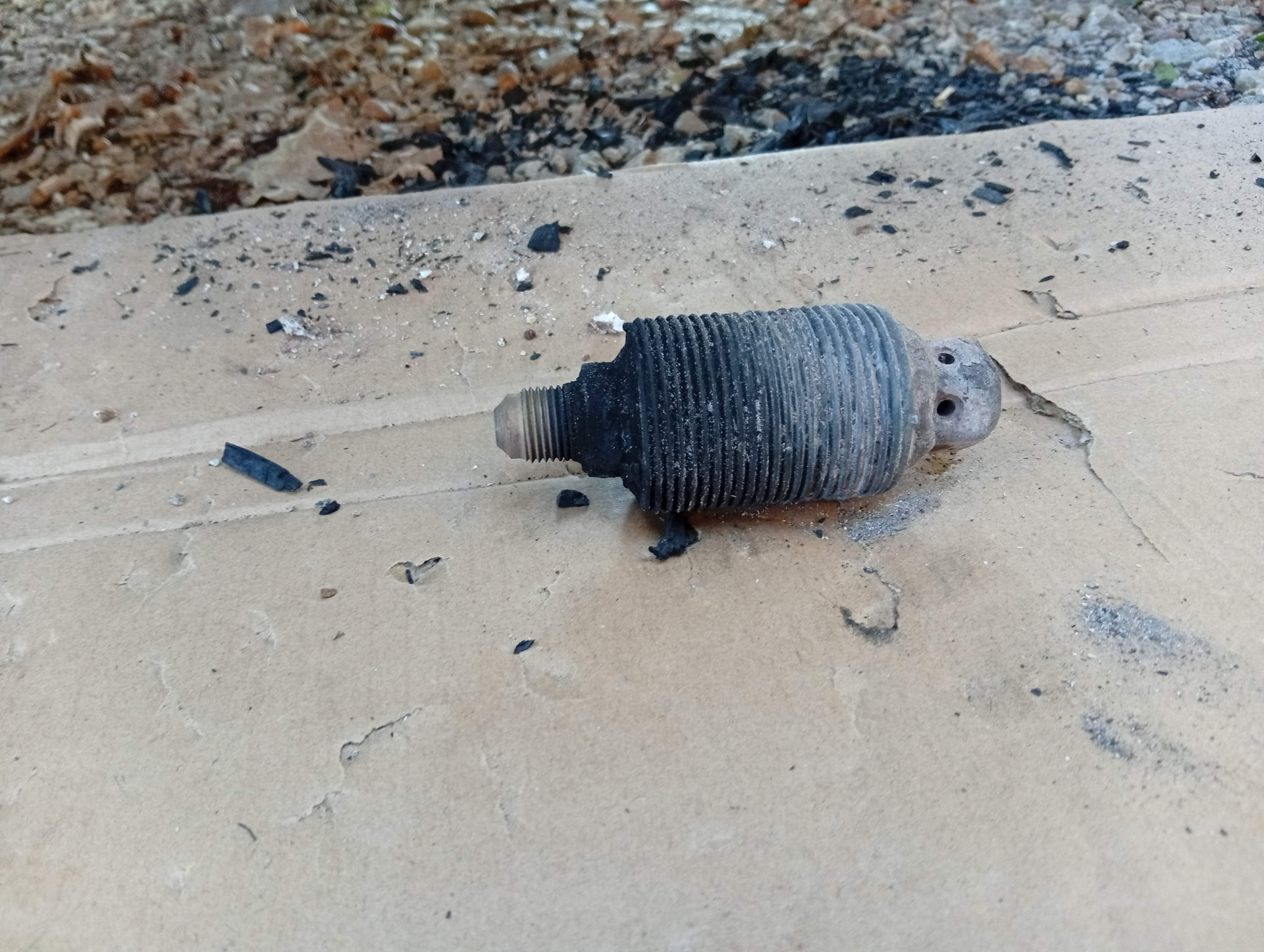
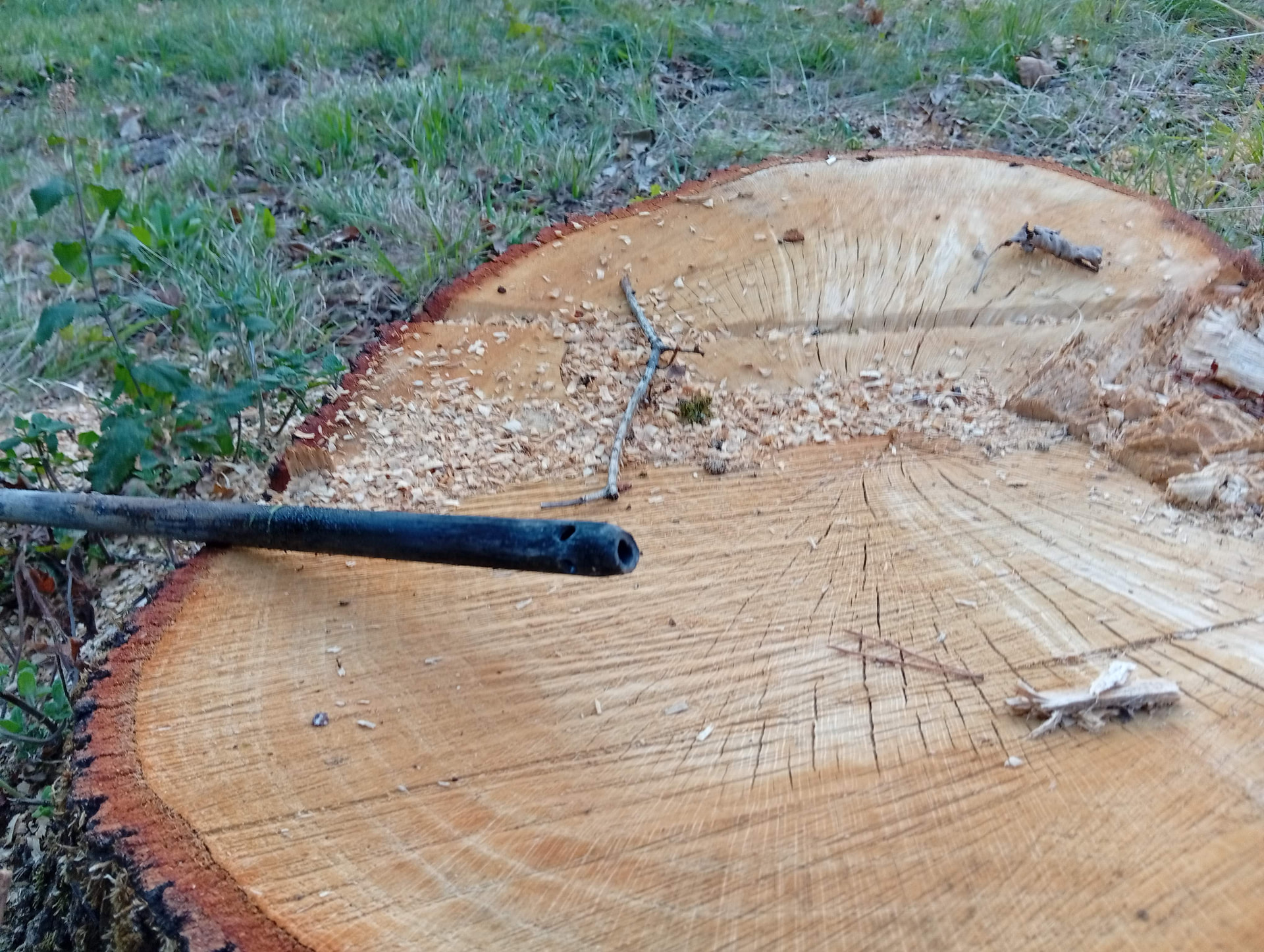
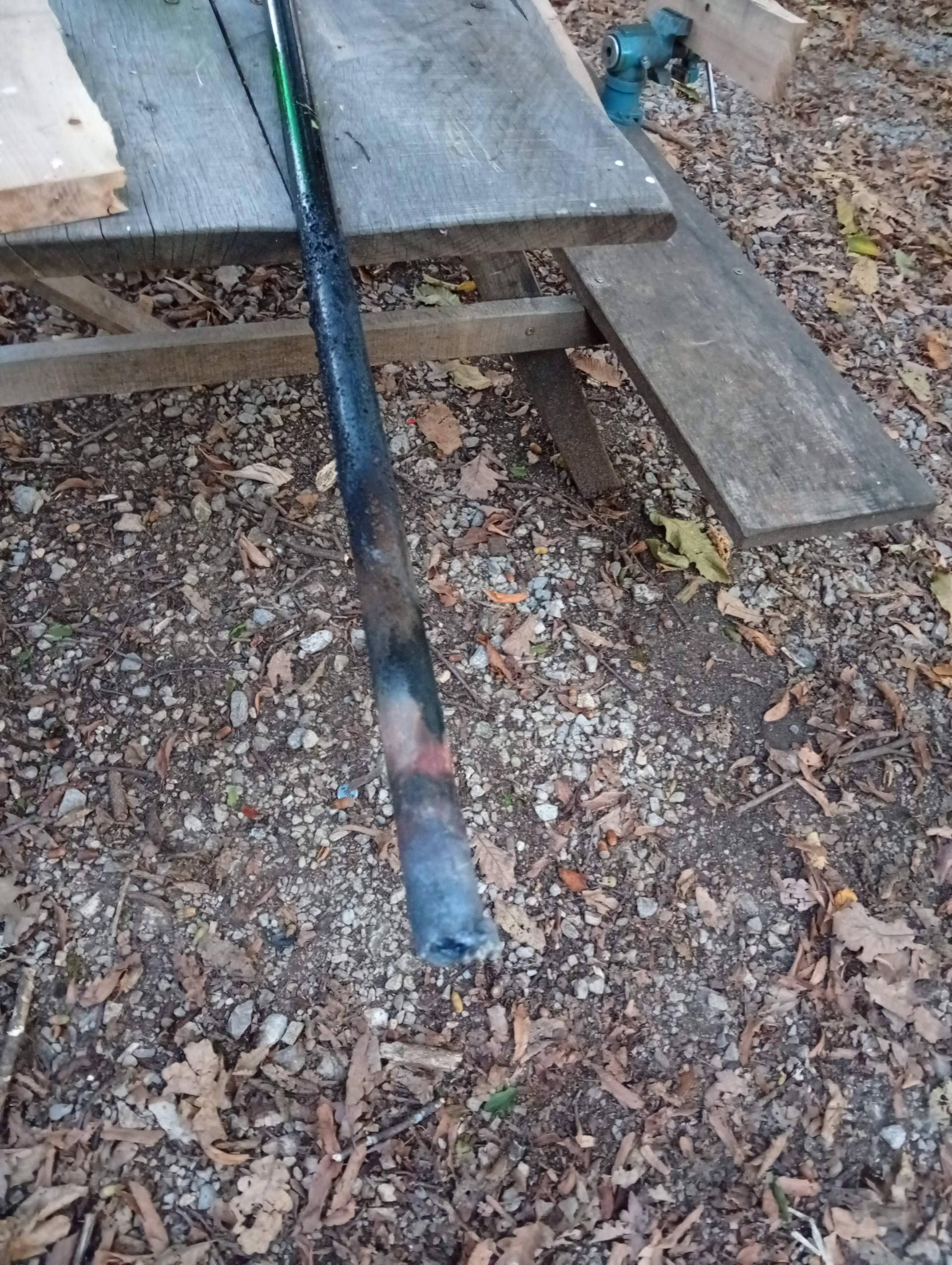
Today I tried starting it again with the pipe in the center—this time using a 3/4" pipe. I got good gas output even faster, and the tractor ran quite well on the air supplied through that pipe. I drove uphill for about five minutes, then opened the air intake for the main nozzles (by removing the rag I’d used to plug the opening); the gas output dropped significantly, though the engine kept running. When I pulled out the starting pipe, the lower section—where I had forged a point and drilled side holes—had practically vanished; it had all melted away… No big deal; the test was successful, but I need to rethink the design of this starting method…
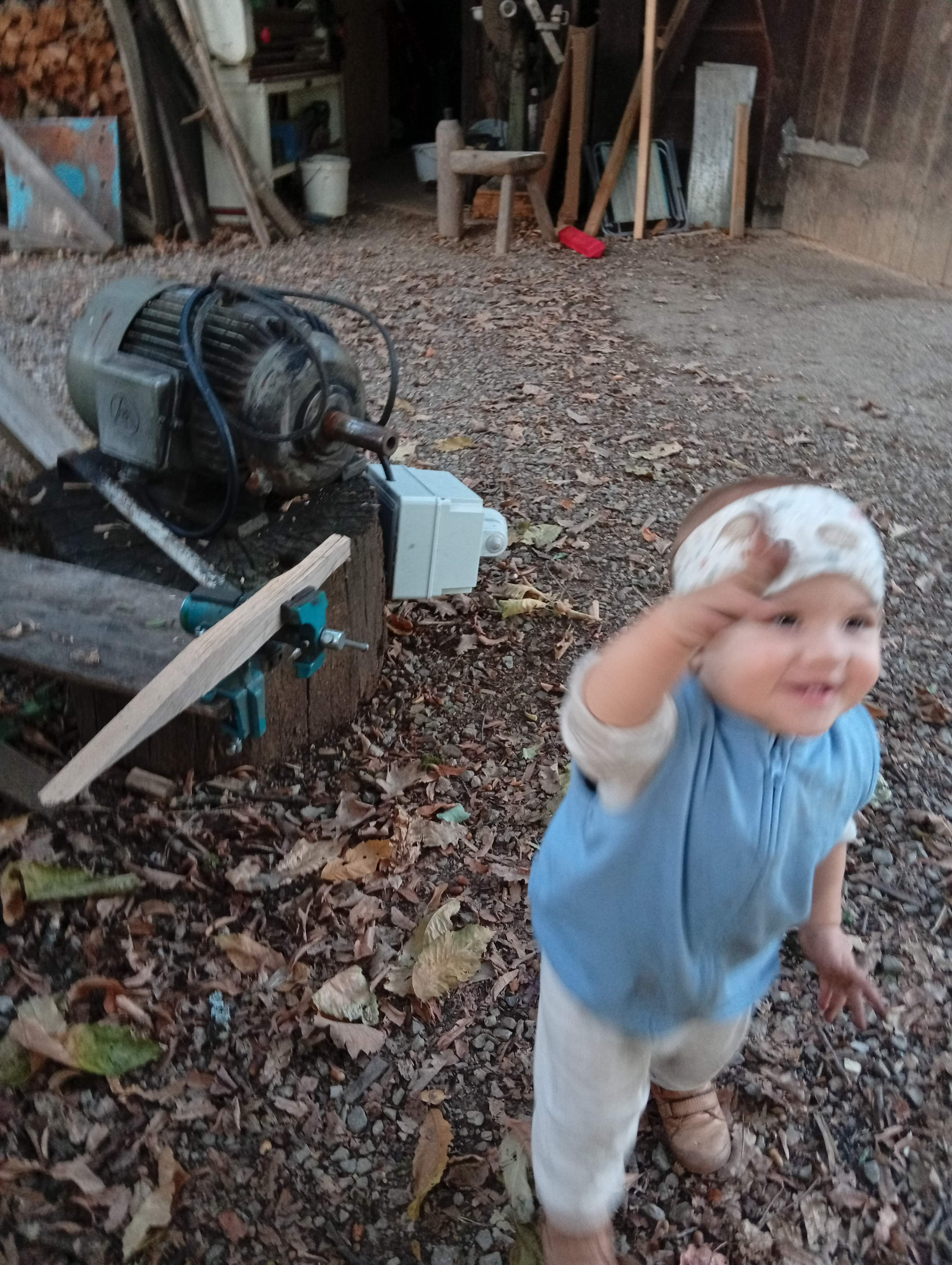
lovrenc is like his grandpa… always active, interested and non afraid to get the hands dirty, maybee in future he becomes a woodgas guy or even a chargas guy!
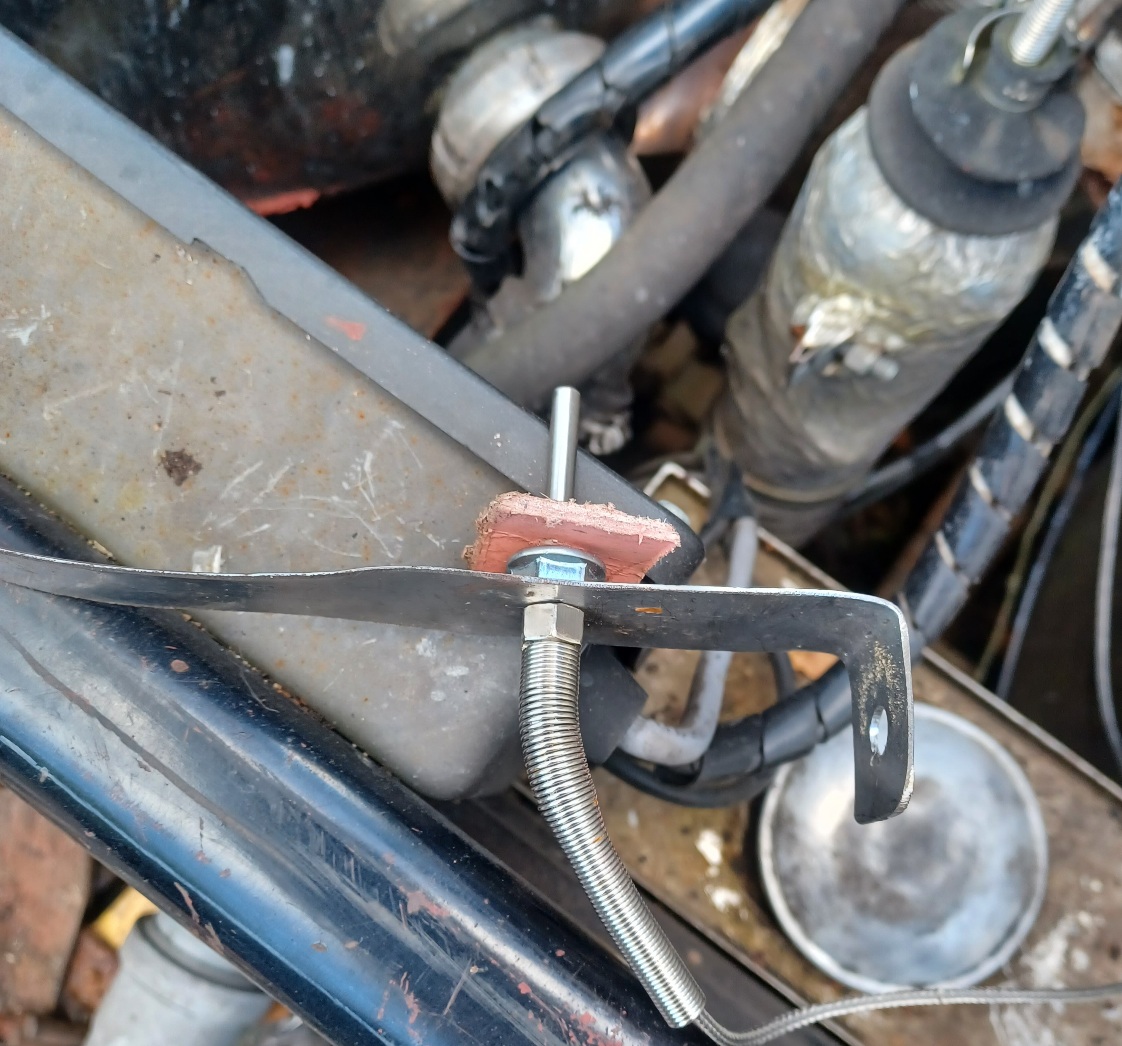
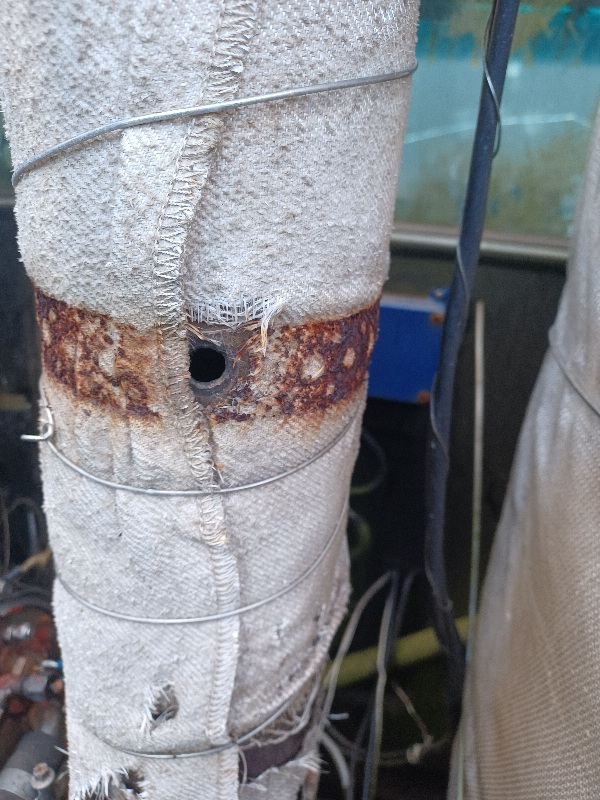
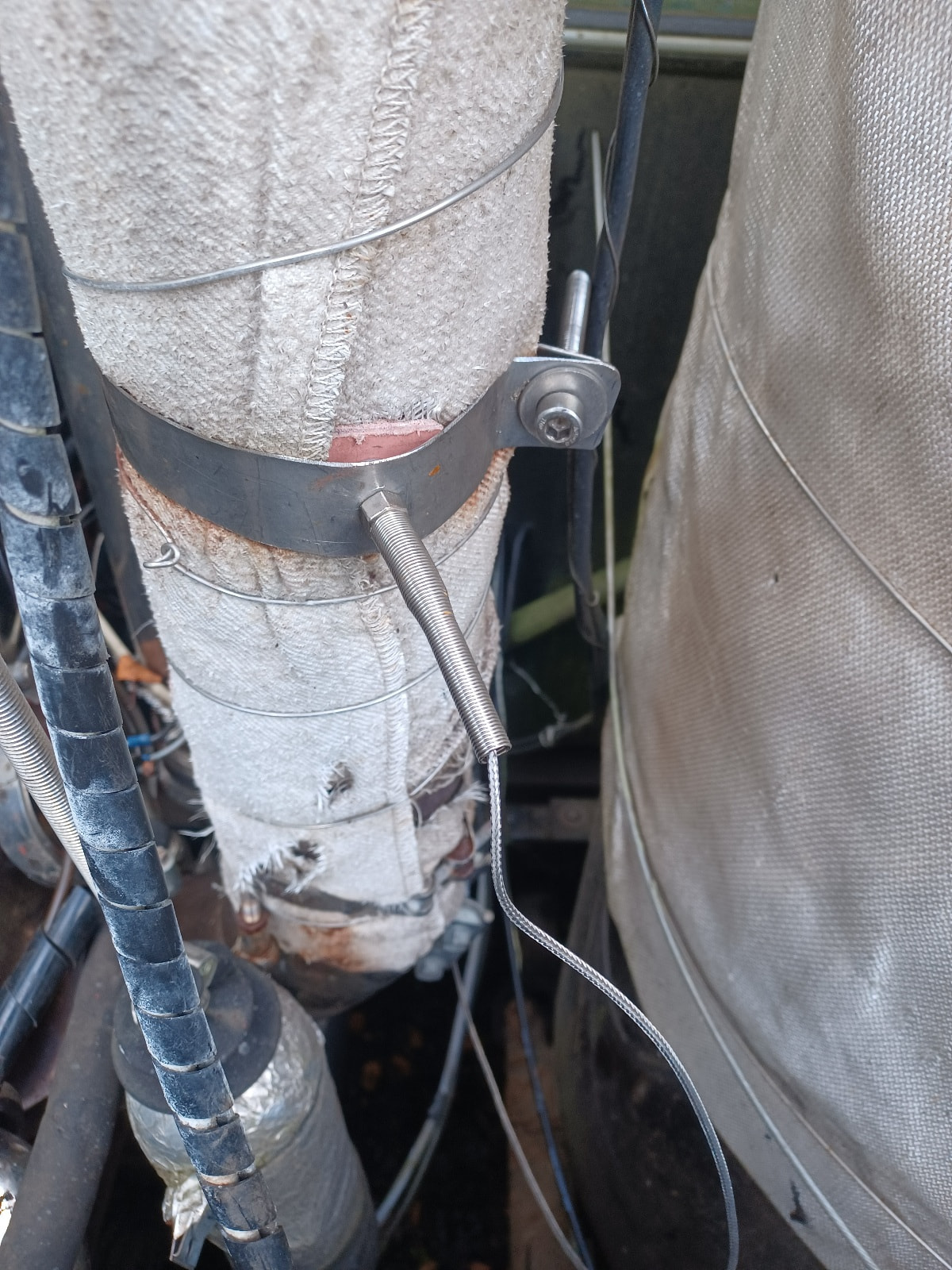
It should go here in gas line after gasifier. Best would be to weld a bung for the probe, but it’s to much work to either bring the pipe to the welder, or the welder to the pipe…
Just clamped in place, with some asbestos sheet as a seal.
I took it for a drive to test the new lid seal, new grate seems to work perfectly, good strong gas, 80km/h on “idle” which is a little to fast. I have one adjustable idle control in cab, and one “lowest point” idle control under hood, it’s that one that needs a turn down.
No leak from ash lid.
Going to take it for a ride today to see if “after smoldering” has stopped, after all, it started in about 10 mins yesterday, the longer start up times after rebuilt may be a combination of the after smoldering, and a charbed that hadnt built up, or settled yet.
Started up the Chevrolet again today, still a small air leak, still glow after yesterdays trip, but had not consumed any char, fast start, about 4 minutes until flare.
Ran good, hasn’t adjusted the idle yet, so i have to choke the air when changing drive or reverse, or put it in neutral to avoid racing engine.
When choked down on secondary air the engine get a “raw” sound, a: wrap…wrap…wrap.., like a highly tuned v8, with a evil camshaft and waaay to big carb, struggling to keep running on low revs. I like it
When i entered my friends driveway today, i braked it down before i choked the air, there was mud on the asphalt paving, and the rear tires slipped some, a woodgas burnout (well, childish me has tried it before, and it is possible)
Well, im going to adjust the idle stop, but it’s nice how much more powerful the woodgas has been on low load.




 (well, childish me has tried it before, and it is possible)