In late 2024, following the high obtained by building WK gasifier, I became obsessed with the idea of gasifying an older, somewhat large displacement motorcycle.
What I ended up with wasn’t one of the original bikes I was looking for, but it was a fairly collectible bike at a great price.
The main goal for me was to make a compact build, which was reversible, so I could unbolt the entire unit quickly—and bring it back to bone stock again.
I’ve been calling this project—“Charmaha”.
It’s been sitting in the garage for a year. About 4 months ago I began working on it.
The good news: it’s finished!
The bad news: I can’t get it to run on chargas— can’t even get it to flare.
So far:
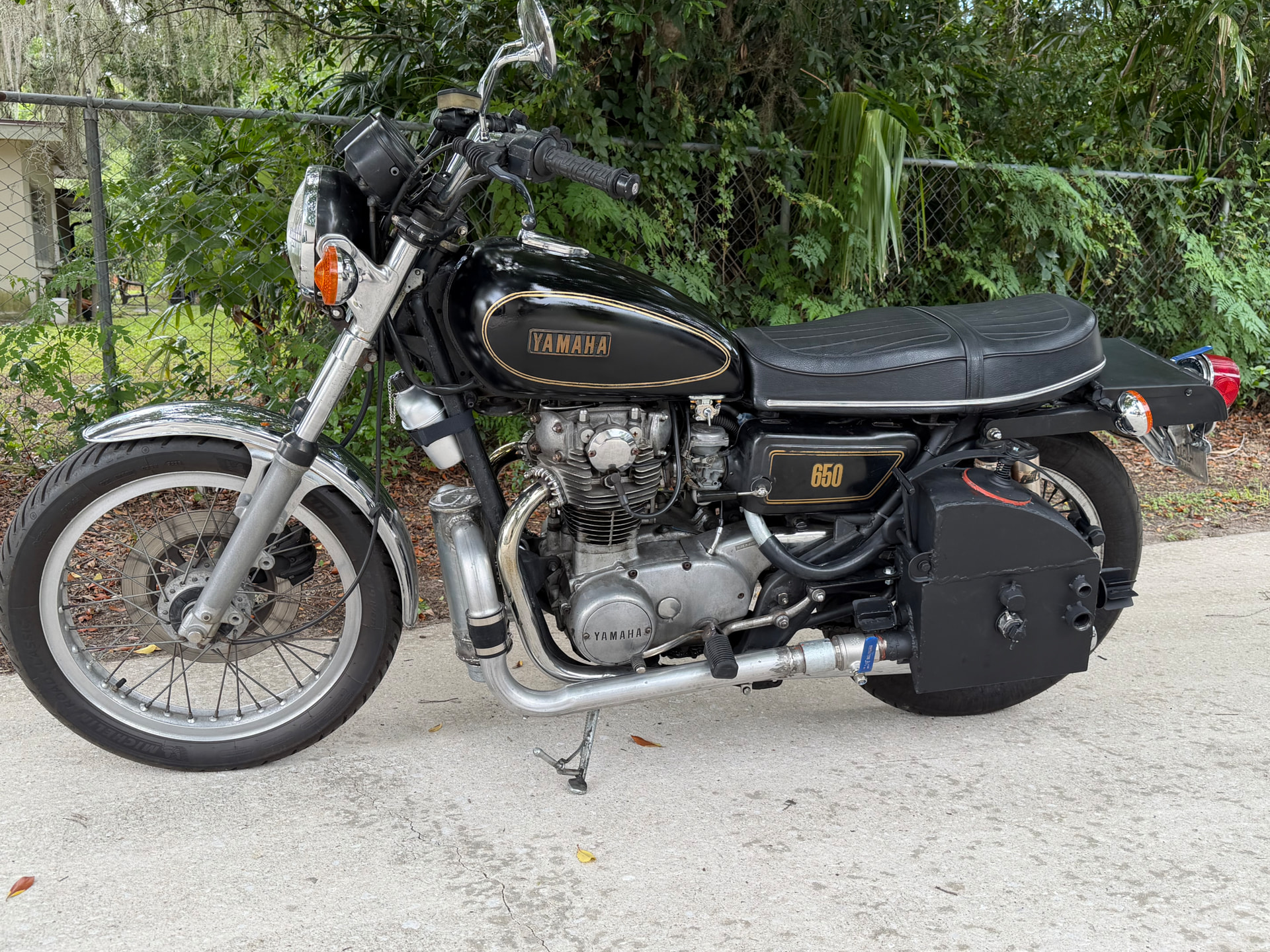
After filling up with charcoal, the gas outlet valve at the bottom left of the reactor gets opened.
With the air inlet port (lower middle cap) opened, the charcoal gets lit by a torch through the lighting port, (smaller cap just above the air inlet).
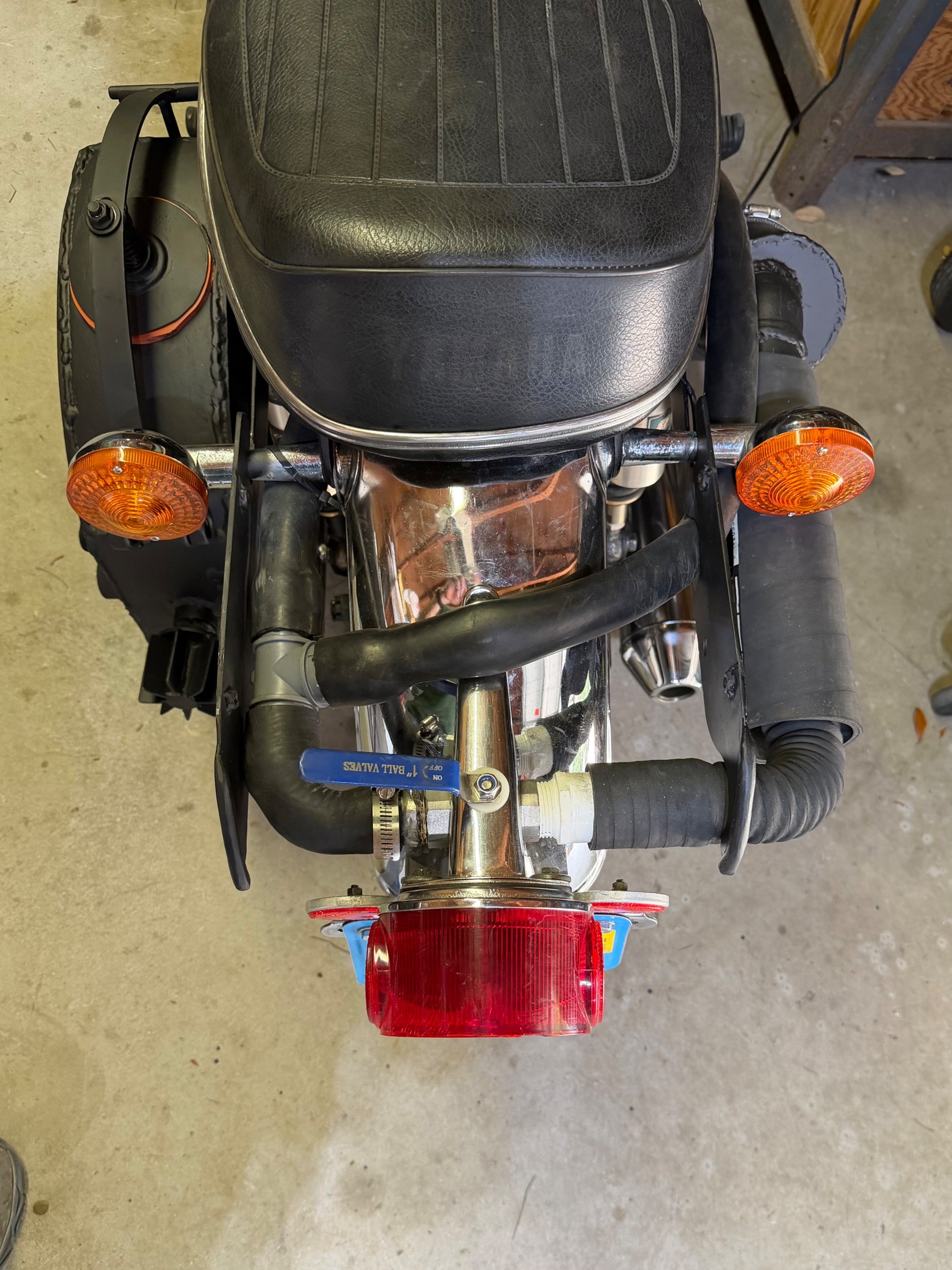
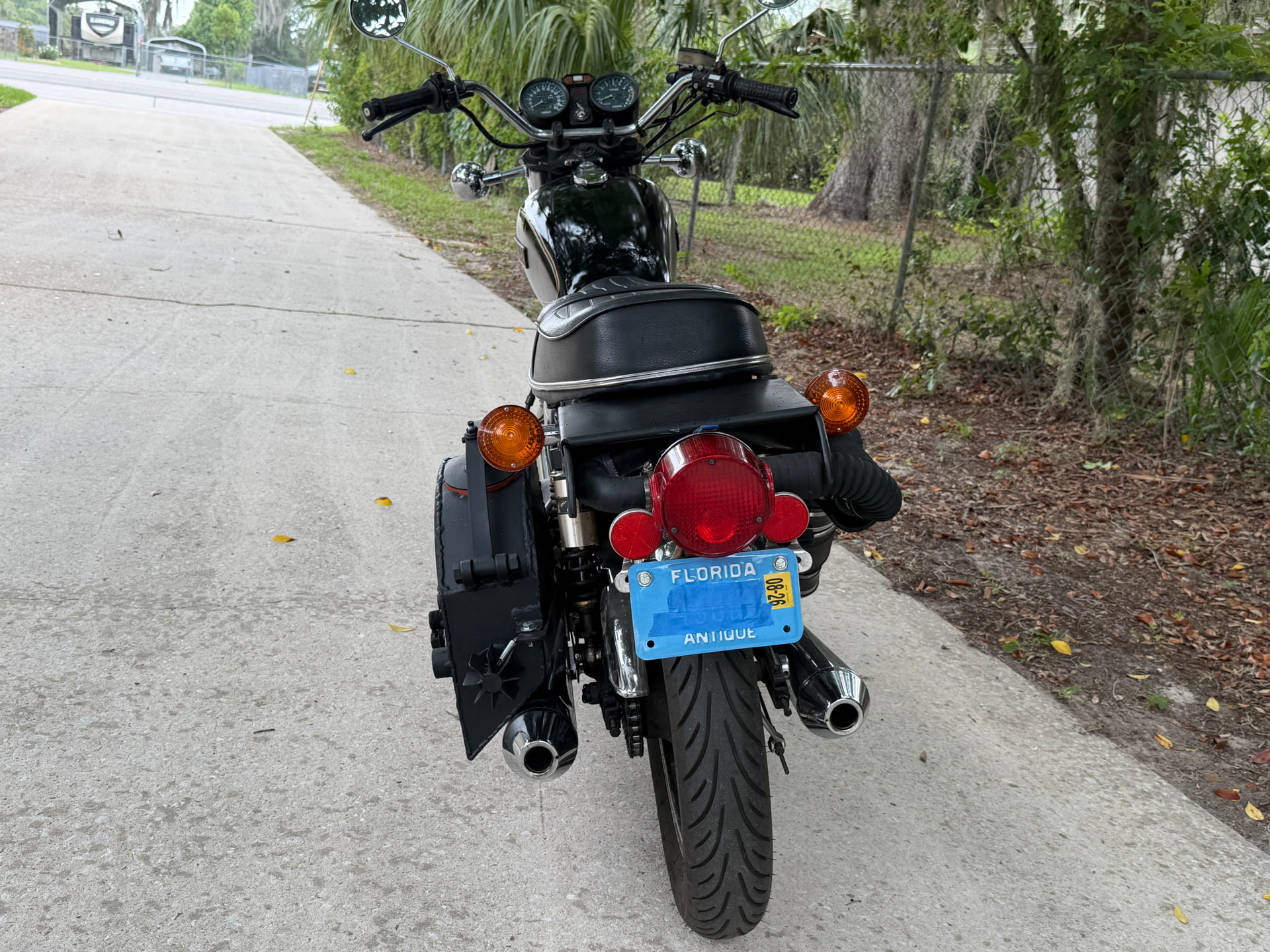
The valve that sits on top of the tail light mount gets closed and a flare pipe is inserted in the system near the end of the blower.
The blower gets turned on, and I let it run for several minutes. I crank up the engine so the blower doesn’t run the old battery down.
At this point, I’ve been trying to light whatever gas is coming out of the flare pipe.
No luck.
I’ve tried removing the flare pipe and returning the plumbing to what should be the normal running state, ie. whatever chargas is produced can be sucked towards the carburetors.
Then, I ride away, running on gasoline, turn my fuel petcock off— (no gasoline going to the carbs), and close the AFR valve with high hopes that any chargas produced can be sucked towards the carbs, by the engine vacuum.
As you would expect it runs wonderfully for about two minutes, until the carb bowls run out of fuel. Then it’s hard to tell if the sputtering is just the bike running out of gas (most likely), or running poorly on char gas, as I fiddle with opening the AFR valve some. But— it eventually dies completely.
Included are some pictures if anyone cares to help with the diagnosis.
My first thoughts:
-Air leaks are weakening the char-gas, (quite possible).
-The 2" diameter bilge blower has too little suction.
-The 2" exhaust pipes used for cooling the gas are just too big, so it just might take a lot more time to displace all the air and fill this up with charge gas.
-The charcoal inside the reactor is not staying lit (not enough air inlet?)
Yet the unit feels hot in the nozzle area—even though the bottom half is insulated.
-The entire reactor is just too compact (not enough chargas produced to power a 650cc twin).
-the nozzle holes (facing upward) are plugged with unlit charcoal restricting the air— I just thought of this one, this could be it!
-it’s just plain built wrong (very possible-even likely ), as I tried to incorporate good ideas from others into this, but not sure if I incorporated them correctly.
-All or a combination of the above.
Here are a few other particulars :
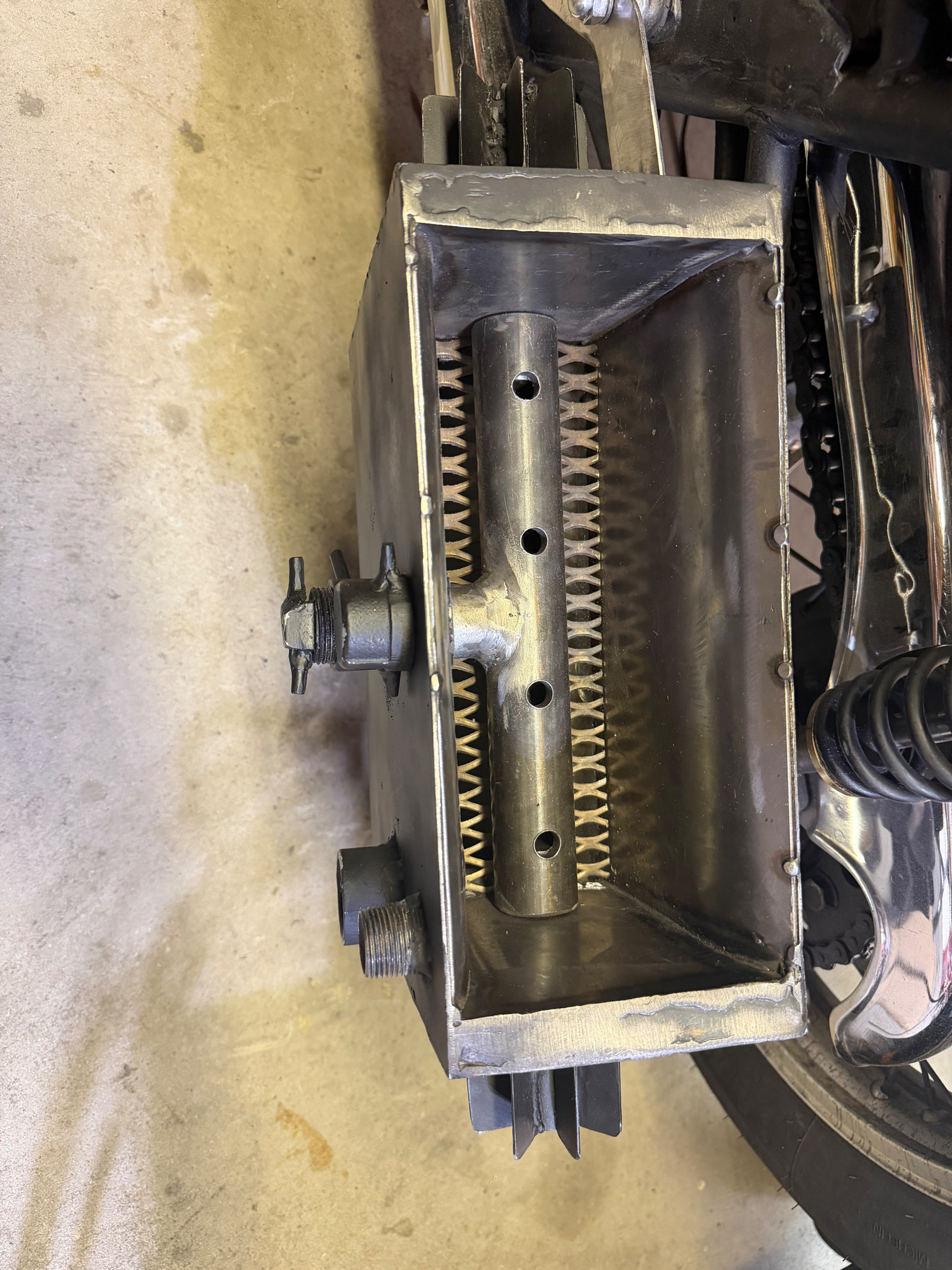
It has a Lettinger style nozzle with 4 holes (each approx. 1/2" diameter.)
It is a TEE shaped nozzle, with air coming in from the middle of the side and then turns toward both ends length wise.
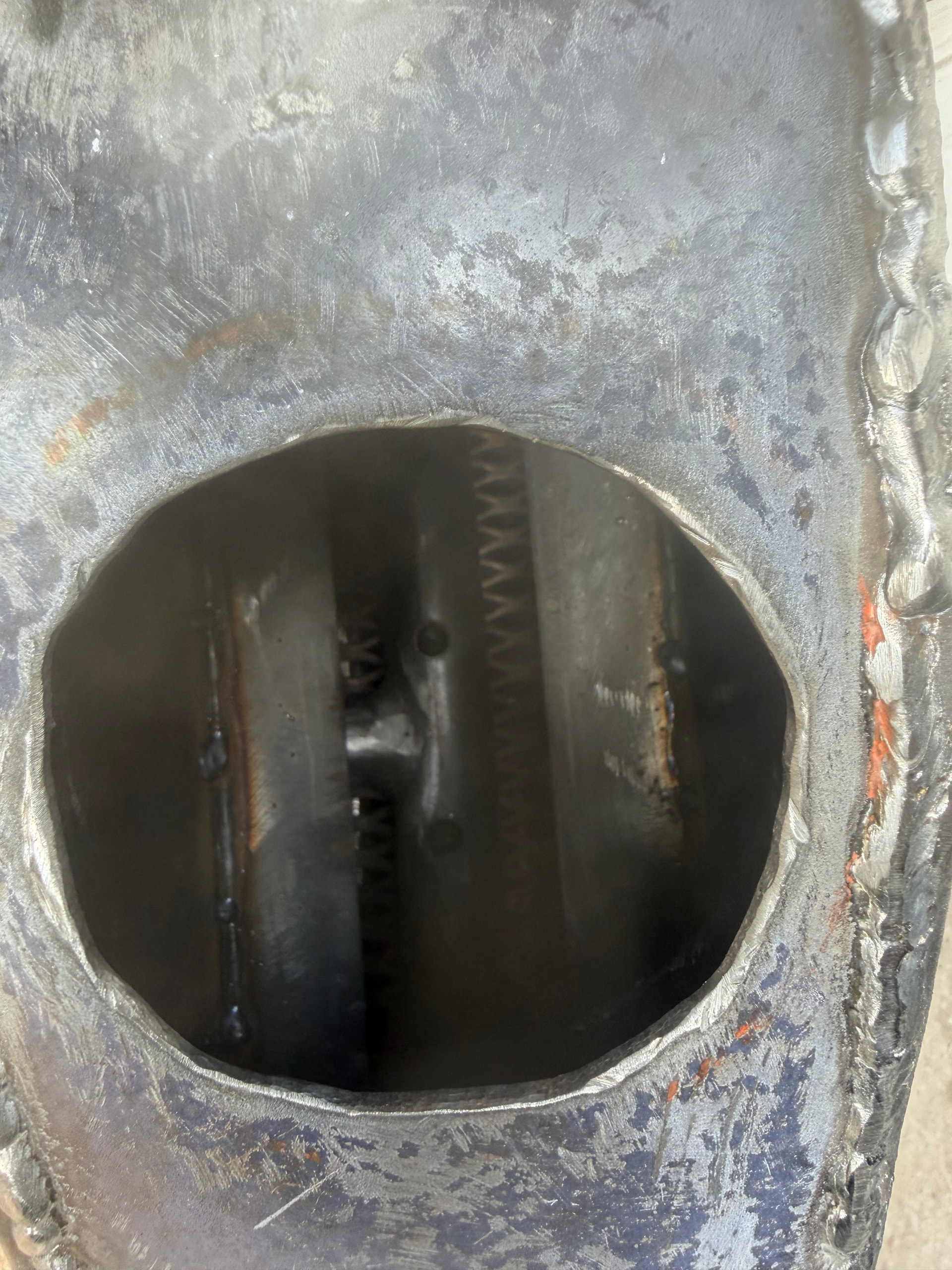
The nozzle sits on a stainless steel grate, with a few inches for ash collection below it. There are some solid 1 inch rods that are for dissipating heat to the outside-(you can see the fins on the reactor).
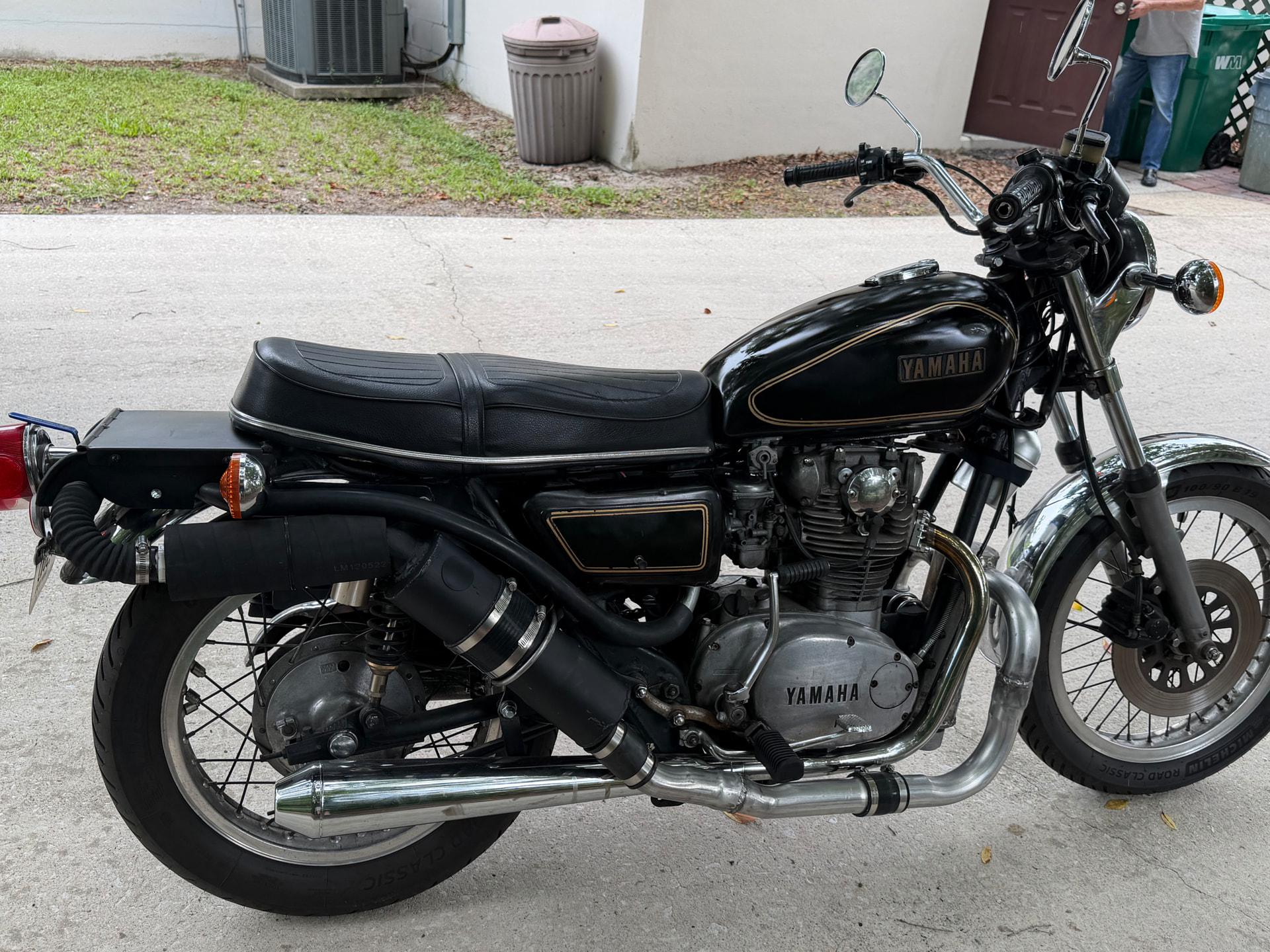
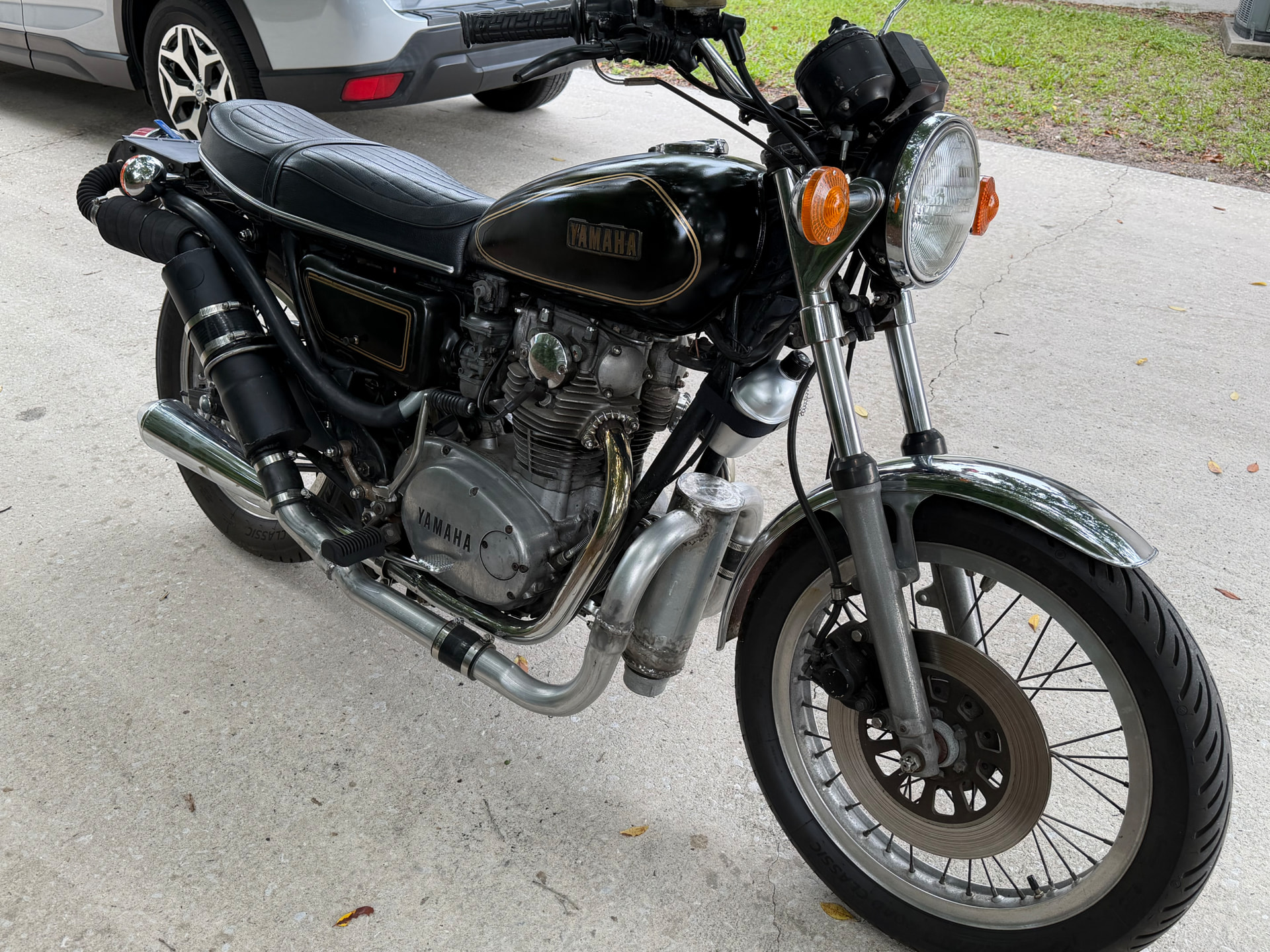
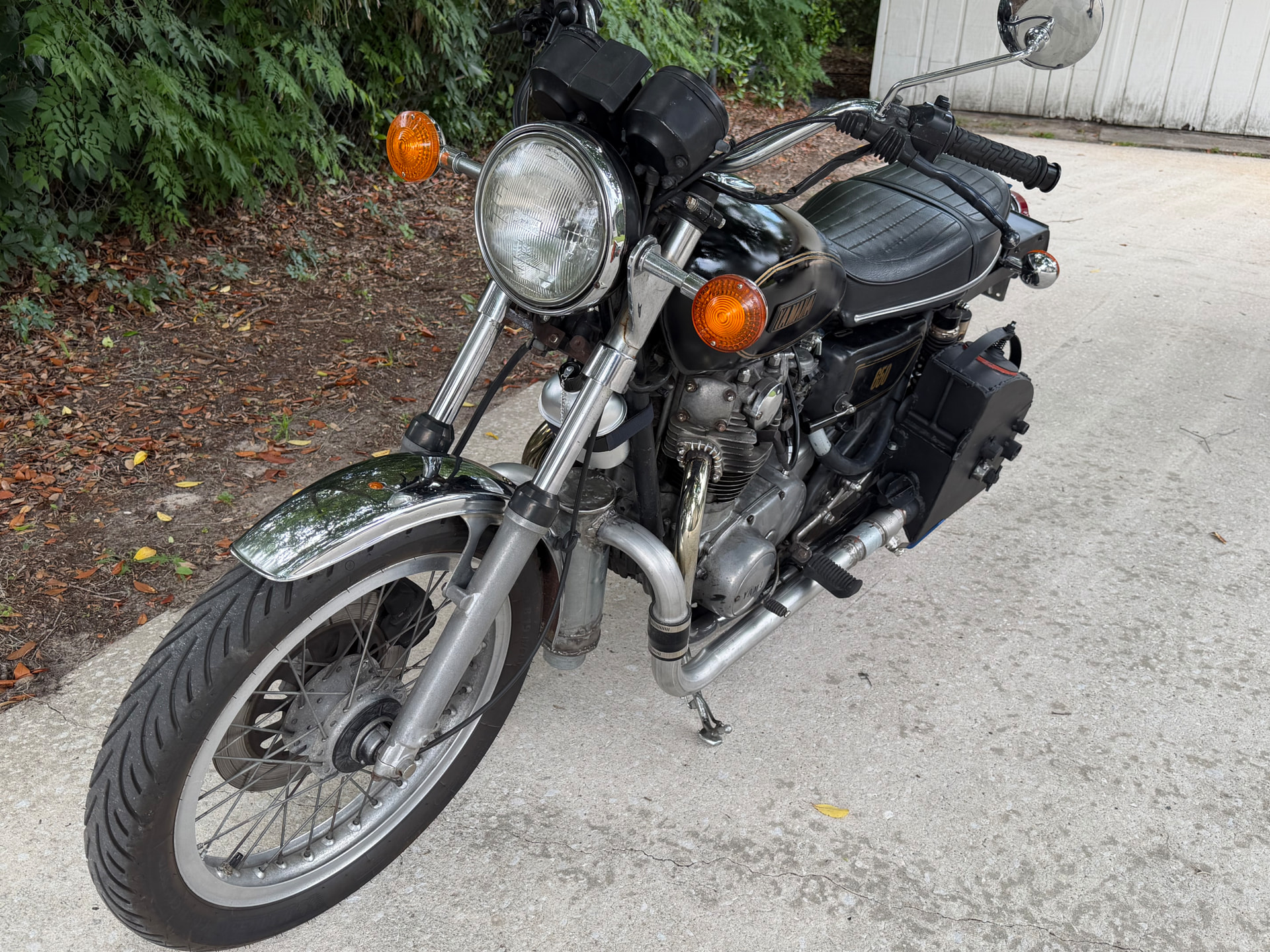
The cylinder sitting between the two front down tubes is a dropbox. It has a vertical plate welded from the top to about 3/4 of the way down. The incoming gas hits the plate at the top and moves downward and underneath the plate, then exits out of the top of the other side of the plate.
The diagonally arranged cylinder on the right side of the bike is the filter. The top half is foam, the bottom half, pine straw.
From there, the gas exits into the 2 inch blower which is hiding under that giant, short section of radiator hose.
The valve at the tail light controls chargas flow to a wye, beneath the fender rack, and branches to each of the carbs.
There are two mixer boxes that are welded together as a unit and fit onto the dual carbs. On the left side cover is a lever attached to a rod that passes through both mixer boxes and two discs are welded on the rod to act as butterfly valves to to control the AFR for both carbs.
On the right side cover, you can see a little push pull knob that controls the blower.
Whew! So sorry to be this wordy, but I’m trying to help anyone that wants to tackle this with me.
The project has been a lot of fun for me even though it’s not working out ----yet. I’m willing to make major modifications
Thanks