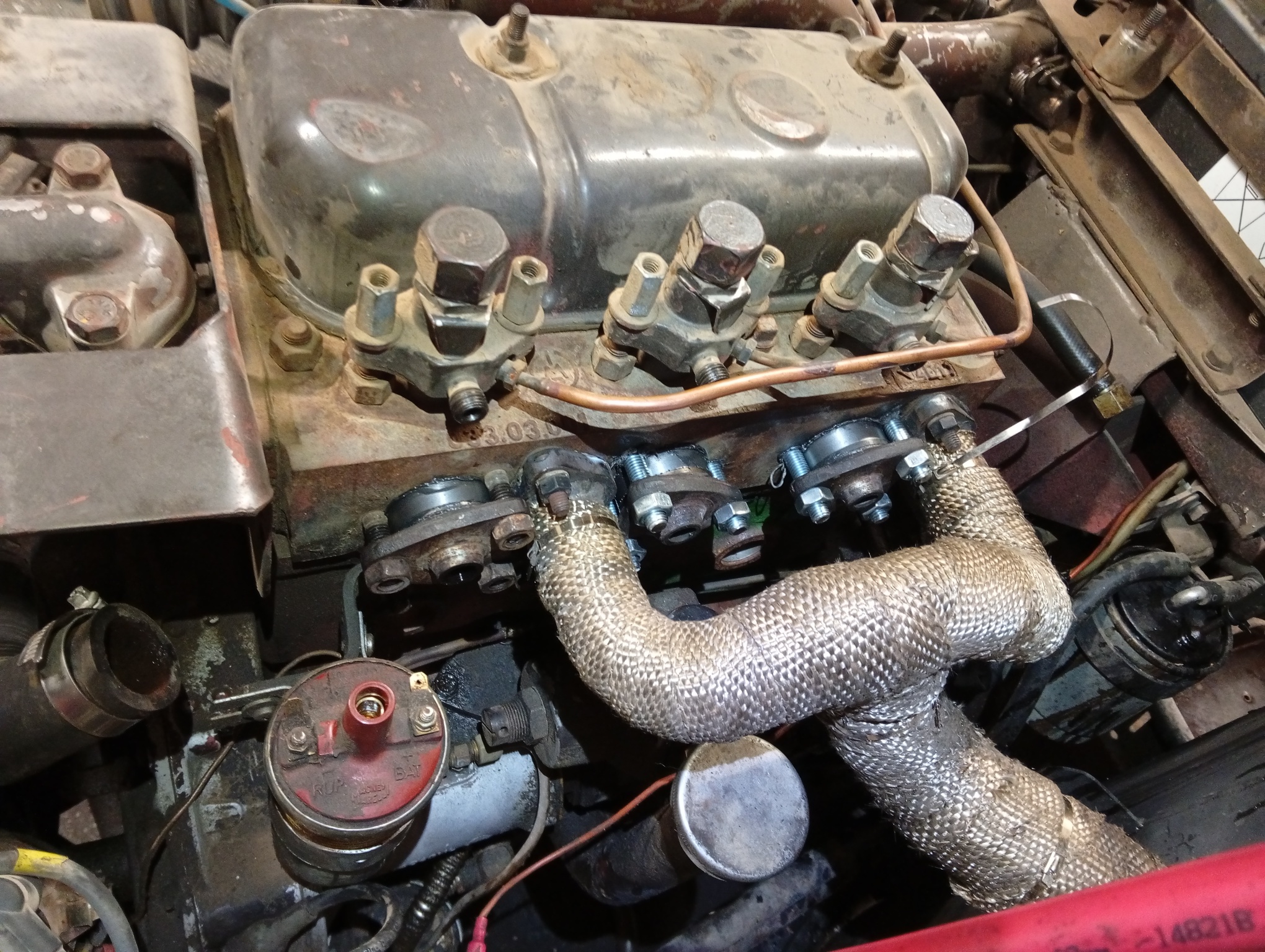
A short report on the operation of the “new” gasifier:
the basic purpose of this construction was to be able to use wood of different sizes and shapes without any problems, which moves downwards without jamming or bridging, which ensures the same cross-section of the interior
a large cross-section of 50 cm entering the hot zone allows for a lot of power and low resistance
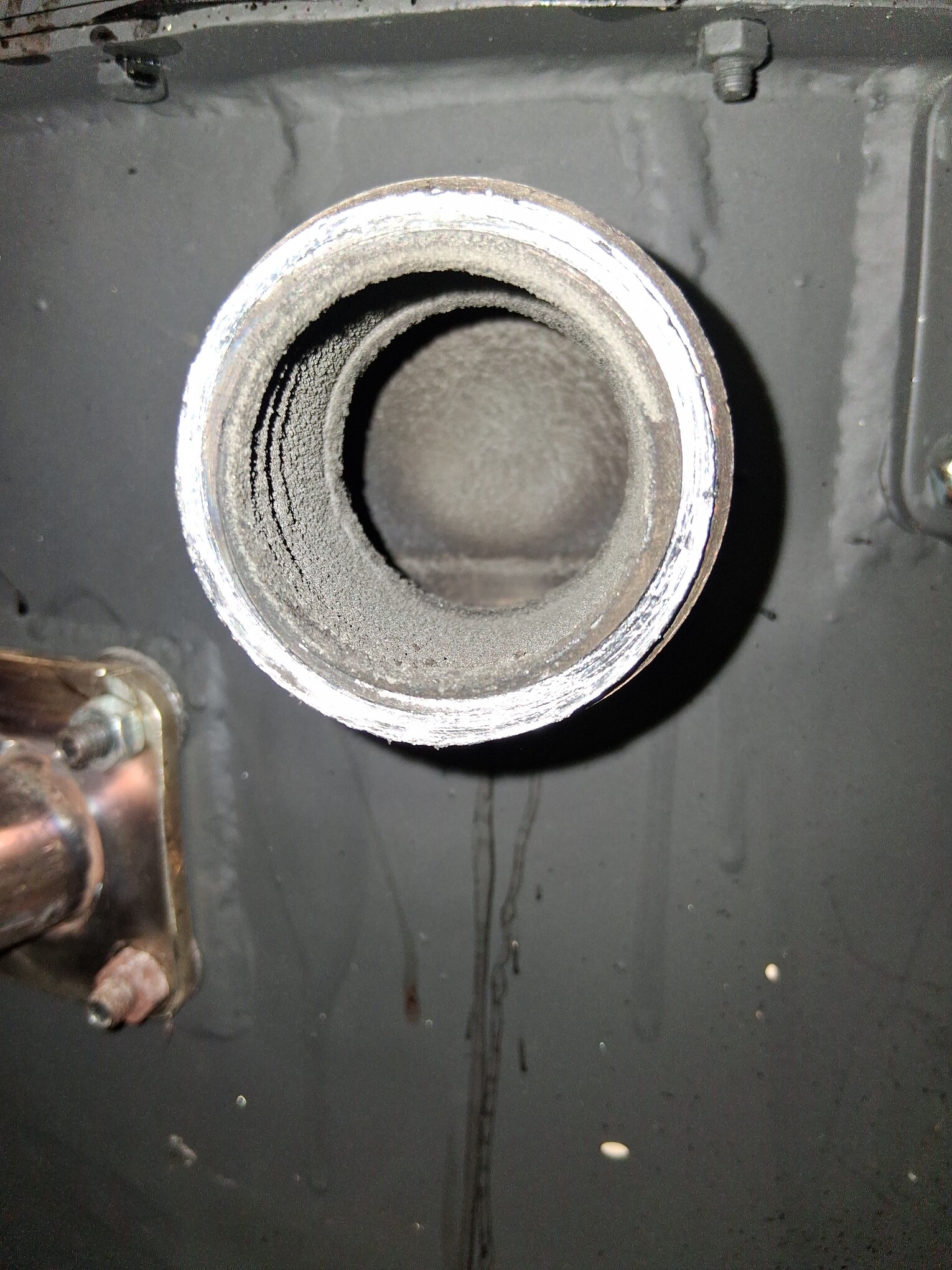
the lower central nozzle supplies air directly above the limiting opening, thus maintaining the active layer of charcoal until the end of the conversion, in this way all the charcoal is used until ash is formed, which simply retreats into the ash space with the gas flow
after a few years of using wood gas to power a tractor, I have found that all processes are endothermic and require energy to proceed, well, the temperatures are different
drying wood,… here it is necessary to heat and maintain the wood at a high temperature (150°C) in order for the moisture to evaporate from the interior, this process represents a consumption of approximately 5% of the energy of wood (wood with 15-20% moisture)
pyrolysis,… here the wood is exposed to a temperature of 200 to 500°C, relatively moist but very calorific gases are released, thermal decomposition of the wood occurs and charcoal is produced, which represents a consumption of approximately 4% of energy
the reduction of moist gases in charcoal “consumes” the most energy, this is estimated to be approximately 13%
A classic gasifier covers all these heat needs by burning wood, which represents more than 22% of the energy of the wood, the result is gas with a relatively low energy of approximately 1.5 kWh/pm.
If we include the heat recovery of wood gas in the calculation, it does not cover the energy for drying and pyrolysis, but when we add the energy of the exhaust gases, this is sufficient to cover these needs and also for preheating the cooled - dried gases that enter the reduction zone,… so here we can save 5% for drying, 4% for pyrolysis and we help the reduction process with 5% savings,… the gas becomes much more powerful and has at least 2 kWh/pm, an engine that runs on such gas reaches power and torque equivalent to diesel fuel
Tone, I totally admire your understanding of your system and the understandable way you can explain it. Your recent upgrades are admirable making your system one of the most efficient I have seen. Thank You.
Thierry, the first reason is that the thermostat layout and the hydraulic circuit of the tractor’s water pump do not allow for the very cold water from the lower radiator connection to be pushed through the condensation zone, this would have to be done with an additional pump for this system. So I decided to install a separate cooling system.
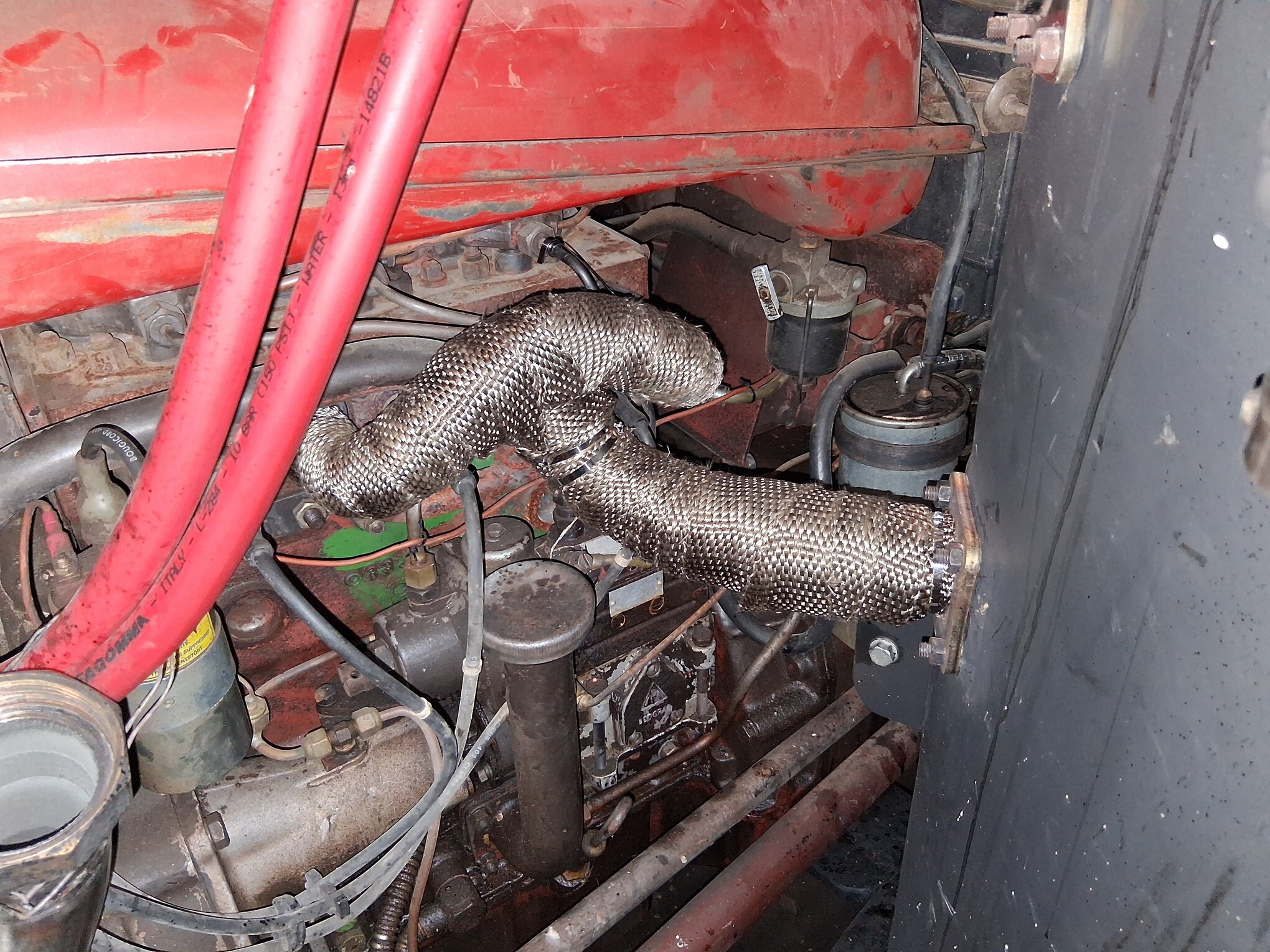
Mr. Tom suggested insulating the exhaust pipe, and I listened to him. Well, insulating this pipe will significantly contribute to ensuring that the exhaust gases enter the interior heating jacket at the highest possible temperature, because I want high temperatures in this part.
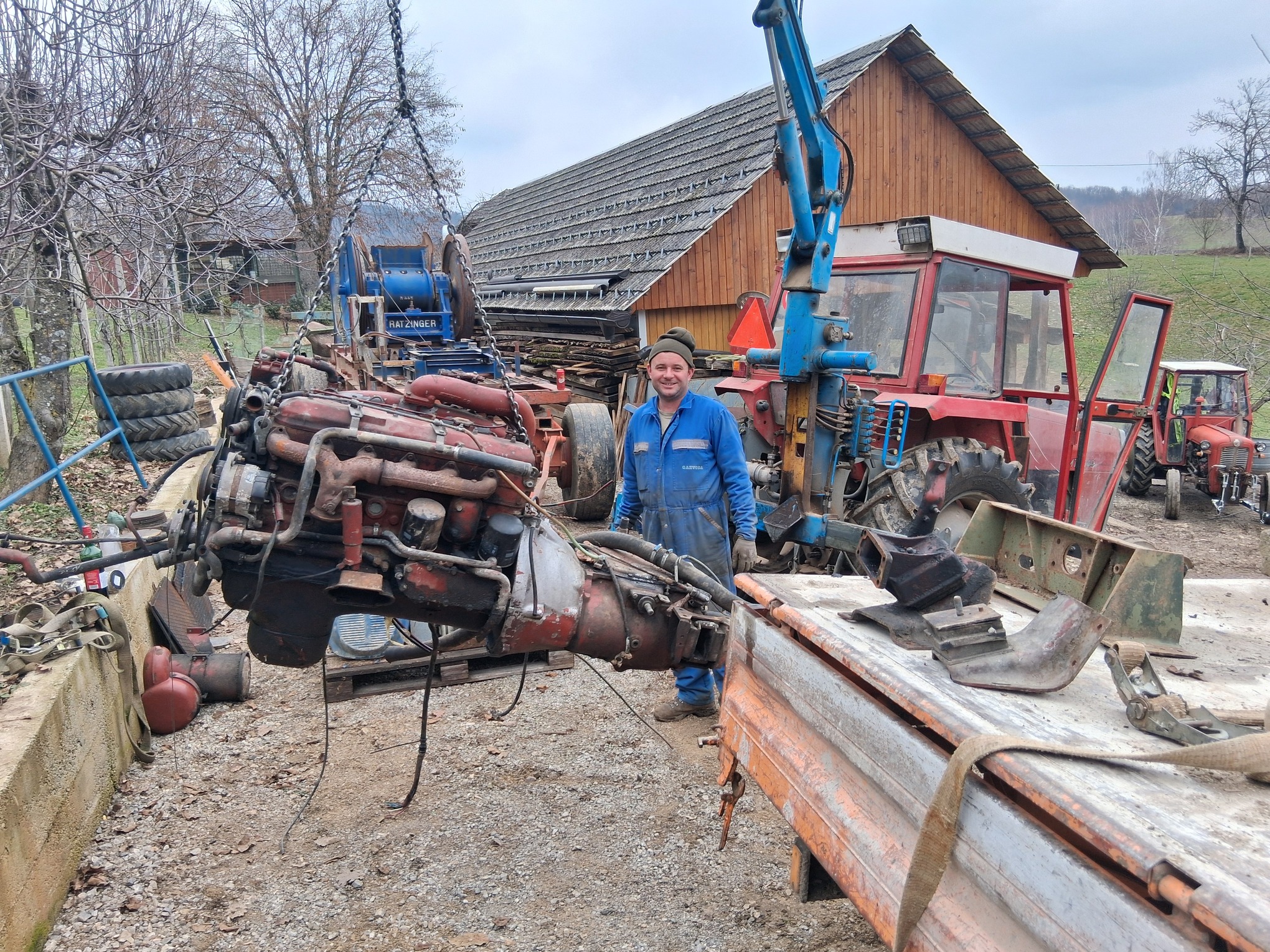
I just thought I’d add one picture, otherwise it has nothing to do with the gasifier, … Saturday work on the renovation of the stone crusher, … my friend Simon
The gasifier has completed more than 50 working hours according to the engine counter, well, that means at least 100 hours of operation according to the time per hour,…
Regarding the operation and efficiency of this gasifier, I can say (without the help of artificial intelligence):
I use different sizes and shapes of wood, including dust and bark fragments
I maintain a relatively high fuel level in the tank, when it decreases by the volume of one bag (50-60 l, or 12-15 kg), I fill it to the top
this filling is enough for 1-2 hours of work, depending on the weight of the work
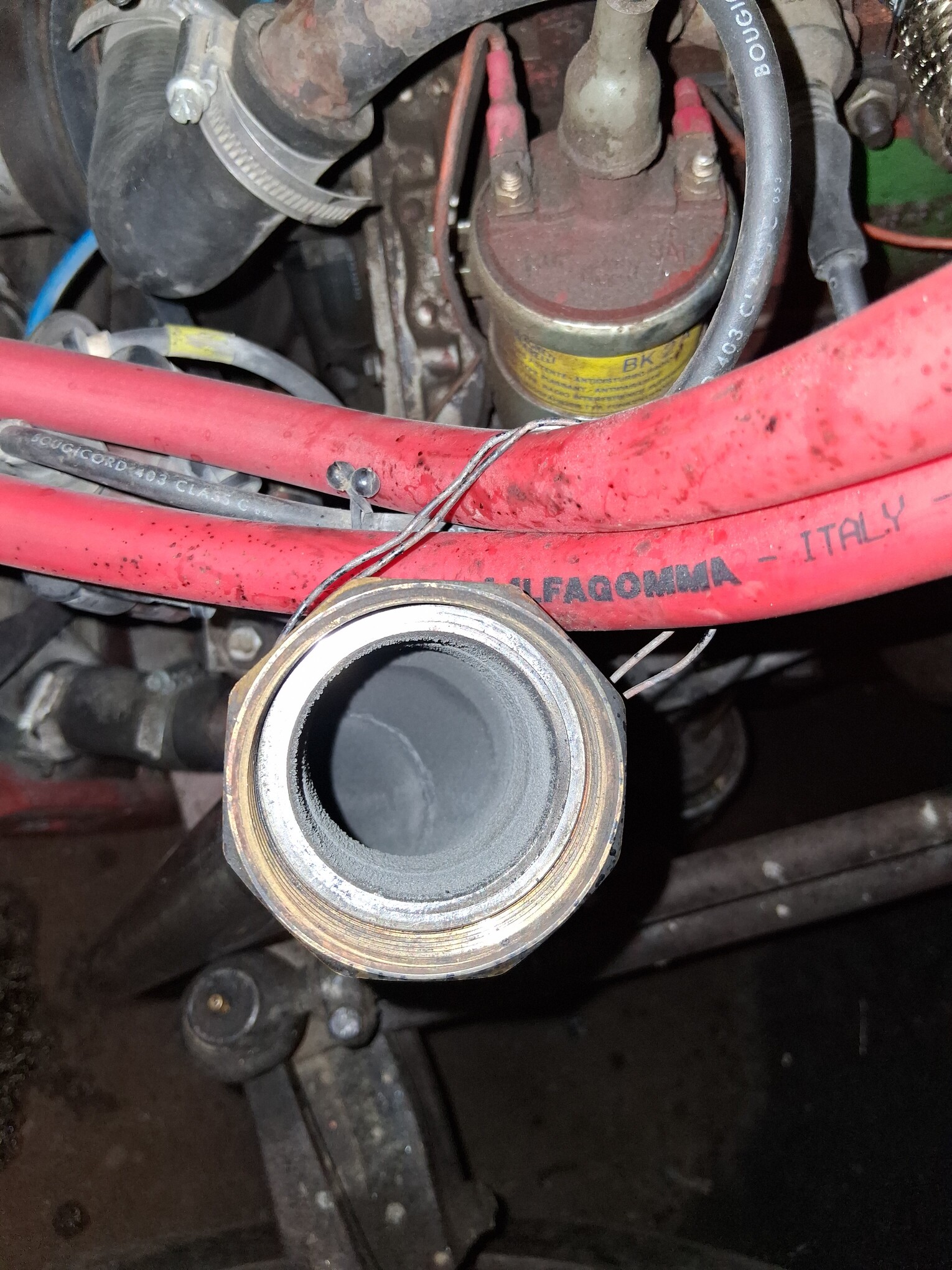
the water-cooled condensation zone removes a lot of water, there is no water in the cooler, only fine ash, the filter is only slightly damp, there is no water to drain below
starting the gasifier takes longer than with the previous one (about 10 min), which is understandable due to the size of the hot zone
the operation is stable, at lower load and idle When the engine is running, the gas is of similar quality as in the previous gasifier, but under higher load, a very calorific gas with a lot of hydrogen and methane is produced, so that due to the high CR (1:12.5) of the engine, detonations occur, which I solve by increasing the proportion of air, with such gas, the CR of the engine should not exceed the limit of 1:10
let me also mention the “undesirable” effect of this gasifier, … due to the large expansion of pyrolysis gases after a higher load, overpressure is created in the gasifier, which prevents the entry of fresh air, so the charcoal below cools down after a while and the quality of the gas drops significantly, I eliminate this symptom by opening the “chimney”
,and the central lower nozzle lowered low above the restriction opening
Hi Tone
Is the area heated by the exhaust gases too large? Or could a bypass system divert some of the exhaust gases to limit excessive pyrolysis?
Is the height of the lower nozzle easily adjustable?
It’s really interesting that you shared your observations with us, thank you.
Thierry, I do not want to reduce this effect of heating with exhaust gases for the pyrolysis process and preheating the moist pyrolysis gases before entering the hot zone, because the wood gas thus produced is of extremely high quality, there are no problems during the operation of the engine with moderate or high load, if the engine operates for a long time with low load or at idle, there are also no problems, overpressure only occurs after a high load, when I suddenly reduce the load to a minimum (or the case of driving up a slope, then the road slopes steeply downwards and the engine brakes for a long time). For this case, I would need a robust fan that would suck out the excess pyrolysis gases and maintain a minimum negative pressure in the gasifier. This pyrolysis gas is very calorific, so it is a shame to throw it away, this gas would need to be burned and the hot zone heated with heat, in this way the symptoms of “hesitation” would probably be completely eliminated.
As you can see, the “development” of the wood gasifier is not yet complete, new ideas are coming about the design of a “good wood gasifier”.
About a week ago I decided to lower the compression ratio even further, it’s pretty easy with this engine, all you need to do is adjust the spacer and enlarge the combustion chamber… now the CR is about 1:12.
Very satisfying woodgas grunt, Tone. Good " reactor-muffler" and camera. I’ve actually been DOWing window down today - to listen to the exhaust
OMG it’s green down your neck of the woods. Buds just started bursting here - a few weeks early.
Tone, your experience with wood gas and high compression engines is rare and helpful.
Most of us are converting spark/petrol engines with compression ratios that are lower than ideal for woodgas. There are ways to boost the compression ratio but (1) easy ways do not create much increase and (2) big increases require major surgery on the block and/or head.
Great to read about your experience taking a very high compression engine and tuning it down to improve performance. Most of what I read is that wood gas is so knock resistant that 16:1 is fine, even optimal, but those are research projects with every variable tightly controlled and optimized. Lower compression may trade off a little efficiency for a lot of practicality.
My list of woodgas engine tweaks:
(1) Higher compression (assuming an 8-9:1 donor engine)
(2) Earlier timing (to address slow flame speed)
(3) Two or more spark plugs per cylinder (again- flame speed)
(4) Well insulated gasifier to improve gas quality (more H2, less N2)
Woodgas is tricky because it has lower energy content vs petrol. To improve power, we could run higher RPMs since displacement of a given engine is fixed. More cycles per second means more fuel burned and more power.
But… the slow flame speed of woodgas leads to a drop off of efficiency as RPM increases. At faster RPM you may just be pumping half burned fuel. Earlier and more spark would help lift that ceiling a bit. Early spark through a timing bump is easy. More spark is harder- needs a custom or customized head.
AnthonyB. you left out one engine choice factor when using woodgas or charges . . .
just use a larger displacement engine for the true needed power output. This has been the classic engine solution still applicable today.
Two spark plugs are used in wide across, shallow depth combustion chambers primarily. Or as an emissions reduction in trying to keep the flame front off of the surfaces, more centered.
Woodgas though considered “slow” has very simple fuel molecules, more readably completely combusted. So more efficiently completely converted to heat and pressure.
The other engine design factors then dictates how well the made heat and pressure is converted into the rotary mechanical power you want.
The higher static compression heats and intensifies the combustion speed rate. So woodgas is then not so “slow”.
Good job Tone showing with your hillside living and working on slopes; true engine loading conditions. Flatlander’s have a hard time truly loading engines except at stunting accelerations; or at fast continuous highway speeds.
Regards
Steve Unruh
Ain’t no replacement for displacement: Can’t argue with you there, Steve!
My use case wants power a bit above what a simple lawn tractor v-twin can produce on woodgas/chargas. You can squeeze a bit more but it isn’t so easy- as you can see from my suggestions above. My next best idea is running two of the v-twins on two separate genheads and have the option of half production if one goes out or needs tending. Double the displacement, just spend twice- ha!.
You might be curious what I am trying to avoid? To me, the next step up is a salvaged 1-1.2L 4-cylinder car engine. I look at all the parts and cables and such hanging off the block in the ebay pictures and sense that it is beyond me.
I can do carbs and lifters and simple points/ECI. Modern car engines are an alphabet soup of EFI, ECU, MAF, variable valve timing… I’d be spending weeks taking complex things off the block, adding back simple and hoping it would still work in the end. If it does? likely can push 10kwatts through a genhead which would be amazing.