Called Dutch John today, he is doing fine. Took his website off line but keeps the info off course. He took the Volvo for a long ride this year, gasifier wasnt mounted on the back but on a trailer now, and still able to do 100 km/h, 60 mph. And moving from the artistic corner back to tecjnical stuff. Very interesting projects he is doing at the moment. Nice talk, to short just before dinnertime.
Anyway, the info is still available if you really want.
13 Likes
Its a lot more complex thain just calculating dimensions for a desired power output… there are just so many variables. So many details that, when changed, make for a completely different machine. And the thing is, l guess learning all the theory is possible, if you got a few hundred hours to spend reading and searching for info but in the meantine;
A Simplefire is literaly just a bucket with 2 holes. You will find its remarkably easy to run an engine on woodgas, but also wery hard an you will learn what are the things that push the needle in one or the other direction.
13 Likes
I have to admit I’m completely overwhelmed.
In everything I undertake, it’s often difficult to make a choice right away because I always analyze things to get the best performance, etc.
But here, the systems are so diverse that I’m lost. I need some guidance…
Perhaps I should start at the end? Begin with the engine and work my way up to the gasifier, since I have no knowledge of it.
I have no intention of inventing a system, just copying an existing one. If the owner allows it, of course.
But I think I’ll need more reading and advice anyway.
Thank you very much for all the advice given and, I hope, for the advice to come.
8 Likes
It’s true that charcoal gasifiers are simpler than raw-wood gasifiers. I’ve made a few that are pretty rough, but work.
Giorgio is very modest. Chargas is simple, but his work is art. Just because the basic process is simpler with charcoal, it doesn’t mean the systems can’t be creative, durable, and efficient. Just one example:
11 Likes
DavidP. this pushing to just use charcoal happens too much here.
They say they want to have a newbie have as soon as possible success. That too many who just wanted home electrical generation quit woodgas with valves tarred up engine failures.
Instead I have now seen more and more who came here; and left horrified by having to burn-off all of the combustion off gases to make a perfectly safe motor fuel stock in pure wood charcoal. Cold washed charcoal that then needs to reheated back up and have either water drip added or steam injected to get the hydrogen in the mix for a modern high compression engine.
April 2024 a Polish fellow came here and put up an inquiry topic in the Small engine section. “Ben Peterson gasifier or different”. And he got this same run-around. He left. Never posted up anything again. Has never read the DOW again.
In his topic Andris Lapsa @andris_lv posted up that he had made up a DIY raw woodgas system he was happily making home electric power with. Four cylinder engine.
And I put up a YouTube of member Dean Lasko “Newbie from Canada” @DeanL electrical load testing his made up Ben Peterson book system running on his raw wood. Larger than 500cc V-twin engine-generator.
So you have the skills, intelligence, and especially the willpower to go directly to raw wood using the four cylinder car engine you said you had.
Geez guys. Moderate your charcoal bias’s will you.
You are chasing guys away.
I can only hope the Polish fellow just went ahead and build up his Ben Peterson book-built system for his needs.
Steve Unruh
7 Likes
It was not my intention to discourage you from the project. The opposite. I suggest you get your feet wet by first testing out the simplest, cheapest of them all to get a feel for it. Even if no engine involved, just flaring some gas. Even if its just a 20l bucket gasifier with charcoal you collected from your wood stove. Because this way, reading, analising and planing will be much easyer for you and you will have some basic understanding of whats going on, not just in theory but in front of your eyes. The things you read then will start to make sense, otherwise, like you sayd, its quite overhuelming.
At that point it will also be easyer for others to help and guide you in the right direction.
11 Likes
David, I think Steve is right about you 
Alas, I don’t fit that same description 
But I can handle charcoal, and simpler gasifiers
I’m sorry to offend or discourage anyone; just grateful and having fun with what I can do.
10 Likes
This is what they did in Sweden around 1960, I hope you can translate.
8 Likes
Steve,
I have walked that path. I heared about woodgas and with the limited information available all those years back l went to work. Gave all my savings for a litle engine and after months of testing woodgas l was left with a ruined engine, stinky clothes and empty pockets. I was 13 at the time and it took forever to save alowance money for of any usefull amount.
I gave up woodgas. As a matter of fact, you can see the dream shatter at 3.38 in this video. Engine glued shut with tar.
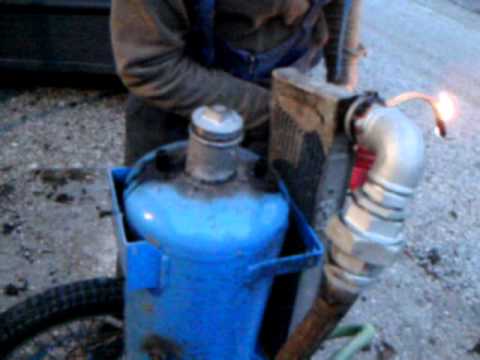
Years later, coincidencely my graduation asignment involved gasification and l stumbled on charcoal gasification during research. Before, l didnt even know charcoal can be gasifyed. Rebuilt the same engine (50cc 2 stroke!) and powered it with a Simplefire style gasifier. Worked so well, l went all in and gasified our only car at the time, the Seat Arosa wich is documented here on this site. Then many sucsessfull raw wood gasifiers.
If l hadnt had a charcoal buisness now l too wuld probably rather use raw wood. Im not a “charcoal guy” and even when l do advocate about charcoal as fuel for a seasoned wood gaser its always as a mix of some charcoal in raw wood, think of it as a “fuel aditive”. But you got to crawl before you walk. And truely great sistems can not be built by just copying. They need to be understood well.
But l do however strongly belive anyone planing to produce power from biomass shuld start designing his sistem around the fuel he has rather thain the engine and other things. There are fuel sorces where conversion to charcoal does make a lot more sense thain raw wood gasification. But to stick to Davids topic, his situation doesent seem to be one of them.
13 Likes
david, on your last photo…do you use the twigs for something?
this is the stuff i use for my fuel making, charred in a bath tub, it has immediately the right size for motor fuel, crunching is not needed, and because of the short charring process a lot of chemically bounded h2 remains, from my modest insight…
sorry, but we should not end here in a religion war about wood or charcoal, but help with practical advices , so a beginner can valutate better his own situation and his possibilities…i had run with my system till now a 160ccm honda engine and at least a 2225 ccm fiat motor on a crawler…
10 Likes
Hello Kent,
I’ve done some research on charcoal and what I understand is that a good portion of the tar is removed during the transformation process.
So, I understand that the process is easier to control and prevents tar buildup in the engine.
Thank you for your feedback.
8 Likes
Hi Steve,
Thank you for your concern about my motivation 
I initially thought about having you rename the website DDIWBC (Don’t Drive In Woob But Charcoal), but ultimately I decided to learn more about charcoal.
Just kidding, of course. It’s true that a lot of information at once can be discouraging because it means more work.
I’m still happy with your feedback because I know what to expect.
I haven’t made a decision yet, and that’s precisely what makes it even more work. But rest assured, I don’t get discouraged easily.
Usually, I only have my own opinion on the questions I ask myself; more opinions inevitably lead to more questions.
8 Likes
Hello Kristijan,
Don’t worry, I’m not easily discouraged, and thankfully so, because I have absolutely no experience and I’m starting from scratch (even with the engine part).
And it’s been the same for all my projects.
When I became interested in the hydraulic turbine, I did my research without necessarily intending to install it myself, as it might have been too complicated or too expensive.
And it’s the same for the gasifier; I don’t need one, but I’d like to build one because it seems interesting for my purposes.
I’ve also seen other ready-made systems that are top-notch. But 40,000 euros was a bit pricey.
I’ve leaned towards gasifiers because it could be built for less.
I want to thank those who pointed me towards coal.
Now I have many questions:
Which method requires the least amount of work? Cutting wood into small pieces or blasting it in a kiln and then crumbling it after processing?
For the moment, I’m still thinking about it.
The more we discuss it, the more obvious it will become.
I understand that for you, coal is the best option, especially given your limited space in your vehicle.
But for me, it’s a stationary system, and I have plenty of space.
My options are less limited.
Whether it’s the budget for your 13 years or the available space.
The only thing I’d like to keep in mind is minimizing waste, because building 10 gasifiers and leaving them lying around the house isn’t my idea of fun.
9 Likes
David, 10 years ago I built my first gasifier. For various reasons I went for a wood gasifier straight away and put it on my dayily driver. The gasifier wasn’t perfect at all, but with a bit of luck I drove that setup over 20 000 km without making enough tar to ruin the engine.
As mentioned before, 75% of the road to success is about the operator. A few important points come to mind.
First of all, a wood gasifier always has to have a tall base of charcoal sitting on the grate - pieces no bigger than marbles. This will be your “tar protection filter”. It’s important that this base is kept glowing hot - keep the engine loaded. Whenever your gas shows signs of smoke, it tells you tary vapours escape the charcoal base - to coarse or not hot enough. 99% of the time this isn’t a problem and the charcoal base will replace itself as you go and will only have to be manually filled before your first ever lightup.
Since heat is a critical factor, you’re most likely to make tary gases when the gasifier is brand new. Over time the gasifier will insulate itself internally and keep the heat in better. To help this situation, it’s important to prefill voids with ash to start with. After a few hours of runtime and a dussin lightups and cooldowns, more dust and crust will settle and a broken in gasifier can take a lot of abuse.
Finally and maybe most importantly - fuel. No dust and debrie. Aim for egg sized chunks. Round 5cm chunks from limbs flow the best without bridging. And use as bone dry fuel as possible. Dragging vater vapour through the charbed and superheating the steam will only rob you of valuable heat. Wood chunks can never be too dry.
15 Likes
JO sayd it wery well. But has it realy been 10 years? Seems like yesterday when l first started following your thread…
“Which method requires the least amount of work? Cutting wood into small pieces or blasting it in a kiln and then crumbling it after processing?”
You asked a valid question here. And, like in many woodgas related things, the answer is “depends”.
I produce and sell BBQ charcoal. The finer stuff (we call Engine grade) is a unsellable byproduct. I use this.
JO has a lot of young growth and limbs wich his Rebak chunker transforms in to ideal round chunks.
Mr Wayne has sawmill waste that he chunks in a specific way that shatters the peaces but they hold together still.
Giorgio uses the twigs, wich he burns in bathtubs to make charcoal. A pain to transform raw twigs in good, string and dust free woodchips!
Steve’s wood supply are conifers. Good luck making good charcoal out of that! Wood gasification is his only real option.
Its up to you to figure out what works best for you, but for refference, you need about 1kg fuel for each kw of electricity. You do the math of how much furl prepp you got and how you are going to aproach it.
There are also gasifiers that can run on both charcoal and wood, or the best fuel in my opinion; mix of them both. If l were to build something like you are, l wuld aim for that kind of a sistem.
12 Likes
Hello Giorgio,
No, I don’t use them and it would be good not to waste them, but without too much work, I’m interested in an explanation of your fuel production process.
5 Likes
david, here is the topic, from first try to some developement…
as you wrote if you use your woodlands in a careful way,they can regrow and be reused and can least for you, it is also wise to use the twigs…and coal size for motor use is ideal without crunching…the fire makes the work and not some machines, and occassionally some barbecue with sausages and a good belgium beer
10 Likes
This debate between the merits of raw wood or charcoal always seems to spring up when a new member who is actually intent on learning about wood gas joins. That’s OK. It helps bring out a lot of information that members have learned making gas by both and even hybrid systems. Then there is the issue of mobile to stationary applications and fuel production. If you were planning to drive on wood then producing enough fuel to make that possible is a definite challenge. Fueling cubic inches rather than cubic centimeters is a whole different ball game. Making enough charcoal to power Wayne’s V-10 would be about a full time job. I get enough charcoal out of heating my house with a wood stove for 7 months of the year to fuel my 400CC generator when I feel like it. It’s designed as an back up system. Big difference. I have not yet built a gasifier that runs unattended. You may not yet be aware of types of gasifiers such as up-draft, down draft or cross draft. I really think you need to run a version of a Simple Fire, which is an up-draft, to learn the basics of wood gas. First gasifier I built was a down sized WK and I found that getting good CLEAN gas out of it was a constant struggle. The modifications I made to the WK design resulted in a tar maker which is the exact thing the WK was designed to overcome. I backed away from wood gas for five years because of that experience. Fiddling around for some years with simple up-drafts has taught me where my original built went wrong and I could certainly rebuild it to be a good producer now. Just not necessary for what I need out of wood gas now. I am not aware of anyone that has made a fill it and leave it for a day. The guys who drive keep their char beds open from bumping down the road. I think Dave in Australia can run his up-draft for about 4 hours unattended. I run mine while I’m doing other things outside and have to occasionally adjust the amount of air to compensate for changes in the fire zone. I can tell by the sound of the engine if the mixture need adjustment. Others may do better. I am not the most proficient operator here by far. Anyway, for all these words the point comes down to the necessity of learning by doing and not just reading.
12 Likes
Jan,
Thank you for posting that link! There are many gems there, and my Microsoft Edge browser will translate the text. I even found web pages with period photographs I have not seen before! 
10 Likes
Great, thanks Jo.
So, branches the size of an ostrich egg are okay too? No, I’m just kidding. 5cm logs are perfect; I already have some dry ones, I’ll just need to cut them to length.
I’ll put the larger ones in the boiler and the smaller ones in the gasifier.
I’d like to benefit from your experience, if I can? Has your gasifier evolved since then?
I don’t know much about dry wood and its moisture content. As you can see, my wood is stored outside and covered, but it’s sometimes battered by rain during strong winds. Does that have a significant impact or not?
Thank you
8 Likes