Yes, me too. I agree with both points. Fortunately I like my work and feel bad we didnt pay Tone a visit this year. Only with three on the road, but they changed plans. Anything happens with a reason. What Tone is up to now is way above my had ( and it was already) and a must see.
I’ve finally caught up on this topic.
First of all, thanks again for everything you’ve taught me.
JO,
You seem to process wood often and in large quantities; if you don’t mind me asking, do you burn all your wood, or do you sell some of it?
How many cubic meters of stacked wood do you need per year?
Steve,
I don’t understand why you like gas-powered chainsaws so much.
It’s true that they are more efficient for large timber, but they are so heavy.
For limbing, even as a young person, I prefer using a battery-powered machine (though perhaps you don’t have branches to cut).
As for brushcutters, I don’t even take out the gas-powered one anymore; the latest Stihl battery models are so powerful, not to mention the smell, the noise, and the health aspects.
Wow. You did read back through this oldest, original, most extensive DOW topic DavidP. I can see this from some of the Hearts Likes you put up on some of the now old, old posts.
I have to remind myself that you are not an English reader/speaker but use on-line translators. Three months back and forth with this years Spanish Exchange parents using different translators showed me well how possible it makes it. Also the severe limitations it has also in languages with extensive male/female/neuter complexities.
I actually did in detail lay out my strong preference usage for handheld gasoline power equipments. The last 30 years evolution on these allowing more work to be done by a single fellow (aged fellow) in tight narrow weather windows. Daily always limited and other priority demanding time frames. As a solo now 73 year old man I still must produce results and have enough daily time/energy left to get other needful things done. My situation not unsimilar to other truly old guys here on the DOW. You asked J.O. some specific questions. Reflect on this. J.O.; JanA.; Tone and Johan as 50ish year old “Grandfathers” use productive gasoline saws for the same reasons. Sure the modern advanced gasoline saws are noisy. Somewhat stinky, smelly sure. A few "But’s . . . " now. But we are all true Rural. But chainsaw noise is a forest rural normal, and expected. All of that forest green growths can easily absorb and emiliarate the exhausts and bar oils. But what about all of the supply chain and then eventual disposal of complete conversion to rare earth batteries?? As 50’s to 80’s year olds we have all seen decades of new technologies be promoted, pushed-tried, the quietly fade away, to be set aside. Only time in use will sort out the truly long term practical. I continue to use gasoline equipments because it in most cases is the most Practical for me. My gasoline equipment have the same power and capabilities start to finish. Battery systems do not. Start strong, tapering to weak.
Ha! And I and these other fellows do use cordless battery systems when they make sense to us. The controllable variable speed of hand drill/driver as one of the best usages. Personally I have found battery hand held reciprocating saws to be great also. Yes for limbs. For me it has been 30 years evolving from 9.6 → 12.0 → 14.5 NiMh to now 18 volt Lion. I do not $$$ and $$$$ chase the 20-60 volt batteries killing applications. Just because it is now available. Just because it is the "commanded’ newer-is-better, thing now. The “Everyone Must!”.
Ha! Ha! I’ll check back in with you in 30 years and see what tune you are then singing DavidP.
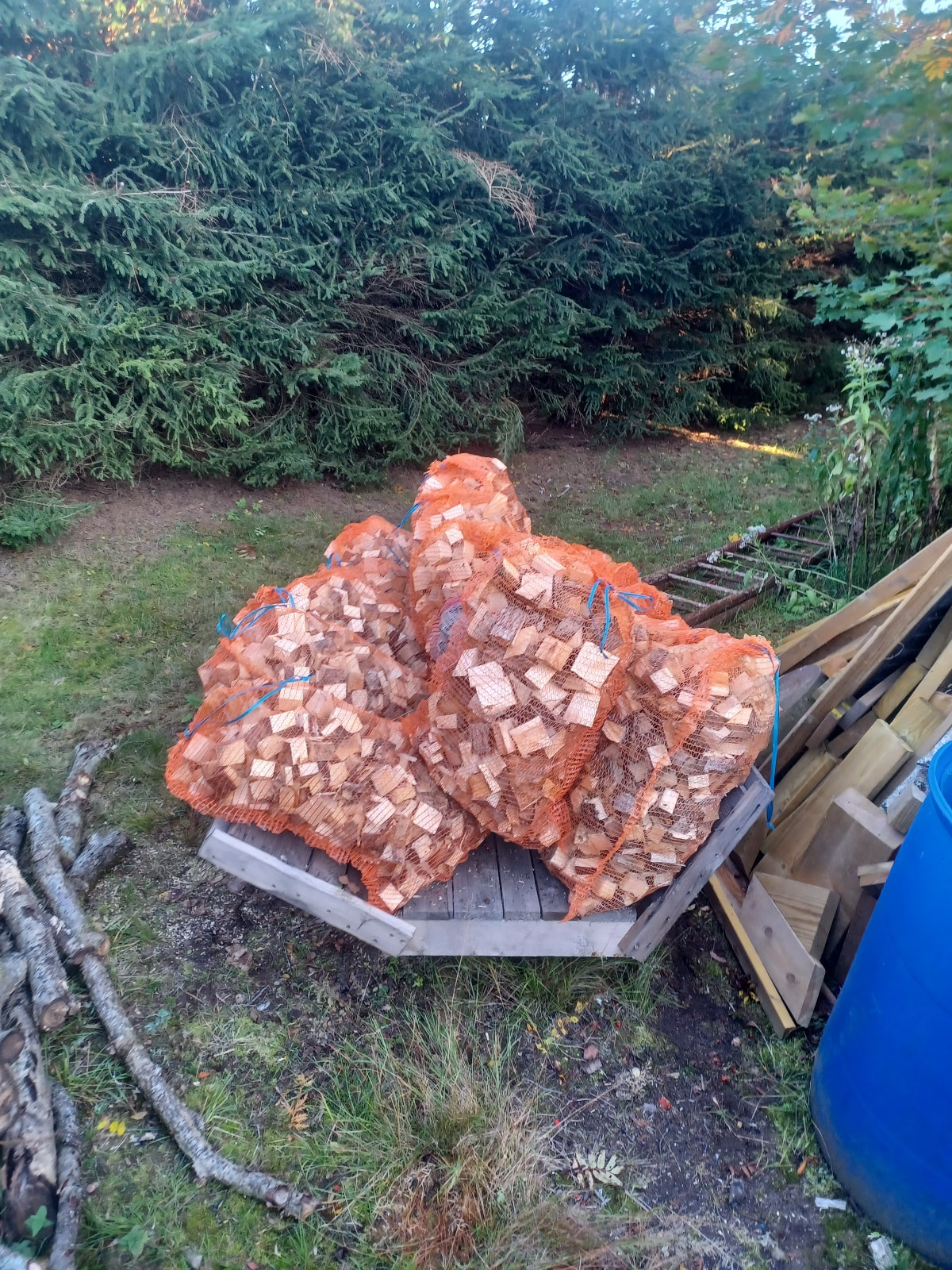
Hi David! I process firewood once a year - in March-April. I do sell some, but numbers have increased lately. Nowdays about twice those 20-30 m3 I burn myself.
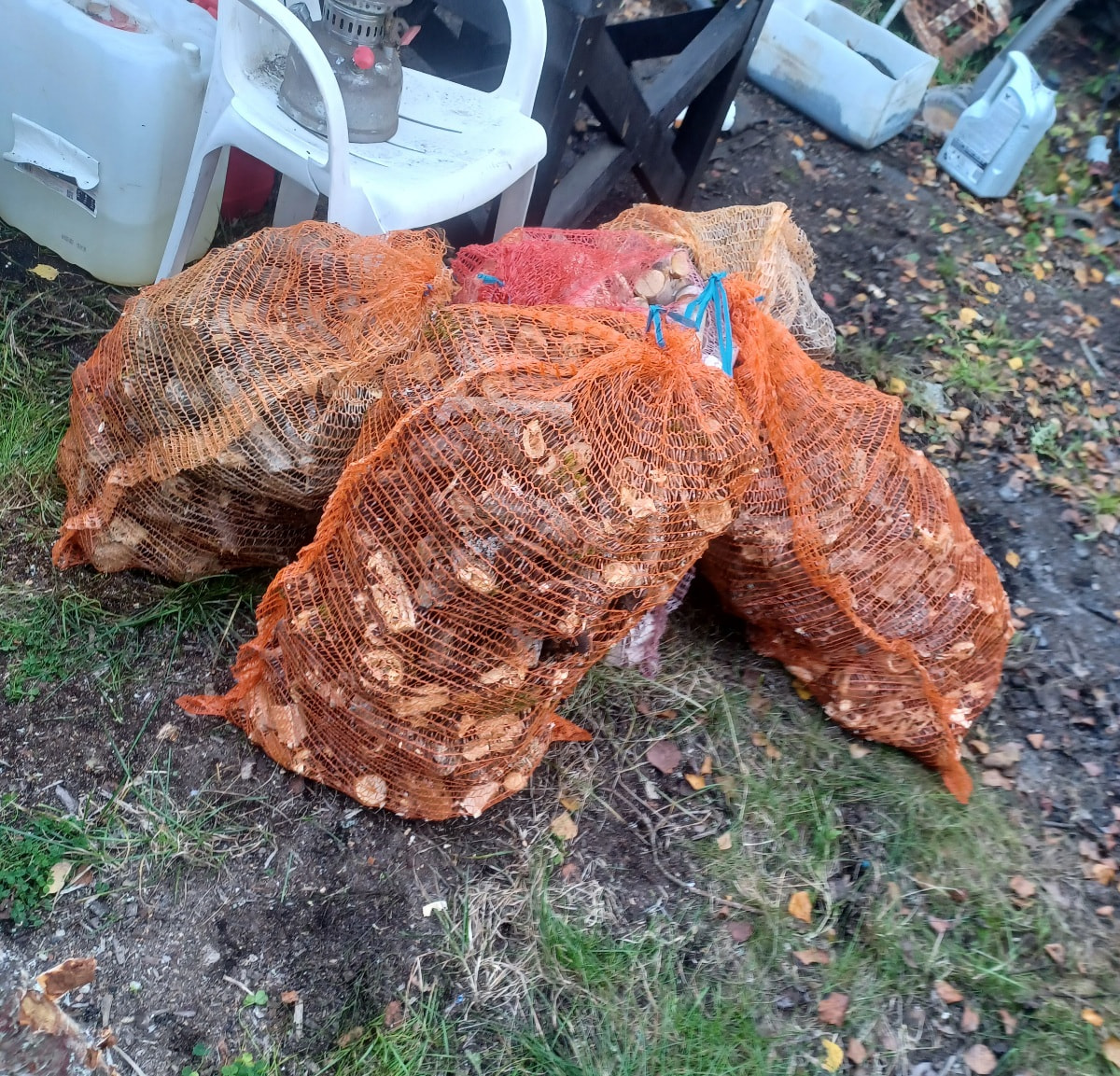
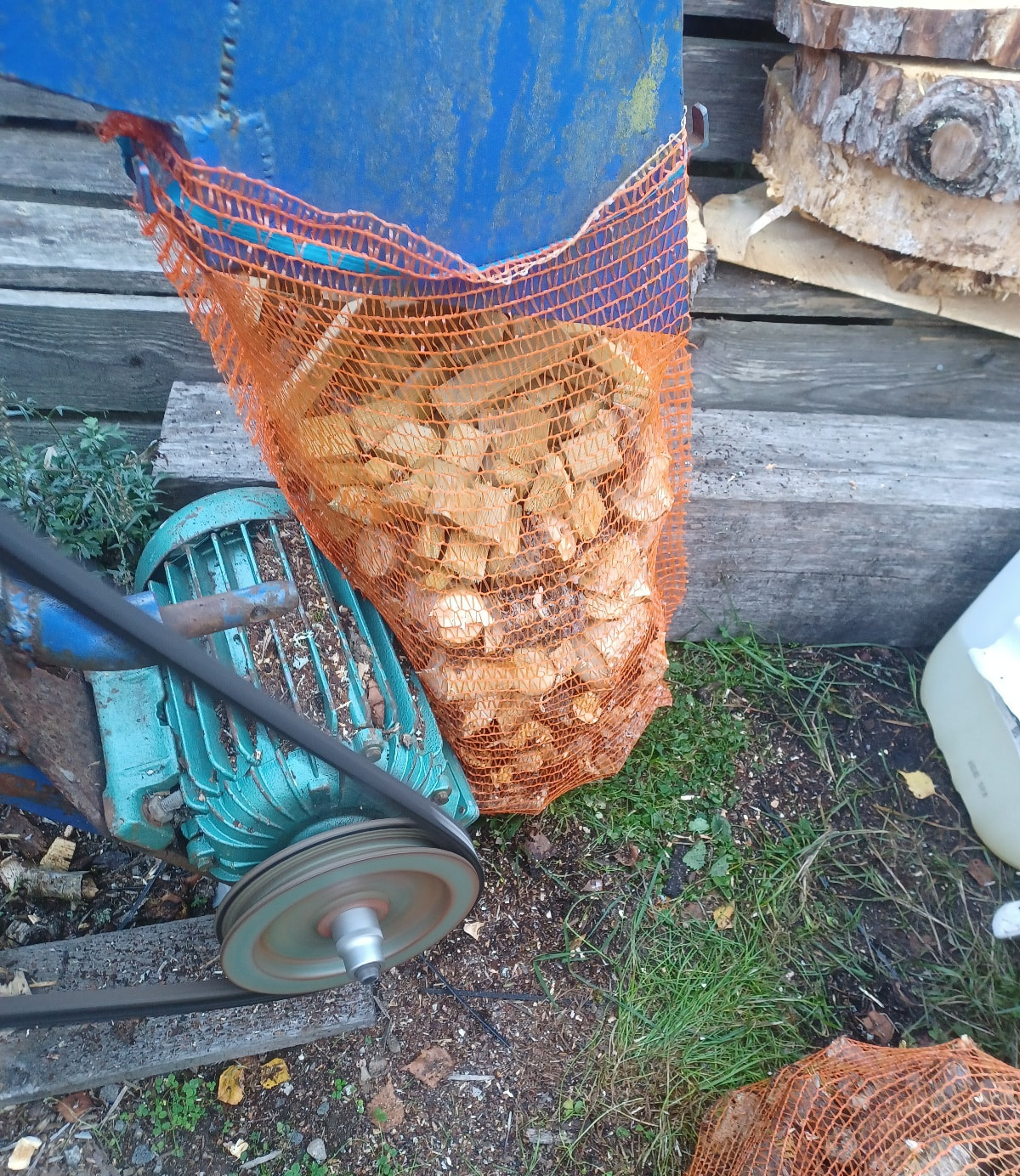
Chunks for the vehicles is another story. That’s another 10 m3, but processing is spread out from March to October. I only have so many trailers and covers for drying
I annually process about 40m3 firewood for own use every spring to burn and what ever is necessary to harvest for milling, I have only squirreled away about 1m3 of dow-chunks so far and I only use gasoline powered chainsaws mainly because battery powered stuff always eventually go bad and then new batteries has to be bought.
Yes, one can argue that it still would be cheaper in total including gasoline and what not to use batteries but if I am in the forest harvesting wood for timber or firewood I usually don’t stop until I have a full wagon with me back, which would be somewhere around 10-12m3 (around 3 full cords of firewood) depending on lengths then I would need quite a few batteries with me and then it gets expensive compared to an extra jug of gasoline. So I think I will choose gasoline saws everyday but I also bring a small Stihl 201c for limbing because of weight.
I however splurged on a cheap small batterypowered limb chainsaw from a country far east to harvest 2” young trees just waiting to be chunked, I used a limb axe earlier but have to use a lot of force to cut through it and had a close call missing my ankle with a few inches (haven’t told my wife about that one) so that purchase felt like a must plus it it not many actual running minutes per trip.
Steve,
I hope I’ll be able to give you an update in 30 years; I take my hat off to you.
I already find gas-powered chainsaws heavy, so by the time I reach your age, I’ll need one on wheels!
I’m a bit like Johan: I use an electric chainsaw for branches because it’s lightweight and much less tiring, even though my electric model is quite powerful.
For big trunks, I use the gas chainsaw, but my bar is 50cm (much shorter than yours), which is plenty; the biggest trees I’ve felled were 80cm in diameter, though I mostly cut 30–40cm logs.
JO and Johan,
40 cubic meters a year is a serious amount of wood.
I’m not sure exactly how much I burn, but I’d guess less than 10 cubic meters.
I use photovoltaic panels to automatically heat the water for my heating system whenever the sun is out.
I’d also like to cut down further on wood consumption by finishing the house insulation and using other tricks, not necessarily just to save money, but simply because I enjoy it.
Of course, as you’ve probably realized, I have an unfair advantage over you: my geographical location is better, and winters around here aren’t as harsh or long.
I think the days are longer here, too.
I don’t know how much 10 cubic meters of wood is in cords. A cord in the US is 4x4x8 foot. I cut 10 for house heating every year and hard to say how much charcoal I make out of small branches. I have a 58V Echo battery saw. A handy tool for getting my gas saws unstuck when I screw up and get the bar bound. Maybe if I could afford 4 batteries I could do some real work with it if I touched up the chain about every hour but my gas saws run all day long and have the power to pull a tired chain through hardwood when I’m to lazy to maintain it while out cutting. I know some of the newer very expensive battery saws are gas saw capable but still need a recharge every hour or so doing serious work. One of the biggest reasons I’m not a big fan of battery saws is that I can tear down my gas saws, and replace bad parts but for me a broken electric tool is just a boat anchor.. I know others are not as electrically retarded as I am.
To me, 1 cubic meter corresponds to a *stère*, that is, split wood stacked in a 1m x 1m x 1m pile. A “cord” is equivalent to about 3 *stères*.
So, you’re burning roughly the same amount as JO or Johan.
As for battery-powered chainsaws, I own a Stihl model that, I have to admit, was quite expensive.
That was mainly because I already owned other tools from the same brand, so I wanted a battery system that was compatible across all my machines.
With my largest battery (though it’s not the biggest one available), I can easily match the runtime of a full tank of gas on a petrol chainsaw (in terms of duration, though not necessarily for cutting through massive logs).
And with two batteries (the second one being the next size down) plus the fast charger, I only need those two to keep working continuously.
However, if the chain starts to lose its cutting edge, I simply swap it out for a sharpened chain; in my opinion, you just waste time trying to cut with a dull chain.
My chainsaw hasn’t broken down yet, I’ve had it for at least four years, but I’m not too worried about having to repair it myself; I’ve certainly fixed more complicated things.
I assume spare parts are available, though I’ve never actually checked.
Working on electric motor tools is not so bad. You just have to do/practice and get into the swing of things. Motor brushes are available for the corded Stihl saws. Done that.
Hand held sizes for decades now that means working with a lot of plastics. Ha! In many respects now with same with most gasoline chainsaws too: a lot of plastics too.
For practice pieces use older worn cordless drills. I have three Makitia’s brush types now with brushes; chucks, and clutches worn. You can get brushes. But the slip-ring commuters are grooved worn through too now. No clutch parts available. Replacement chucks are easy available but can be heartbreaking to replace when aged plastics or a drive shaft breaks with the force needed for removal.
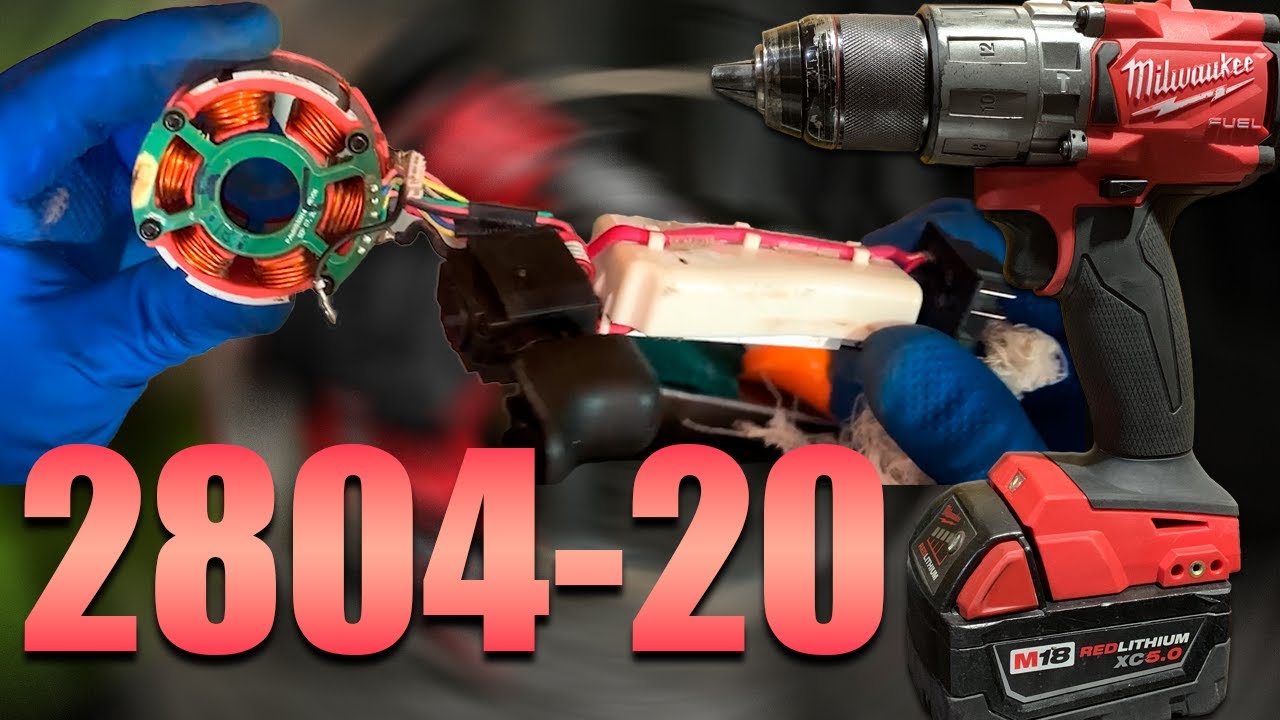
I did change over to a brushless; electronic clutch Milwaukie M18 system. THEN after only a year or so the cutch started de-clutching on me. First driving screws. Then just drilling. I was pissed paying more to get less useable service life! I spent a lot of time trying to research how to either lock it mechanically. Or swap it out for the mechanical clutch on a lower grade unit. No-go. Watching teardown and maintenance videos I now see it was the electronics control package forcing tool stoppages from what it considered my overworking, overheating abuse. So it was I; having to adapt to this new tool system. Here is one of the most useful video’s I watched:
I’ve never checked; but sure to be videos about Stihl cordless saws up now too.
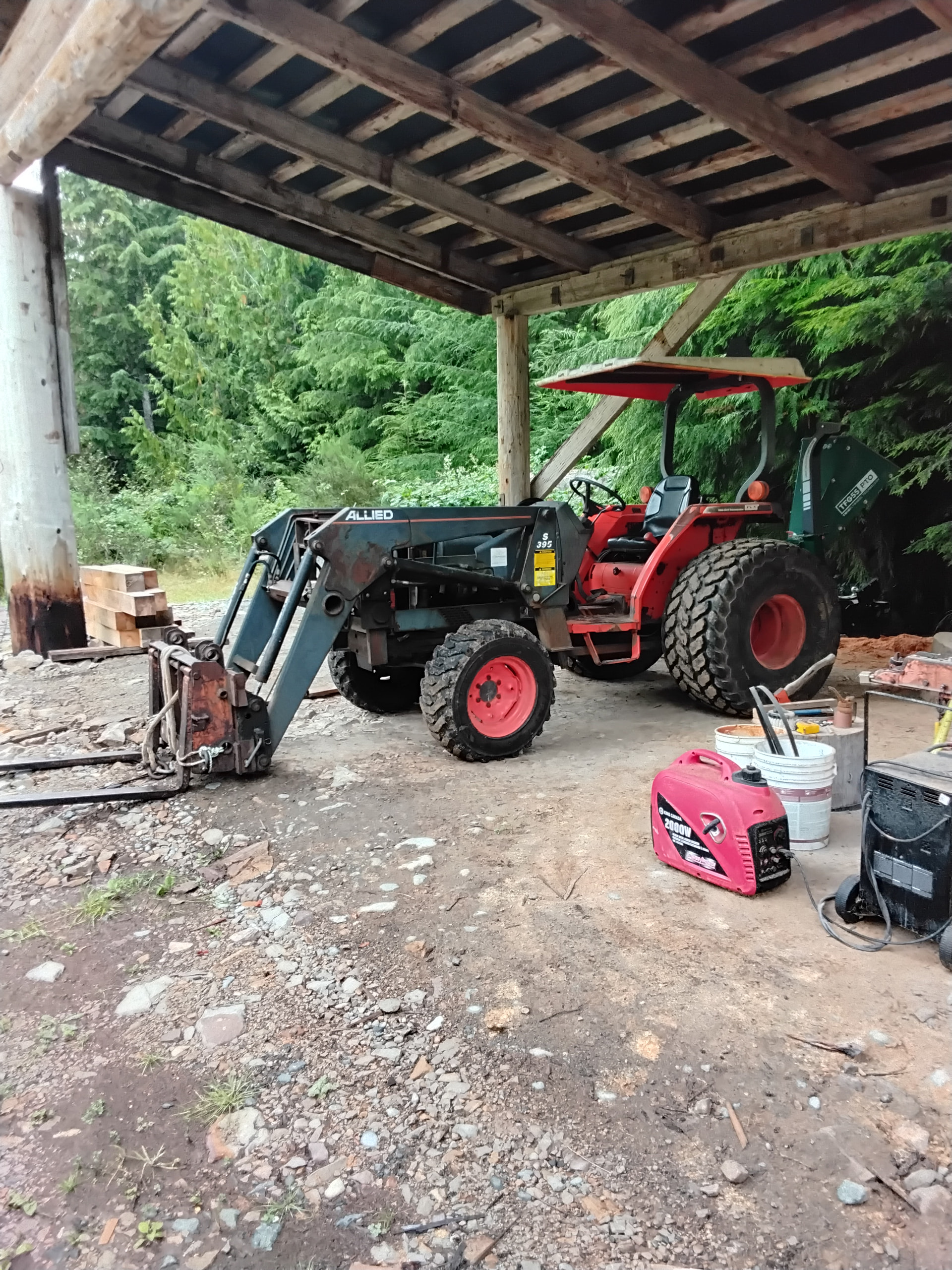
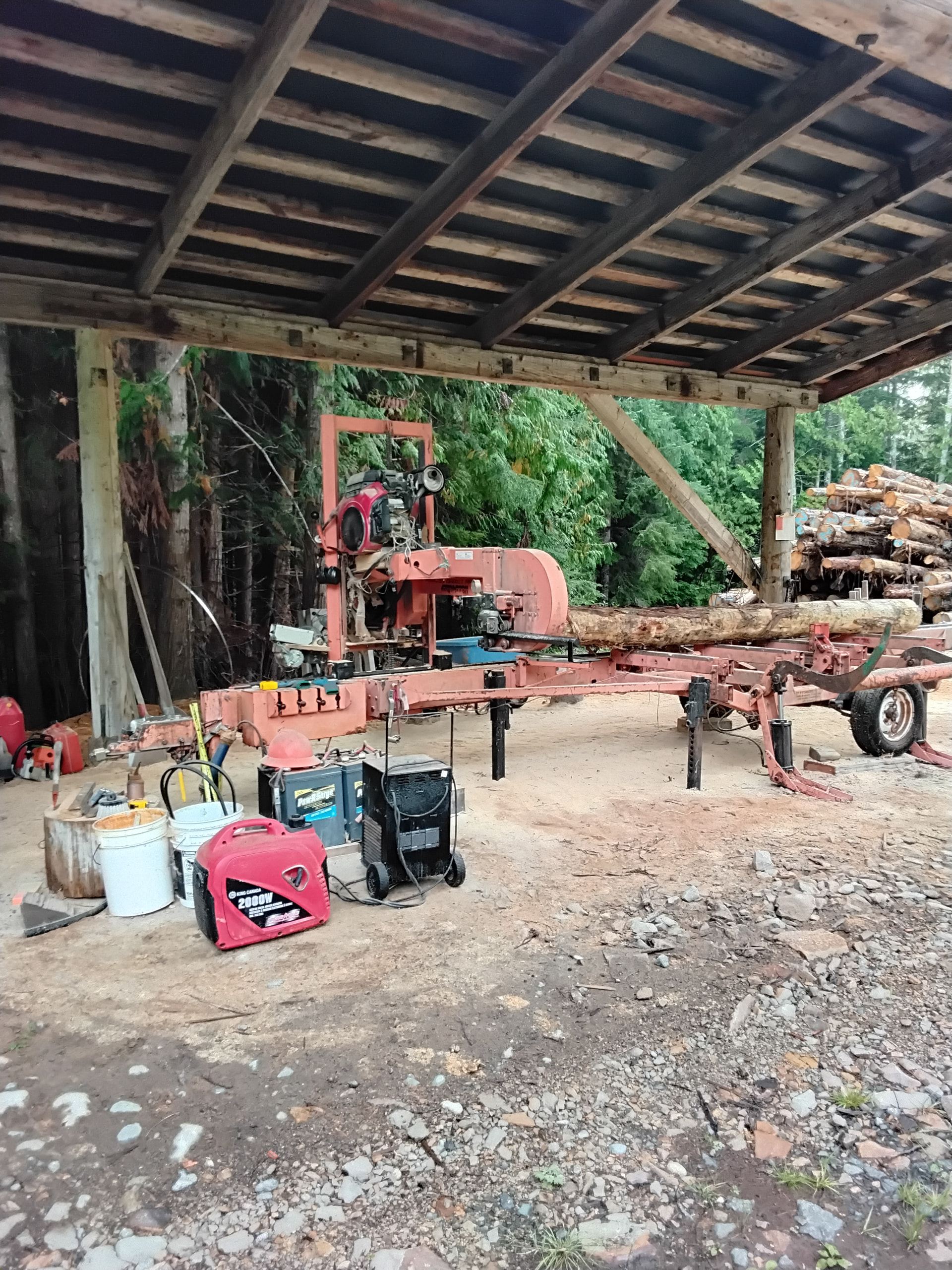
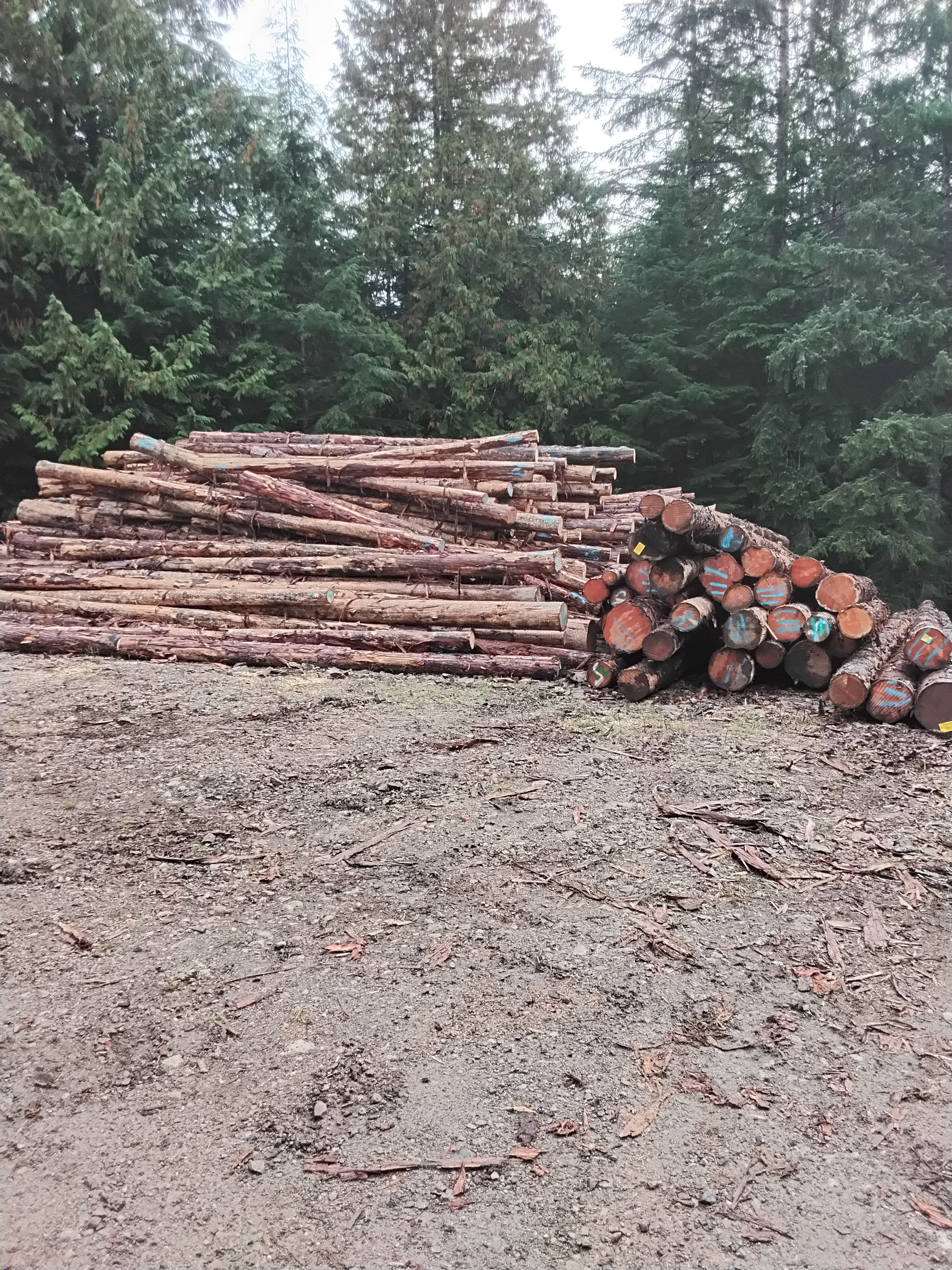
Hey All, here are a couple pictures of my operation if I can figure out how to post them. 40 meters of pine sawlogs and 80 meters of yellow cedar. 3 highway logging truckload. Be busy this winter.
Yep. You are going to be generating a lot of edging slab wood to be able to burn for heating now.
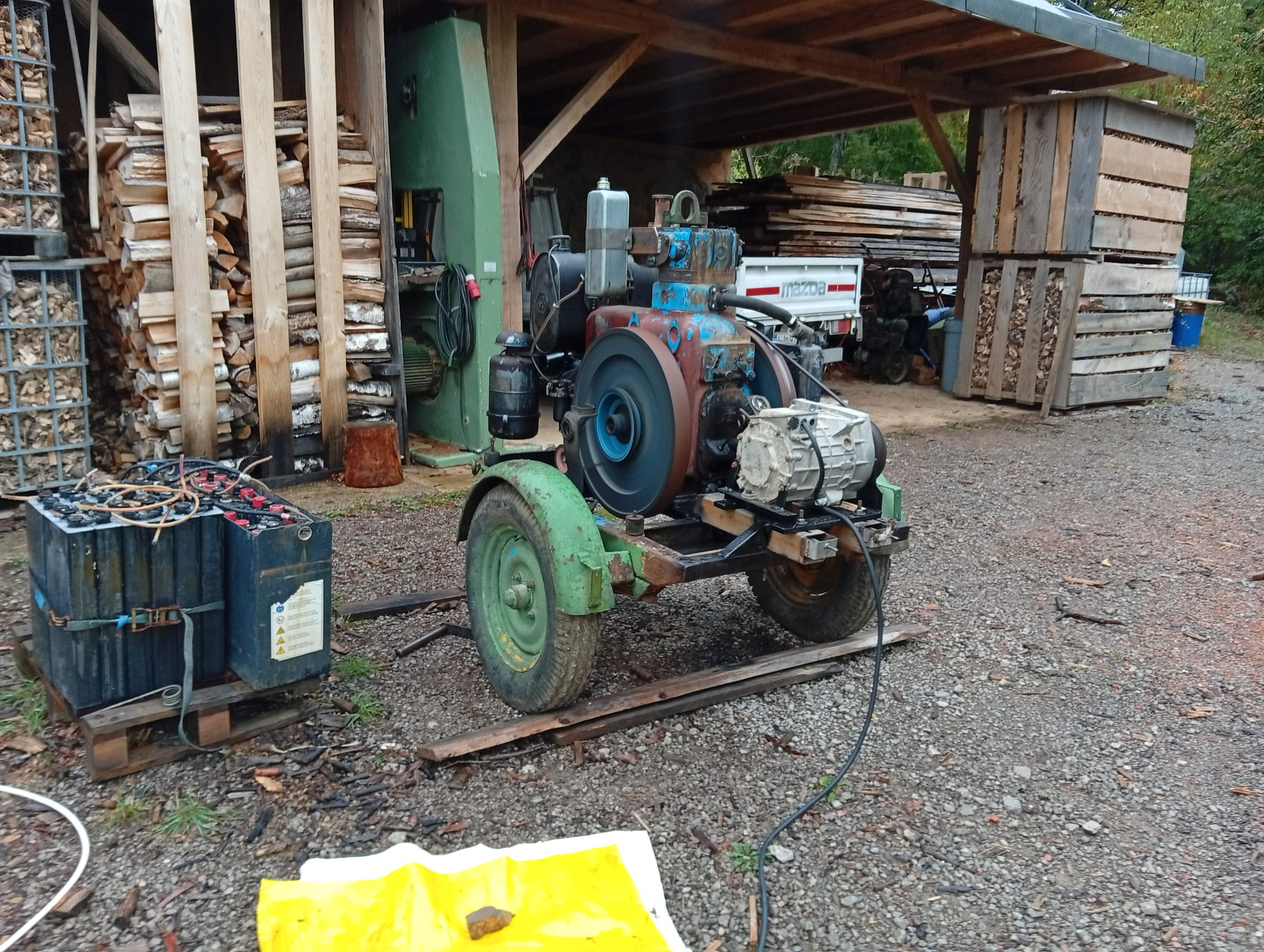
Are those two lead acid batteries for mill power lift, travel and hydraulics motors? Smart to just use a cup or so of gasoline to bulk charge them. Ha! Sometimes me too . . .
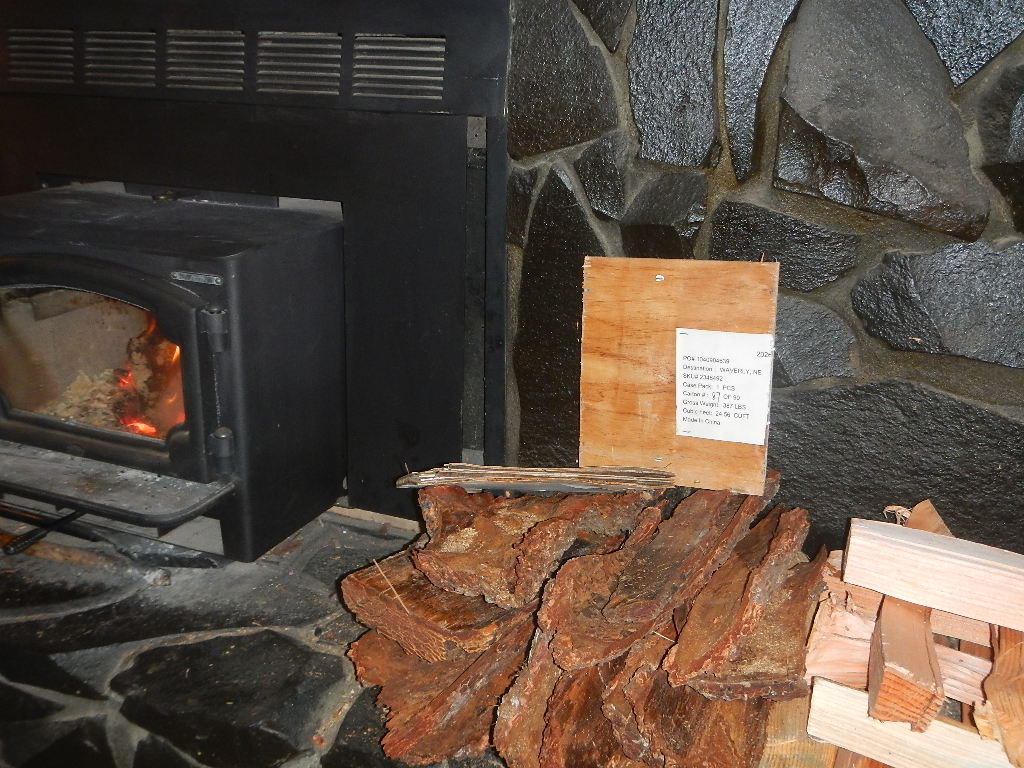
I am already into morning, and sometimes evenings, house warming fires. I use this easy time to burn up all of the bad quality stuff like broken down furniture woods, Chinese shipping woods and plywoods (shame - they delaminate out in the rains), and D.F. thick base bark.
That is exactly right Steve. I fought for years with the power pickup strip to energize the hydraulics and now bypassed it direct to batteries. KISS. Lots of slabs for sure so starting to refill woodsheds. Better late than never.
I hope they aren’t lying about this being an El Nino winter. I used up all my firewood reserves the past two bad winters. l don’t normally like to start cutting firewood until all the undergrowth and raspberry vines have died back but I have to get cataract surgery done the end of the month and I’m not sure about how long it will be before I can do heavy lifting afterward. I’ve been getting about three quarters of a face cord a day so I should be able to make a get a fair sized stack before then.
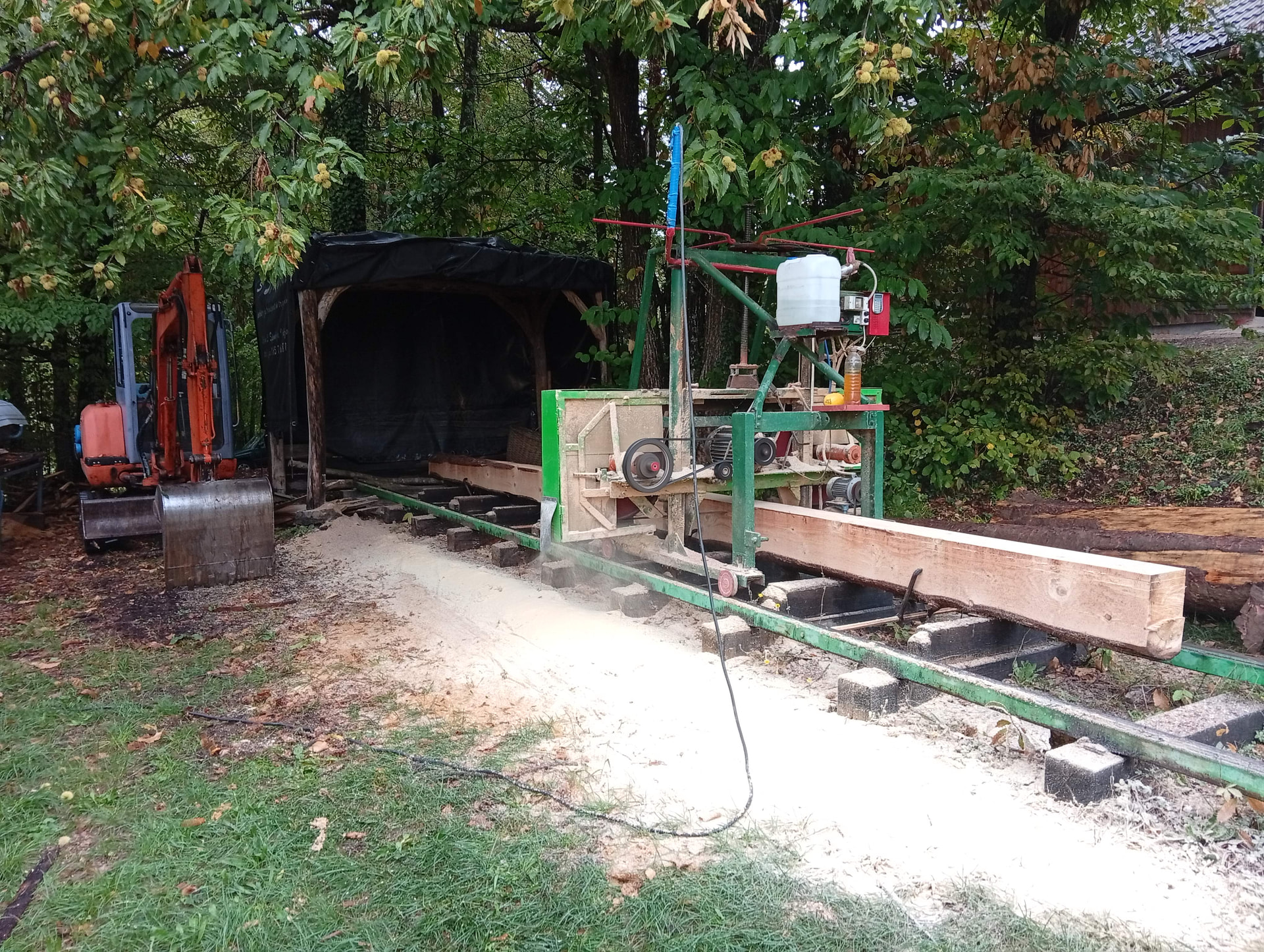
I have some 8-meter spruce logs to process at the sawmill; the weather is overcast and there is no solar power, yet I remain committed to generating my own electricity. This generator—built from an automotive permanent-magnet electric motor—performs excellently, producing approximately 3 kWh from a single liter of oil while maintaining a constant load of 6 kW. It meets the needs of both the sawmill and the household; the saw does not run continuously, as I spend a lot of time manually handling the timber, and the battery charges during those intervals.
Excellent Tone
I can’t remember if you described your battery? Looks like forklift batteries?
Do you charge them from generator, then through inverter?
Goran, the battery is a 32 kWh LiFePO4 unit; charging happens via an inverter, and the generator is connected to the inverter’s DC input. The generator produces three-phase current, which I rectify before it reaches the inverter. This setup actually works excellently; having monitored the system’s actual performance, I can now share real-world results firsthand (in case anyone is interested):
the inverter measures and logs input energy; so far, 1,790 kWh has been generated
output consumption is also logged; this amounted to 1,600 kWh
the difference is nearly 200 kWh, representing battery losses and the energy the inverter consumes to operate—it actually draws between 50 and 150 W for its own operation (averaging about 100 W), which works out to roughly 2 kWh per day.
The lead-acid batteries kept outside are from two manual pallet trucks; I got them for free. However, these batteries have quite poor efficiency—comparing charging energy to the energy retrieved, the efficiency is actually only 60–70%. They aren’t the best choice for this type of application; anyone who has tried generating electricity with a generator knows what 1 kWh represents… (3 kWh per liter of diesel, assuming a good diesel engine and a good generator running at optimal load). When I reflect on the generation, storage, and use of electricity for specific tasks and compare that to my wood-powered tractor, the latter method is far simpler and more efficient: you burn fuel in the gasifier, wait for good-quality gas to form, start the engine, and can get straight to work—whether it’s tilling the soil, hauling materials, crushing stone, cutting firewood, or operating a winch or a hoist…