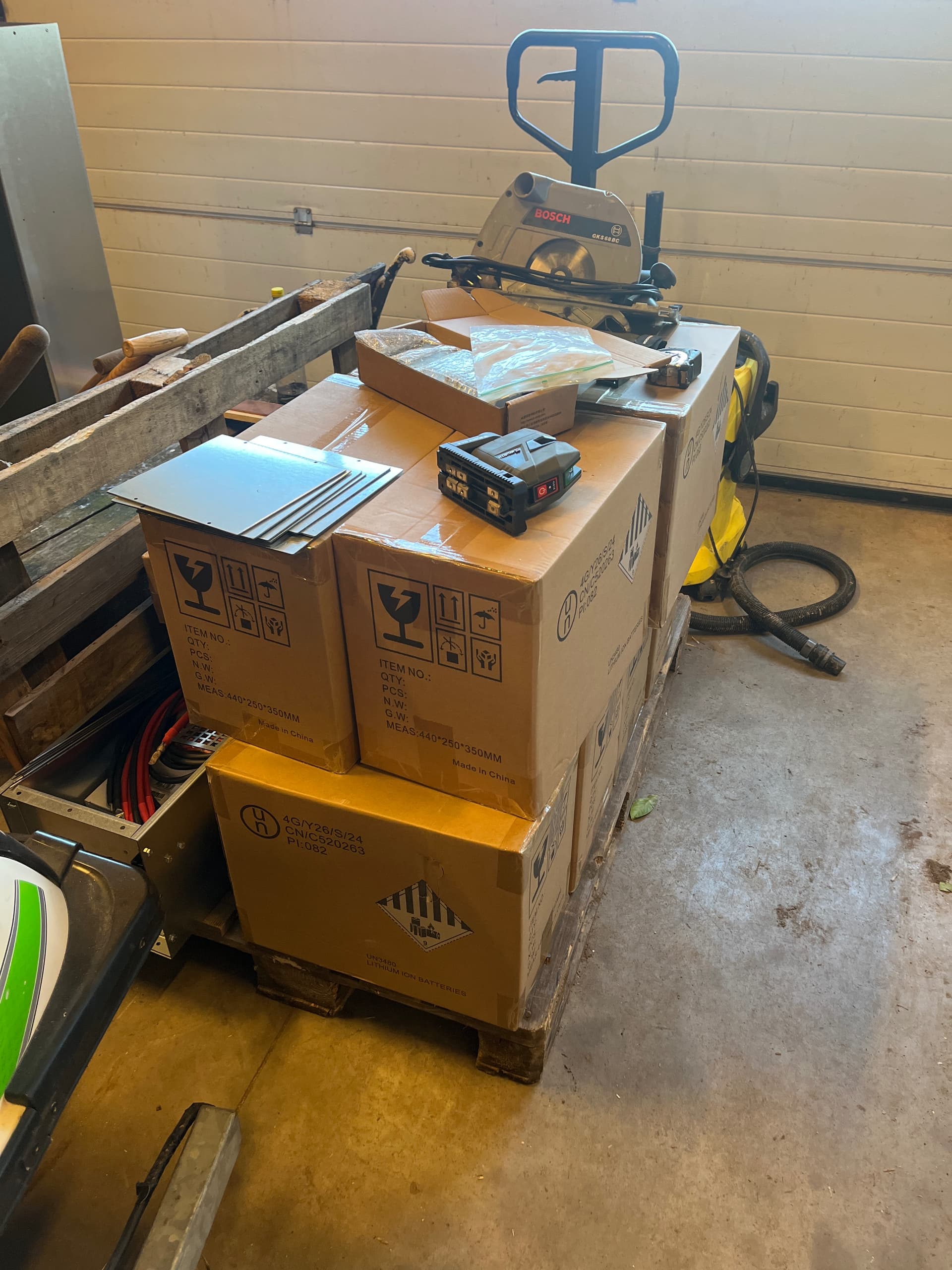
From what I studied in the past and flipping through Wayne’s book, older vehicles or dodges sweet spot were ideal gassifiers…
But my buddy left this truck on my property to die because it needs a bunch of front end work. Then as the electric rates continue to go up I was thinking that paper weight could be my motor to a 25kw pto genset with a gassifier.
Could someone just lay it on me straight and simple if this is feasible? My father in-law has a saw mill 100 feet from my house with 300 yards of logs on each side of the saw mill road. Plus local tree guys will drop me waste wood if I needed it.
This simple, hard? Where would I plumb in the wood gas, how do I get around injectors and timing? I know just enough about mechanics and engines to study specific motors, then I can follow instructions. But I had this vision of gutting motor and putting carburetor on it, locking the wood gas so the driveshaft is spinning at desired speed for power, but I guess governor’s are good… Idk
Don't have a pot to pee in, electric bill is 400 a month, would rather process wood myself at home and feed the hopper.

                  George
No real reason to change it over to a carb George. All you need to run strictly wood gas is a way to meter the air fuel ratio. Your throttle body can do that. Timing on computer controlled engines is outside my wheel house. I doubt it will ever be a fire it up and walk away for the rest of the day option. The secret to off grid power is a large battery bank.
Hi George,
First question. What are your electricity needs that cost $400/mo?
Do you use that amount 24/7 or intermittant?
Second question. If you already have a 25kw pto generator, why not gasify a tractor that already has a pto and a governor?
I am afraid that “free” engine won’t be free after gear reduction and governor add on.
It’s intermittent, we have electric hot water. You know there is an old Massey ferguson that my father in law let rot on the back 4o because of tires. He recently did an engine rebuild on it, years ago. It’s been sitting for 10-15 years. But that’s a great idea… I wanted to work the tractor but didnt want to buy tires. But the PTO works great. Praise God for brilliant men.
The short answer is you can probably get it to work. The longer answer is if you want something quick, and easy. Solar plus battery plus storage is going to be the easiest and fastest, and you may actually need the battery and inverter for your generator anyway.
The main problem is if the gasifier bridges it won’t have the consistent output required to drive the pto generator at the appropriate speed which varies the Hz and can cause issues with appliances.
The run time, maintenance, and wood processing to keep it going 24/7 is going to be a pain in the butt. So having it so it can charge a battery bank is far more practical.
The second issue is it takes time to build one and because it is pretty important to have similar sized pieces or chunks of wood, you will want to build a chunker as well to get the consistency in the fuel source.
Wayne uses slabs from lumber and his chunker essentially to get rid of the slab waste which is a great idea.
You probably should read the book before deciding whether you can construct one.
A friend of mine has a nice solar system set up. He said the batterie set is much cheaper now then it used to be. Think he was talking 5k for lithium batterie and inverter. Does anyone here have any links to batterie and inverter set up? Here’s another question, could I just accumulate used batteries, reconditione them and build a big old bank? I don’t mind spending 5k for a good battery, but a couple friends gave me old batteries and I’ve reconditioned all of them, seems easy enough to do and I feel like if I put out a message I could get a bunch of them in little to no time from friends.
To manage batteries and operate off-grid, you need a UPS with backup power.
In short, it’s the UPS that generates everything it needs to function without the grid.
I prefer the Deye brand; it offers good value for money.
There are two types of batteries: low and high voltage, and UPS systems differ depending on the battery type.
In low-voltage systems, which are most common for small setups, the least efficient battery is used to balance the others for storage.
Therefore, adding new batteries to old ones will decrease the performance of the new batteries (a new technology corrects this phenomenon for high voltages; I don’t know if anything similar exists for low voltages).
Furthermore, there’s a communication system with the UPS, so you can’t just do anything, but I don’t have more specific information on this.
When we talk about €5,000 for one battery and one inverter, yes, it’s possible, but it doesn’t mean much without more precise data.
To give you a concrete example, I paid approximately €13,000 for a 12kW three-phase inverter with 40kW of low-voltage lithium batteries (8 x 5kW), without installation (I did it myself, and it’s not too complicated).
It’s important to know that not only the inverter’s power but also the battery capacity plays a role in the charging and discharging power.
For example, for my 12kW inverter, I was advised to use at least 20kW of batteries to be able to use its full potential.
Regarding refurbishment, I can’t really say.
It seems like a good idea, but as I said, be careful about communication between the different devices.
I don’t know the rates where you are, but here, given the price of electricity, the batteries will pay for themselves.
Although I must admit that I mainly had the installation done to escape the manipulation by our electricity providers.
Just a little extra information: lithium batteries should be used at 80% of their capacity to prevent deterioration, and lead-acid batteries at 50%.
You should have balanced batteries or it can cause issues like fires, and lead acid batteries aren’t good for that many charge cycles unless you have deep cycle or marine batteries, I think it is up to like max 1200 if you don’t go below 55% at all and they lose capacity with every discharge no matter how much you discharge. I just wouldn’t build a new system around them unless it was 100% compatible with lithium batteries, and the cabling between them is probably going to be pretty expensive. And you will have to keep a watchful eye on them. I completely understand taking the risk if they are in like an out building where if they catch fire, no harm no foul. and you need to try to save up the money for batteries.
Basically all home storage batteries tanked in price. There are a few discussions that talk about them. Your friend is most likely talking about Lithium iron phosphate batteries, which supposedly last 25 years with no maintenance and 3-5k charge cycles, down to 80% deep of discharge and don’t start fires. The caveat is they don’t work well around freezing temperatures. Some of them have heaters built in. They don’t have as much storage density as Lithium ion batteries used in cars, but usually space isn’t a huge concern with home storage.
I haven’t priced them out in a couple of years but I doubt it will be 15k today. If you are looking for backup power, you need to look at max current draw so you can spec your inverter (and/or charge controller sometimes they are integrated now), appropriately. Sometimes they also stack in parallel so you can have say 4 of them working in parallel.
Then you have to be able to provide the power to them.
I agree, I think it’s a worthy investment. They are telling us we have to install the smart meters now which supposedly keep track and charge for everything plugged in. I’ve heard good things and bad things. But I figure if I can have a hybrid system with solar and a gassifier (unlimited fuel here) then I can be self sufficient and not be manipulated by corporate filth. Some people say the smart meters are useful to track have and some people report severe rate hikes. Any ideas?
When you say you have electric hot water is that a hydronic home heating system or just a water heater? I think when Matt Ryan sees this thread he will be able to offer you hands on advise. My memory is not good but I think he uses these EG4 components. Dealing with Lead Acid battery banks is a pain in the ass.
Smart meters cause electric rates to go up because they measure accurately.
They don’t track per appliance unless the appliance itself has some communication. But they do track time of use, so they are able to offer high and low rates like daytime/night rates. Sometimes, there is enough of a spread to make it worth actually getting a battery system. I think it was Detroit Energy that offered an extreme low rate of like 1c/kwh, but an obscenely high like 28c daytime rate which is enough to pay for batteries.
Some of the smart inverters will let you program that into them so you don’t use the high time. You may also need a smart panels that automatically cuts off non-priority circuits when you are low on power as well.
Yeah it’s electric hot water, electric stove (I cook all meals)
Dish washer, clothes washer and dryer, well pump, 2 blowers for forced air wood furnace, lights and small appliances. Family of 5 , younger kids take two many baths.
I’m in western MA. Who knows maybe my meter is reading hi and a smart meter will help. But the provider is Ever source.
Regardless if some chatastraphic event happens wood gas is superior, sure it’s work to build and run but if electric isn’t available there will be wood chips.
MA looks like it still has a good net metering program. So you could run woodgas, pump it to the grid, get credits to be used later like in the winter. They include other forms of energy… however it saves quite a bit on upfront costs of a completely off-grid system.
The trick is getting the AC out of the generator and get the frequency matched to grid power. The easy way is to use a charge controller with a battery and an inverter which is probably over half the cost of a solar system. It means you don’t need to spend as much on batteries now because you aren’t completely jumping ship quite yet.
Just a caution: Net metering is great if you don’t need it. Meaning, the rules for net metering can and do change a lot. If you need a good net metering agreement to make your system economically feasible, you can wind up in a tight spot if your utility changes the agreement from generous to greedy. Sometimes existing users are grandfathered, sometimes not.
For what it’s worth . . .
Hello George,
Do you have any idea of your daily consumption?
If that’s what you want to know, there are small devices that calculate all that.
Around here, installing smart meters will almost always be more profitable for electricity providers, despite what they’d like us to believe.
And judging by how you talk about your suppliers, I get the impression it’s the same for you.
To get back to the €13000 price, that’s what I paid in 2024 in Belgium (I’ve been researching for a few years now, and it’s the best price I’ve found).
The system includes:
a hybrid inverter that can manage the panels, turbines, batteries, generator, any additional inverters, and can also be used for home automation. (€2500)
8 x 5kW lithium batteries; most installations here only have 10 to 12kW of battery capacity (€1100 for 5kW)
the remaining equipment for connecting and storing the batteries, inverter, etc.
the testing and commissioning (as Sean mentioned, batteries can cause a fire, so it’s best to be cautious).
If you use a lot of hot water and have a traditional electric water heater, I recommend a heat pump water heater; you’ll reduce your electricity consumption by a factor of three (for water heating).
I’ve had this system for about 15 years, and the consumption is 3 kWh per day for a family of four (compared to 10 kWh per day for the traditional system).
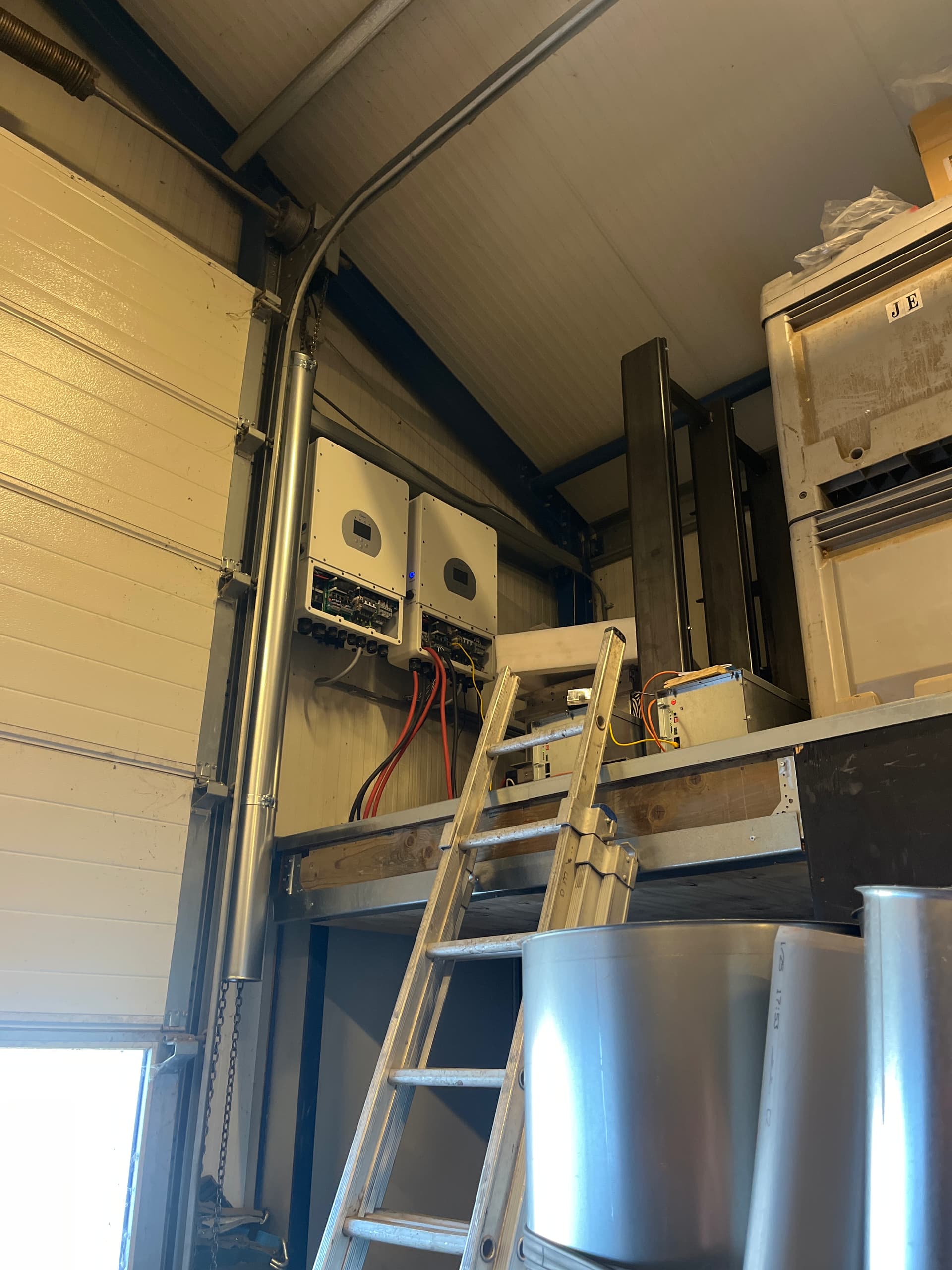
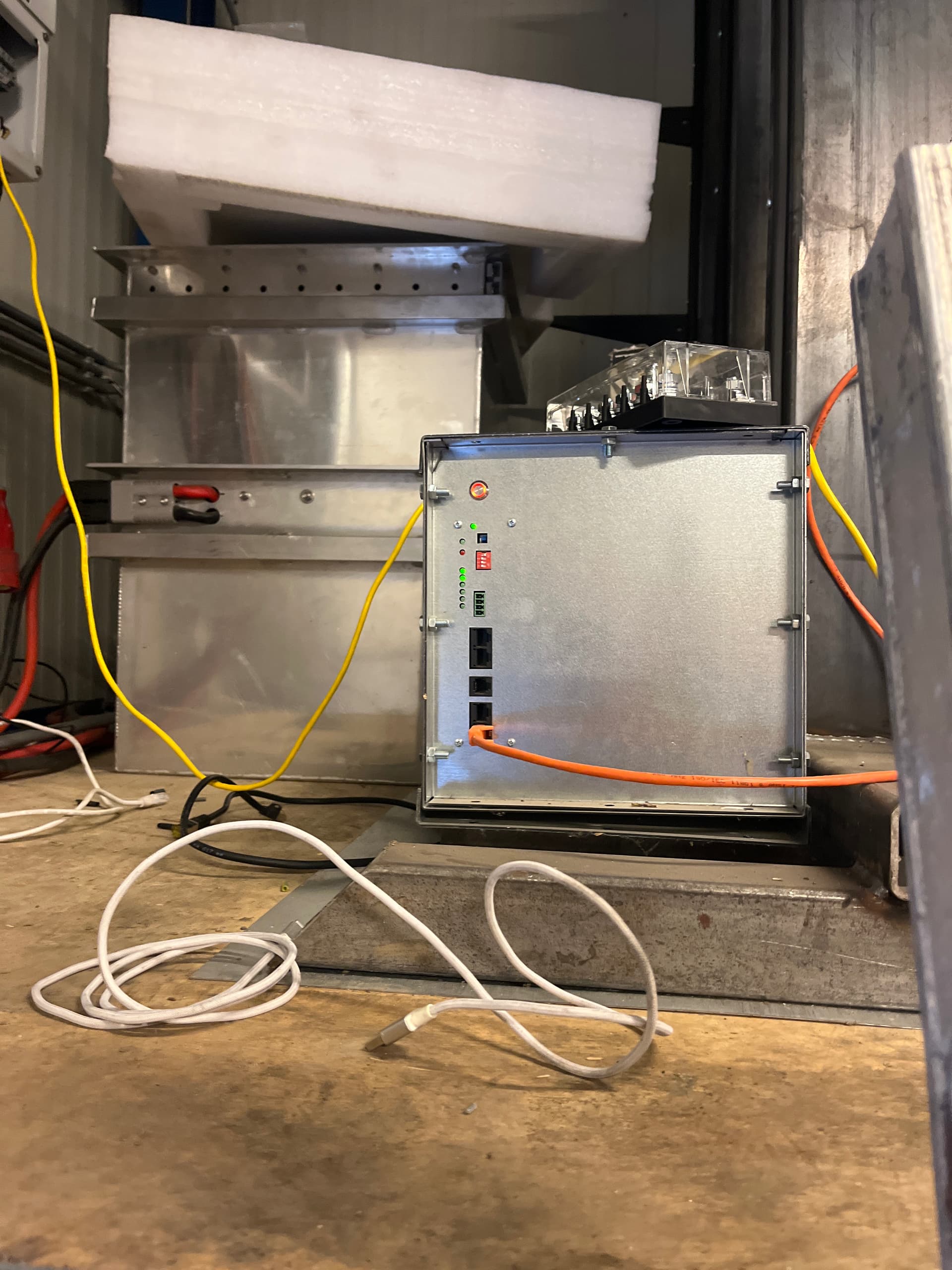
Two assembled ones 15 kWh each. JK bms is talking smootly to the Deye and back. Solar Assistant to see what is going on and talk to Home Assistant. Those things are way out of my comfortzone, so no critical steering yet. The only thing it is allowed to dump energy on the grid when prices are ok.
In the back two of my first builds, 15 kWh and 10 kWh. No communication.
All 48 volts , high voltage will kill me for sure and not really diy.
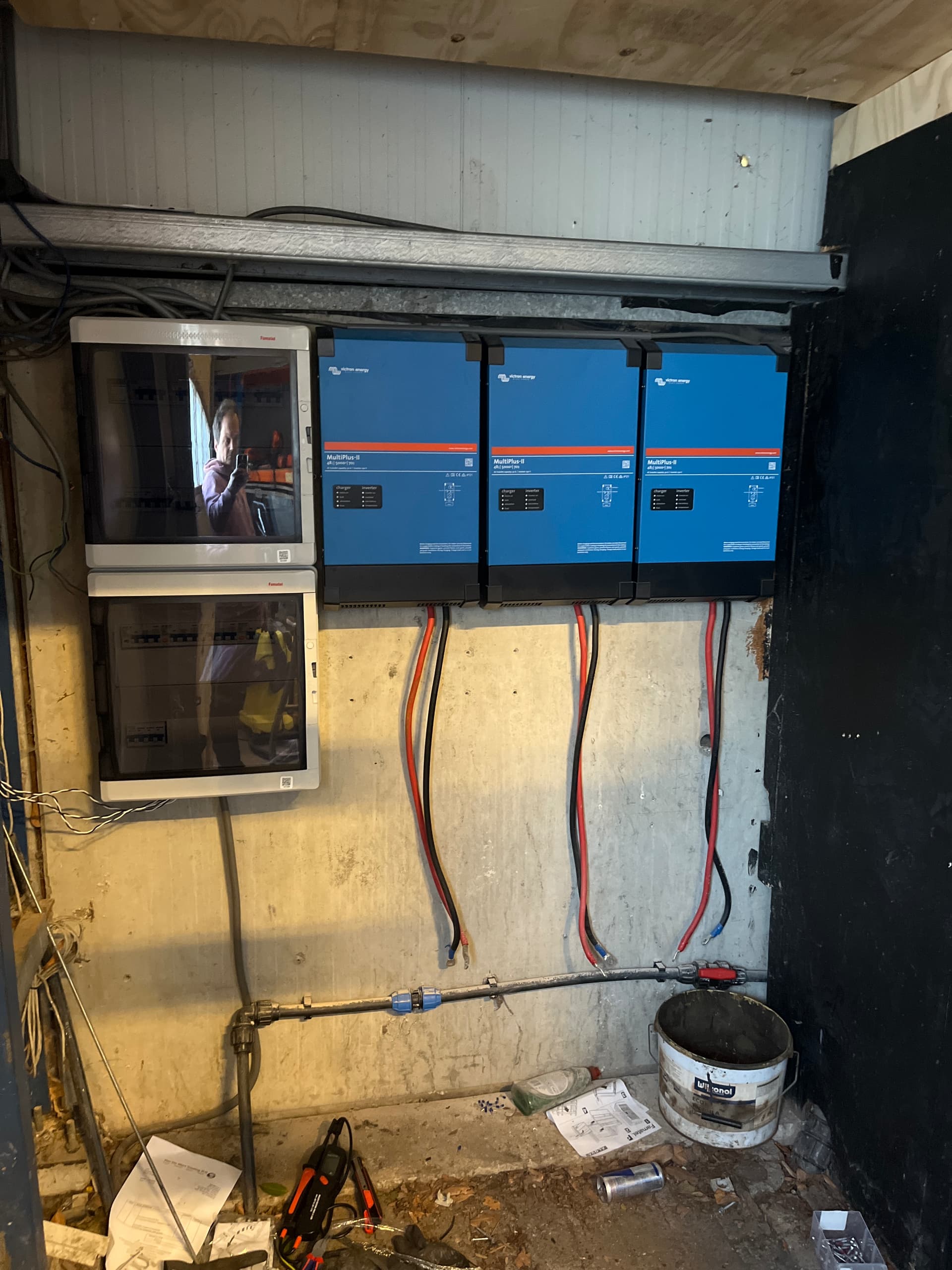
Dye inverters are around €1600-€2000. DIY batt packs 15 kWh around €1000, but you can buy it around €1500. It saves a lot of work. And go for LFP of course, the todays standard.
All inspired by Matt, he is living off grid for a long time.
Yes, your plan starts with a battery bank and hybrid inverter. Solar panels for easy energy and a generator for the dark months.
$400 is a chunk. I know rates vary widely across the country but I have a mostly electric house; water heater, clothes dryer and washer , lights and tools, a wood heater fan that runs 14 hours a day and two pumps for my floor heat and our bill is now averaging about $140 a month. Just me and the wife, so our hot water needs are pretty low. We didn’t get a choice about them installing a smart meter. Bitched and was told that a consent form of some kind was included in our paper bill which would have allowed us to opt out. Our payments are automatic withdrawn from our bank account so we would never have opened up a paper form. Still, our bill has gone up about $30 dollars average over the past two years. It will get worse. Big talk about all the AI data centers they are building all over and how much power it will require to run those. Electrical production capacity is already close to maxed out as things stand right now. People building and promoting those data centers are running propaganda campaigns to assure everyone that they won’t be stealing your required power and that it will not result in vastly increased cost. Who hasn’t heard that line of crap before? Which cup is the marble under? We have enough battery back up to run essentials in the house by using an older lead acid bank and small power stations that can be charged with a small inverter generator running on propane. We have a larger generator that runs on wood gas for occasional heavy draw items. Solar is not an option. We live in the woods and for many months of the year we get no direct sunlight because of the constant cloud cover generated by our nearness to Lake Michigan. It would be possible for us to go completely off grid but I like the convenience of power I don’t have to continually monitor. I should invest more in my off grid capabilities but at 78 yo I have a hard time planning for the future. Still I recommend getting as self sufficient as possible at least until zero point technology is released to us serfs. I may be woo delusional but explain to me how they parked a bunch of drones above the East coast for 6 days with no need to refuel in any way.