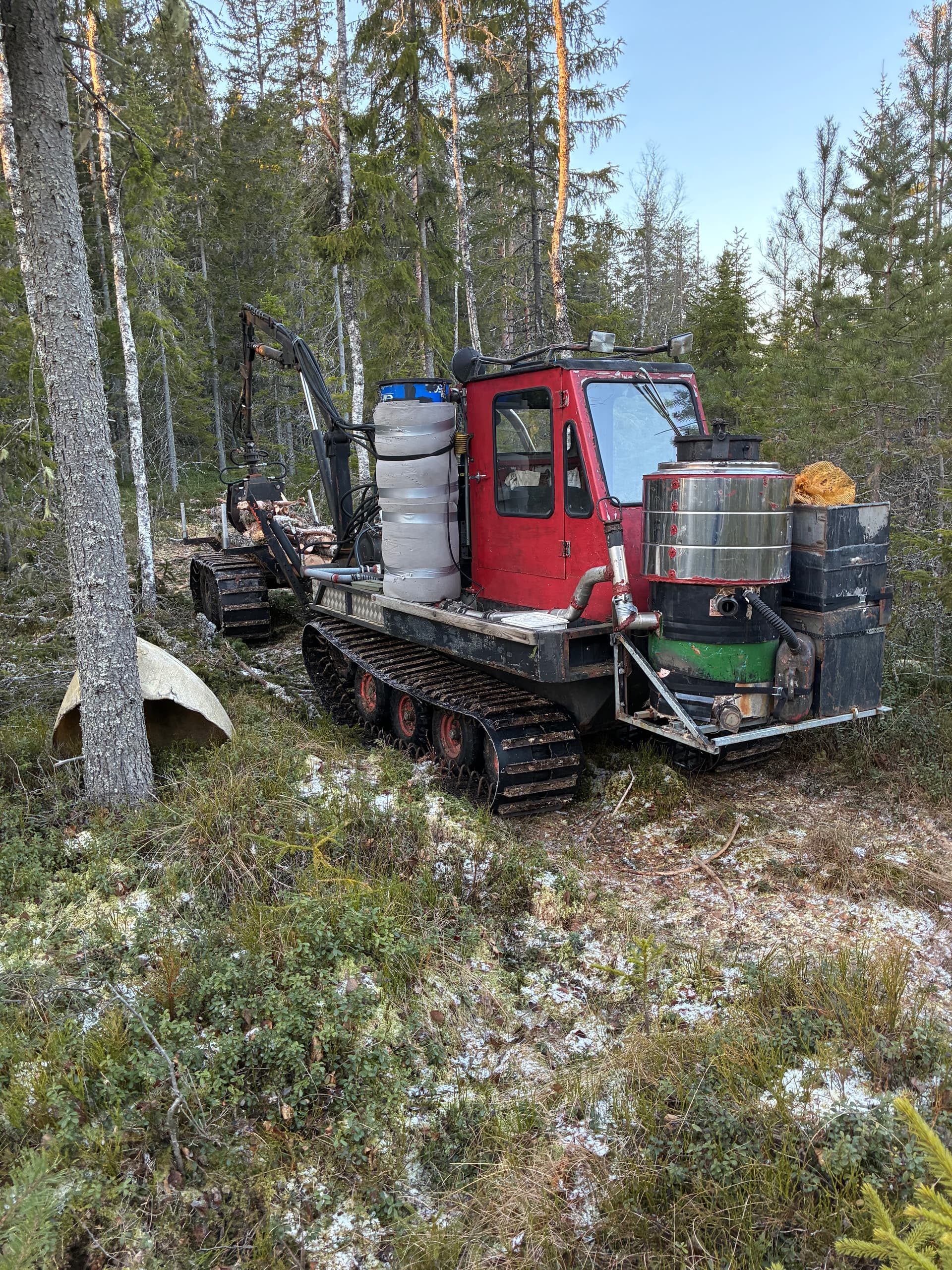
Thanks Robert.
It looks like Joni has short nozzles, even though the sketch shows something different, I might start by changing mine to shorter ones, I have a threaded rod for the nozzles so they are easy to change.
8 Likes
The 8.0 and 9.0 gasifiers had short nozzles the 10.0 is the diagram that he showed with longer nozzles. When the war broke out and he fell into the hard times of the armies coming into his country. He never showed his newest 10.0 . They had stolen all his tools out of his shop and damage his gasifier car. War is evil.
12 Likes
Excellent análisis and explaination Tone.
Excessive moister will overcome kill a systems thermal capacity.
Without an established char bed you will not have the energy available to boost up to reduction reactions.
And that char bed will get consumed up and need continuous downward settling replenishing.
JanA. here is a picture of my current wood fuel:
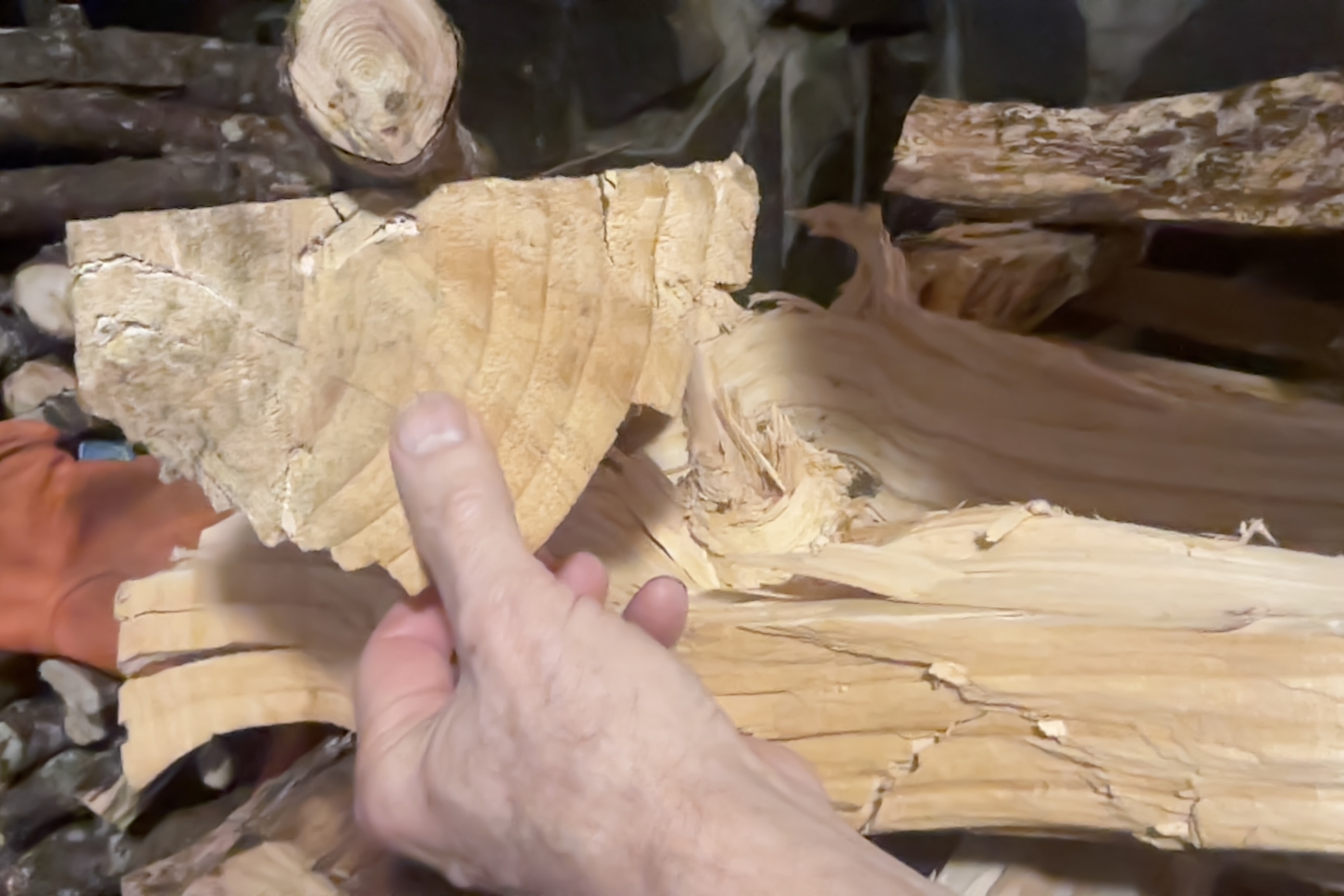
A 35 year old very limby former live white fir (white pine) Christmas tree. Conifer.
My thumb is 1" wide - 2.7cm to give an idea of the growth rings.
The white trunk wood is very low density and lightweight.
As a fuel for wood-stove or gasifier it makes very poor fragile charcoal’s. It consumes up too fast. Never giving enough wood char.
The limb section at the top off of the same tree, also has ~30+ growth rings. Very heavy and dense. Makes excellent charcoals . . . . If I can keep it from smoking up my woodstove glass in its initial burn-off.
Cut as short round billet chunks it really goo-tars up the upper in a gasifier with it’s thin bark-pitch burn off. And is too slow making char chunks.
I am wood stove heating effectively by mixing these in hand laid rows. Some time more trunk splits. Some times more limb cuts.
My point is an active willing Operator can make all of the difference beyond internal hearth dimensional jiggering.
Wood species and the portion of that trees wood matters a lot. I have said this a hundred times.
Another set of factors beyond internal hearth dimension is the actual IC engine usage.
Think . . .
Joni is using his on a relatively wide range automobile WITH A MANUAL transmission. Means he can down shift and command higher flow rates. Means he can really vacuum pull on the gasifier de-accelerating. Tone and others with thier four cylinder wheeled tractors can do the same.
Auto transmission guys can do much less of this Operator gasifier conditions flexing.
Your videos of your Iller machine operating say it is nearly constant speed driving a hydraulic pump?
Operating similar to a synchronous AC electrical generator system. Much tougher to manage. No whole system shock bouncing to clear an ash/char stack. No sharp rapid decelerating vacuum pulses to sweep along ash build ups.
Simply. ALL factors matter.
Some focus (overly) on the Tools side of it.
Others instead focus on techniques. Operators.
In truth; it takes both approaches.
Steve Unruh
10 Likes
Steve, that is a very good explanation about the type of woods for fuel and charcoal making. This is some of the other 75% of gasification.
8 Likes
The ferret has a manual 4-speed gearbox, very difficult to keep the gas steady on it, except at high idle.
The wood is the same as I always have, both for the ferret and the Chevy.
That I am not good at driving a gengas is true, I have only been driving for 4-5 years yet.
11 Likes
I guess that goes for me too Jan. I am still learning and probably always will. DOW and keep learning the other 75% of gasification.
8 Likes
It sounds like the wife needs to drive that car. I haven’t seen a video yet where the wives weren’t thinking it wasn’t a race car. There is no way they idle for anything… Now if she was american she would stop at all the ‘sale’ signs and it may actually cost you more money… but I don’t know if that is just an american thing or it happens in europe too. 
6 Likes