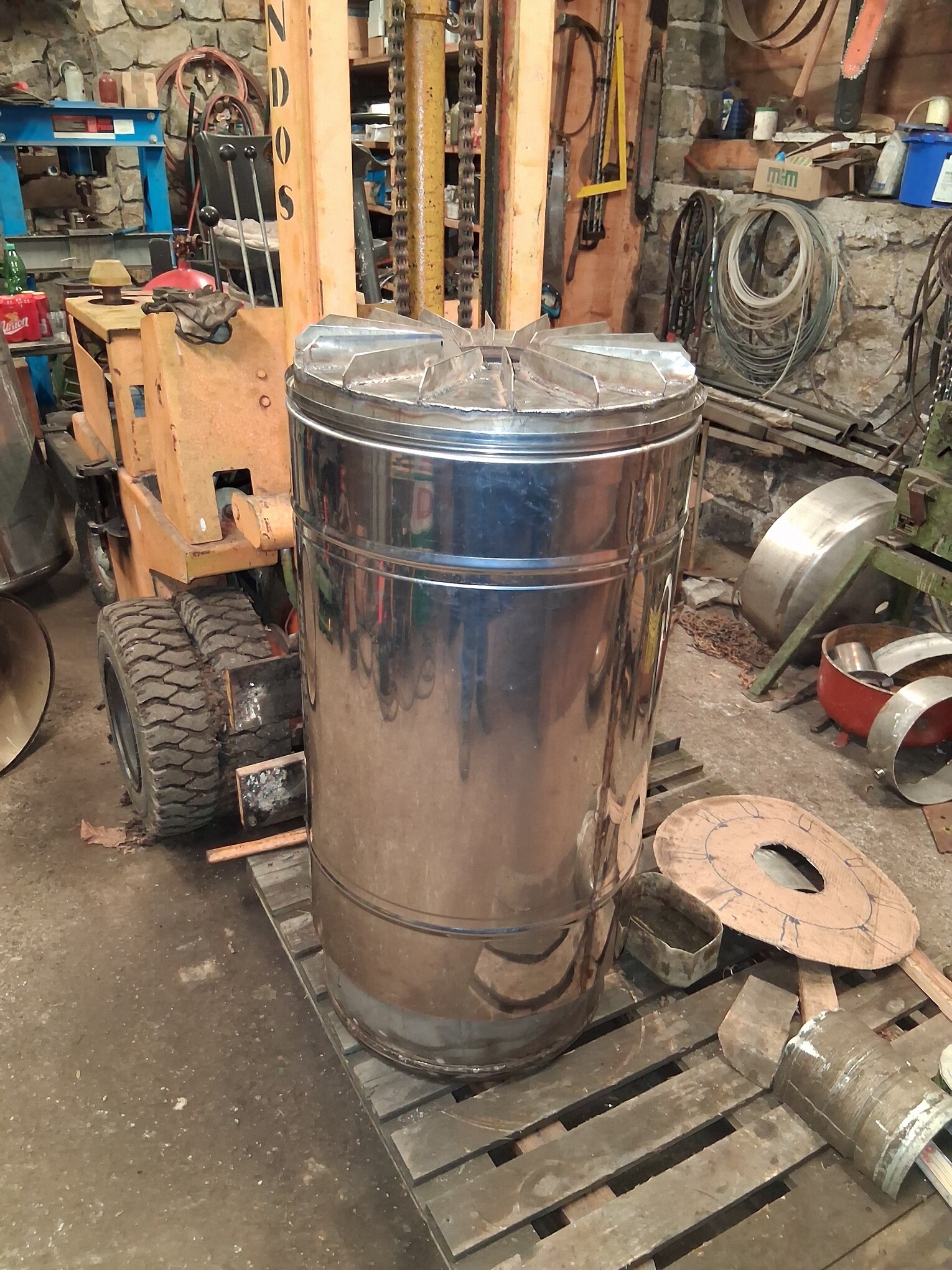
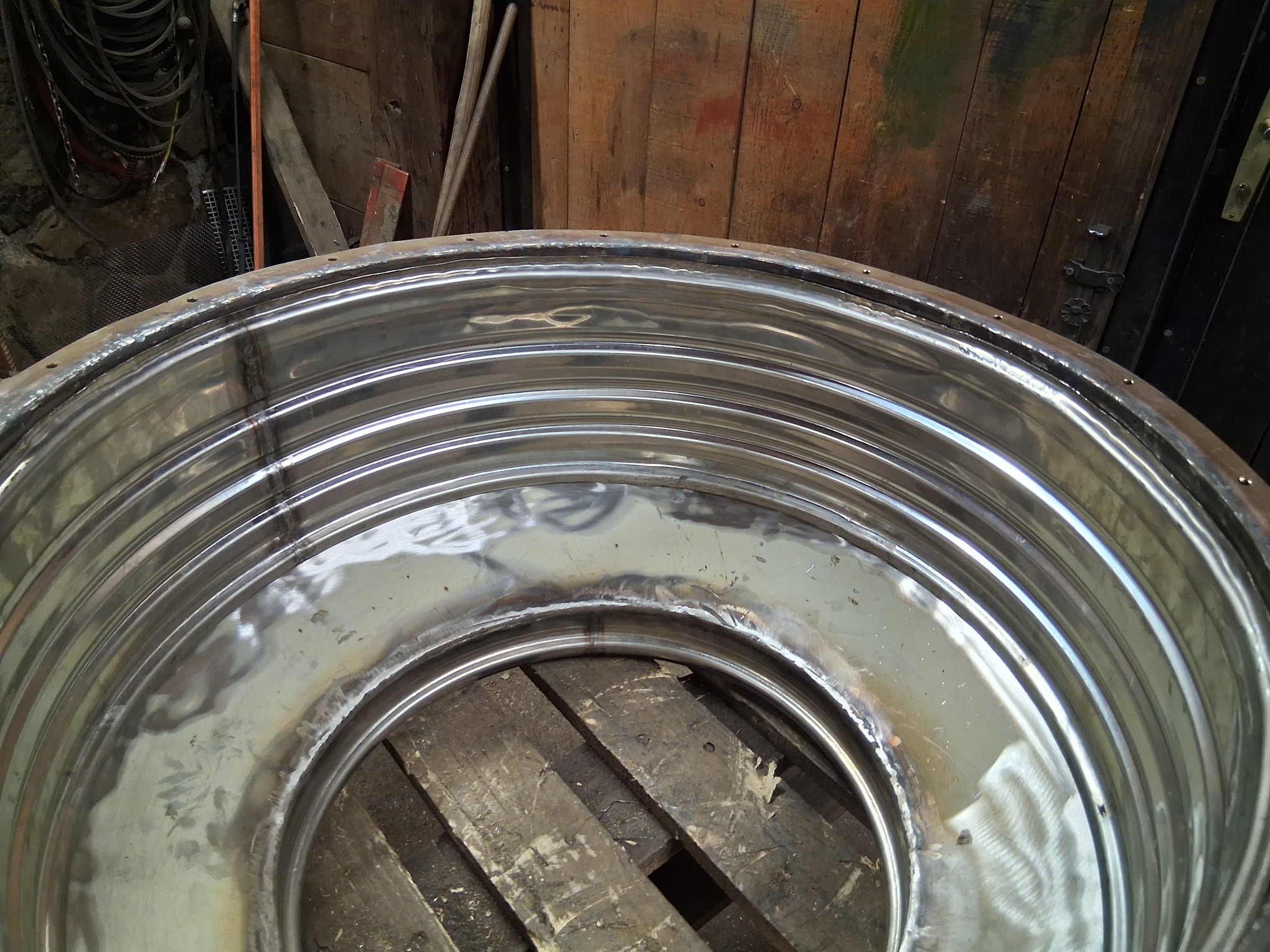
Drawing a gasifier diagram is one thing, making it is another… well, I’m making slow progress… this shiny piece will allow fresh air to flow to the lower holes, it will be heated by hot wood gas on one side, and by a jacket with exhaust gases on the other, I assume it will enter the hot zone housing quite hot.
16 Likes
Aha, the red in your drawing?
5 Likes
A nice build Tone, looking forward to more building pic’s 
Have you told us where this shiny gasifier is to be mounted?
I probably have forgot…
D*mn, all your builds are making me wanna build a gasifier again… but i have one that needs more work… and one waiting for repair… and a more than 100 years old chainsaw distracting me…
14 Likes
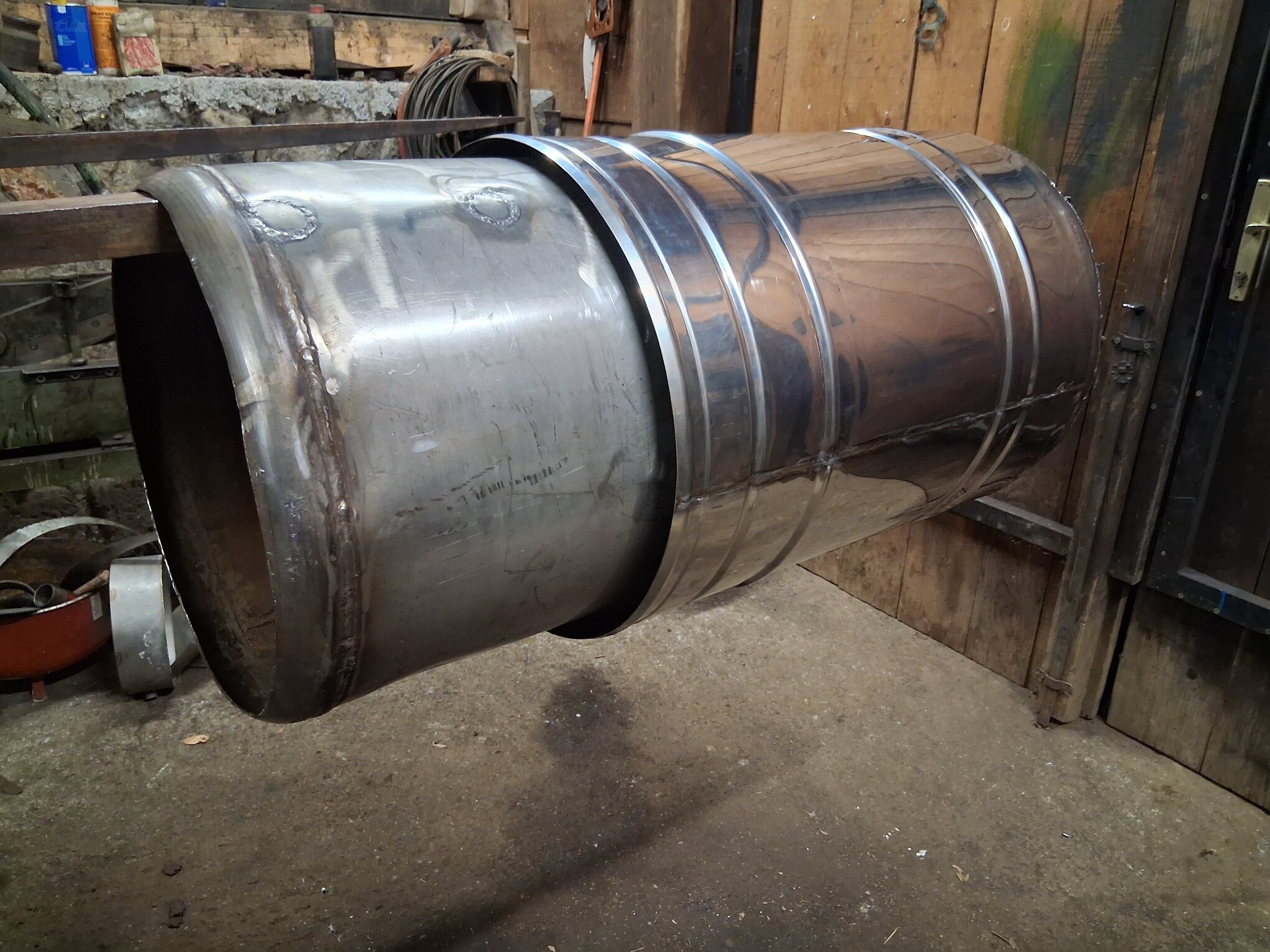
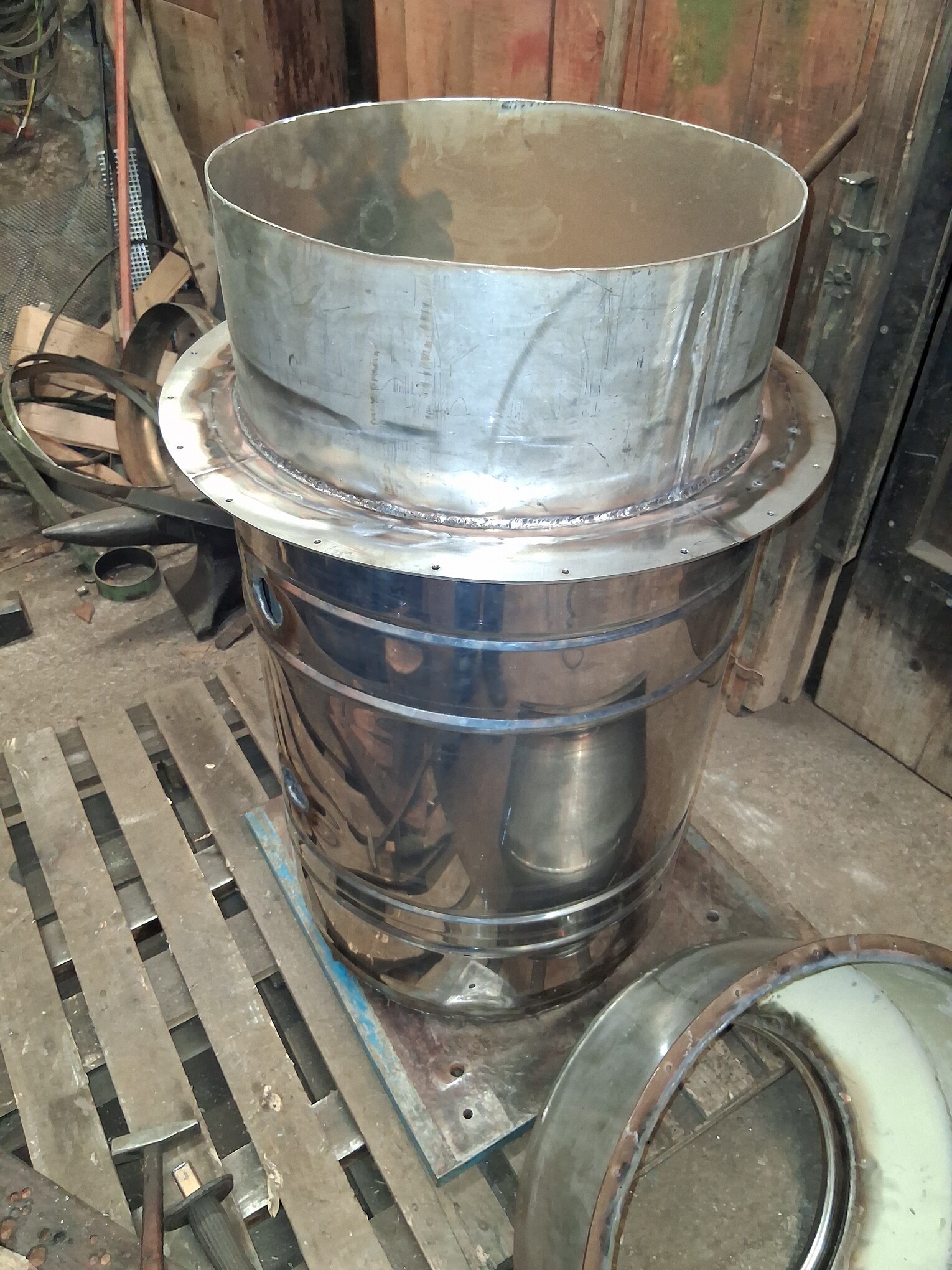
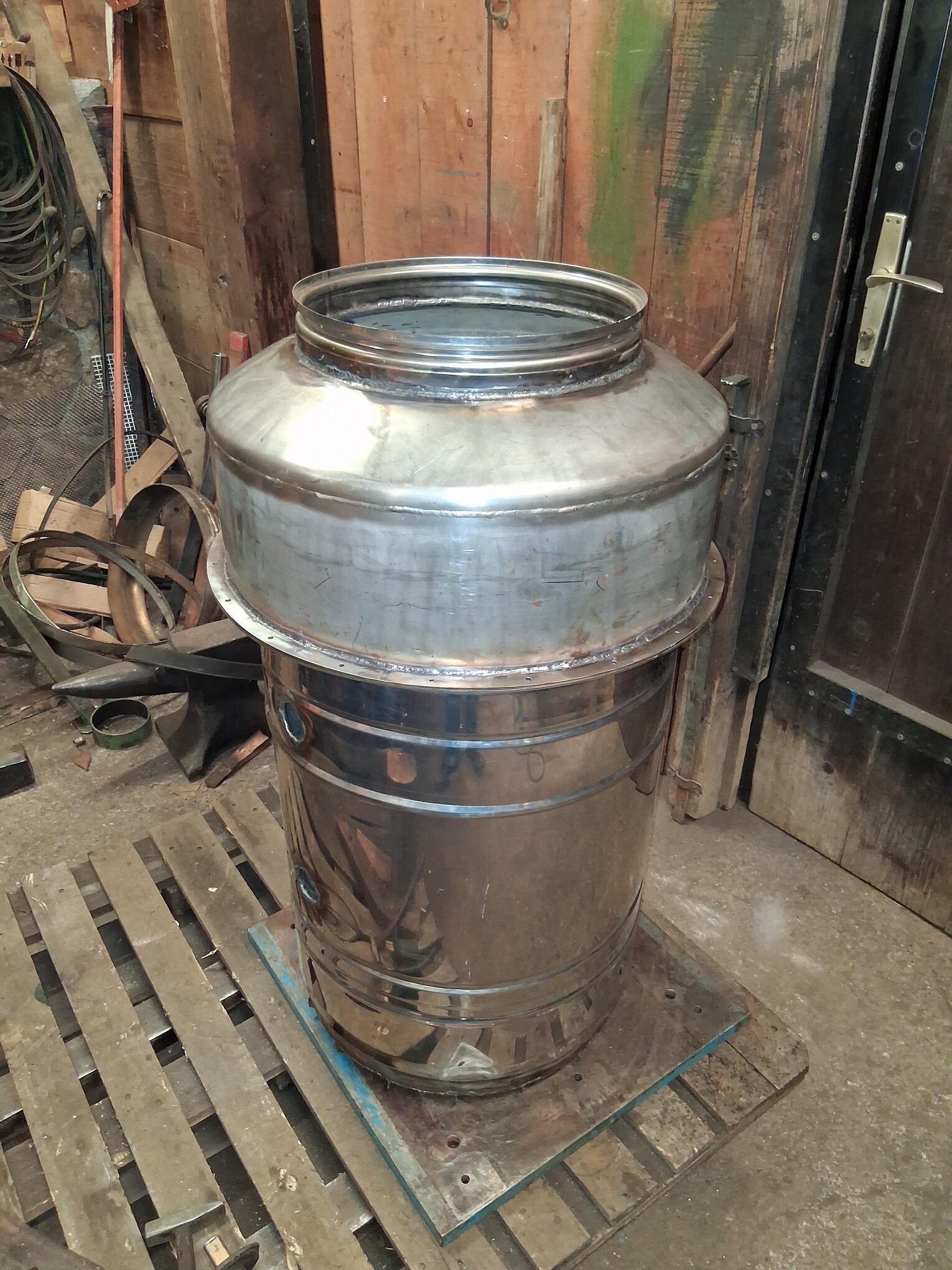
Thanks Goran, I intend to test install this gasifier on Fergi, the external dimensions are similar, but it will be much heavier because it is made of thicker metal (3mm). Hmm pictures, I managed to do something small today:
Here I pulled out a little of the sheet metal for heating with exhaust gases
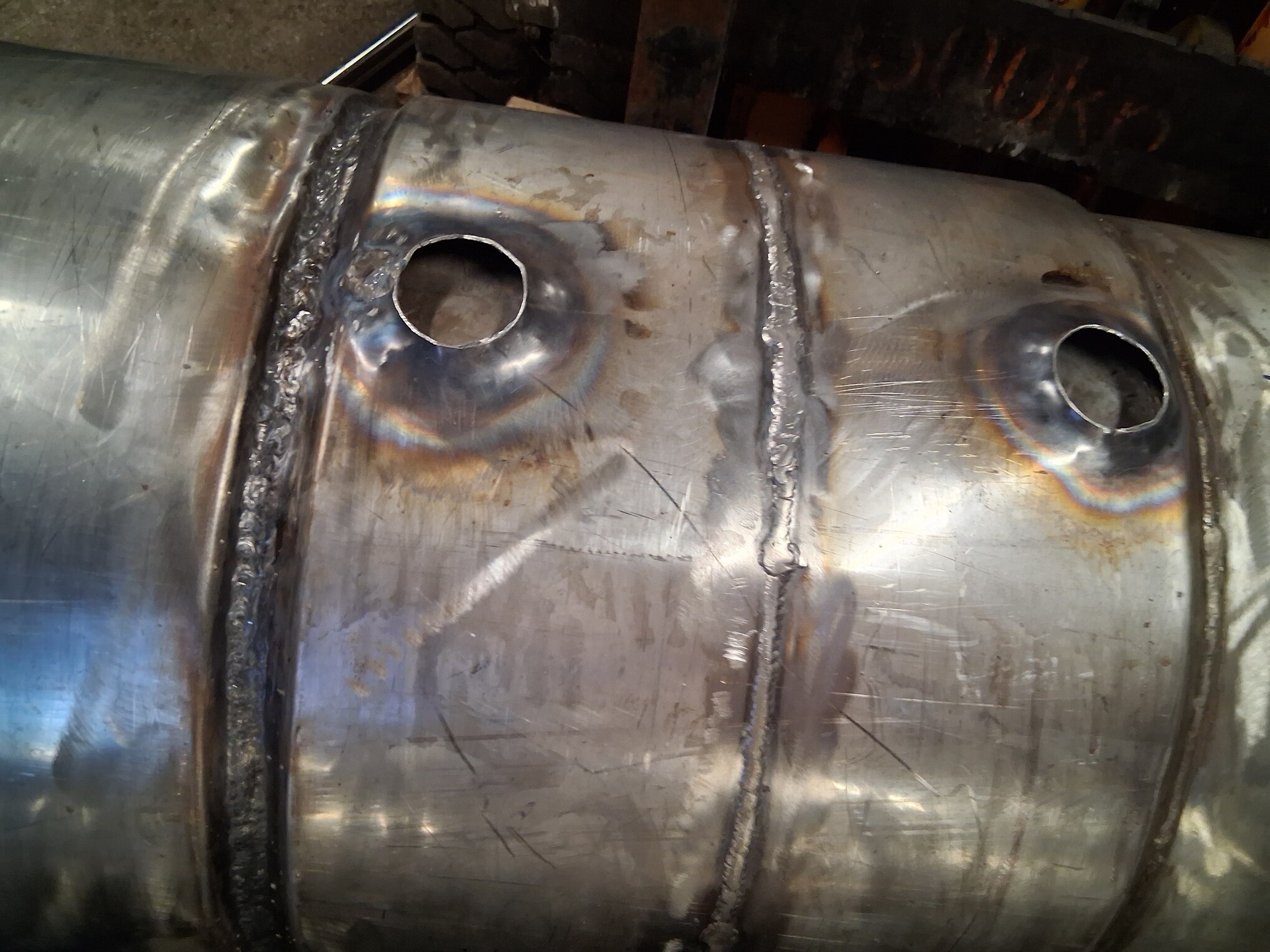
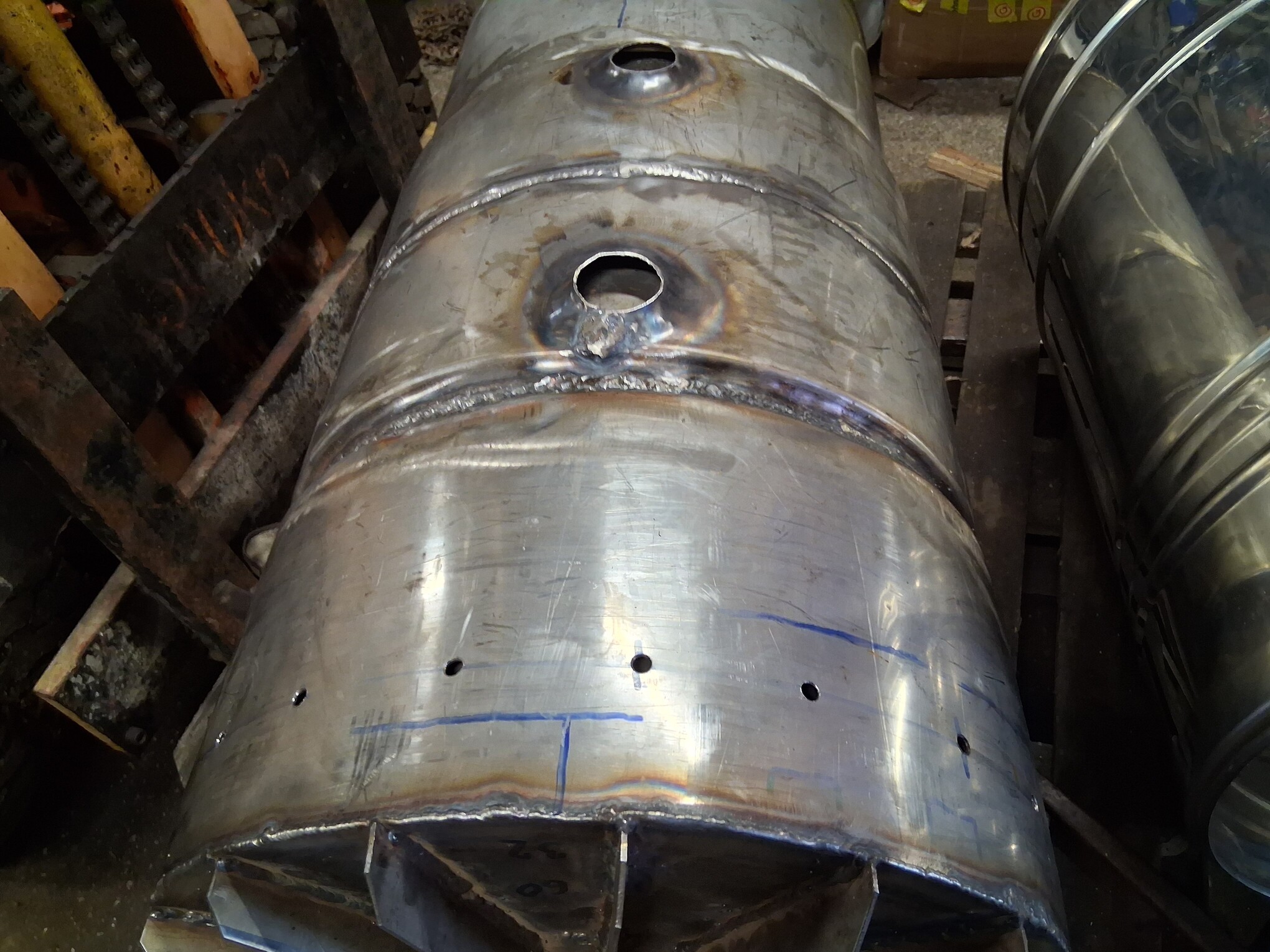
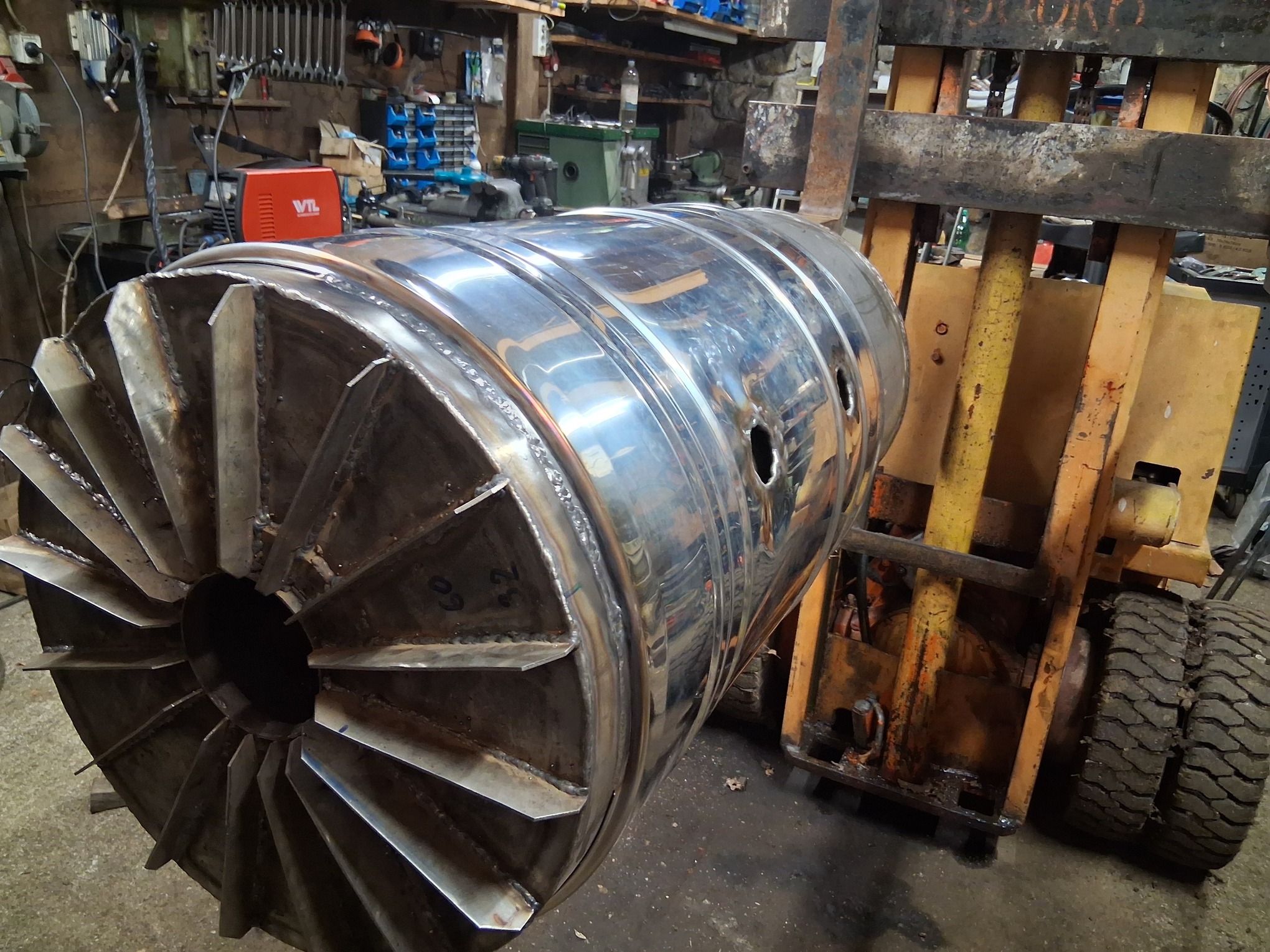
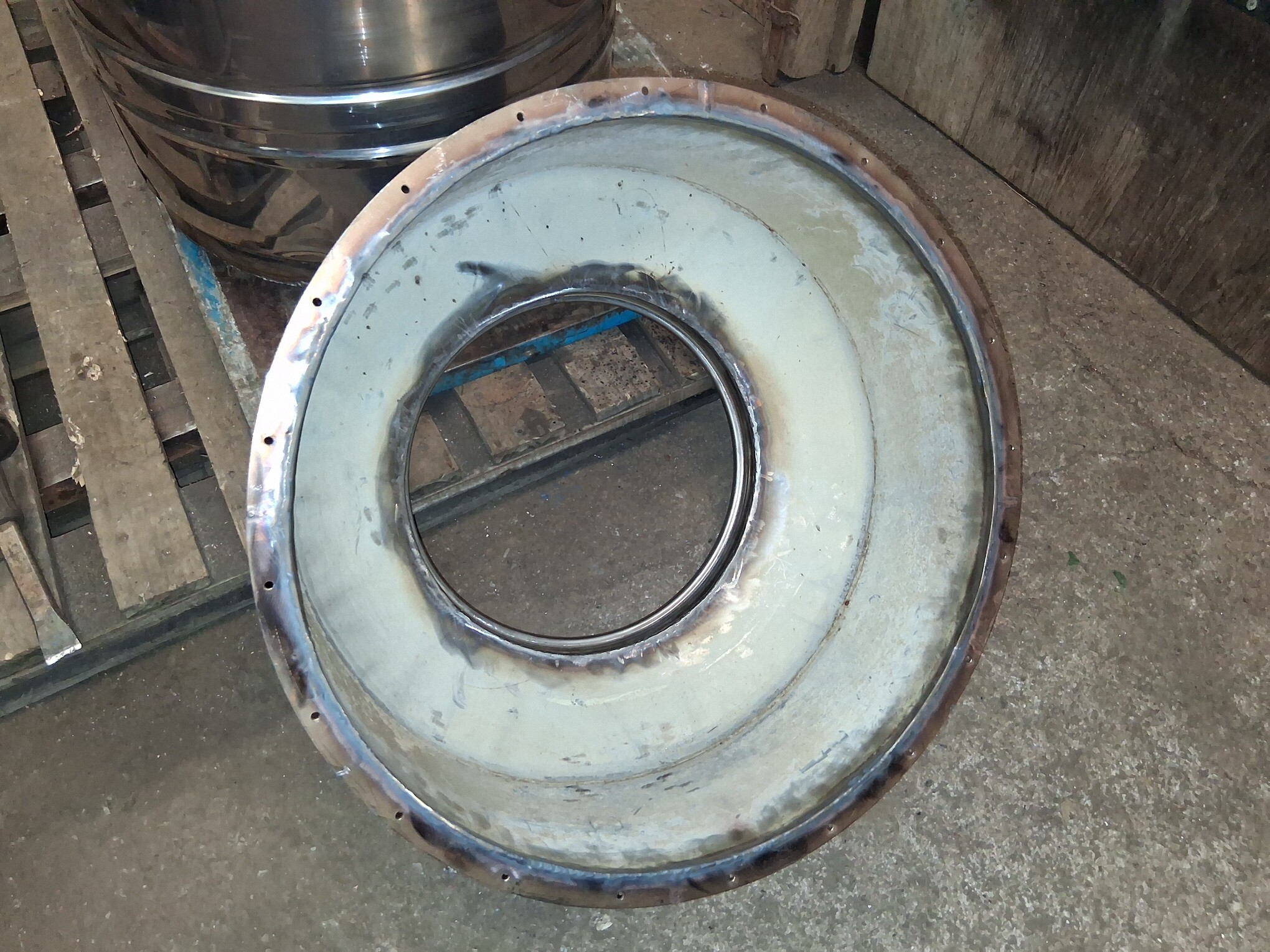
I installed the air intake shroud and welded the exhaust passage, well, welding the bottom part will wait until tomorrow.
18 Likes
Starts looking like nuke reactor 
10 Likes
I was thinking it looked more like a turbo… with the fergie and Tone’s mad skills. I think it will end up something like the green monster.
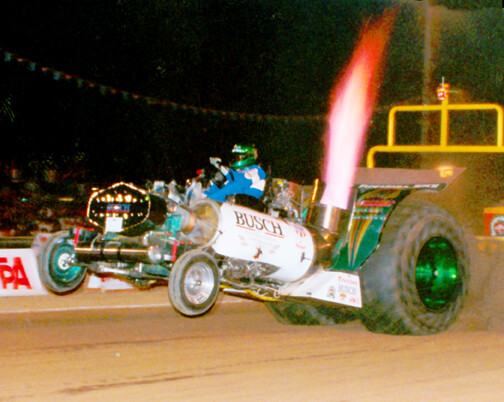
(Art Arfrons circa 2001 at a national tractor pulling association event driving his tractor called the Green Monster, and yes that is a jet engine…)
10 Likes
Makes me wish we had the design for this.
Rindert
Powell Gas Producer
The Powell Gas Producer came into its own with the advent of petrol rationing, which was introduced in Australia in July 1940. The petrol rationing was severe, restricting private motorists to about 40 miles per week. This was well before the days of Australia’s Bass Strait oil fields. Australia relied fully on imported fuel.
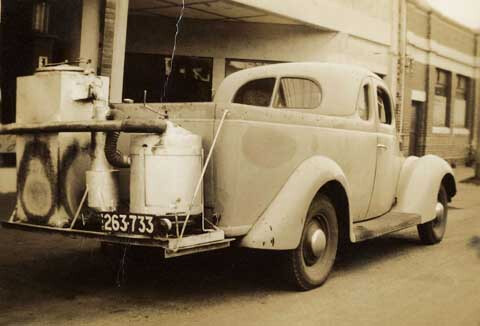
The unit burns wood, coal or briquettes to produce a gas to replace of petrol and thus power the engine.
Ford Australia worked with the University of Melbourne, the Vacuum Oil Co (later to become Mobil), Shell Oil Company, and the Powell Gas Producer Co to develop an efficient gas producer that would not gum up the engine with tar or cause excessive wear because of too many dust particles.
The result was a highly efficient version of the Powell Gas Producer (built in Perth, Western Australia). Ford began mass production and fitting to new vehicles plus selling as after-market units to fit existing vehicles.
The Producer features several safety mechanisms that prevent dangerous levels of gas buildup during operation. It also removes all residual condensate from the system. Furthermore, with its advanced combustion control technology, this device provides maximum efficiency while eliminating unnecessary fuel wastage.
Too bad they aren’t on the “extras” list of new cars today. There were several gas producer manufacturers in Australia, Electrolux being one of them.
14 Likes
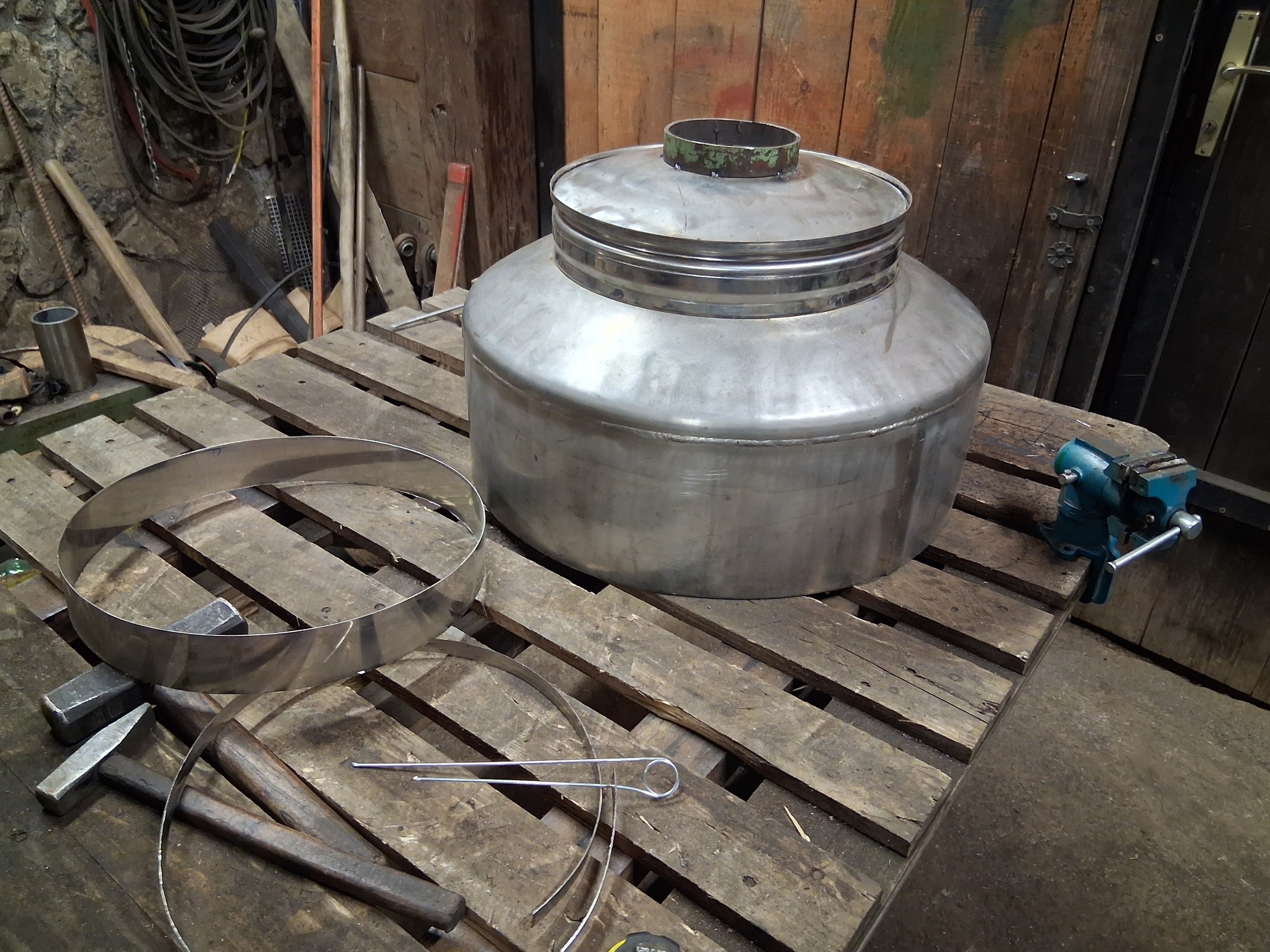
The afternoon goes by quickly when you are busy assembling the gasifier, I patched the holes in the outer casing, through which the water heating coils, sanitary water connections and electric heater were installed,… there were about 10 openings. Then I made a cutout for filling the wood and prepared some parts for the lid, I will try to make a seal without a gasket,…
20 Likes
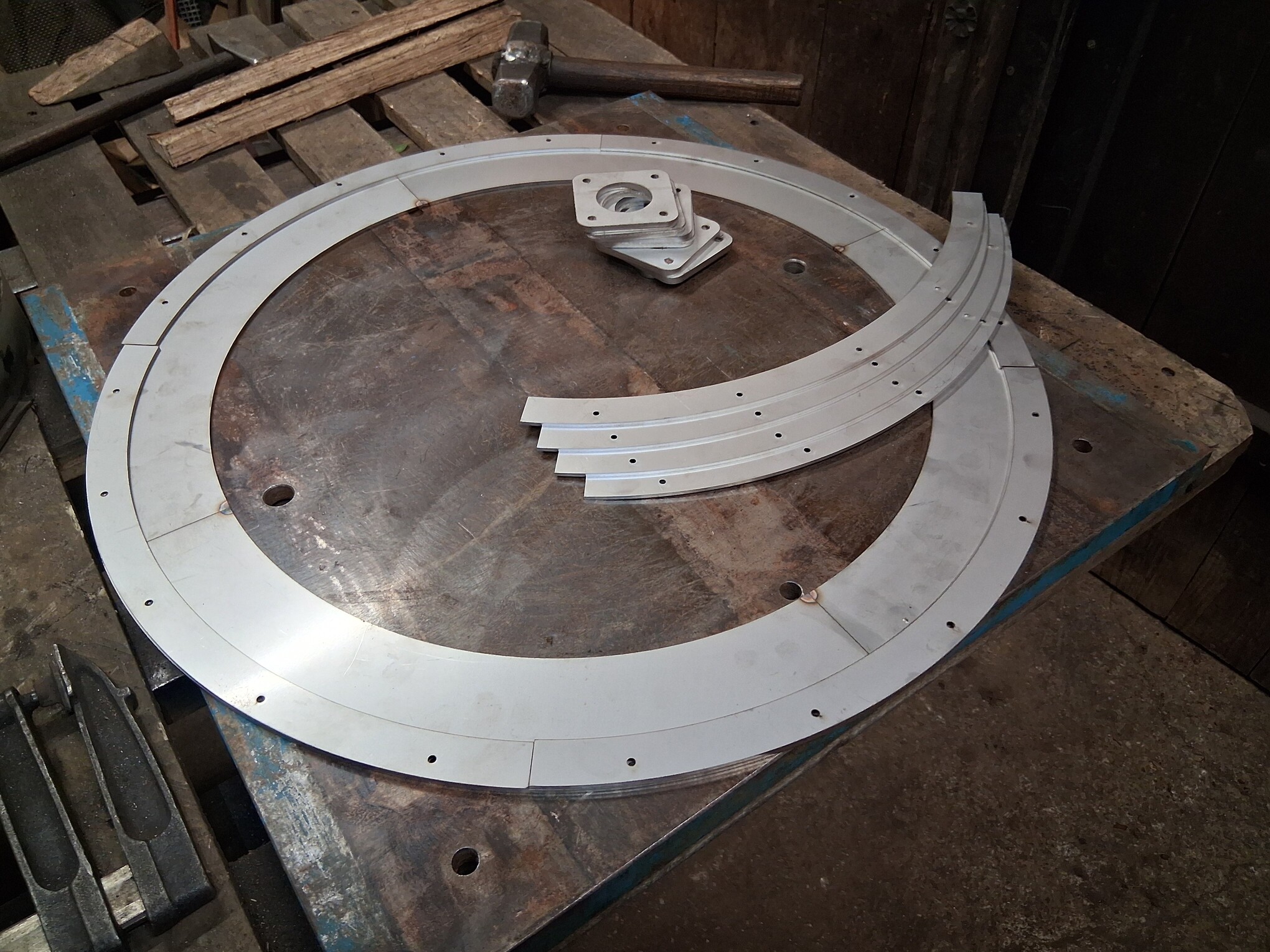
In our “wood gas” community, there is a rule that all parts for the gasifier are made at home, well, today I broke this rule, I had a craftsman who deals with laser cutting of metals cut some parts. I had the flanges, which will serve as the connection of the inner, lower and upper parts, cut from four parts, so the price was lower, because the material utilization is better,…
18 Likes
I did not know that rule was in the by laws of the wood Gas Community. I am glad it is just on your side of the pond. Lol
13 Likes
tone, this is always better as with the angle grinder, when you have the possibility nearby…i think we all use, if possible, prefactured stuff like as containers, milk cans ( my next soon…)
13 Likes
OH MY GOSH!!! We did it!!! It is a miracle!! After a decades long search, we finally found a tool Tone doesn’t have stashed away!! How do we tell your wife? she probably hasn’t gotten you a christmas gift in a decades because she couldn’t find one either!! 
9 Likes
Tone, I think I need to show less pictures and do less talking and I would get more done. You are going to have your gasifier up and installed and running well before I will. Lol Well I did stop working on my gasifier for lack of free materials and some health problems for a long time. Blessed is the most high God. For now it is all going well.
Your gasifier is a work of art in my book of building gasifiers.
DOW
12 Likes
Water-cooled condensation zone, welding thin sheet metal, leaf springs are an excellent tool, they compress the sheet metal nicely so that it does not bend during welding
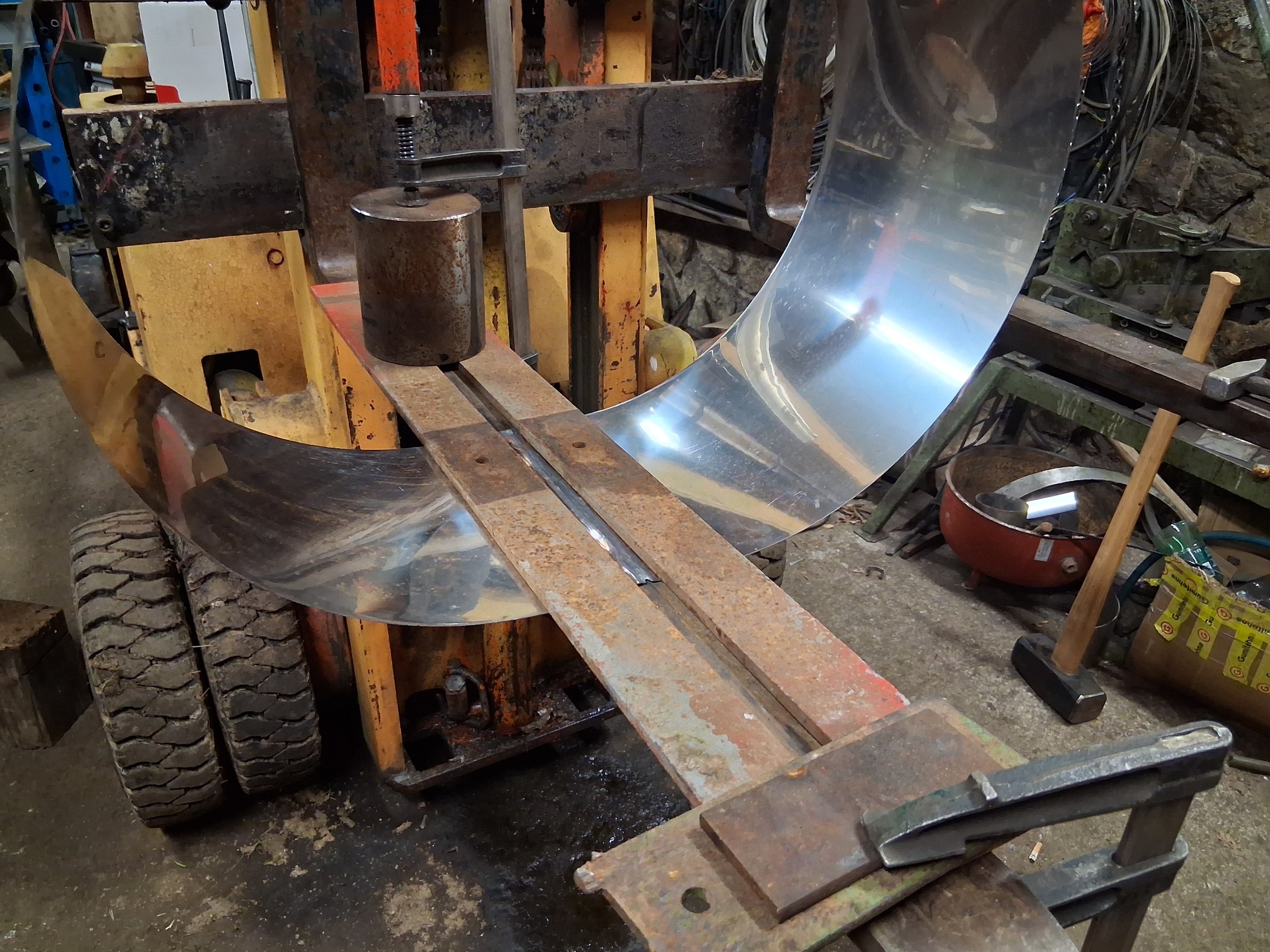
I made wheels for this machine that allow deep bending of thin sheet metal.
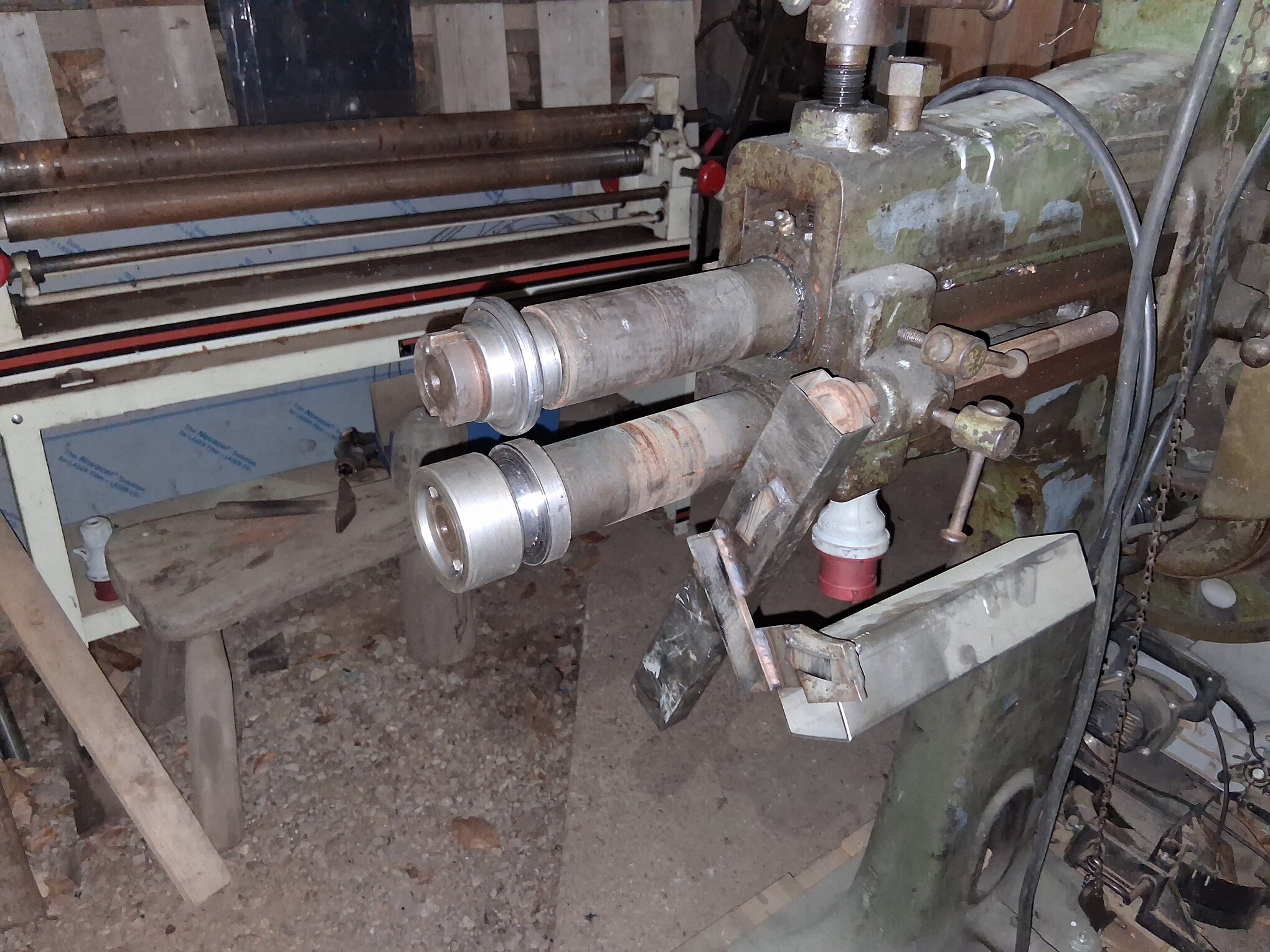
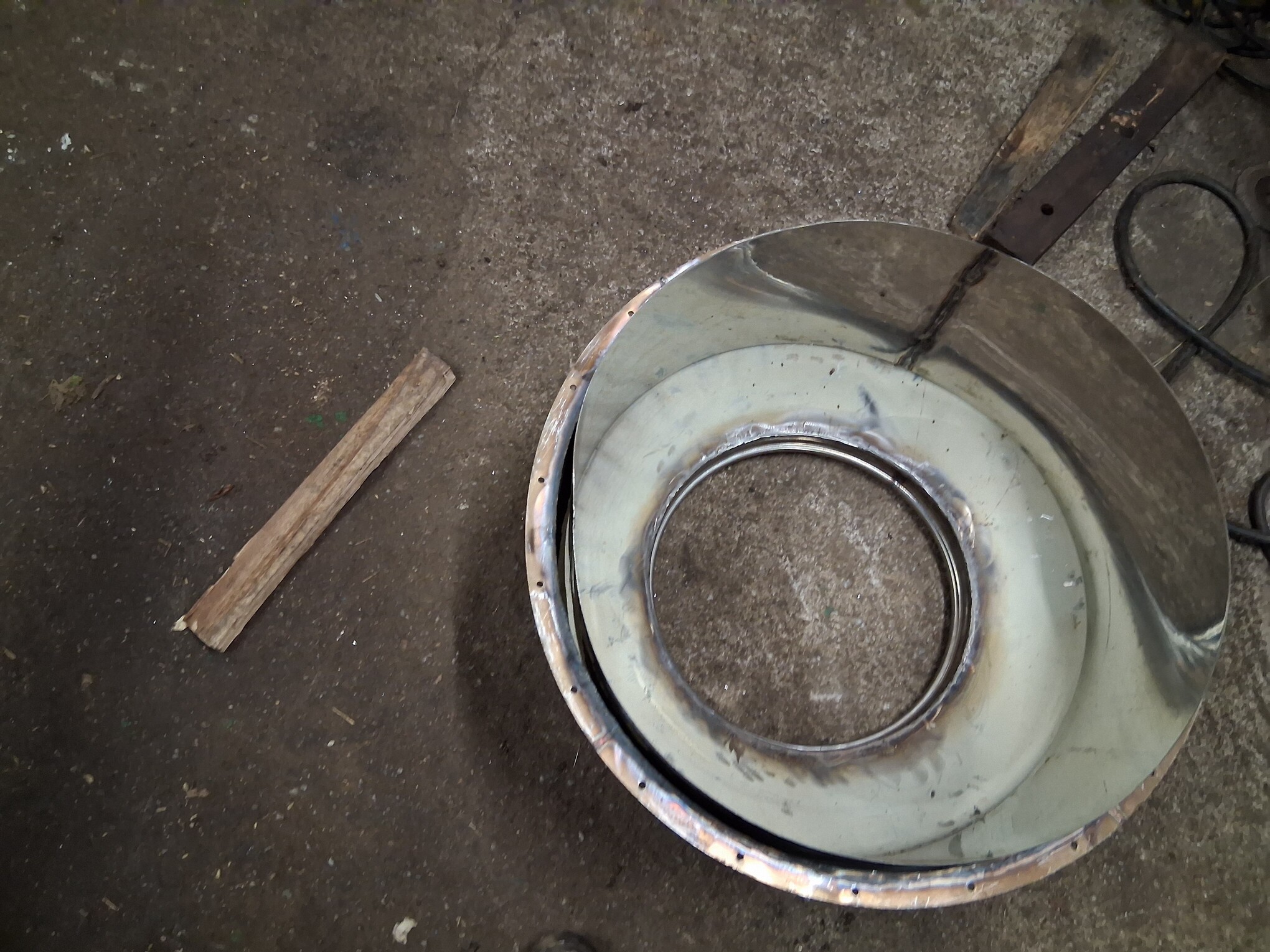
The sheet metal becomes compact when processed by the old machine.
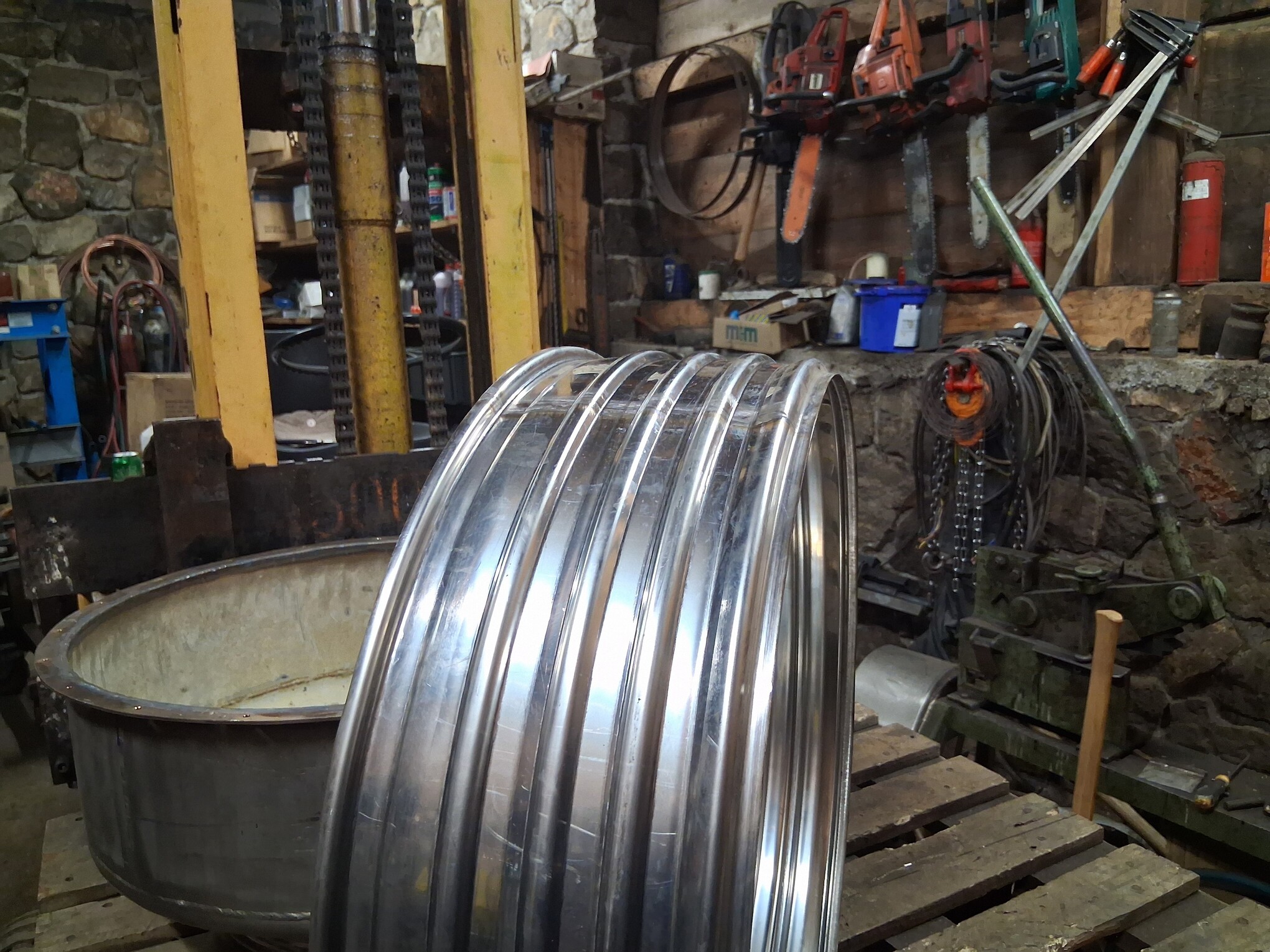
ready for welding,
19 Likes
tone that is fantastic, …the ideal neighbour,
10 Likes
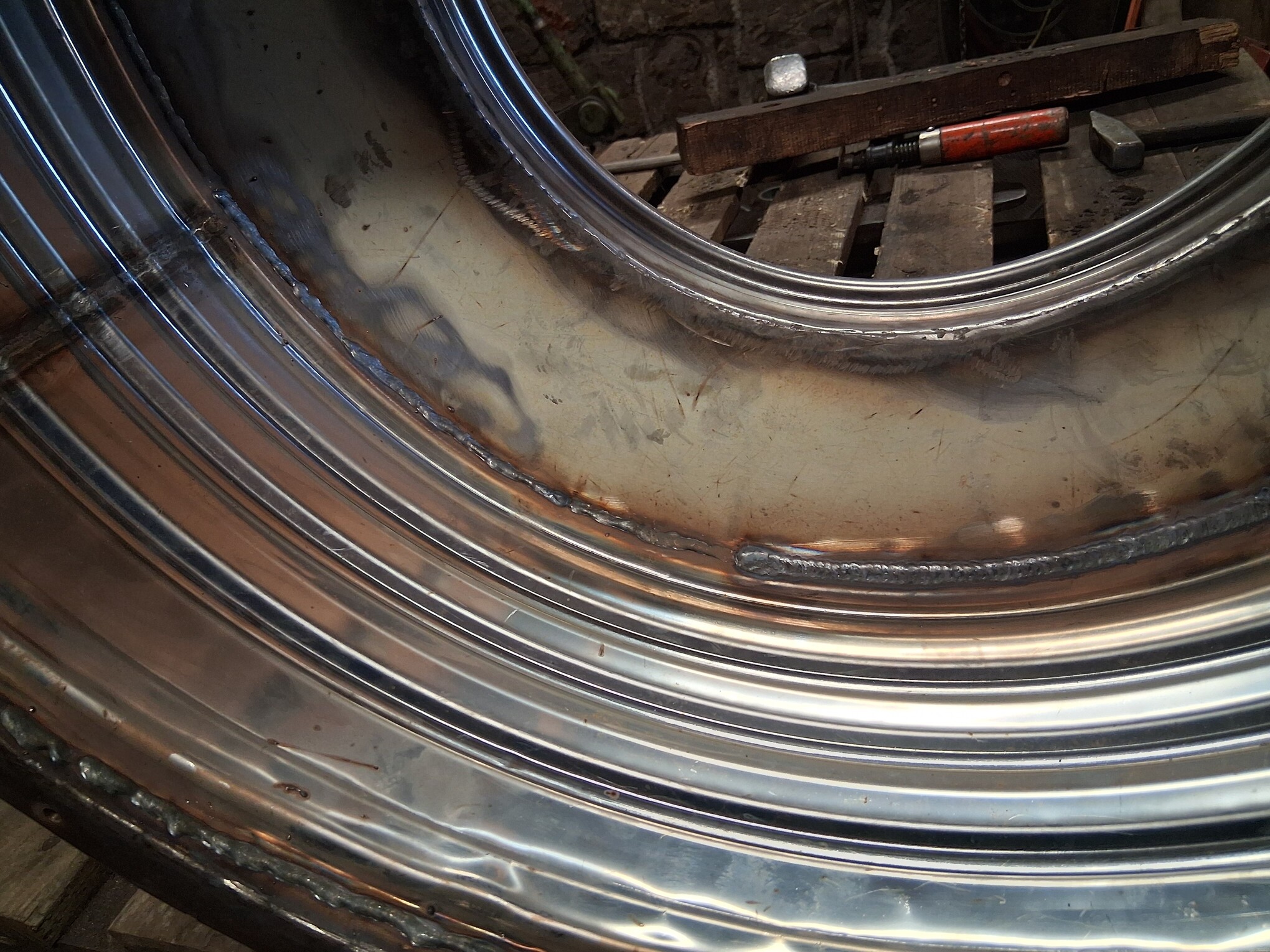
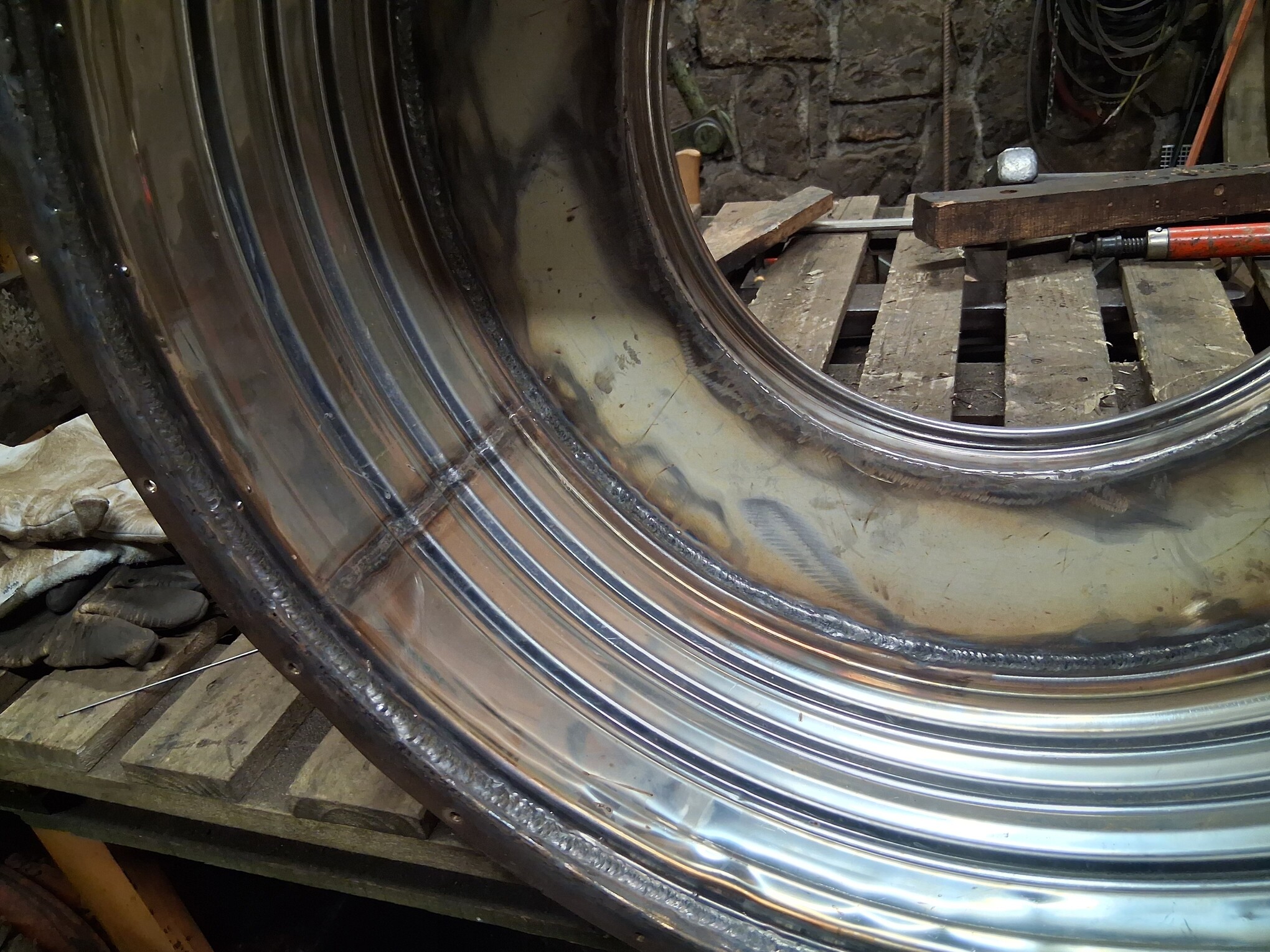
Welding thin and thicker stainless steel sheets is not entirely easy, I first do such a weld with a CO2 welding process (mig-mag), a quick pass, preferably slightly downwards, this creates a weld that joins both sheets, while the material is minimally overheated, so there are no major expansions and contractions. I do the next pass with a TIG welding machine, when I melt this weld and deeply fill it, because there is enough material beforehand, there is no need to add additional material during this pass and there are also no problems with holes forming in the thin sheet.
19 Likes
Hi Tone, do you use stainless wire in the mig-mag?
10 Likes
Bad idea to do not. Or is the thick part normal steel?
8 Likes
That is an ingenious idea. Adding filler with the MIG and at the same time filling the gap to reduce the chance of blowing through with the TIG.
Adding the filler is the hardest part of TIG welding. I have yet been able to get the timing just right where it is not overheating the metal. Autogenous welding on the other hand is a lot easier. No need for timing the filler just right.
Way to go Tone this is really coming together nicely.
11 Likes