Goran, I use 0.8 mm stainless steel wire, and the gas is regular CO2, all the sheet metal is stainless steel, both thin (1mm) and thicker (3mm). When switching to the TIG welding process, I set a higher amperage (70-100 A), with such power it welds quite quickly, …
12 Likes
CO2? Dont you get bubles that way? I tought N2 is the way to go? I am absolutely no welder.
Good job on the profile rilling. We always get stuck with cut away parts. Topjob
8 Likes
Joep, the CO2 is just fine, no bubbles, just a suitable setting of amperage and wire speed and a quick pass with the welding gun so as not to burn the thin sheet metal, and the work is going well.
Slowly the gasifier will take on its shape, here I am dealing with the passage of exhaust gases through the outer shell and with the supply air.
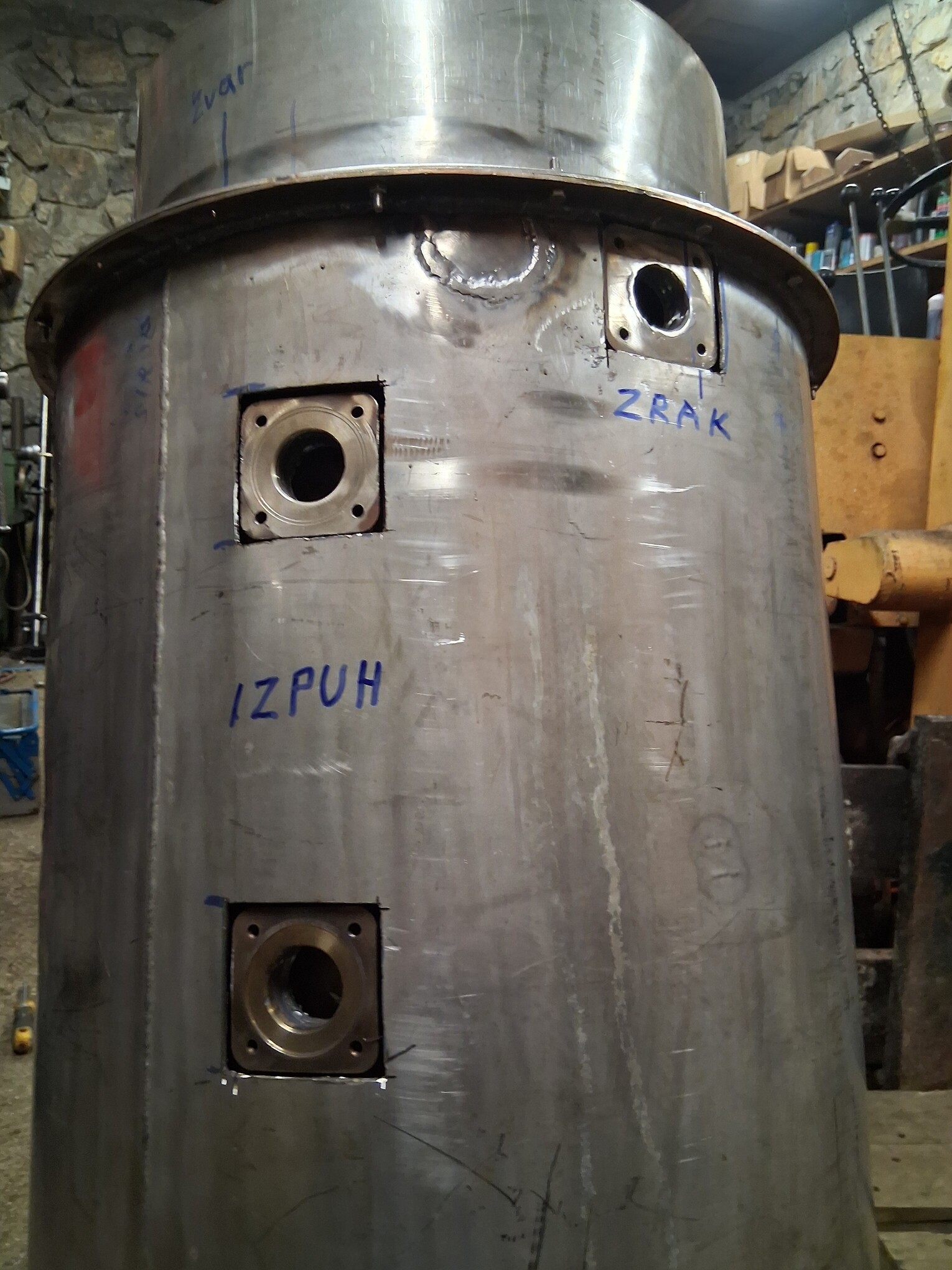
19 Likes
Hi Andris, did you drill and tap your hexagonal ends yourself?
12 Likes
yes, i turned them on lathe, however i think it should not be difficult to drill the hole using drill press,
ideally with lathe chuck to hold the piece instead of vise.
13 Likes
Did you machine the thread on a lathe?
4 Likes
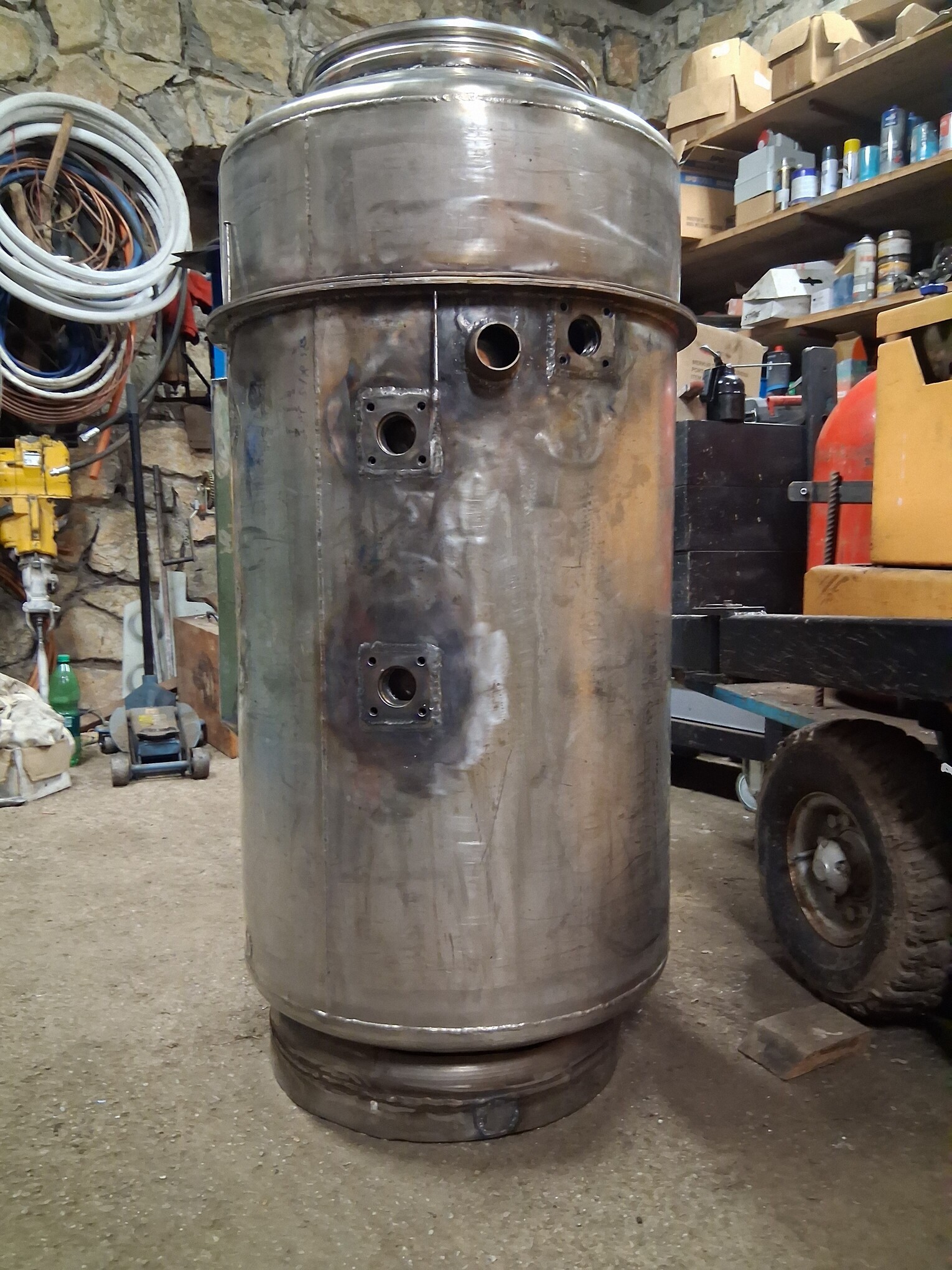
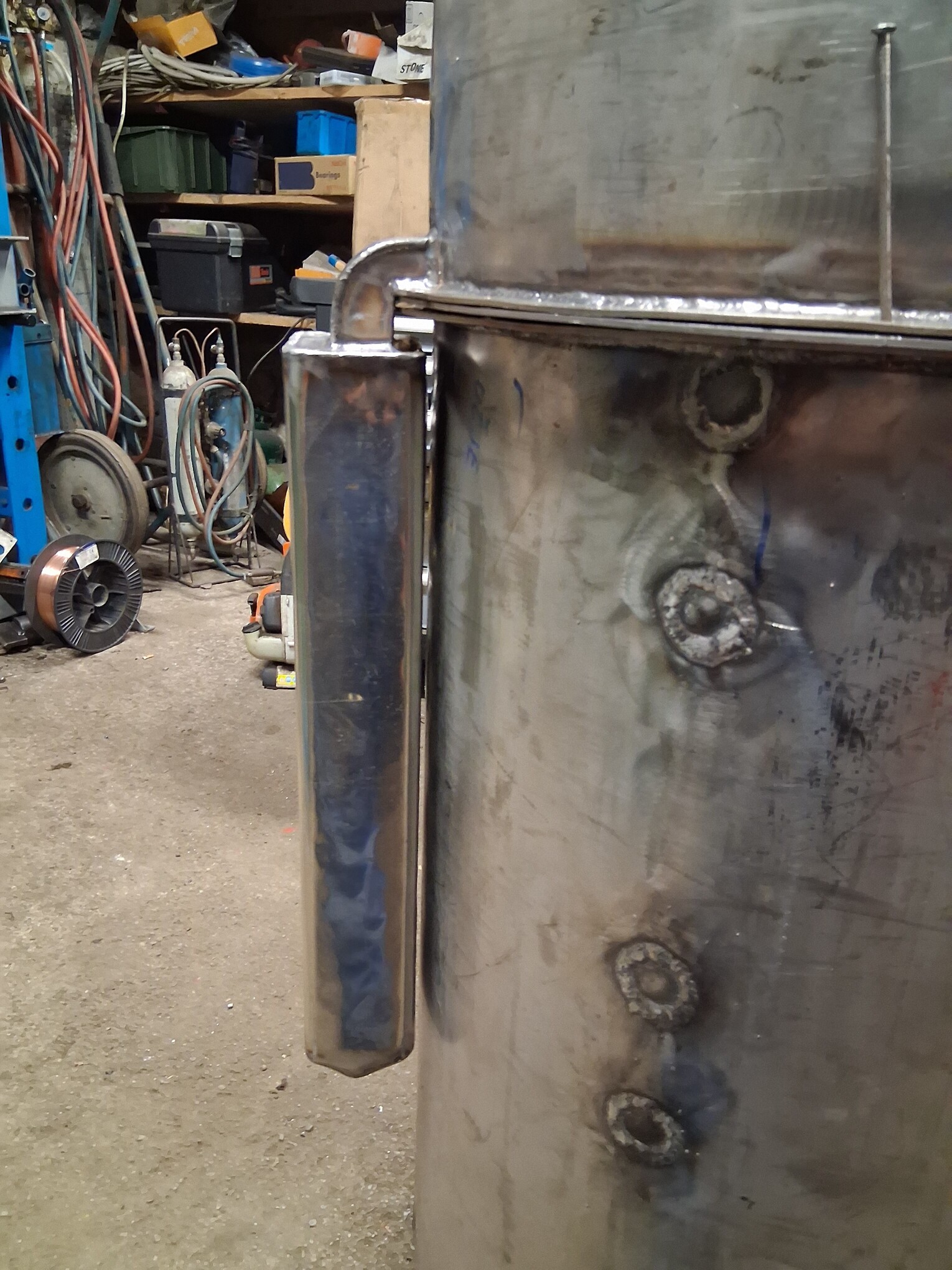
This is what the lower part looks like with the passage openings for exhaust gases, wood gas and air.
here is the condensation outlet and the collection container
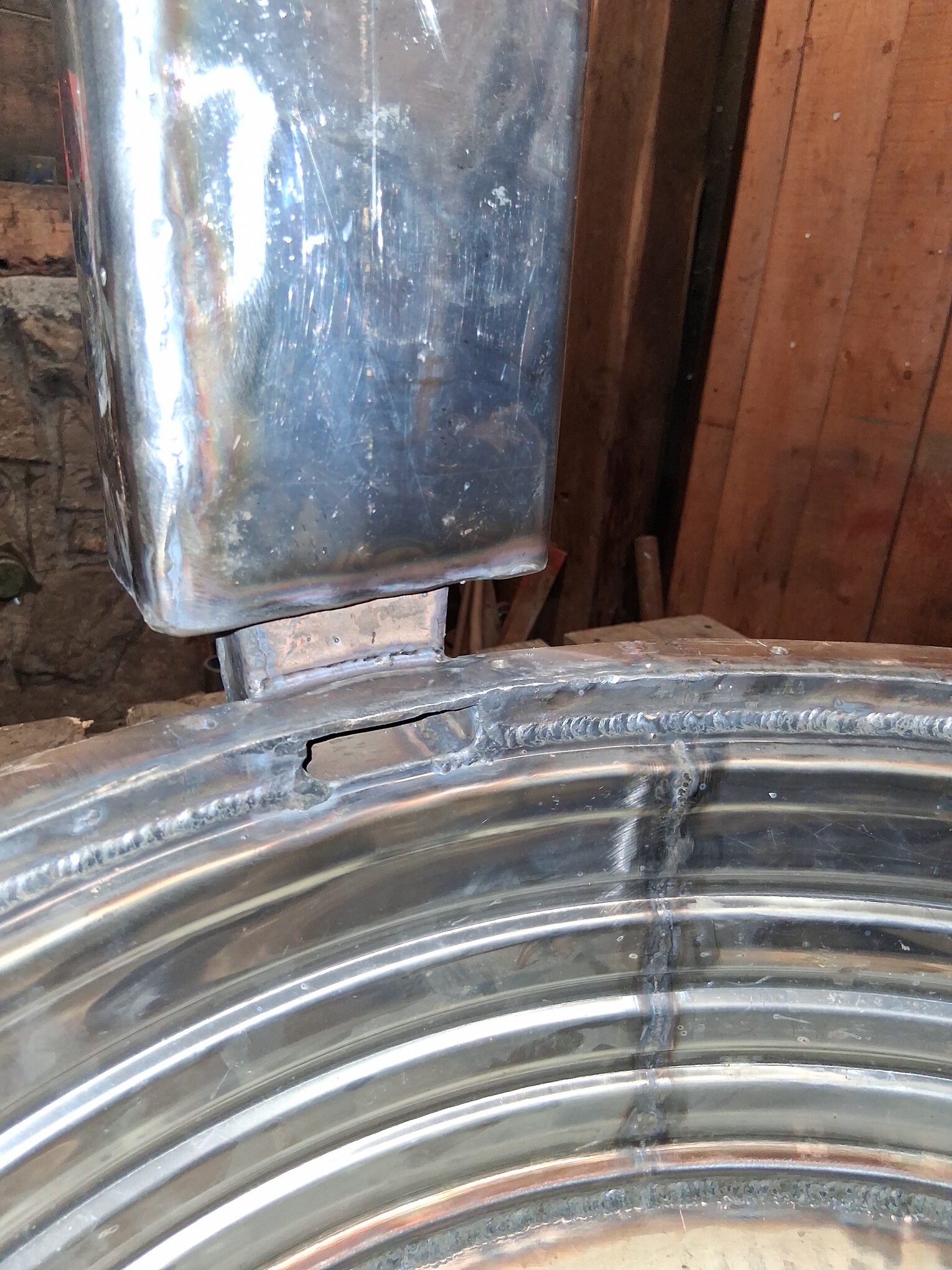
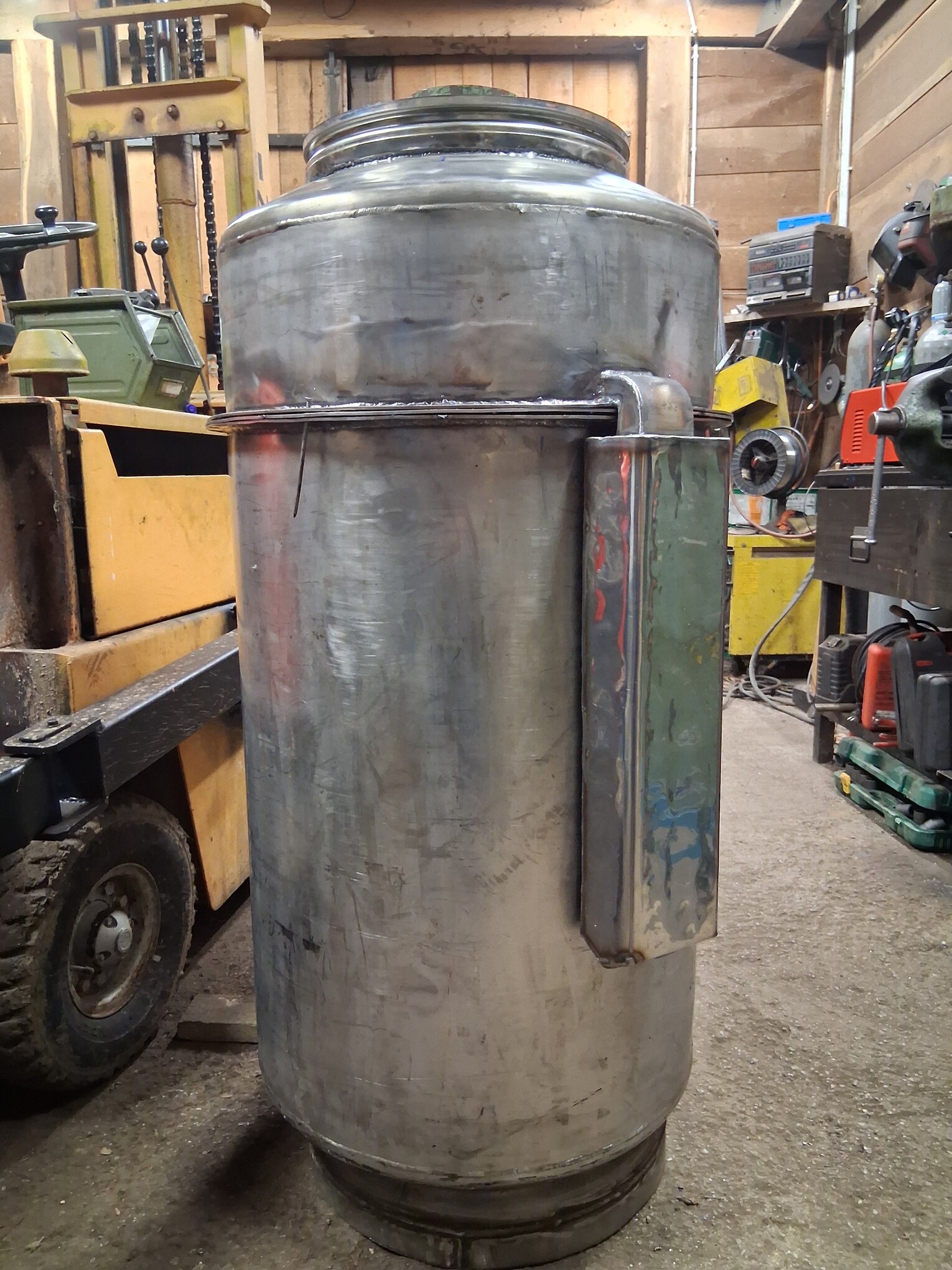
The container will be placed near the gasifier housing to heat and liquefy the tar.
22 Likes
I am amazed on how compack your gasifier units are. And all the complex welding that you do. You really think things out on how it will all work together. This is a fact and I can see it in your building and fabucating of other things. Good job Tone.
17 Likes
Some pictures of the gasifier, this picture shows the 1/2" connections for water, which will cool the condensation zone, I installed a T piece on top, as there will be a small filling and expansion tank with a safety lid on top.
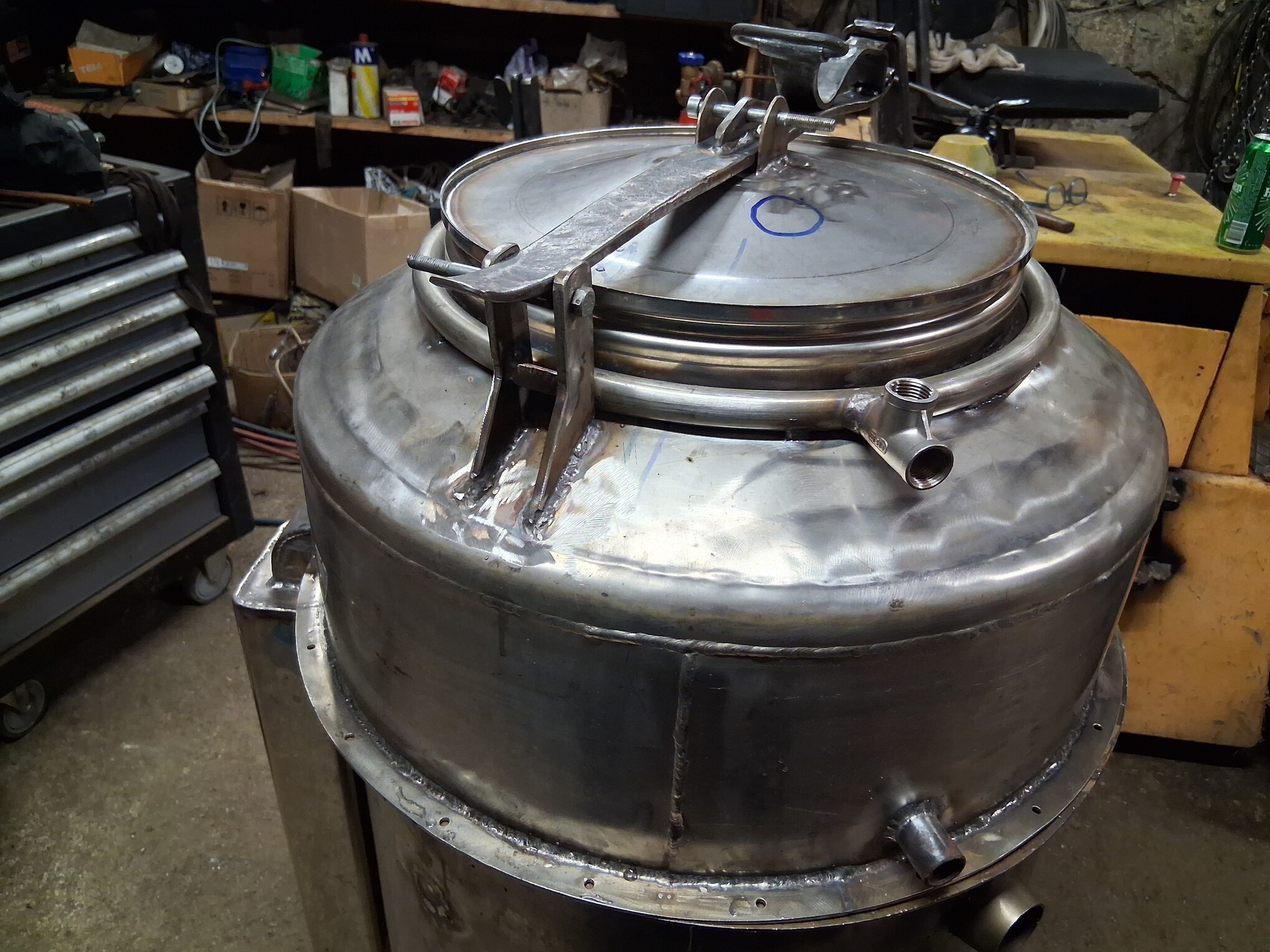
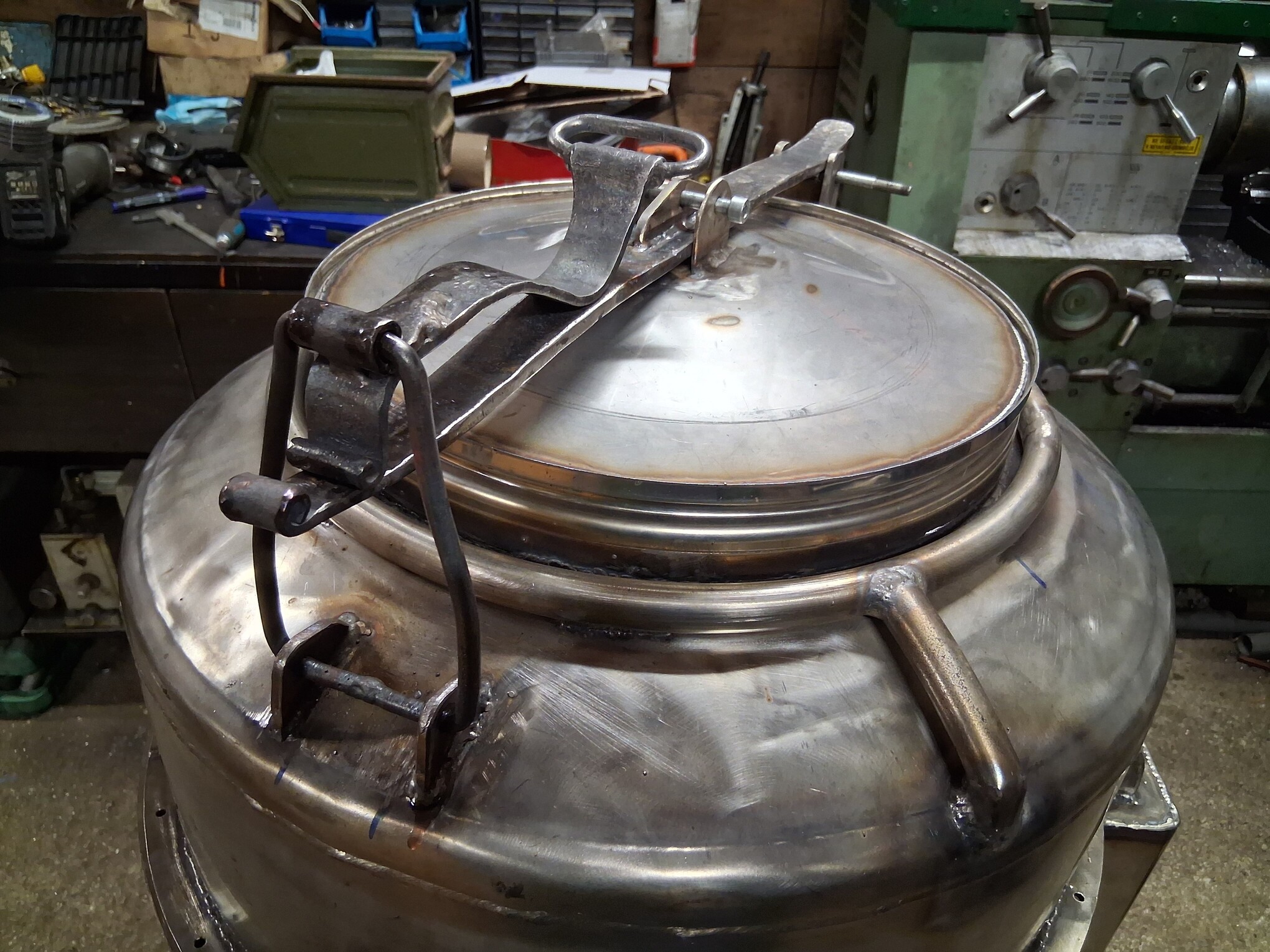
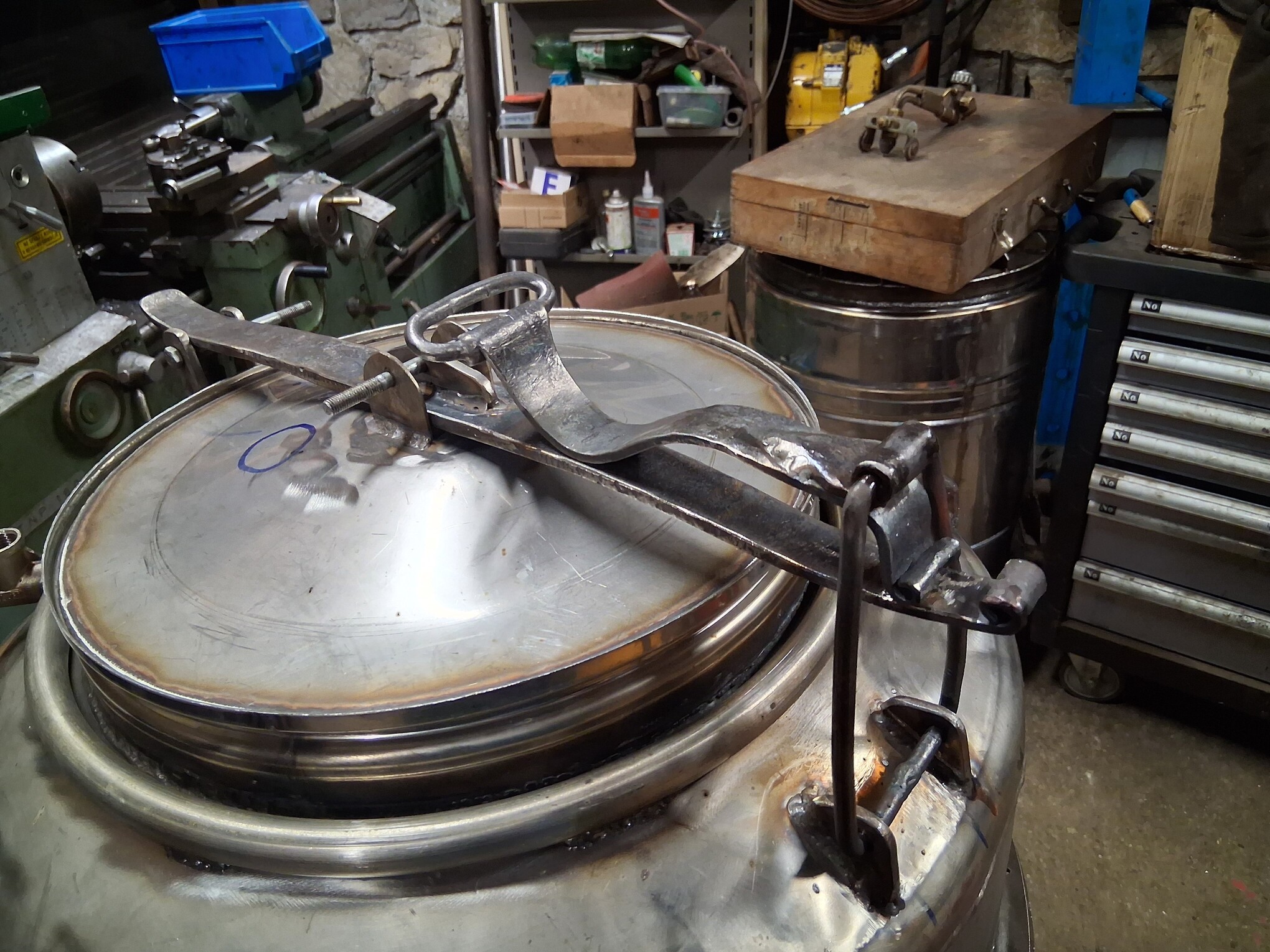
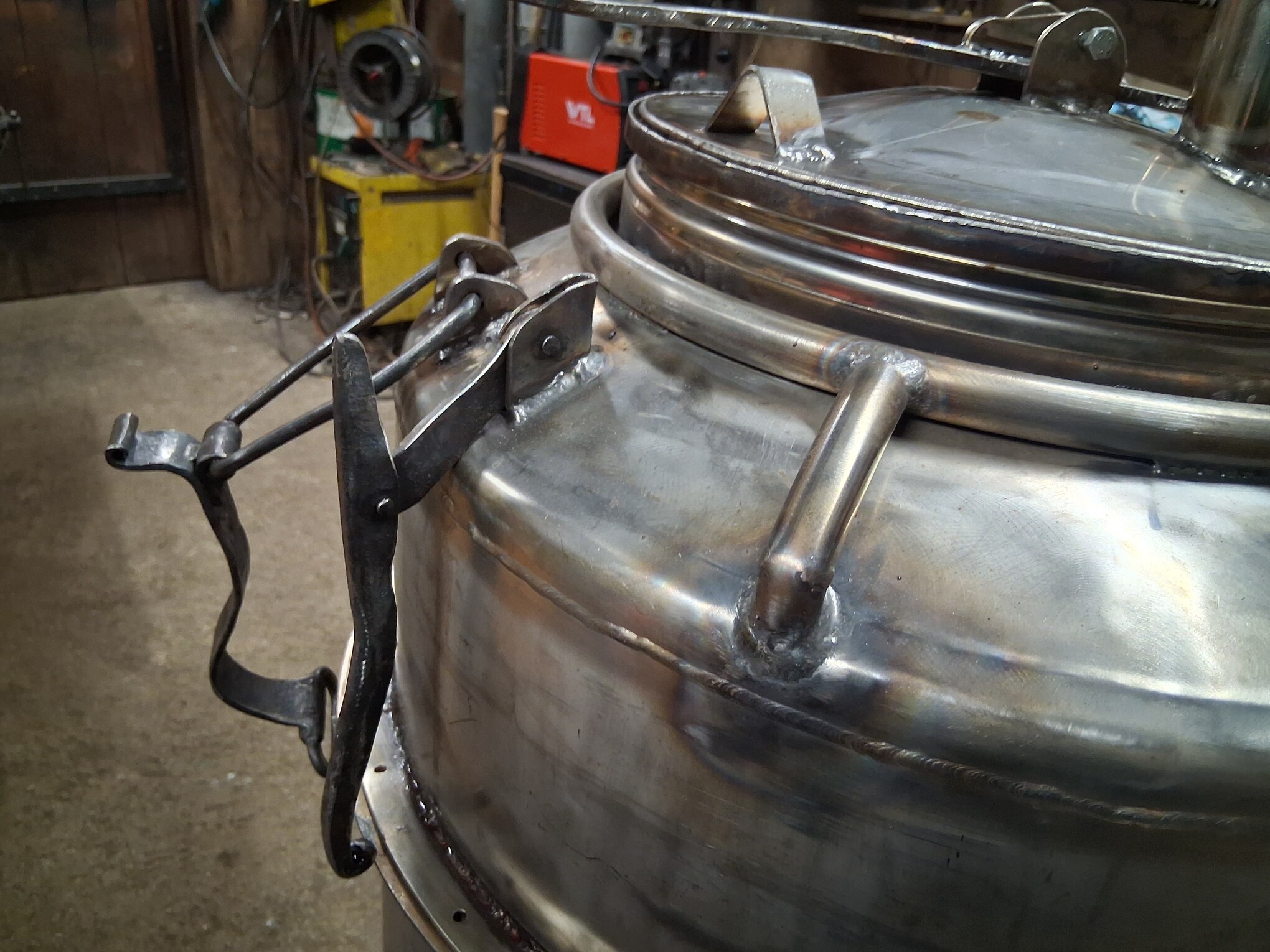
The cooling water inlet will be at the bottom, on the opposite side at the top is the outlet, which goes back along the ring from the pipe, well, here you can also see the “classic” closing mechanism, I adapted the leaf spring as a basis
19 Likes
Those welds… you are skilled Tone!
14 Likes
I have a son gifted in art. Though I cannot paint as he does, I appreciate the beauty he creates. It is similar with Tone. It’s beautiful, but I can’t do it. But I am also grateful that there are charcoal gasifiers simple enough for the rest of us to build  .
.
16 Likes
A work of art Tone! 
This gasifier will hold up for ever.
I got a feeling i need to start collect stainless again…
14 Likes
Goran, You’d better start soon, If you don’t, Tone will get it all.
11 Likes
Goran, you use the word collecting stainless steel. Can you get stainless steel for free where you live. Here it is very hard to find free stainless steel. Very thing has a price tag on it, and it is not cheap.
11 Likes
Well, some i find for free, some i get cheap, and… some idiot’s believe it’s gold they going to throw away, when i ask. They ends up keeping their stainless scrap.
11 Likes
I finished working on the gasifier for this year, I will continue next year,…
Some more “mandatory” equipment:
an opening and a chimney for releasing moist gases when stopped, the lid has a conical seal and also acts as a “safety valve” if the gasifier sneezes.
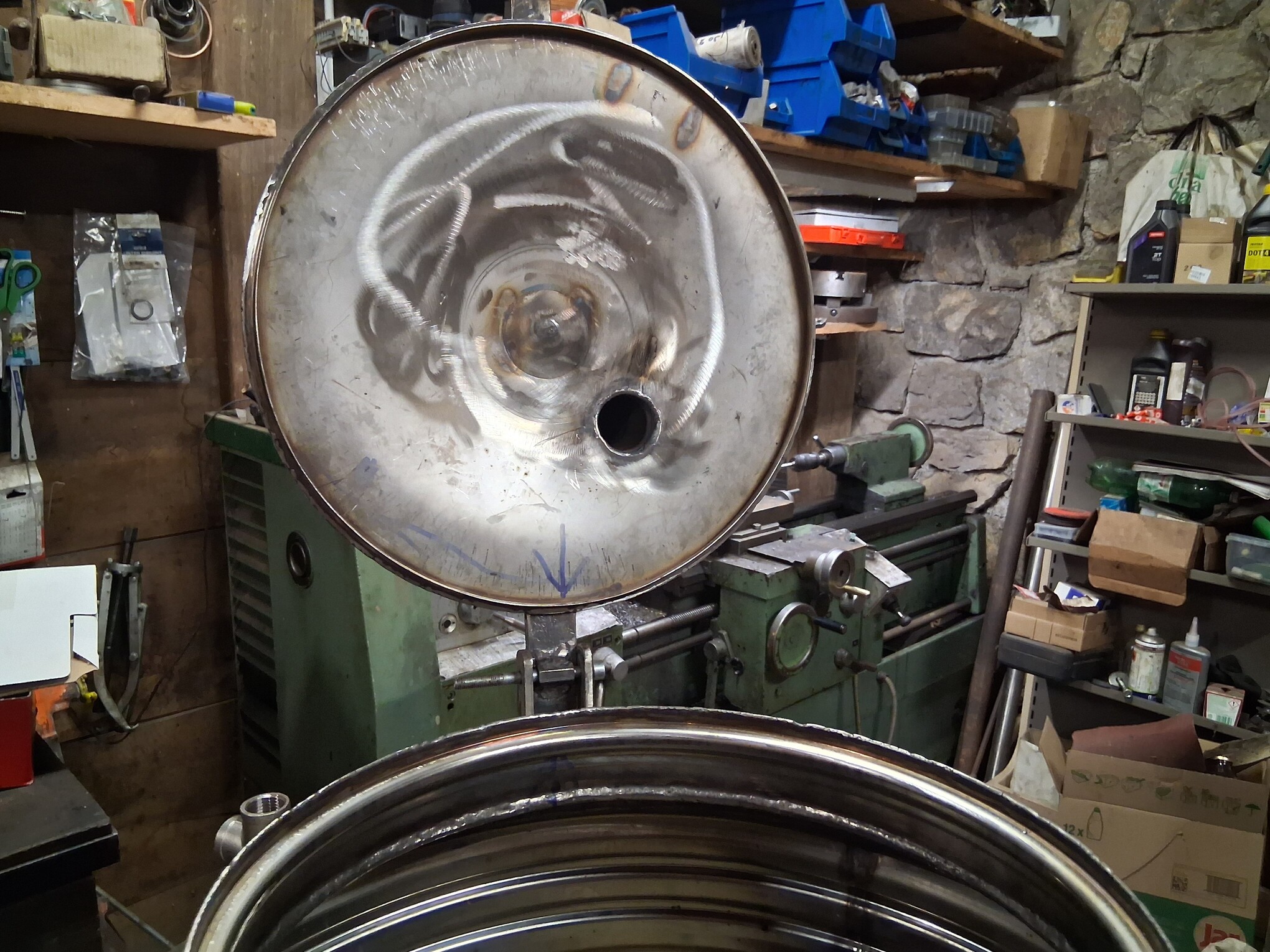
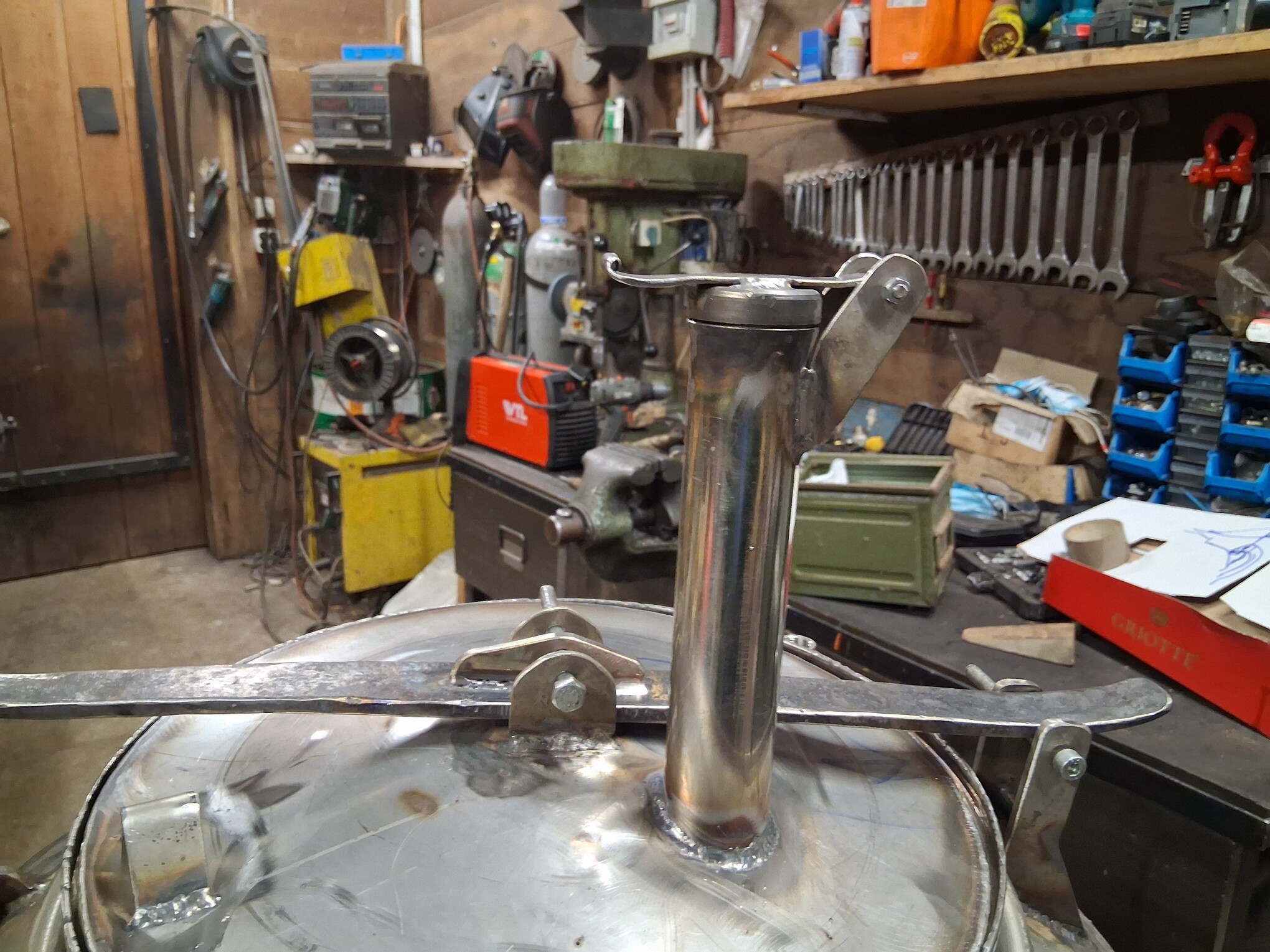
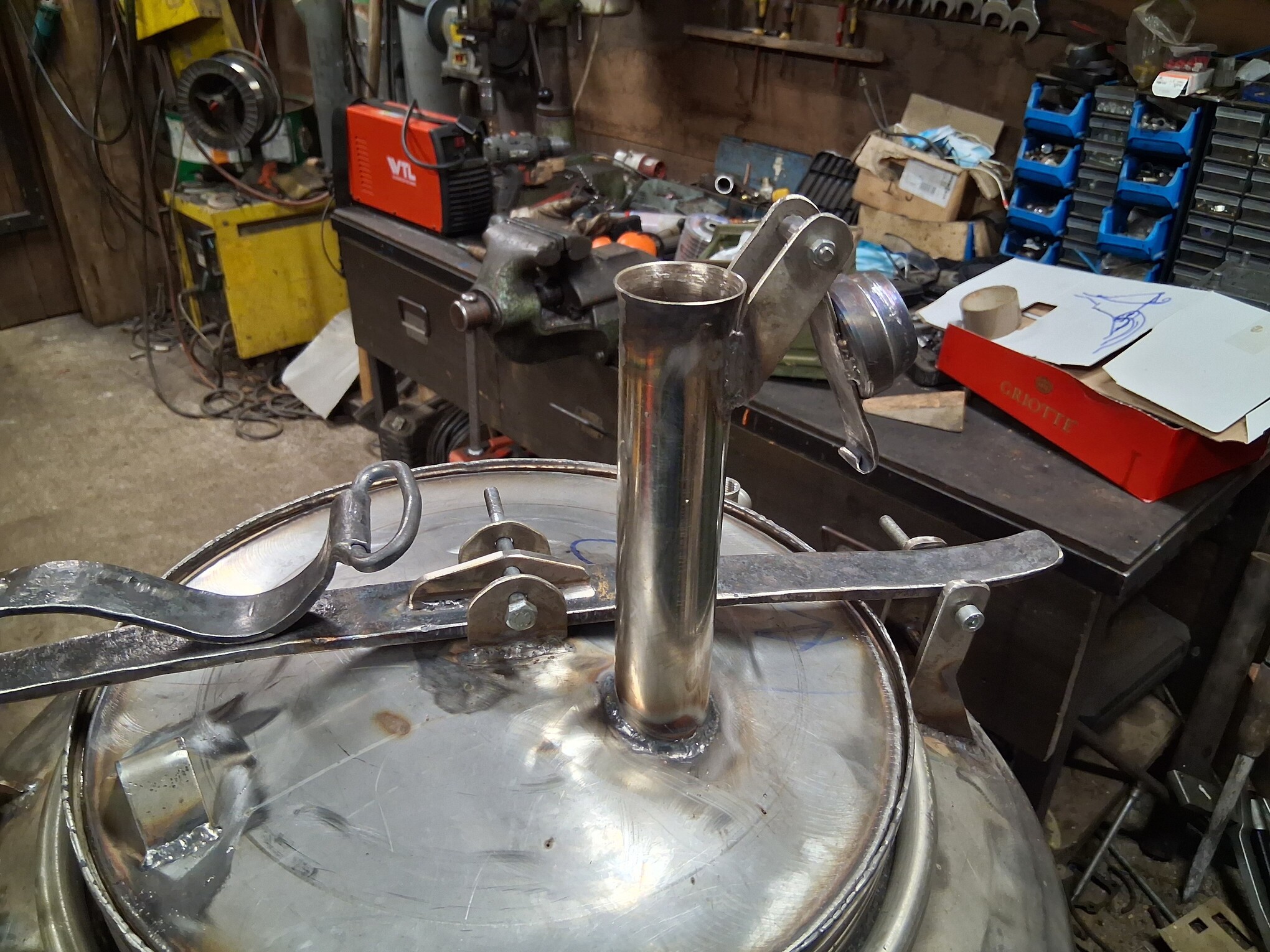
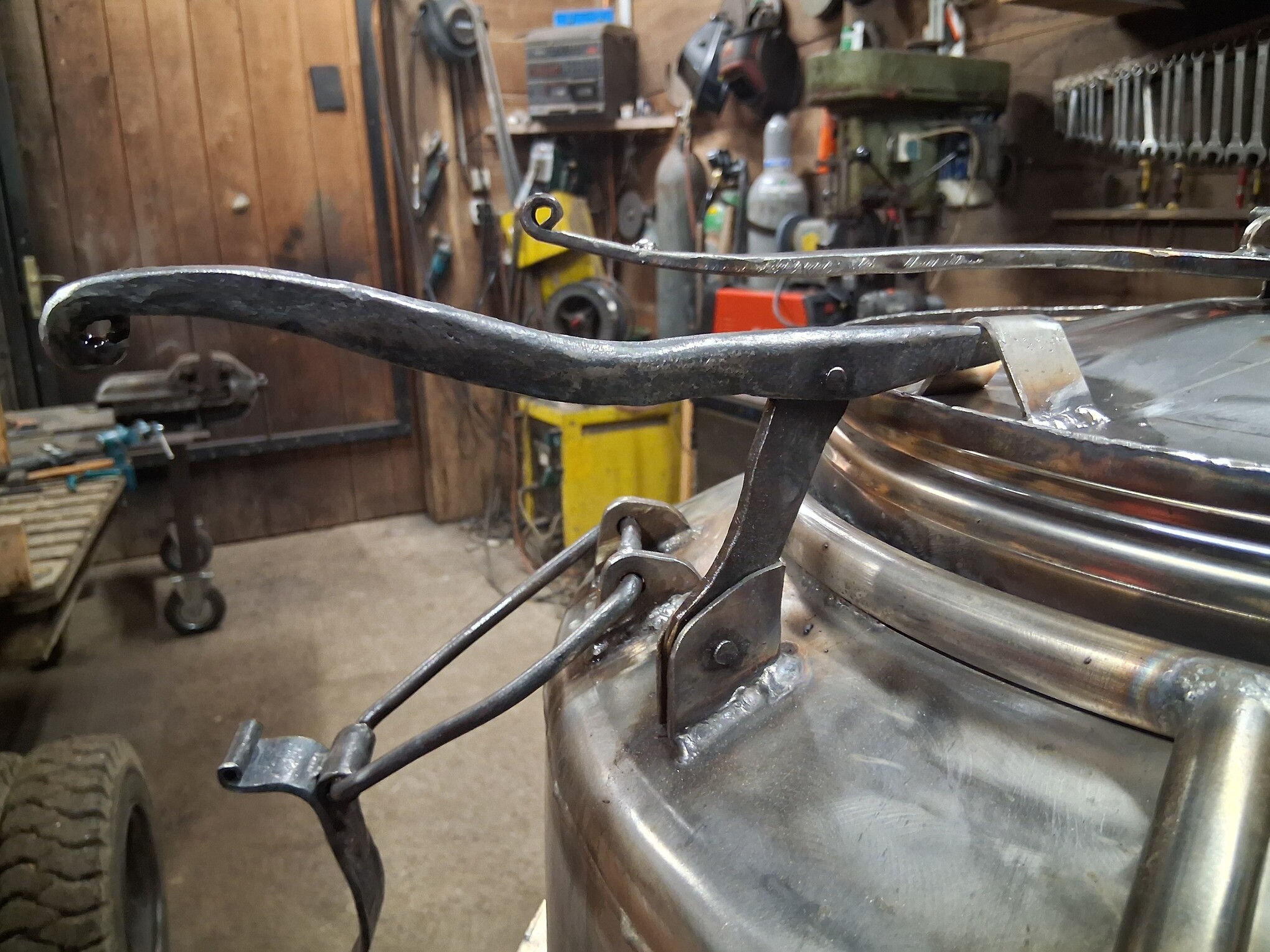
The lid fits quite tightly into the bed, so a certain amount of force is required to open it, but I also installed an opening lever, which will come in handy especially when the lid bed gets stuck with tar.
19 Likes
What others said - a work of art, Tone.
It’ll be very interesting to follow you comparing this gasifier’s performance with the previous one.
15 Likes
Wow, you have all the bells and whistle on this unit. And what JO said.
As Wayne would say, I think I need to go hide my gasifier behind the barn out of sight.
Happy New Year Tone, looking forward to next year to see your continued work on this gasifier. Just 5 1/2 hours to go.
15 Likes
Hi Tone, that opening lever is a real smart option
I have thought about building something like that (but haven’t come up with something clever and simple as yours…)
I mostly use my poker rod to pry the lid open, but it has the disadvantage i need to hold it close the dirty end, which is irritating sometimes.
I’ve used different anti-seize compounds which works great, but always ends up on my shirt sleeves, or on the bags that i re-use.
Im going to build a “opener” soon.
13 Likes
Pure art Tone, I love the clean stainless combined with forging and rivits. No doubt it will work as you planned. Thanks for sharing.
14 Likes