marty, a big opening where in the middle is the grate level, is ideal…so with one cleaning door you arrive over the grate for klinkers and under the grate for ash…
we add a bit of steam, produced by the water cooled nozzle, so i have only a white crunchy powder instead of klinkers…
also egr in the right amount , and there are no or only very less klinkers…
when you will add steam from the water cooled nozzle, my experience is, when you make a gravity system, so around 5 liters of water is required for my engines for getting a sufficient cooling effect, when the water with a while shrinks down to 4 liters by evaporation, there is to see a lot of more steam production, and therefore the water level sinks also more quickly…so a bigger water container maybee for a stationary unit, where weight and space is not so important, is not wrong, you must not fill completely and you can observe the steam production and water level…
it depends a bit how much the motor is sucking, a transparent pipe for water level control is very conveniant
what belongs a bit of humidity in the coal what not get cracked, is a benefit because it keeps the filter medium humid and therefore the dust can glue better on it
Excellent experienced learned wisdoms you have put up, Giorgio.
You covered six “Dynamic Considerations”.
Best Regards
Steve Unruh
marty, when you realize the ring with the fire brick, i hope the reduction area becomes not too small, because without the ring there is more reduction coal in direction of the gas draft to your gas exit holes…i made once a little modification on the hearth of the gasifier that i use on the tiller and harvester mower…the 200 ccm motor runs with it, the 250 ccm not more, because the reduction was not large enough more for it and delivers only bad gas…the motor starts, but stalls immediately…therefore a large enough and also a bit overdimensioned reduction space is not wrong…
Thanks so much Giorgio for that advice, I was leaning toward a smaller orifice. As I think more about it and with your advice, I will make a larger orifice. After all, I was getting good gas when the orifice was in effect the width of the barrel. Also with a larger orifice there will probably be less chance of bridging. I am thinking of making the orifice about 6 inches in diameter which is represented in the diagram I uploaded yesterday.
marty, i think also it is bettter to have the orifice wide, because it prevents also that the gas stream can clogg up by ashes…when it is wide the gas can always find a new path through the surrounding coal…i would let it how it is, when it works fine and keep the coal storage dry enough and inject steam through the nozzle, there the water cannot escape…
more up in the discussion was spoken about the flare colour…on our fiat crawler - updraft system- the coal dries out by heat…we reuse this coal after sieving , and with this dry heated coal the flame colour is really blue…when i give water drips in the nozzle, after a short moment is to see that the flame changes in orange…so my conclusion is that orange flame contents some hydrogen, what is also good for starting…my son has documented this effect on the gasifiat topic with some nice photos…
also a observation is to have secondary air for run not too near the motor, we use the secondary valve near the motor only for starting with determined open space (control with a drill for the right space ) seems when than switching to the secondary air valve with mixer the rpms are more higher and the run is easier to regulate, and another advantage is that at this point the rubber hose is kept cooler because air is just mixed in after this point…we must never regulate air during driving and also with the stationary unit, if rpm is higher or lower, doesnt matter…
also with bridging we have never problems because of right coal size and engine vibrations, seems the fine coal crumbles down like a “rain”, though the coal in the hopper becomes a really hard packet by the vibrations , what makes also a certain resistance when i stick with the rod in…secrets and anecdotes from charcoal gasifier using…not only the black hands are nice
Thank you Giorgio for helping with the answers and keeping this forum “drive on Wood” going. You have contributed really good explanations, as if you were a professor, well, there is probably no one these days who would be so serious about and use charcoal gasifiers, let alone have such a supply of fuel.
We talked with Giorgio about the advantages and disadvantages of charcoal gasifiers, Giorgio states that in the upward process, every slightest leak of the lid is a problem, it can also be a problem in the sideways process, only in the downward process, if the reactions take place in a suitably large tube, this is not a problem, and wet charcoal is also not a problem. Martin, I agree with Giorgi’s advice, that the limiting opening or tube in which the reaction takes place must be “too big”, otherwise the “stuffy nose” syndrome occurs, in the downward process, the force of gravity and the flow of gases compresses the ash and fine charcoal, thus creating a difficult-to-permeable layer, which makes it difficult for the gas to pass through. I have already talked about my idea, where the air would be supplied from below, this “upward” method lifts and loosens this fine material, and the flow of gases transforms the hot ball into the shape of an umbrella. If the dimension of this area is adjusted to the gas consumption, this umbrella opens up to the gas outlet, which prevents the passage of water vapor, if I were making a gasifier for a 400-500 cc engine, the diameter of the hot zone would be about 25 cm or 10".
And thank you too Tone, this conversation has really added to my understanding of charcoal gasifiers. For example I didn’t realize the temperature effect on clinker formation and how water could lessen their formation.
After refilling the gasifier after its cleaning, I got a 6 hour run out of it before the generator shutdown. I emptied the gasifier and found a large clinker just under the nozzle. It didn’t seem large enough though to have made that much of a difference to the generator, but then again, my gen is running extremely lean. I have to keep the choke just cracked a little to get the it to run. It is going into my shop today to see what’s up. Anyway, there was a lot less water in the water trap, so maybe that is why a large clinker developed.
I am really looking forward to making the changes and adding some moisture to the airstream.
hi Tone , I’m looking for the drawing you posted a while ago about the regulation of the steam introduced into coal gasifiers. You were using horsehair to operate a valve that controls the heating of a I’ve been looking for it without success for a while. Can you put it back in this conversation? Thierry, thanks
Thierry, I can’t find the post either, I’ll try to find the “original” sketch next week, if not, I’ll draw a new one.
Today was a cloudy day, so I took advantage of it to test my tractor generator, … 4 hours of operation, power from 4-6 kW, the generator easily provides this power, well, when I tried a higher power, the inverter disconnects the charging. 4 hours of operation, produced energy 20 kWh, consumption of about 20 kg of wood, in fact all the data matches the theory.
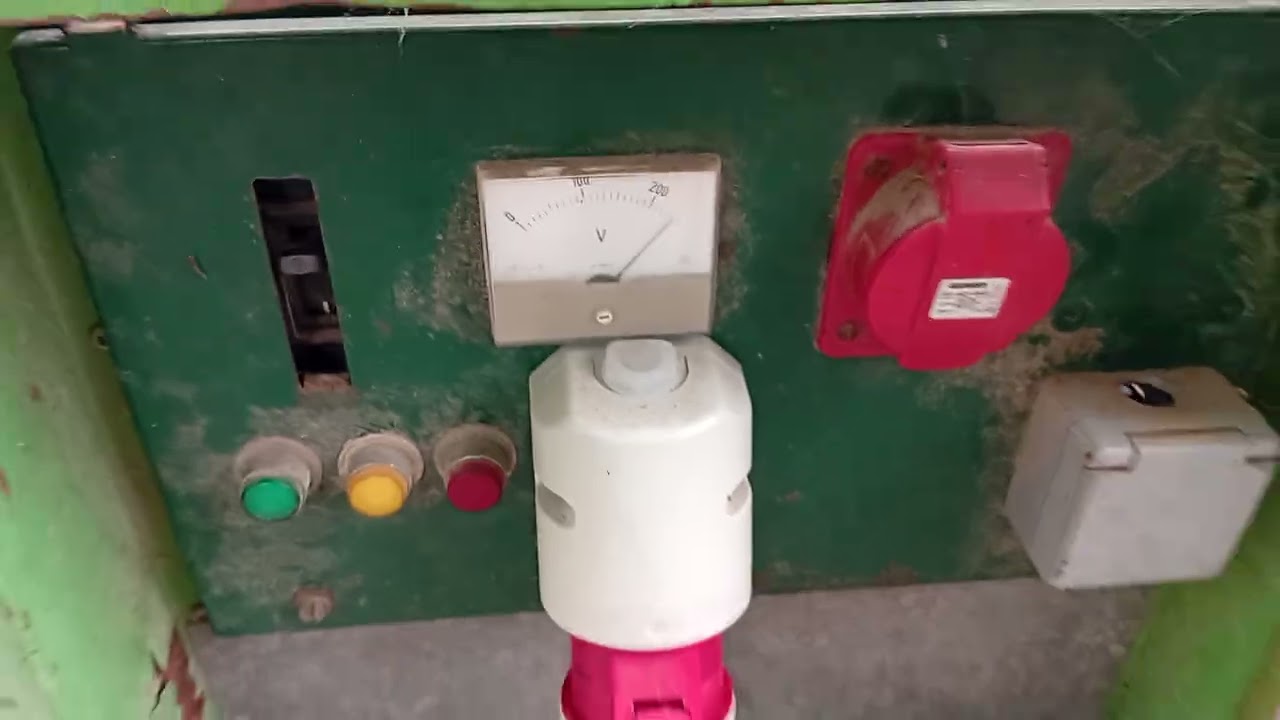
Looking good Tone. I see you went all in with 5 belts. Unfortunately I had only one groove left on the Volvo crank pully when I tried mine out. When I maxed out at close to 10 kW I was afraid something would happen and the engine rev itself to death 
Tone, I am fascinated on how you produce power with an asynchronous motor with capacitors. I have seen this done to produce single phase power from a 3 phase motor, but never to produce 3 phase power. Could you provide a sketch of how you wire the motor with the capacitors? You are truly an artist craftsman in many fields.
Here is a link to Giorgi’s topic, …
If you have a specific electric motor available, I can provide specific numbers.
JO, you’re ahead of me again,…
Unfortunately, this DC input is limited to 6 kW if used for a wind turbine. This inverter also has a three-phase input for a generator, which I haven’t tested yet, but I will soon.
I can say that the gasifier-tractor-generator system works great, I walked around it for a while and took measurements on the generator, and then it operated unattended most of the time, this constant load suits it very well.
If I think a little more about the numbers, 20kWh is enough for a small electric car for 200 km of driving, or for a large pick-up for 100 km, and the wood consumption of 20kg also corresponds to the information on the consumption of wood gas users in cars.
Thanks for the link, somehow I missed it…
I made the upgrades to my gasifier and test fired it today.
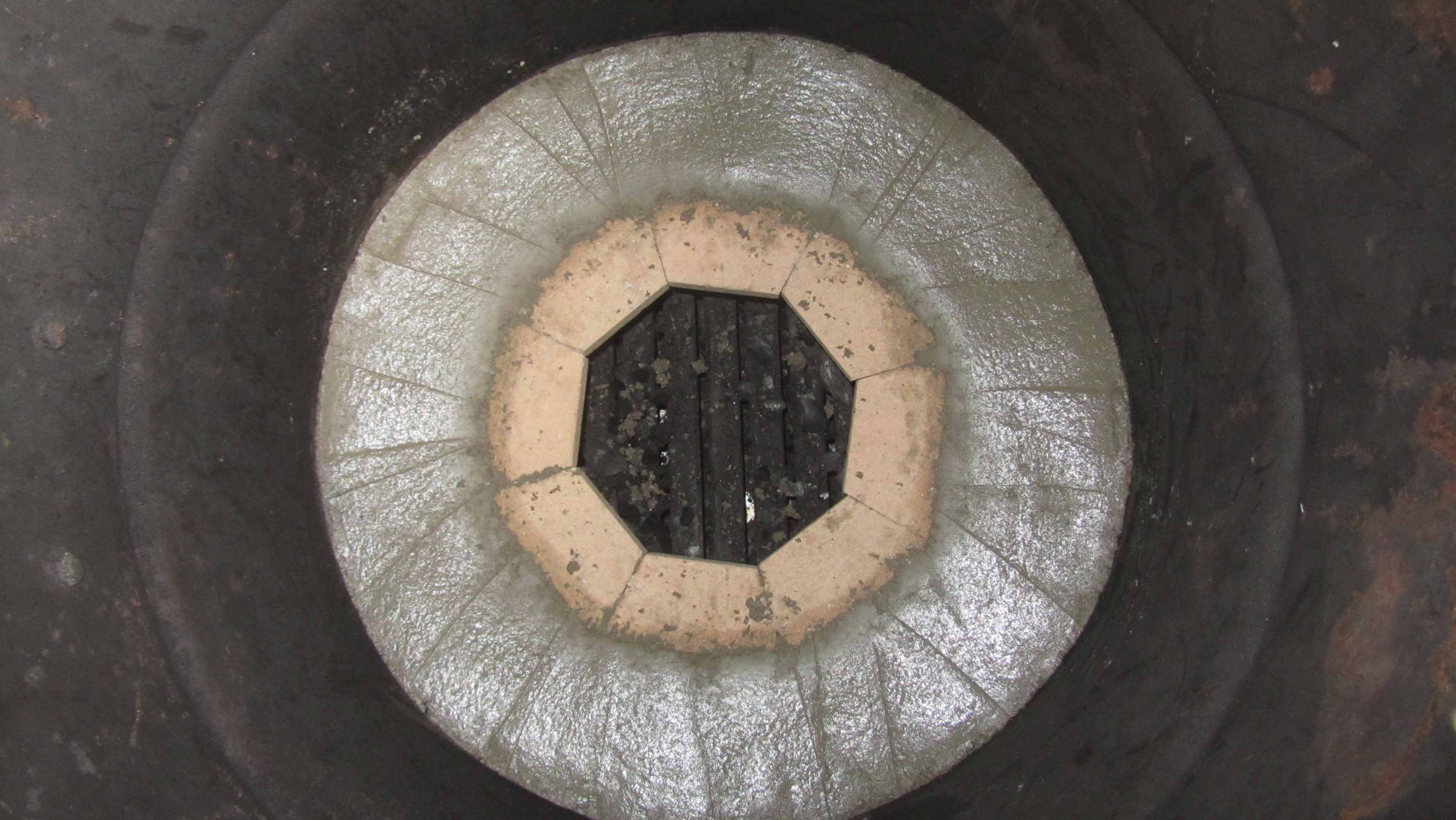
I added an orifice above the grate that is 8 inches in diameter.
It took less than 2 minutes to get a nice flare:
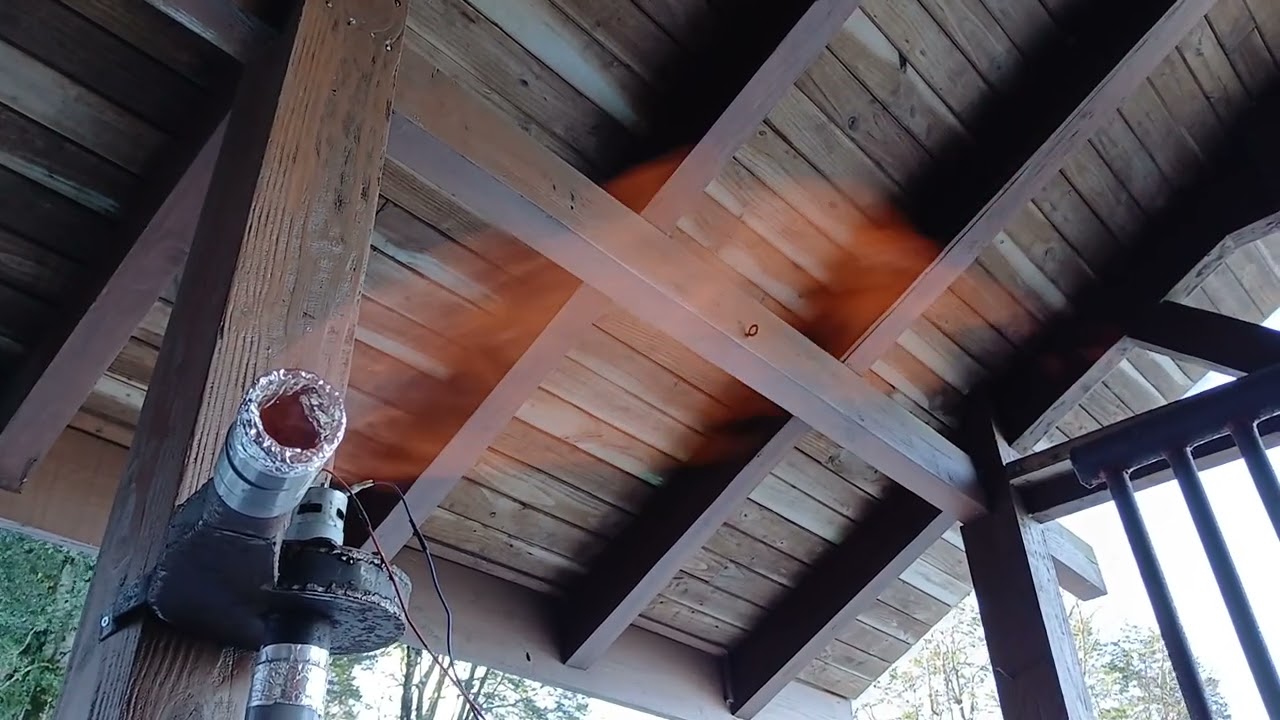
Now I have to test the gas in my generator. That will happen after I tune the motor. I was using a cheap Chinese tachometer that uses a wire wrapped around the spark plug wire. It was giving weird numbers and was not responding to obvious engine speed changes. I just finished programming an Arduino to measure Hz so hopefully I can get the generator tested on chargas tomorrow…
Ah, I’m finally all caught up on this topic 
I’d like to thank you all for what you’ve taught me.
Tone, is your inverter a 6kW three-phase model?
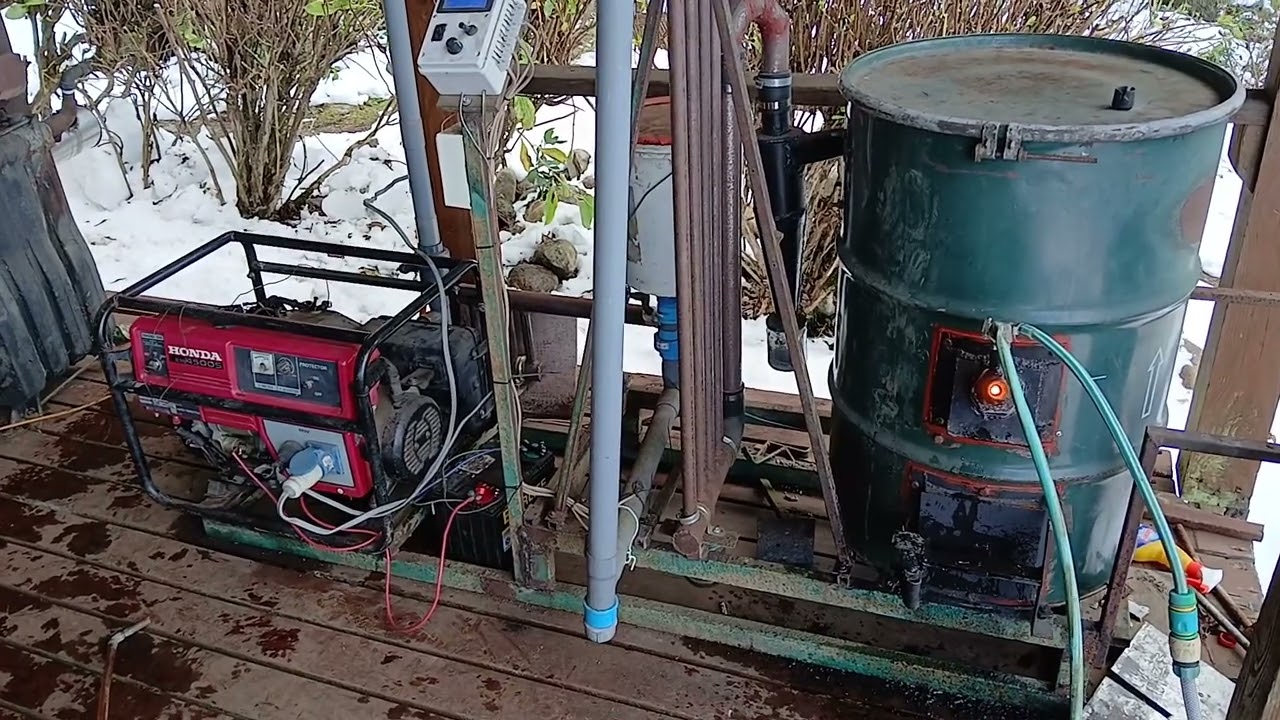
I got the generator engine tuned and hooked up to the gasifier today. It was the easiest start yet and I am very pleased with the gasifier’s performance.
I have a cooling water leak at a fitting on the nozzle but it was only during the short test. I am going to be building a recirculation circuit with an air intake moisturizer that will replace the garden hoses. Hopefully I will have that done in the coming week.
It will be interesting to see how the gasifier does in extended runs. I could easily get 5-6 hours without attention with the old gasifier. I hope I can get the same with the new updates in place.